Key takeaways
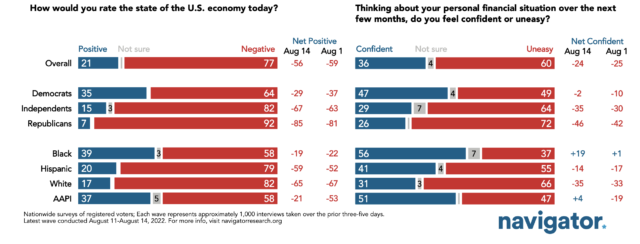
- Americans remain broadly negative about the economy and uneasy about their personal financial situations.
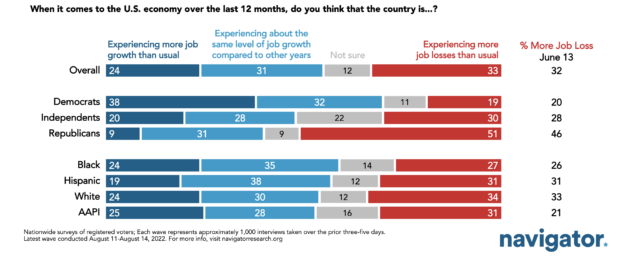
- A narrow plurality continue to say the U.S. is experiencing more job losses than gains.
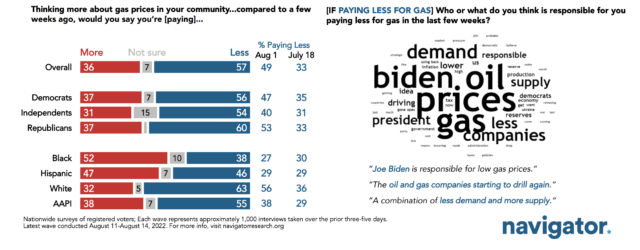
- There has been a double-digit increase since July in the share saying they are paying less for gas now than they were a few weeks ago, citing Biden, oil and gas companies, and supply and demand as most responsible.
Four in Five View Economy Negatively as Majorities Remain Financially Uneasy
Bipartisan majorities rate the economy negatively and pluralities say they are uneasy about their personal financial situation – only Black and Asian Americans say they are more confident (56% and 51%, respectively) than uneasy (37% and 47%).
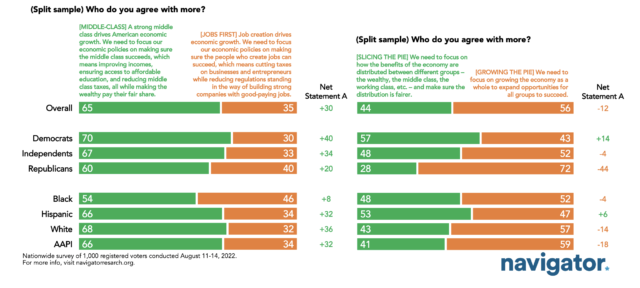
Americans See Middle Class Growth Over Jobs-First Growth for the Economy; Prefer “Growing the Pie” to “Slicing It”
Despite Improving Jobs Reports, a Narrow Plurality of Voters Say the U.S. Is Experiencing More Job Loss than Usual
Still three in ten independents (30%) say the U.S. is experiencing more job losses than usual, as do a majority of Republicans (51%).
Now, a Majority Say Gas Prices in Their Community Are Lower Than They Were a Few Weeks Ago
There has been a 24-point increase in the share who say they’re paying less for gas than they were a few weeks ago (33% in July to 57%).
- Those who say they are paying less focus on Biden, oil and gas companies, and changes in supply and demand.