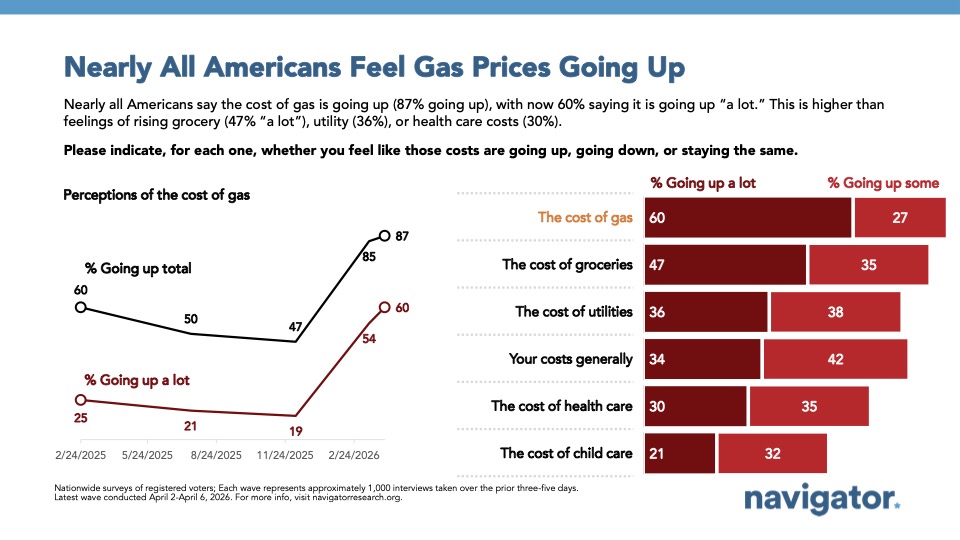
Nearly Nine in Ten Say Gas Prices Are Increasing
87% of Americans say the cost of gas is going up, including 60% who say it’s going up “a lot.” By comparison, 82% of Americans say the cost of groceries is going up, with 47% saying it’s going up “a lot.” Though views of the economy are often partisan, gas price increases are being felt across parties, with 91% of Democrats, 90% of independents, and 81% of Republicans saying costs are increasing.
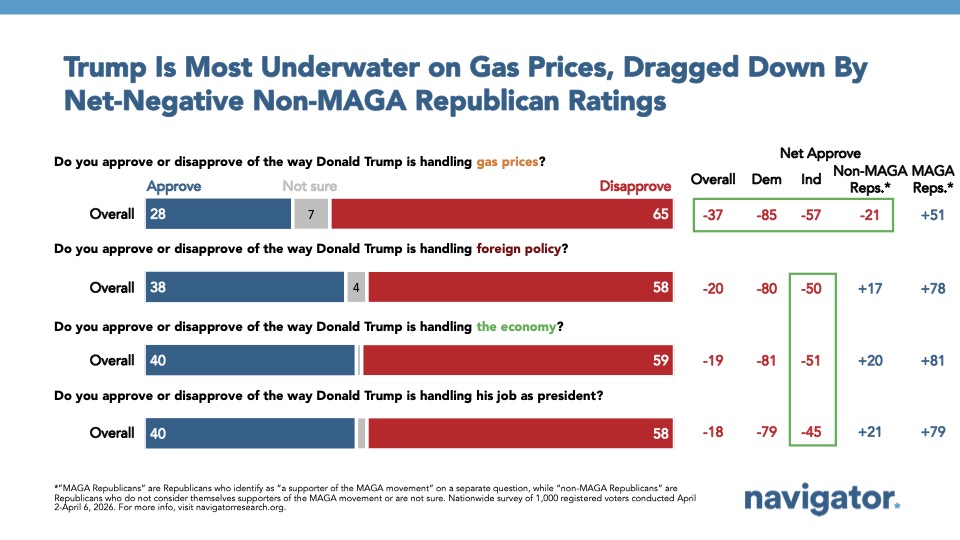
Trump’s Approval on Gas Prices Hits Rock Bottom
Americans disapprove of Trump’s handling of gas prices by 37 points (28% approve – 65% disapprove), with independents disapproving by 57 points (15% approve – 72% disapprove). Republicans are slightly more positive, approving of Trump’s handling of gas prices by 18 points (55% approve – 37% disapprove), though this approval is significantly worse than their overall approval rating of the president (net +52; 75% approve – 23% disapprove), signaling significant discontent within Trump’s own party.
The rise in gas prices reveals fractures within the GOP, with non-MAGA Republicans disapproving of Trump’s handling of the issue by 21 points (33% approve – 54% disapprove), and Republican women only approving by 11 points (51% approve – 40% disapprove) compared to Republican men who approve by 24 points (59% approve – 35% disapprove). In contrast, MAGA Republicans approve of Trump’s handling of gas prices by 51 points (73% approve – 22% disapprove).
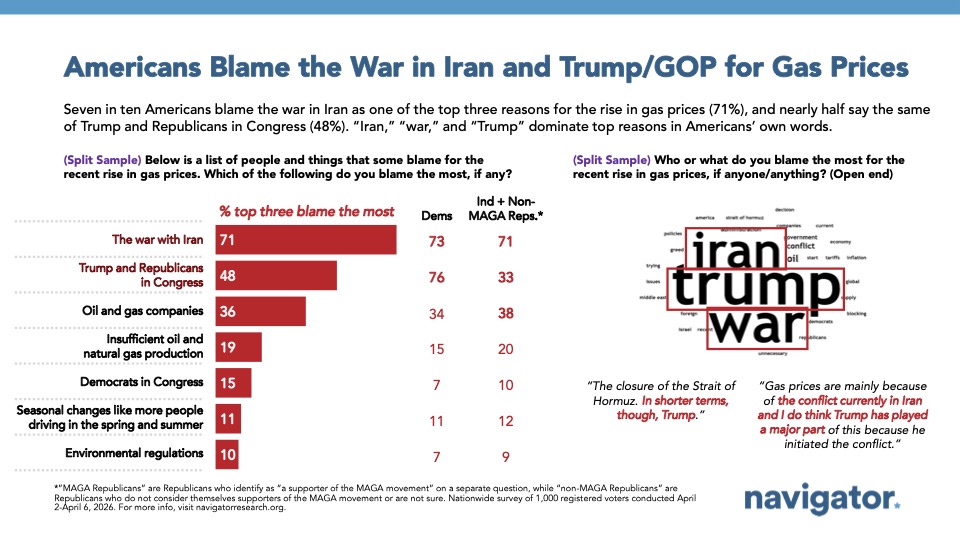
Trump’s War with Iran Seen as the Culprit
Whether open-ended or closed-ended, the war in Iran is considered the top driver of high gas prices. More Americans see the war as responsible for rising gas prices (71%), than Trump and Republicans in Congress (48%), or oil and gas companies (36%). An overwhelming majority also blame Trump and Republicans in Congress more for rising gas prices than Democrats in Congress (60% blame Trump and Republicans in Congress – 16% blame Democrats in Congress). When adding the phrase “because of the war,” blame for Trump and Republicans in Congress increases (64% blame Trump and Republicans – 12% blame Democrats in Congress).
- Across parties, Americans say “President Trump and Republicans in Congress because of the war with Iran” are more to blame than Democrats in Congress, including Democrats by 84 points, independents by 58 points, and Republicans by 18 points.
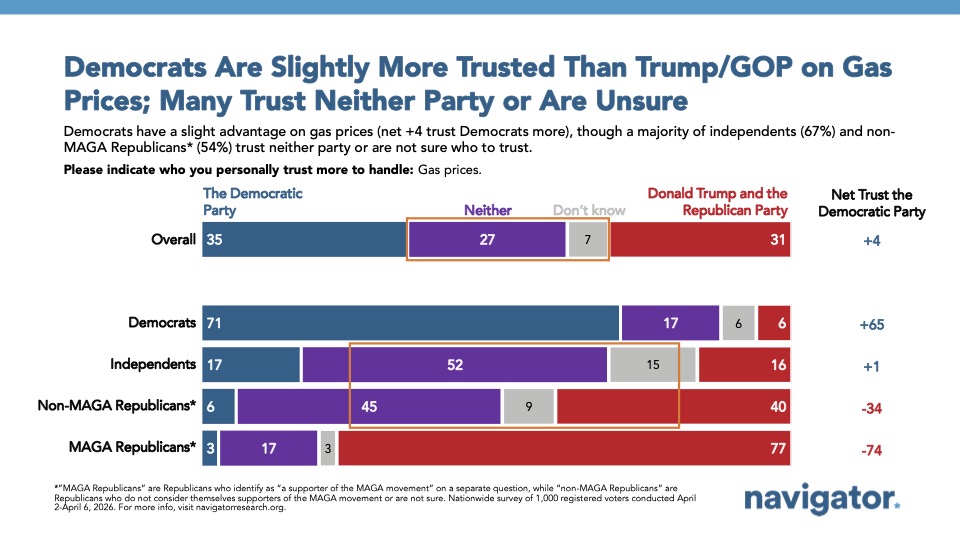
The Democratic Party Holds Narrow Advantage on Handling Gas Prices
By 4 points, Americans trust the Democratic Party more to handle gas prices than Trump and the Republican Party (35% trust Democratic Party – 31% trust Trump and Republican Party). Over one-in-four don’t trust either party to handle gas prices (27%), including a majority of independents (52%) and nearly half of non-MAGA Republicans (45%).