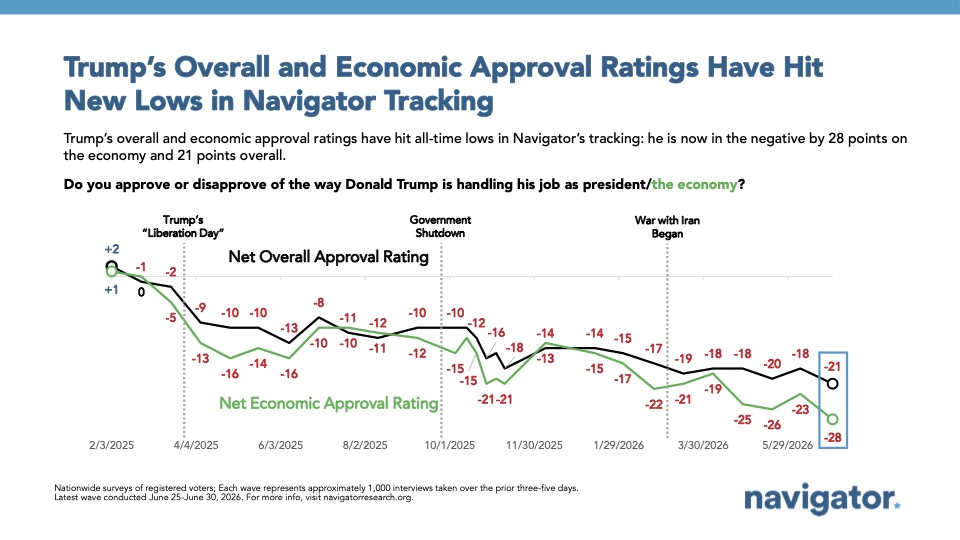
Trump’s Economic Approval Rating Reaches a New Low as Disapproval Grows
With the ongoing conflict in Iran and Trump tariffs continuing to raise costs, Americans’ disapproval of President Trump’s performance continues to grow. A majority disapprove of his job performance overall (net -21; 39% approve, 60% disapprove), while nearly two-thirds disapprove of his handling of the economy (net -28; 35% approve, 63% disapprove). Economic disapproval is especially high among Gen Z (73%) and extends to nearly half of non-MAGA Republicans (47%).
As disapproval of President Trump’s handling of the economy grows, nearly two-thirds now say the country is headed in the wrong direction (net -34; 64% wrong direction, 30% right track), reflecting broader pessimism about both the economy and where we are headed.
The Economy, Broken Promises, and the War With Iran Drive Regret Among Trump Voters
Trump’s continued pursuit of his controversial economic agenda is weakening support among some who helped elect him. Nearly one-in-five 2024 Trump voters now regret their vote (19%), most often citing the economy, broken promises, and the war with Iran.
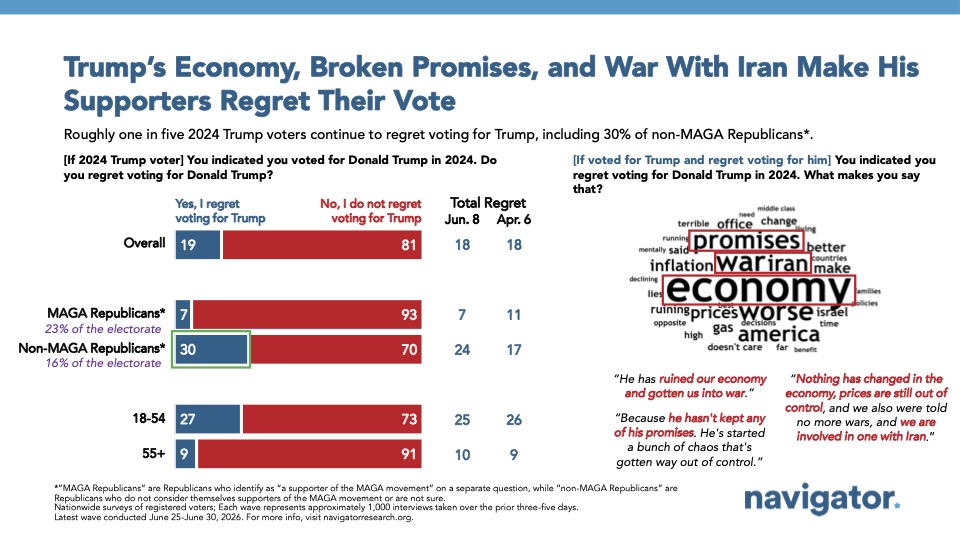
- Nearly a third of non-MAGA Republicans now express regret for their vote (30%).
- Younger Trump voters are substantially more likely to regret their choice. Over a quarter (27%) of Trump voters ages 18-54 say they regret their vote, compared to just 9% of those ages 55 and older.
Americans Face Widespread Financial Pressure, From Paycheck Strain to Debt
Across demographic and income groups, many Americans report difficulty staying financially afloat. More than one-third say they are living paycheck to paycheck (36%), while another 24% are struggling to make ends meet. Financial pressure extends even to higher-income households: nearly one-in-four Americans earning more than $100,000 live paycheck to paycheck (23%), as do 28% of middle-class Americans. Just 12% say they are living comfortably with money left to save.
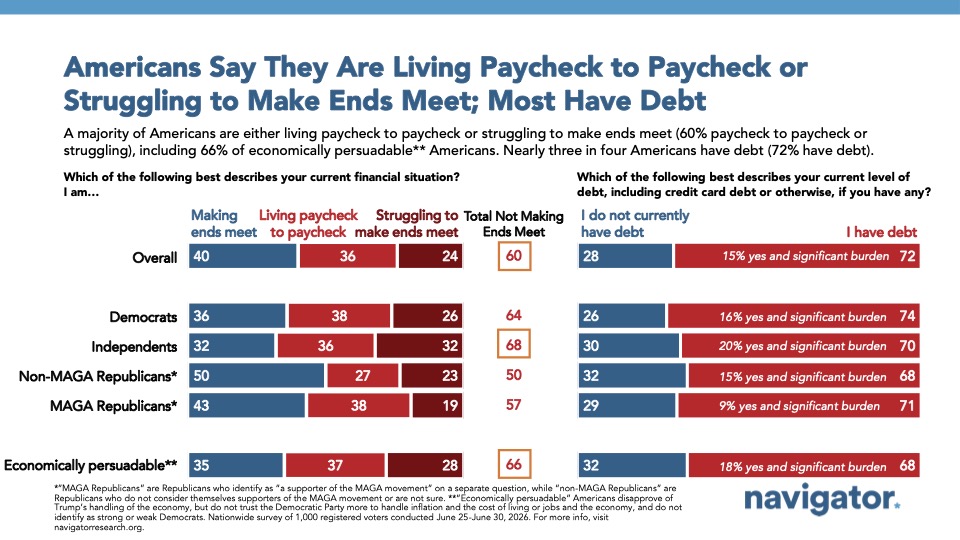
For many Americans, that financial strain is compounded by debt. Nearly three-quarters say they currently have debt (72%), and 44% say making their debt payments is difficult. 68% of economically persuadable Americans currently hold debt.
Americans Prioritize Lower Costs Over Higher Wages, but Doubt the Federal Government Can Deliver Either
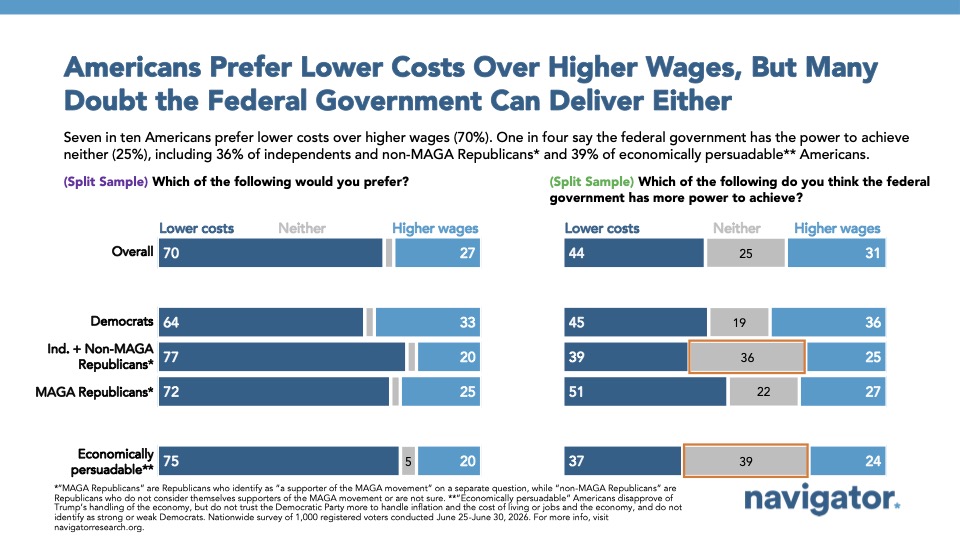
In response to continued financial pressure, Americans are far more likely to prioritize lowering everyday costs than increasing wages. Seven-in-10 say reducing costs is more important (70%), compared with 27% who prioritize higher wages, a double digit margin that holds across party lines. At the same time, few Americans believe the federal government can achieve either goal: just 24% say it has the power to lower costs, and the same share say it can raise wages, regardless of their approval of President Trump.
Americans See Elected Officials’ Decisions as the Main Drivers of Economic Outcomes
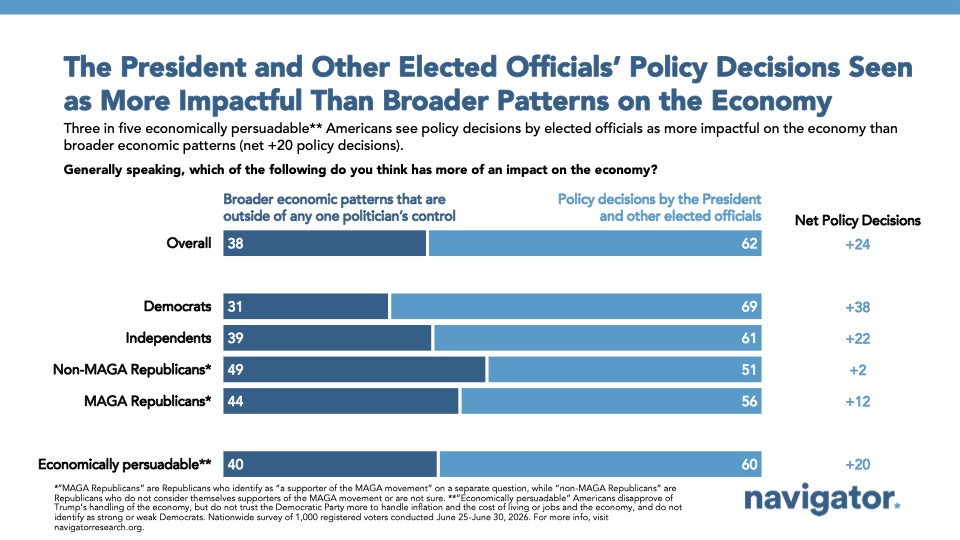
Across ideological groups, Americans are more likely to believe decisions made by the president and other elected officials shape the economy than by broader forces beyond policymakers’ control. Nearly two-thirds say economic outcomes are driven primarily by elected officials’ decisions (62%), while 38% attribute them more to broader economic patterns.
Americans Hold Trump’s Tariffs and the Republican Budget Bill Responsible for Current Economic Conditions
With Americans broadly assigning responsibility for the economy to elected officials, they also identify two specific policies as having a greater impact than broader economic forces. Nearly seven-in-10 say tariffs have had more influence on the economy than factors outside politicians’ control (68%), while 71% say the same of the Republican budget bill, or One Big Beautiful Bill Act.
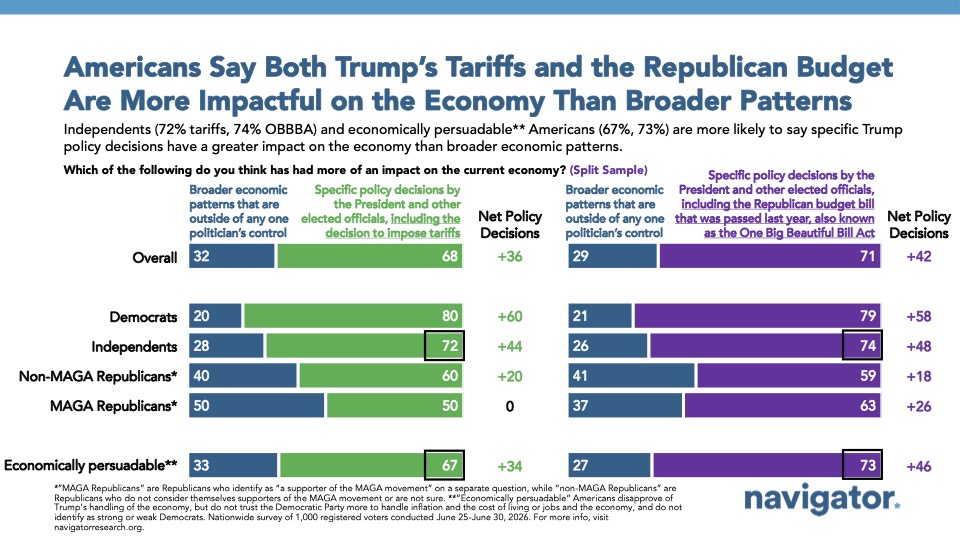
This view cuts across partisan lines. Majorities of independents and non-MAGA Republicans say both policies have had a greater impact on the economy than broader forces, while even among MAGA Republicans, half say tariffs have had a greater impact and 63% say the same of the Republican budget bill.
Americans See Tariffs and War in Iran As The Biggest Cost-Drivers
Americans identify tariffs and the war with Iran as two of the leading contributors to rising costs. More than half say tariffs on imported goods are driving prices higher (54%), including 58% of independents and 54% of non-MAGA Republicans. A similar share say the conflict with Iran is contributing to higher costs (52%), including nearly six-in-10 independents (59%) and half of non-MAGA Republicans (50%).
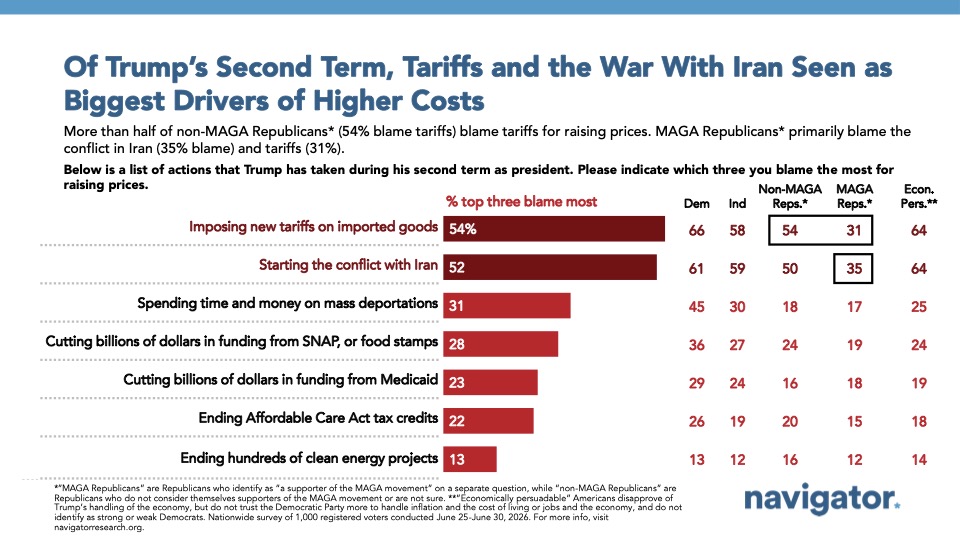
- Higher-income Americans are among the most likely to identify tariffs as a cost driver, including 67% of those earning more than $100,000.
- College graduates are 10 points more likely than those without a college degree to say tariffs are raising prices (61% versus 51%).
- Millennials are the only age group more likely to identify the war with Iran over tariffs as a contributor to rising costs (54% war with Iran, 50% tariffs).
Trump’s Comments on Inflation and Americans’ Finances Raise Doubts About His Economic Priorities
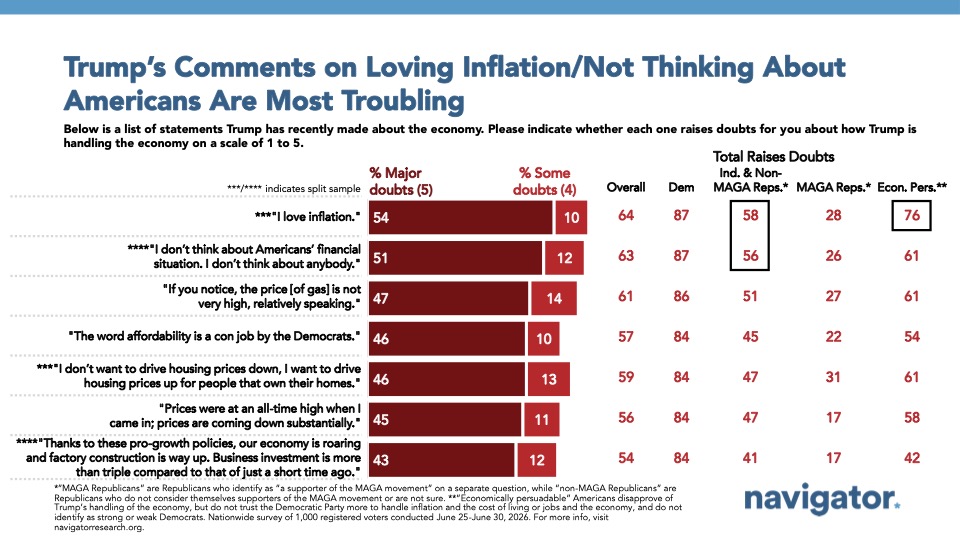
Americans express broad concern about President Trump’s comments on the economy. Nearly two-thirds say his statement that he “loves inflation” raises doubts about his handling of the economy (64%), including 58% of independents and non-MAGA Republicans. A similar share are troubled by his comment that he does not think about Americans’ financial situations or “about anybody” (63%), including 51% who say it raises major doubts. Among independents and non-MAGA Republicans, 56% say the comment raises doubts about his economic leadership.
Americans Are Most Troubled by Rising Costs and a Lack of Focus on Middle Class
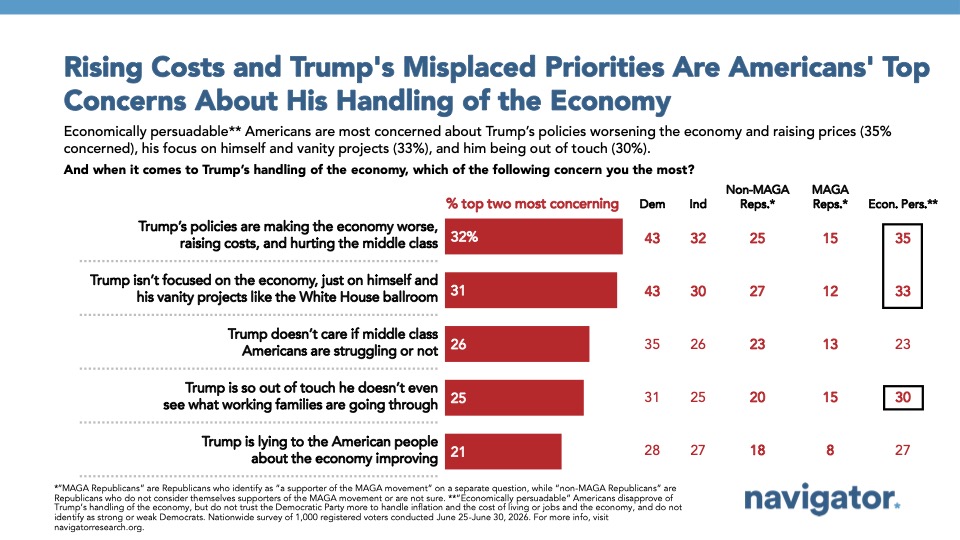
Americans are especially concerned that Trump’s economic priorities are focused away from the rising costs and financial pressures affecting the middle class. Nearly one-third say his policies are worsening the economy, raising costs, and hurting the middle class (32%), while 31% say he is focused on himself and projects such as building a White House ballroom. About one-quarter say he does not care whether middle-class Americans are struggling (26%) or is too out of touch to understand what the middle class are facing (25%).
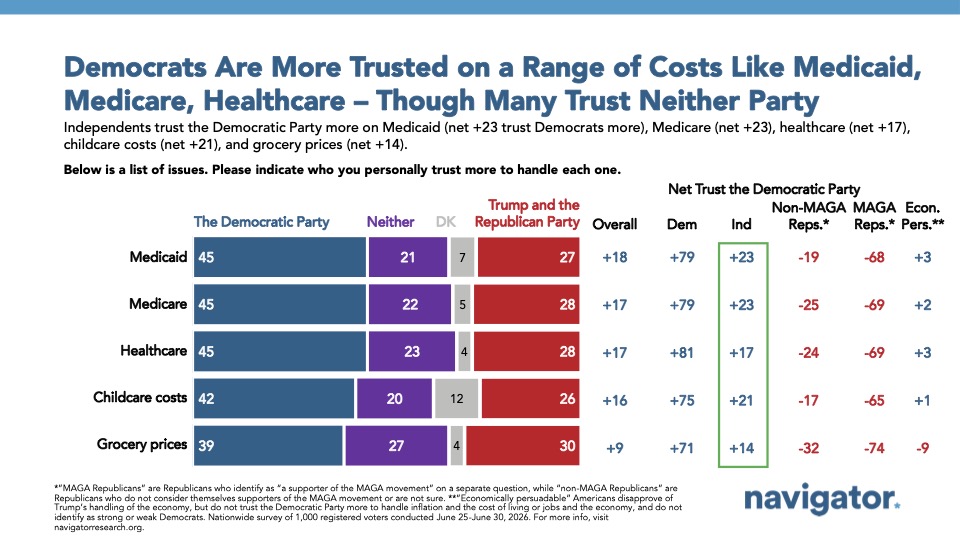
Democrats Hold an Advantage on Costs, Though Trust in Both Parties Remains Limited
Americans do not believe President Trump and Republicans in Congress are prioritizing the economic issues affecting them most. However, while pluralities trust the Democratic Party more to handle a range of healthcare and economic issues, skepticism among those who do not trust neither remains substantial.