Key takeaways
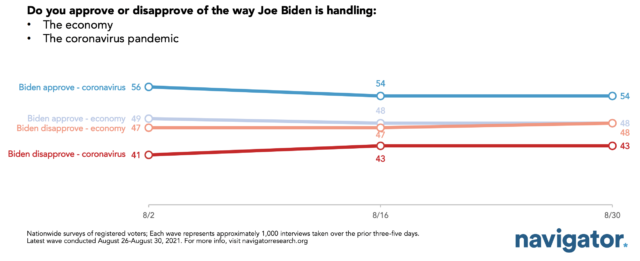
- Despite a decline in Biden’s overall job approval, his ratings on the pandemic and economy are stable.
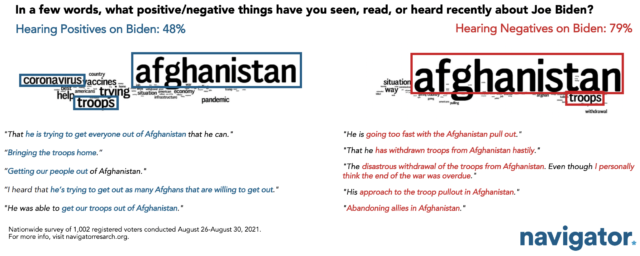
- The situation in Afghanistan has dominated both positive and negative coverage of Biden this week.
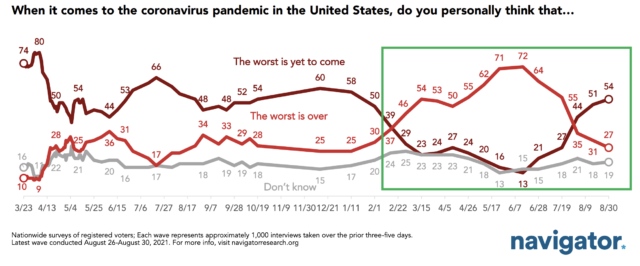
- A growing majority say “the worst is yet to come” in the pandemic, as worries about reopening schools and the Delta variant remain high.
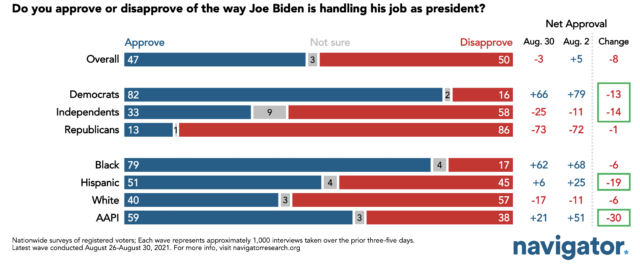
Biden’s Dip in Job Approval Largely Driven by Democrats and Independents
While Biden’s net approval rating has dropped 8 points overall since last month, this drop is most pronounced among Democrats (-13 change in net approval), independents (-14), Hispanic Americans (-19), and AAPI (-30).
Afghanistan Dominated Both the Positive and Negative Conversation Around Biden Over the Past Week
For those hearing at least some positives on Biden, they cite his efforts to get American troops home and his commitment to getting as many Afghans and their families out as possible (many also continue to cite the pandemic); on the negatives, most cite his withdrawing troops too quickly and the abandoning of allies in the region.
Despite Drop in Biden’s Overall Approval, His Ratings on the Pandemic and Economy Remain Stable
On the pandemic, Biden’s approval rating remains at net +11, while his approval on the economy breaks even.
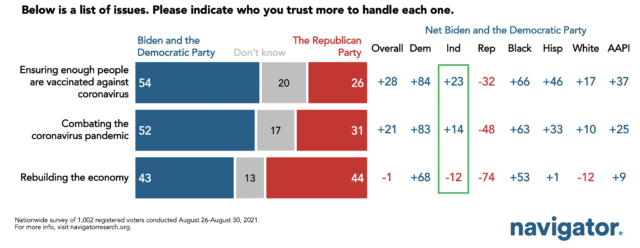
Biden and Democrats Remain Much More Trusted on Vaccines & Pandemic, While Americans Split on Economy
Majorities of Americans trust Biden and Democrats more to ensure enough people are getting vaccinated (54%) and to combat the pandemic (52%), while Americans are divided on who they trust more to handle the economy.
Growing Majority Say the “Worst Is Yet to Come” in the Pandemic
The share saying “the worst is yet to come” is at an all-time high in our tracking in 2021 overall and among Democrats (58%), independents (61%), and Republicans (48%).
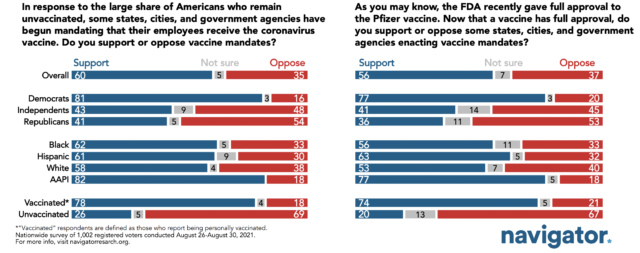
Majorities Support Vaccine Mandates, Whether Framed By Share of Unvaccinated or Recent Full FDA Approval of Pfizer
More than seven in ten vaccinated Americans support vaccine mandates, while just one in five unvaccinated Americans support them.
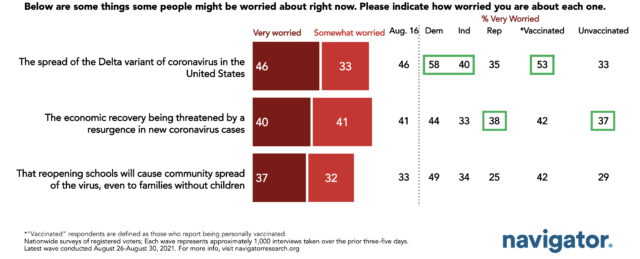
The Delta Variant Continues to Top Americans’ Pandemic Concerns, Followed by the Economic Recovery and Schools
Since August 16th, there has been a 4-point increase in the share who are “very worried” the reopening of schools will cause community spread of the virus.
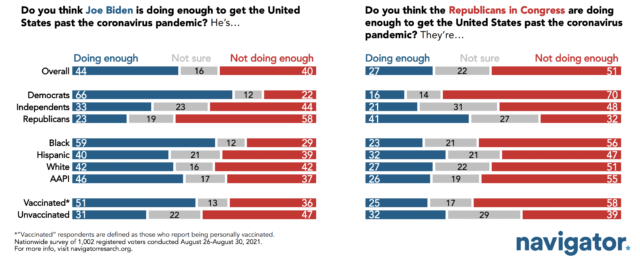
A Plurality Say Biden Is Doing Enough to Get the U.S. Past the Pandemic, While a Majority Say Republicans Are Not
More American believe Biden is “doing enough” than “not doing enough” by 4 points (44% to 40%), while Congressional Republicans are underwater by 24 points (27% “doing enough” to 51% “not doing enough”).