
- Majorities support canceling a portion of student loan debt, including those who have never had any student loan debt.
- The strongest messaging lanes on canceling student loan debt are the current costs of getting a college education and circumstantial factors like the pandemic and inflation.
- Canceling at least a portion of student loan debt increases the view Biden is keeping his campaign promises.
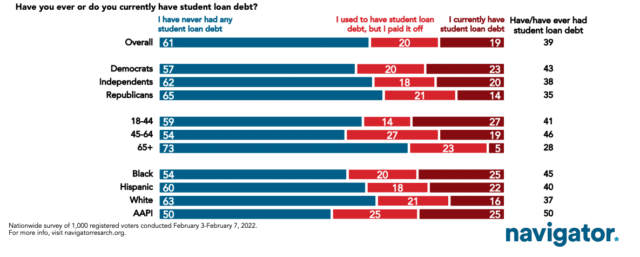
Two in Five Have or Have Had Student Loan Debt; One in Five Currently Have Student Loan Debt
Democrats (43% have/have had student loan debt), 18-44 year-olds (41%), 45-64 year-olds (46%), Black Americans (46%), and AAPI (50%) are most likely to have or have had student loan debt.
- More than one in four 18-44 year-olds report currently having student loan debt.
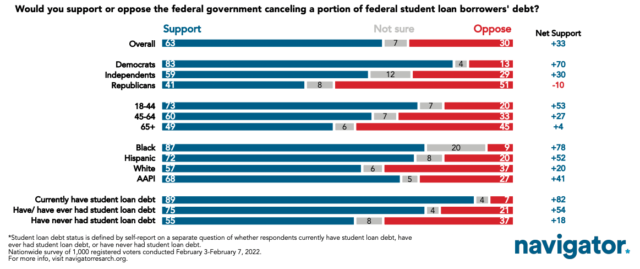
Canceling Some Student Loan Debt Has Broad-Based Support Across Ages, Races, Partisanship, and Debt Status
Three in five Americans support canceling at least a portion of student loan debt, including 55% of those who have never had any student loan debt and 89% of those who currently have student loan debt. Three in five independents (59%) support.
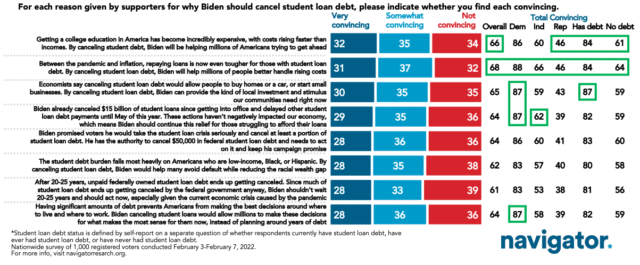
Rising Costs and Circumstantial Factors Like the Pandemic and Inflation Are Best Reasons to Cancel Student Loan Debt
Overall, college being “incredibly expensive” and referring to inflation and the pandemic are the strongest messaging lanes.
- Roughly three in five of those who do not and have never had student loan debt say each message is convincing.
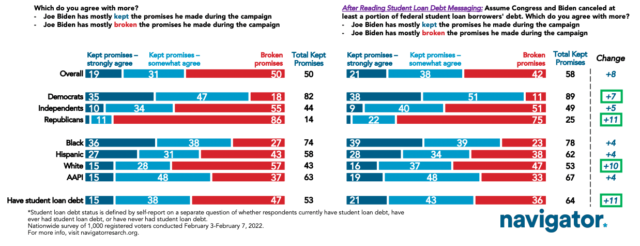
Canceling a Portion of Federal Student Loan Debt Increases Perception Biden Has Kept Campaign Promises
The greatest increases in perceptions that Biden has kept his campaign promises occur among Democrats (+7), Republicans (+11), white Americans (+10), and those who currently have student loan debt (+11).