Poll: Biden and Trump
This Navigator Research report contains polling data on what the public is hearing about former President Trump and President Biden in the news, as well as tracking on whether or not Americans believe Trump committed a crime as president, whether the public thinks he will be convicted of crimes of which he is accused, and how concerning Americans find recent statements by Trump to be, particularly on the issues of democracy and abortion rights.
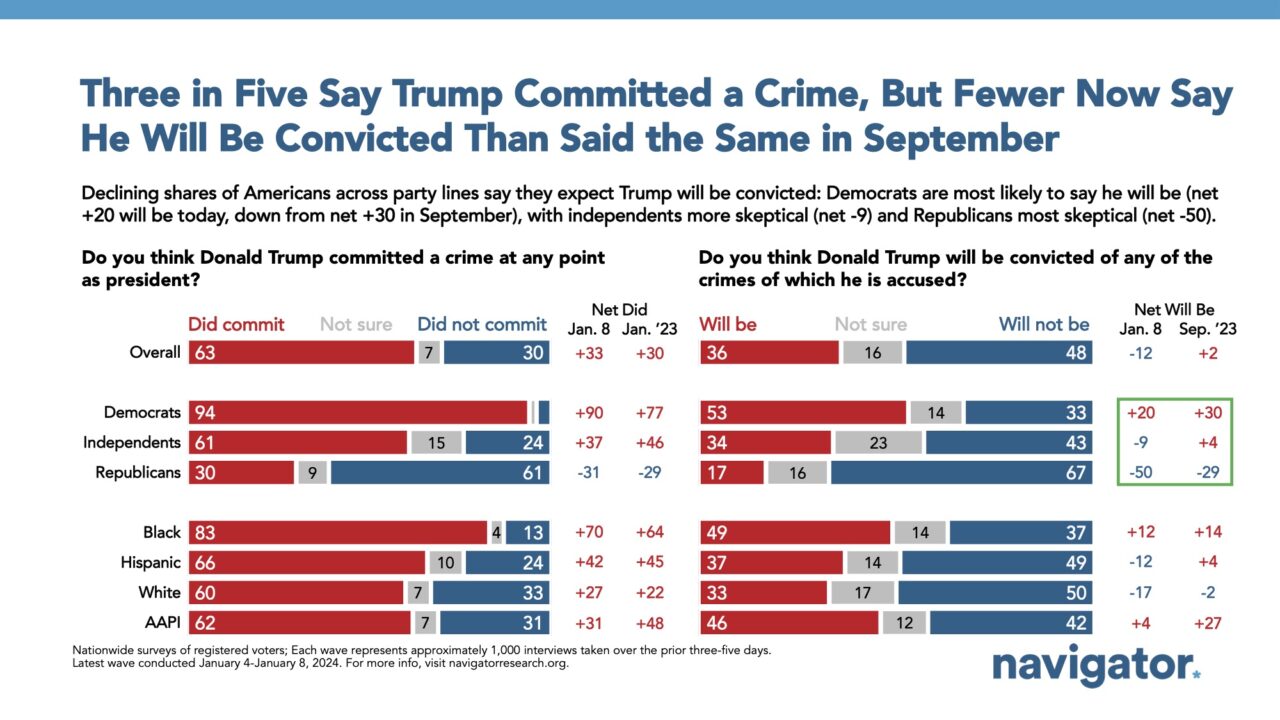
A growing share of Americans – now nearly two in three – say Trump committed a crime as President.
Nearly two in three Americans now believe Trump has committed a crime, a high in Navigator’s tracking; however, only about one in three Americans think he will be convicted of any crimes, the lowest in Navigator’s tracking. By a 33-point margin, 63 percent of Americans believe Donald Trump committed a crime while he was president compared to just 30 percent who do not, up a net 11 points from November 2022. This includes three in five independents who believe Trump committed a crime while president (net +37; 61 percent did commit – 24 percent did not). Among Americans who have unfavorable opinions toward both Trump and President Biden, more than four in five believe Trump has committed a crime (net +71; 82 percent did commit – 11 percent did not).
- At the same time, the share who believe Trump will be convicted of any of the crimes he is accused of has declined since last fall (from net +2 then to net -12 now): only 36 percent believe Trump will be convicted of any crimes of which he is accused, including 34 percent of independents.
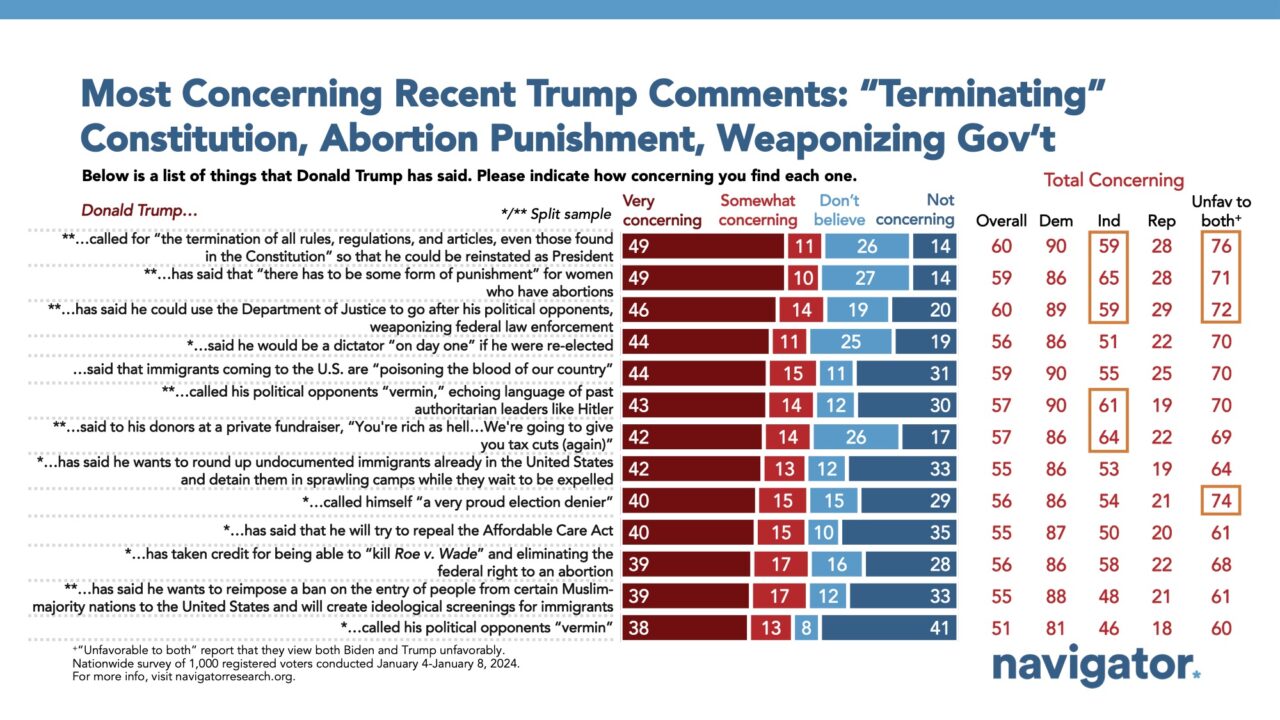
Americans are most concerned by Donald Trump’s anti-democratic statements and statements calling for the punishment for women who have abortions.
Three in five Americans are concerned by Trump recently “calling for ‘the termination of all rules, regulations, and articles, even those found in the Constitution’ so that he could be reinstated as President” (60 percent, including 49 percent of Americans who are “very” concerned by this statement). Similarly, 60 percent of Americans find it concerning that Trump “said he could use the Department of Justice to go after his political opponents, weaponizing federal law enforcement” to be concerning (including 46 percent who are “very” concerned by this statement), and 59 percent of Americans are concerned by Trump previously saying “‘there has to be some form of punishment’ for women who have abortions” (including 49 percent who are “very” concerned by this statement).
- Among Americans who report having unfavorable opinions toward both Trump and President Biden, more than seven in ten Americans find these statements to be concerning, including 76 percent who are concerned by his calling for terminating the Constitution, 72 percent who are concerned by his saying he would use the Department of Justice to go after his political opponents, 71 percent who are concerned by his statement that women who have abortions should receive some form of punishment, as well as 74 percent who also find it concerning that he has said he wants to try to repeal the Affordable Care Act again.
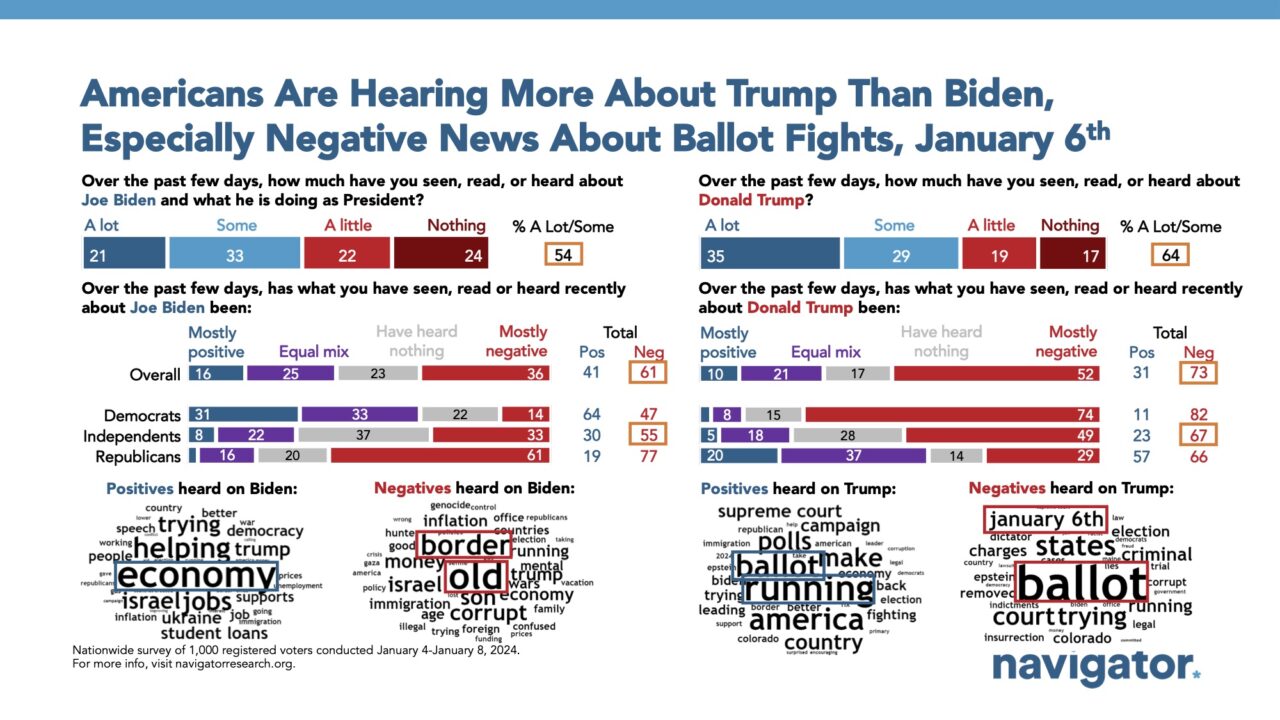
By double digits, more Americans are hearing more news about Donald Trump than President Biden, and also hearing more negative news about Trump than Biden.
In this survey — which was fielded in the first week of January — two in three Americans reported hearing at least some about Donald Trump in the news (64 percent), while a smaller majority reported hearing about President Biden in the news (54 percent). Most say that what they have seen, read, or heard about Donald Trump over the past few days had been mostly negative (52 percent) with an additional 21 percent who had heard a mix of negative and positive news, while only 36 percent of Americans saying the news they had consumed recently about Joe Biden had been negative, with an additional 25 percent who had heard a mix of negative and positive news.
- When describing the most common negative things they have seen, read, or heard recently about President Biden, Americans most frequently used the words “old” and “border.” When describing the negative news they have been hearing about Donald Trump, Americans most frequently use the words “ballot,” “states,” and “January 6th.”