
Poll: Child Tax Credit
This Navigator Research report contains polling data on perceptions of government and what Americans say matters most about to them about the attributes they want to see in their elected officials. Additionally, this release looks at public support for improving and expanding the Child Tax Credit.
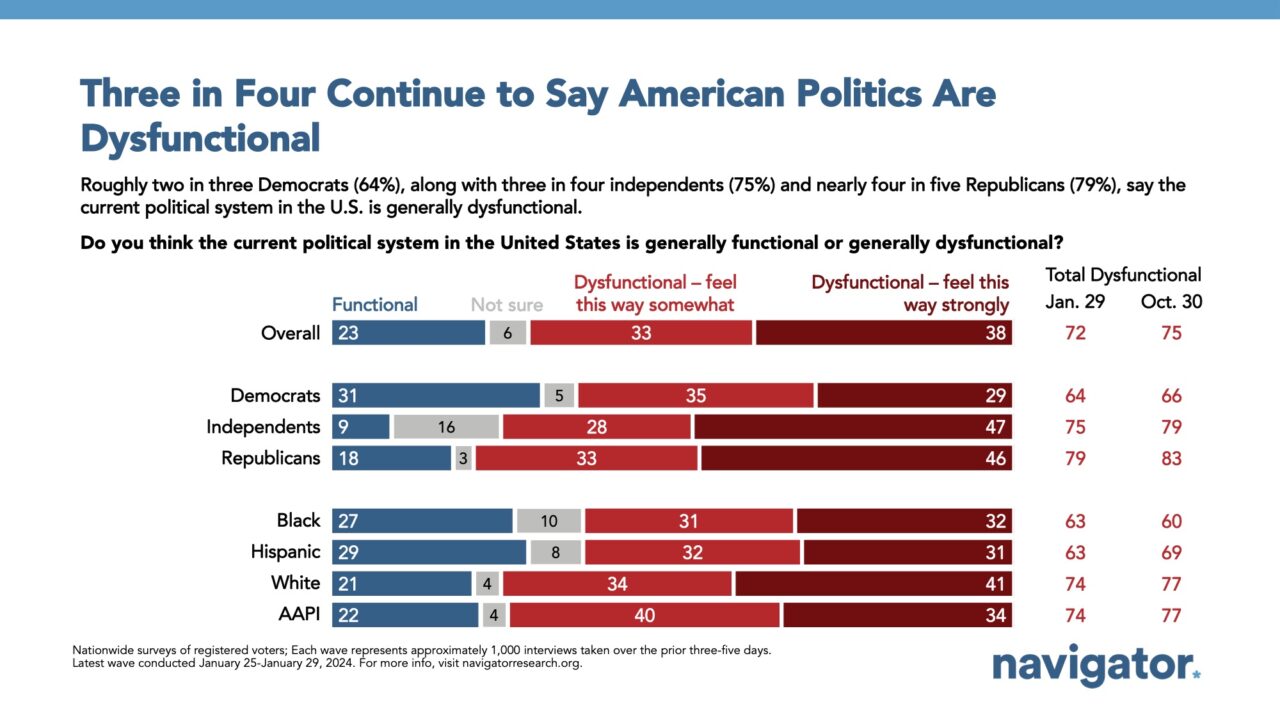
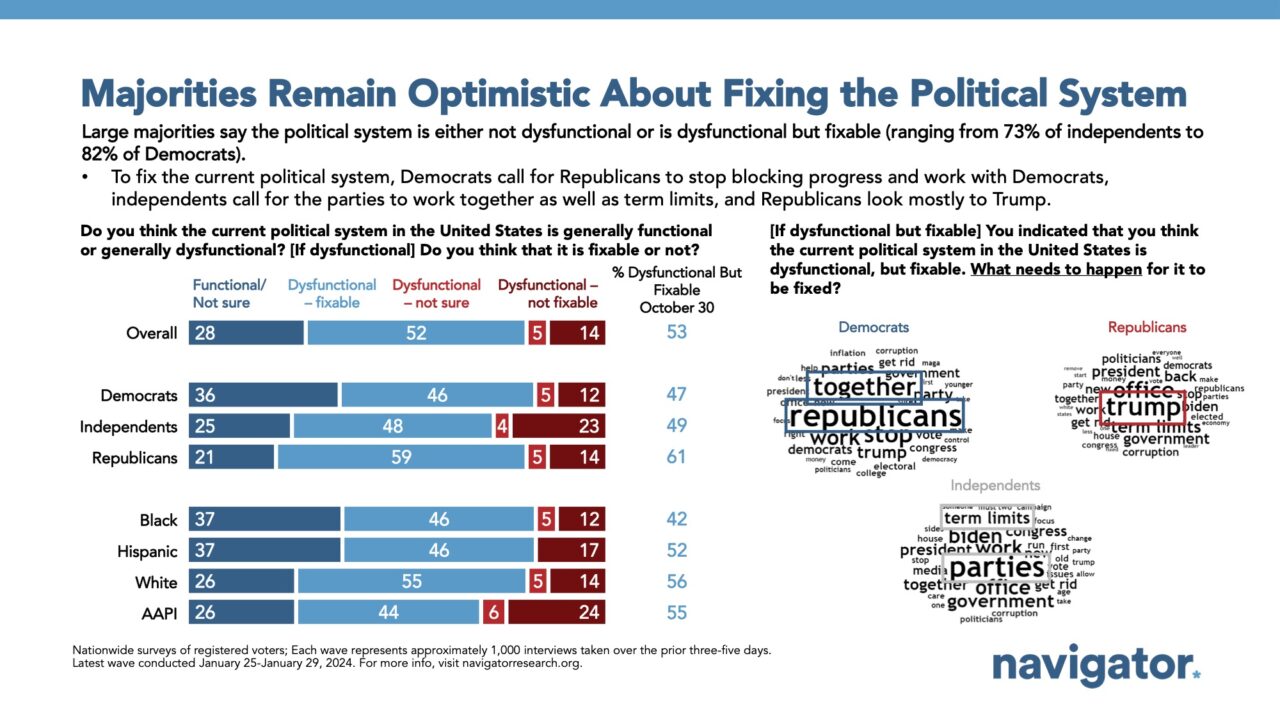
Majorities continue to say the American political system is dysfunctional, but fixable.
Three in four Americans think the current political system in the United States is dysfunctional; however, a majority believe that while it is dysfunctional, it is fixable. By a 49-point margin, most Americans characterize the current political system in the United States as dysfunctional (23 percent functional – 72 percent dysfunctional), including nearly two in five Americans who say they feel strongly that it is dysfunctional. Majorities agree across racial and partisan subgroups, with the slightly higher shares of Republicans and independents saying the current political system in the United States is dysfunctional (75 percent and 79 percent, respectively).
- Yet, a majority of Americans — 52 percent — believe that dysfunction in the political system is fixable. When asked in an open-ended follow-up question what could be done to fix dysfunction, Democrats tended to focus more on the need for Republicans to stop blocking progress, independents were drawn toward solutions like term limits and criticisms of both parties, and Republicans were most likely to cite “Trump” as the solution.
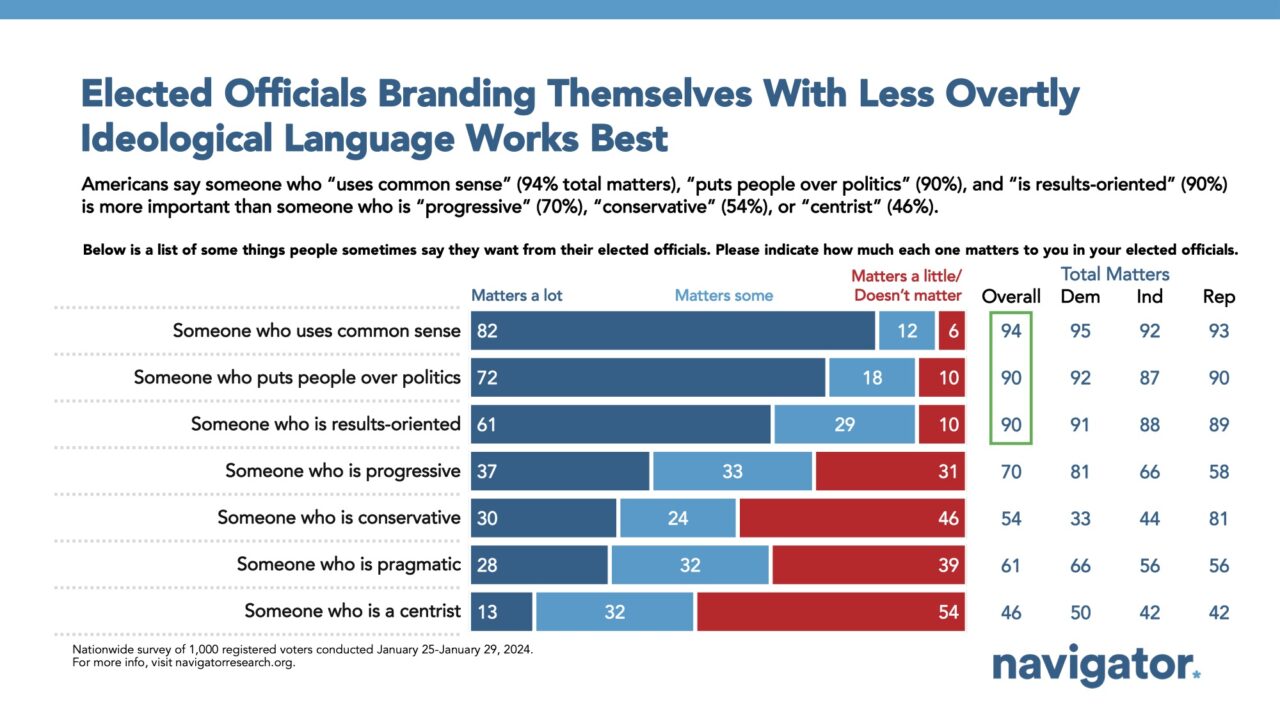
Using common sense, putting people over politics, and being results-oriented are the attributes Americans think matter most in their elected officials.
Among a list of descriptors shown to respondents of characteristics that might matter for them to see in an elected official, at least nine in ten Americans select “someone who uses common sense” (94 percent matters at least some to them, including 95 percent of Democrats, 93 percent of Republicans, and 92 percent of independents) and “someone who puts people over politics” (90 percent matters at least some to them). This includes 82 percent who said “someone who uses common sense” matters “a lot” to them and 72 percent who said “someone who puts people over politics” matters “a lot” to them.
- While being progressive or conservative matters at least some to Americans, a significantly smaller share say these descriptors matter a lot. “Someone who is progressive” matters to 70 percent of Americans (37 percent matters a lot, 33 percent matters some), while 54 percent say “someone who is conservative” matters to them (30 percent matters a lot, 24 percent matters some).
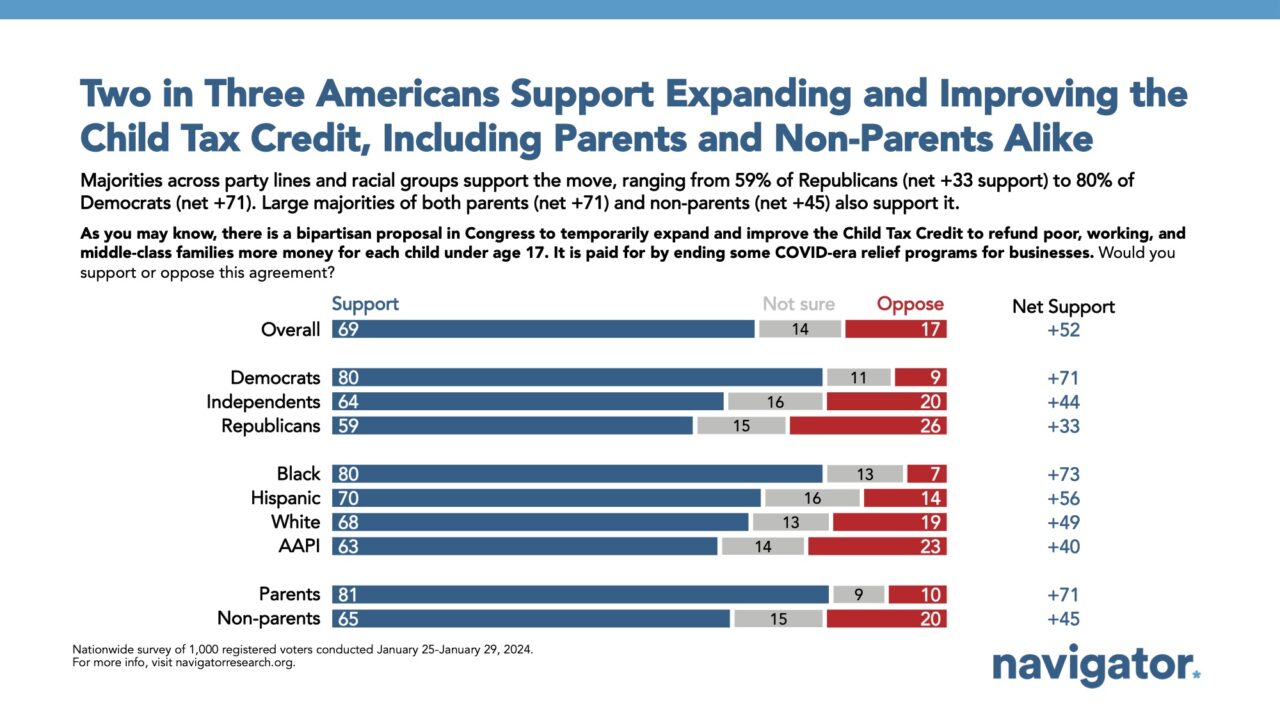
Seven in ten Americans support improving and expanding the Child Tax Credit.
When framed as “…a bipartisan proposal in Congress to temporarily expand and improve the Child Tax Credit to refund poor, working, and middle-class families more money for each child under age 17… paid for by ending some COVID-era relief programs for businesses,” net support for improving and expanding the Child Tax Credit is 52 points above water (69 percent support – 17 percent oppose). This includes majorities across partisanship, including four in five Democrats (net +71; 80 percent support – 9 percent oppose), nearly two in three independents (net +44; 64 percent support – 20 percent oppose), and about three in five Republicans (net +33; 59 percent support – 26 percent oppose). Four in five Americans who are parents are supportive of expanding and improving the Child Tax Credit (net +71; 81 percent support – 10 percent oppose), though about two in three non-parents also express support (net +45; 65 percent support – 20 percent oppose).
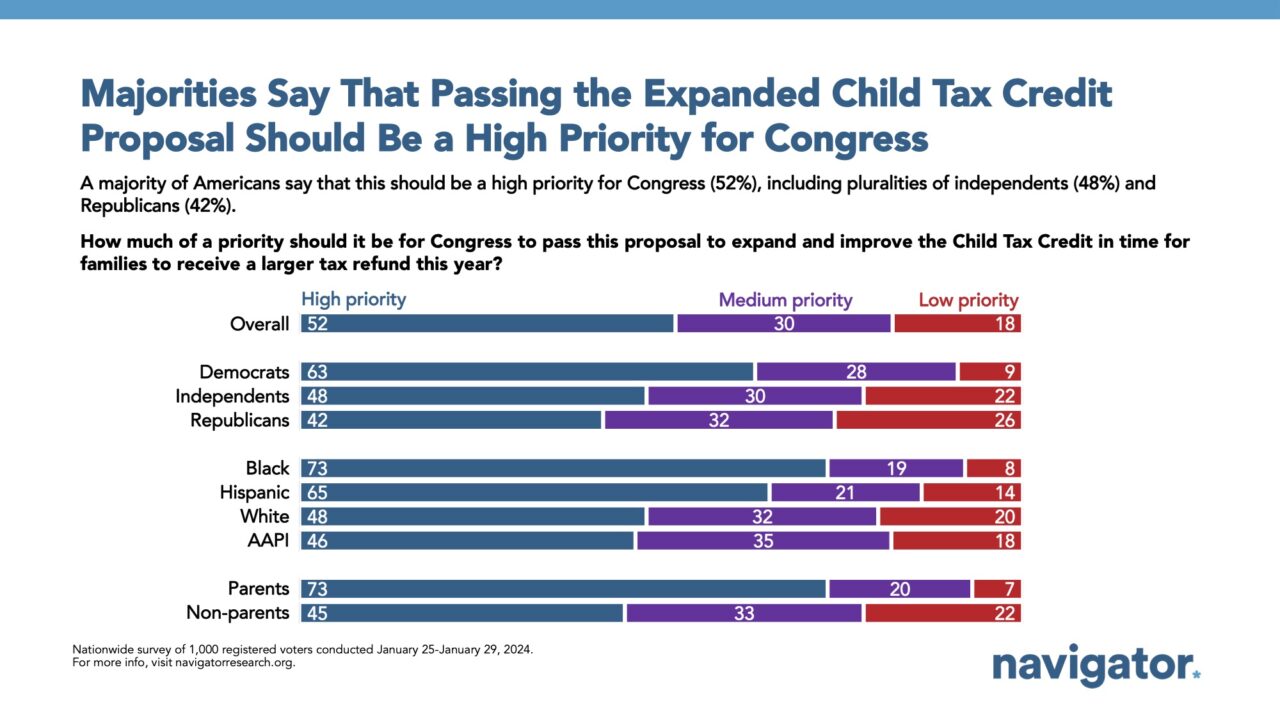
- A majority of Americans believe that passing this proposal to expand and improve the Child Tax Credit in time for families to receive a larger tax refund this year is a high priority (52 percent), with an additional 30 percent who say this is at least a medium priority.
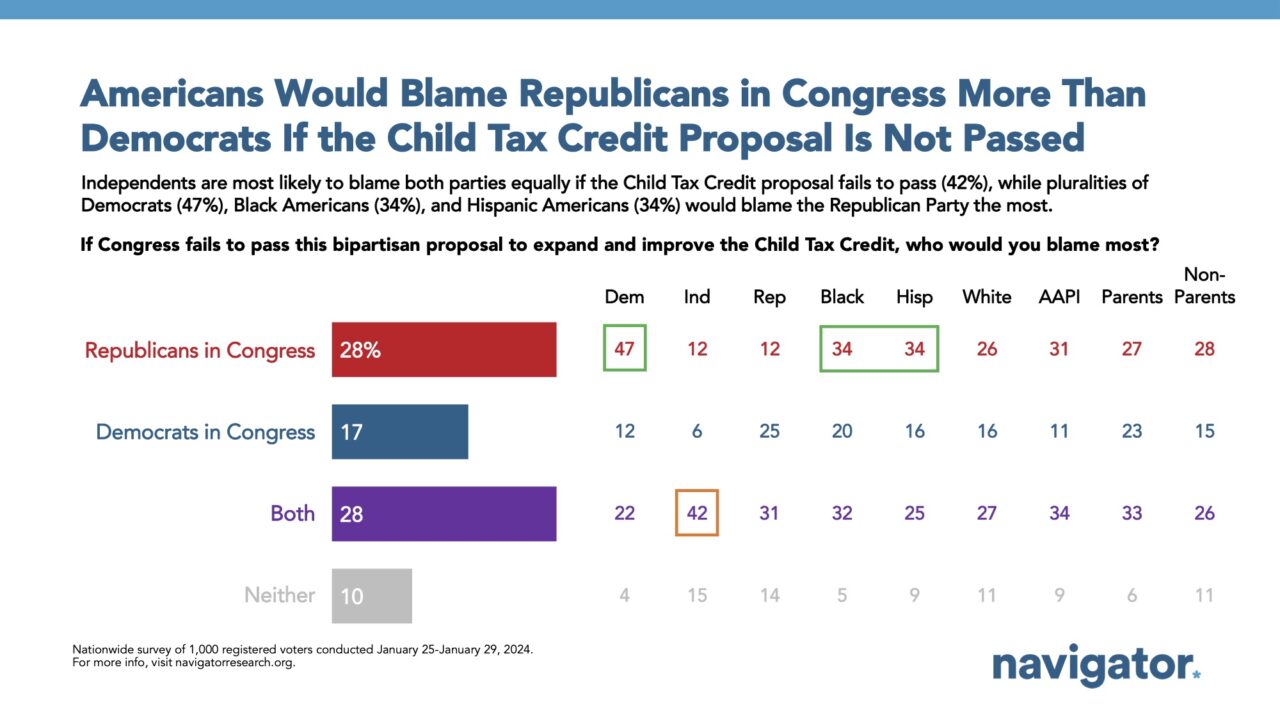
- If the current proposal to expand and improve the Child Tax Credit does not pass, more Americans would blame Republicans (28 percent) than Democrats in Congress (17 percent), while an additional 28 percent say they would blame both parties.