
Poll: The Academy Awards
This Navigator Research report contains polling data on Americans’ favorite movies from this past year, which nominees for the Academy Award for Best Picture Americans have seen, and which movie Americans think should win the Oscar for Best Picture.
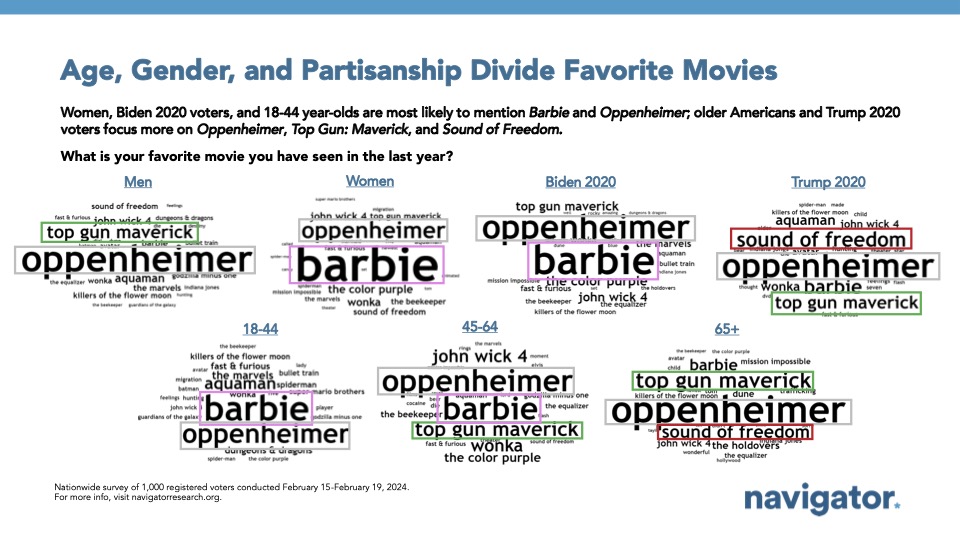
Barbie and Oppenheimer dominate the list of Americans’ favorite movies of the year.
While Barbie and Oppenheimer are most commonly cited as the favorite films Americans have seen this year, several films not nominated for Best Picture this year also emerged as favorites, including Top Gun: Maverick (particularly among Americans over the age of 45, men, and Trump 2020 voters) and The Sound of Freedom (particularly among Americans over the age of 65 and Trump 2020 voters). Women, Biden 2020 voters, and Americans under the age of 45 are most likely to mention Barbie and Oppenheimer as their favorite movies from the past year.
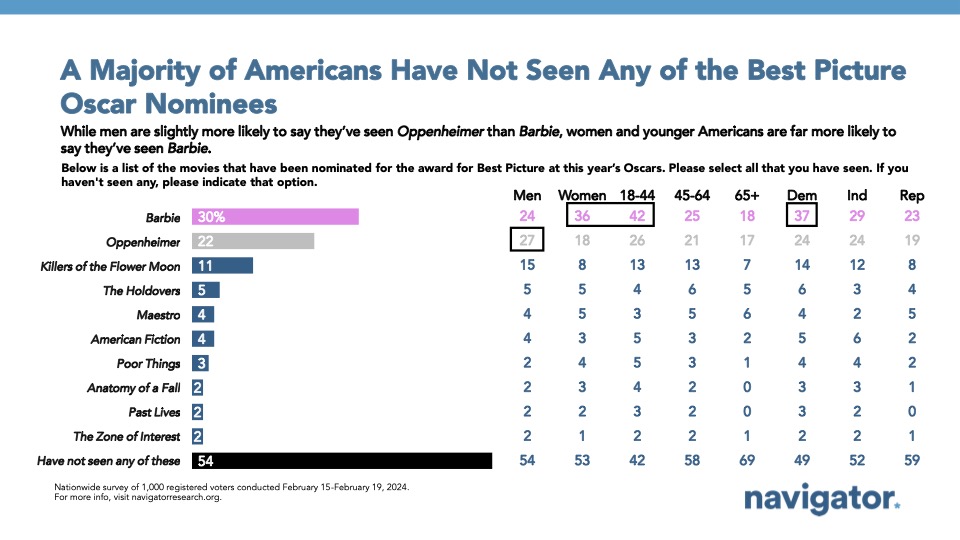
Of the movies nominated for Best Picture at this year’s Academy Awards, Americans are most likely to have seen Barbie, Oppenheimer, and Killers of the Flower Moon.
Nearly one in three Americans say they have seen Barbie (30 percent), one in five have seen Oppenheimer (22 percent), and one in ten have seen Killers of the Flower Moon (11 percent). A majority of Americans have not seen any of the films nominated for Best Picture (54 percent), including two in three Americans over the age of 55 (66 percent).
- A majority of Americans under the age of 35 have seen Barbie (51 percent) compared to only three in ten younger Americans who have seen Oppenheimer (30 percent).
- Men are narrowly more likely to have seen Oppenheimer (27 percent) than they are to have seen Barbie (24 percent Barbie), whereas women are significantly more likely to have seen Barbie (36 percent) than Oppenheimer (18 percent).
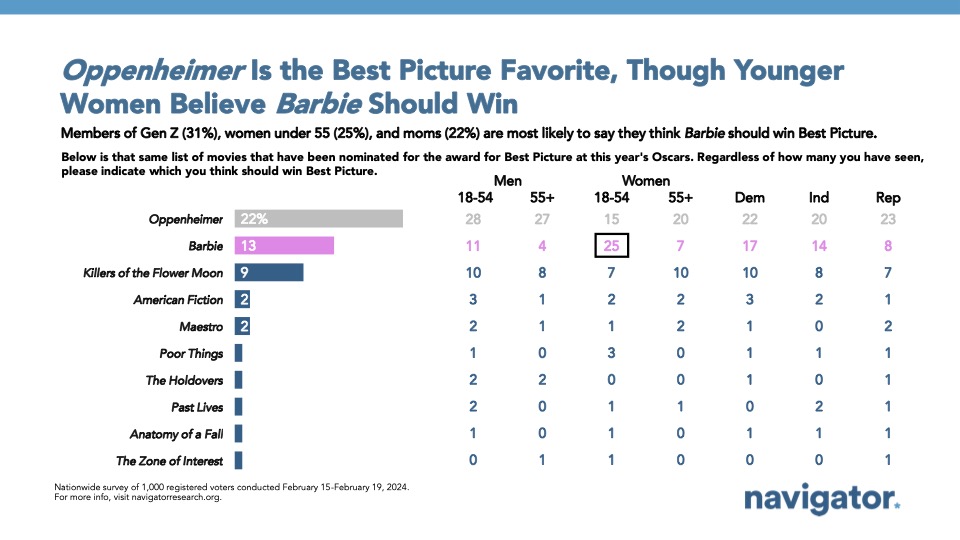
Although Americans are more likely to have seen Barbie, a plurality say Oppenheimer should win Best Picture.
One in five say Oppenheimer should win Best Picture (22 percent), 9 points higher than the share who say Barbie should win (13 percent). Women under the age of 55 are more inclined to believe Barbie should win Best Picture (25 percent) than Oppenheimer (15 percent). Men of all ages believe Oppenheimer should win Best Picture (28 percent), beating out Barbie (8 percent) by 20 points.
- By 8 points, moms say Barbie (22 percent) should win Best Picture over Oppenheimer (14 percent); dads say Oppenheimer should win Best Picture (34 percent) compared to just 7 percent who say the same of Barbie.
- One in ten Americans believe Killers of the Flower Moon should win Best Picture (9 percent), performing the best among Democratic men (13 percent).