Poll: Government Shutdown
This Navigator Research report covers awareness of and blame for the government shutdown.
Shutdown News
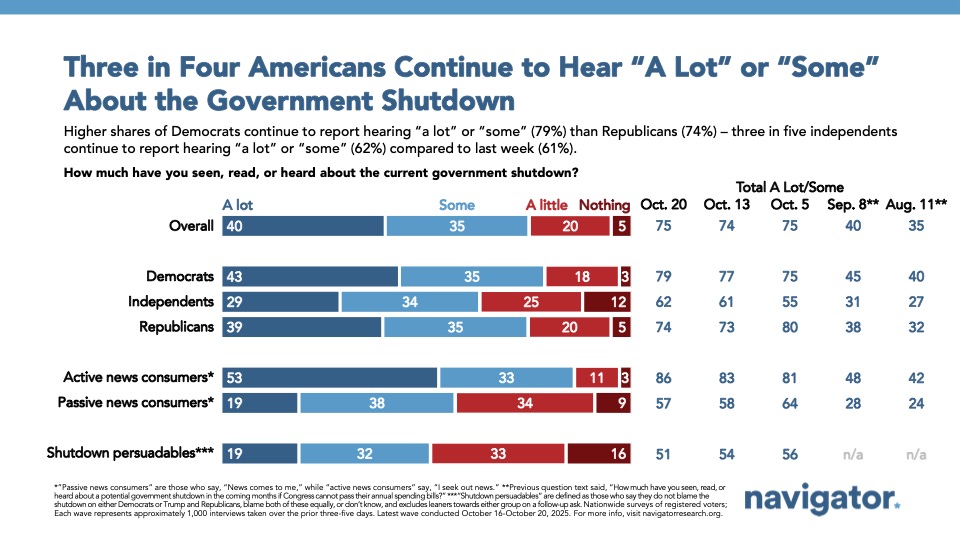
The government shutdown continues to dominate the negative news Americans are hearing about President Trump, as well as Democrats and Republicans in Congress. Three quarters (75 percent) are hearing at least some news about the government shutdown, slightly lower among independents (62 percent) and passive news consumers (57 percent).
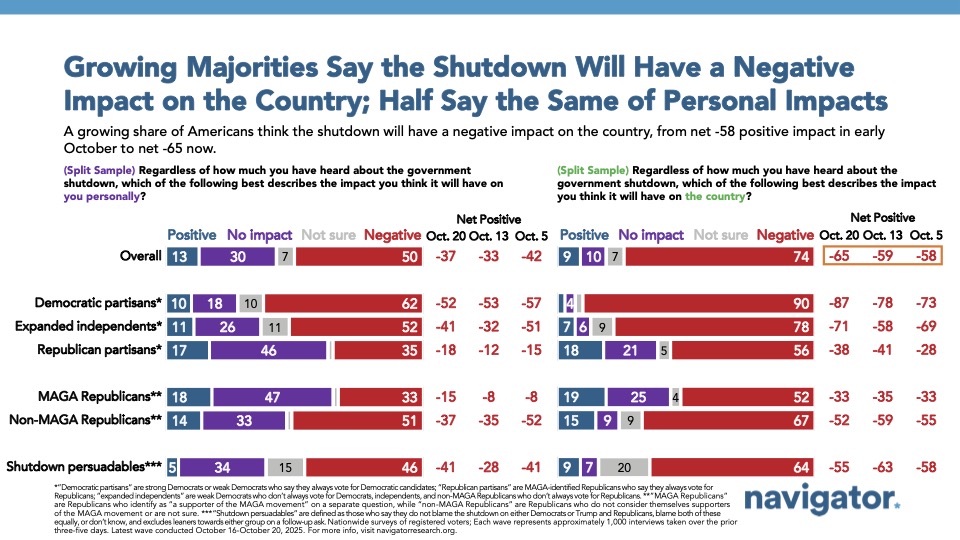
Half of Americans believe the government shutdown will have a negative impact on them personally, up from 42 percent last week. Even more (74 percent) believe it will have a negative impact on the country.
Shutdown Blame
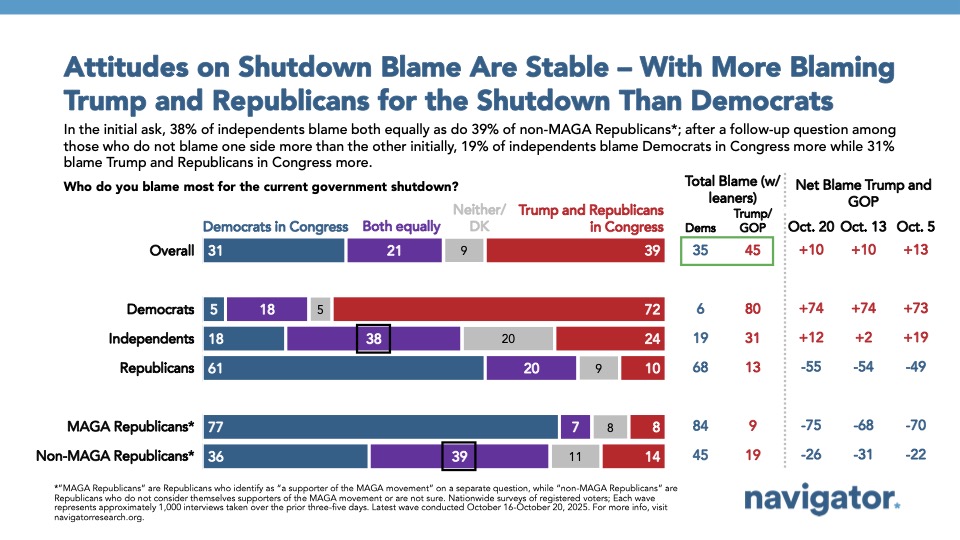
By a 10-point margin, Americans blame Donald Trump and Republicans in Congress (45 percent – 35 percent) for the government shutdown. The margin is unchanged from our tracking last week.
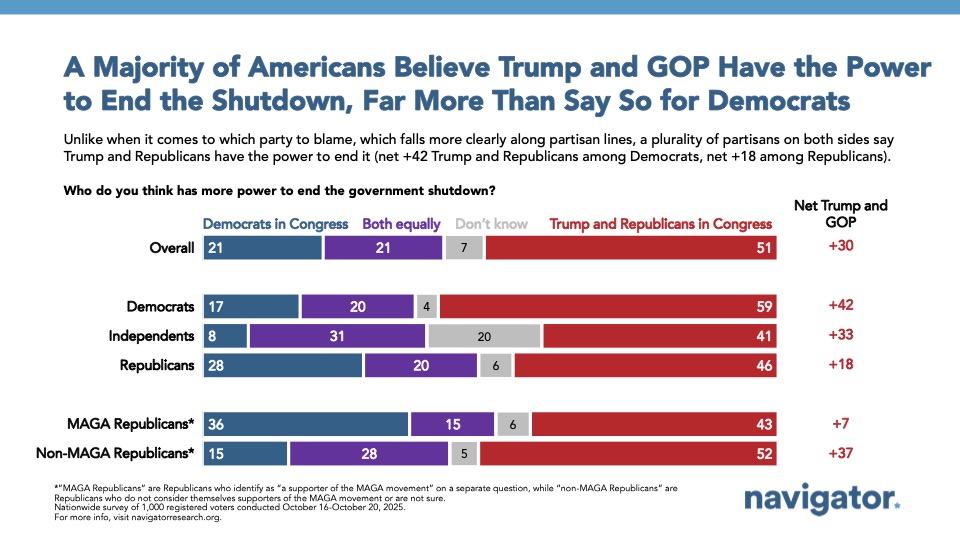
A plurality believe Trump and Republicans in Congress have the power to end the shutdown over Democrats in Congress, though a third say both have equal power to end it. When forced to choose between Trump and Republicans or Democrats, a majority say Trump and Republicans have the power to end it (51 percent – 21 percent).
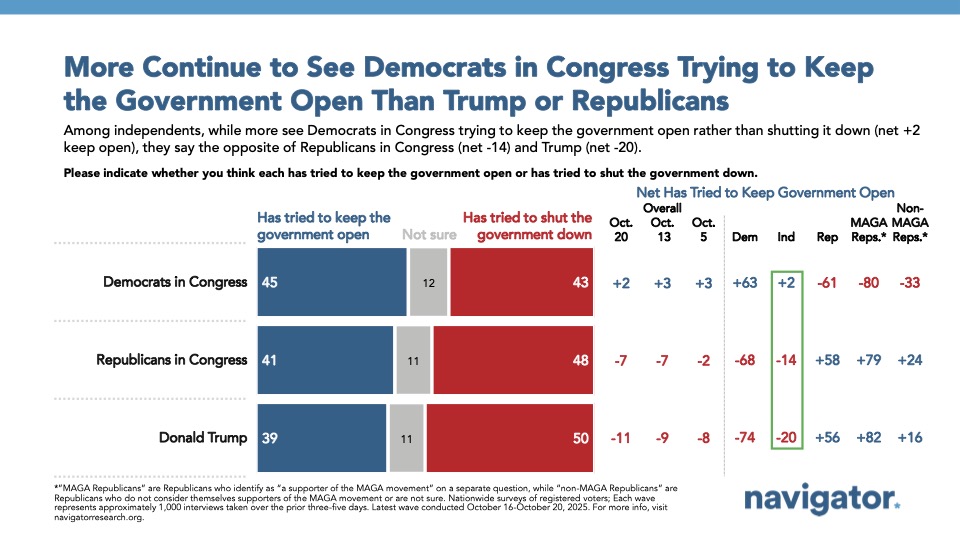
Asked who is trying to keep the government open vs. shut it down, more cast blame on Trump and Republicans in Congress than on Democrats in Congress. Slightly more say Democrats are trying to keep the government open (+2), while more say Republicans in Congress (-7) and Trump are trying to keep it shut (-11). While this is a marginal shift from last week, Americans are more likely now than three weeks ago to say Republicans in Congress and Trump have tried to shut the government down.
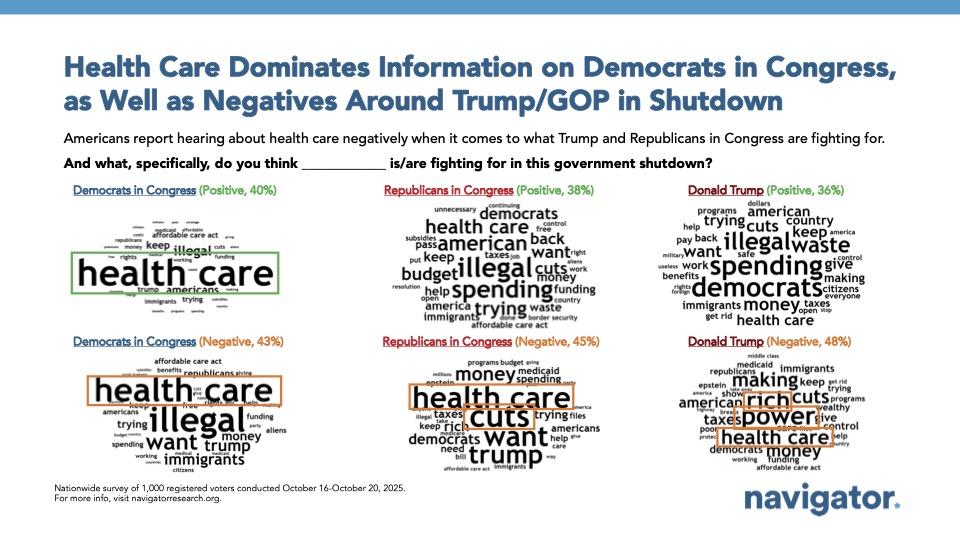
Yet both parties’ motivation for a shut down are viewed negatively. By 3 points, Americans have a negative view of what Democrats in Congress are fighting for in the shutdown. Favorable views are dominated by Democrats’ position on health care.
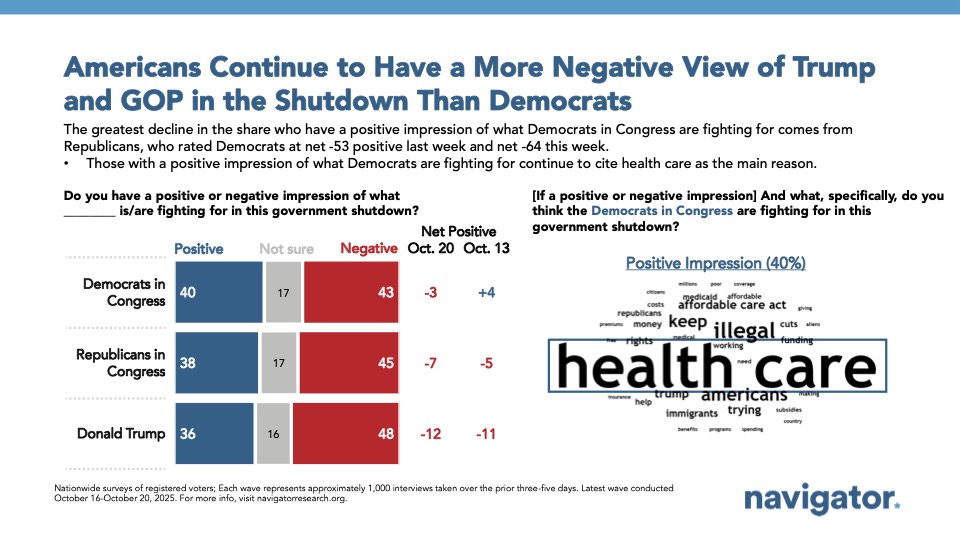
By 7 points, Americans have a negative view of what Republicans in Congress are fighting for. Those views are also dominated by health care – specifically cuts.
Donald Trump fares worse than either party in Congress on this question. By a 12-point margin, half (48 percent) have a negative view of what Donald Trump is fighting for in the shutdown. Negative views are dominated by “rich,” “power,” and “ health care cuts.”
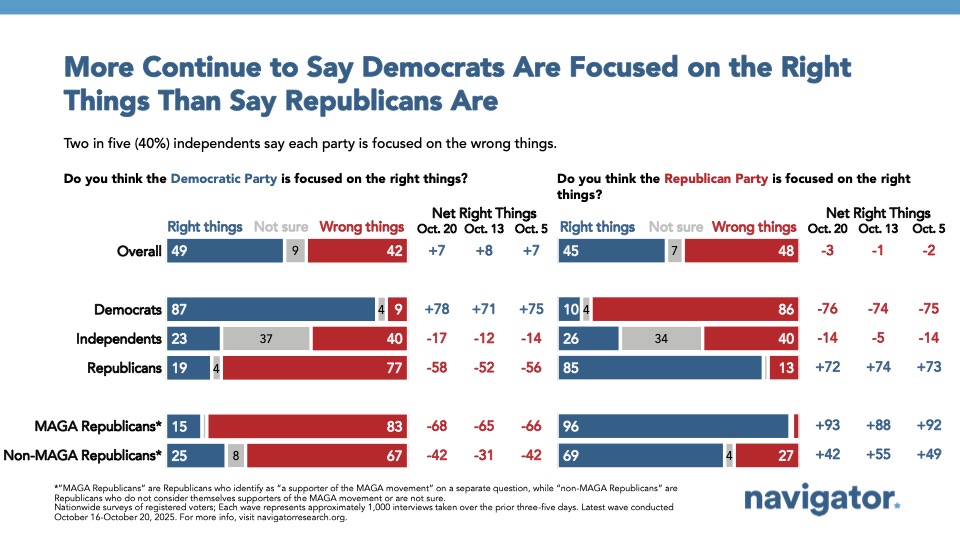
When asked about priorities, more believe Democrats in Congress are focused on the right things by 7 points (49 percent right things – 42 percent wrong things), while Republicans in Congress are underwater on the same measure by 3 points (45 percent right things – 48 percent wrong things). A plurality of independents think both Democrats and Republicans are focused on the wrong things.
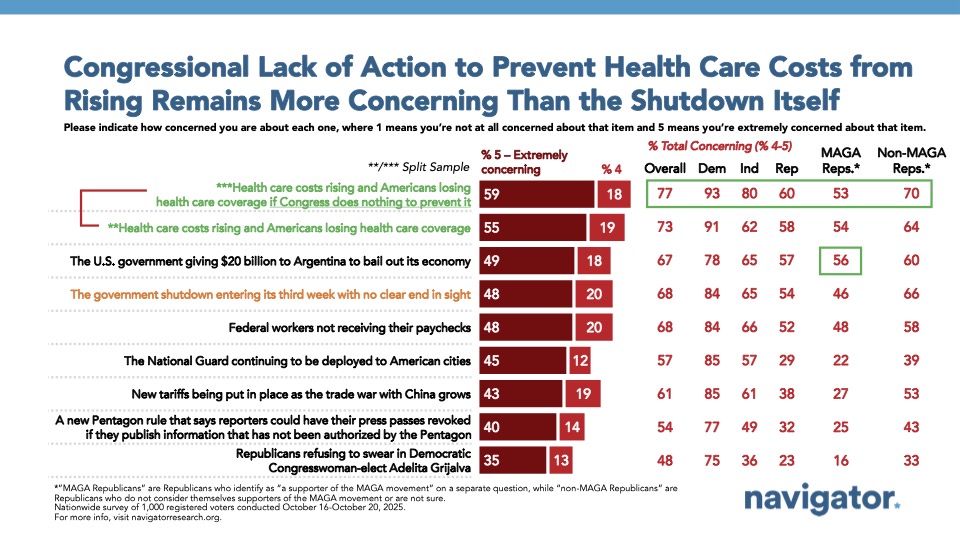
Of Everything Going On Right Now, Health Care Is Top Concern
Among a list of things Americans might be concerned about, they are most concerned about health care costs rising and Americans losing health care coverage if Congress does nothing to prevent it. This concern is shared by majorities across party lines, including 60 percent of Republicans.
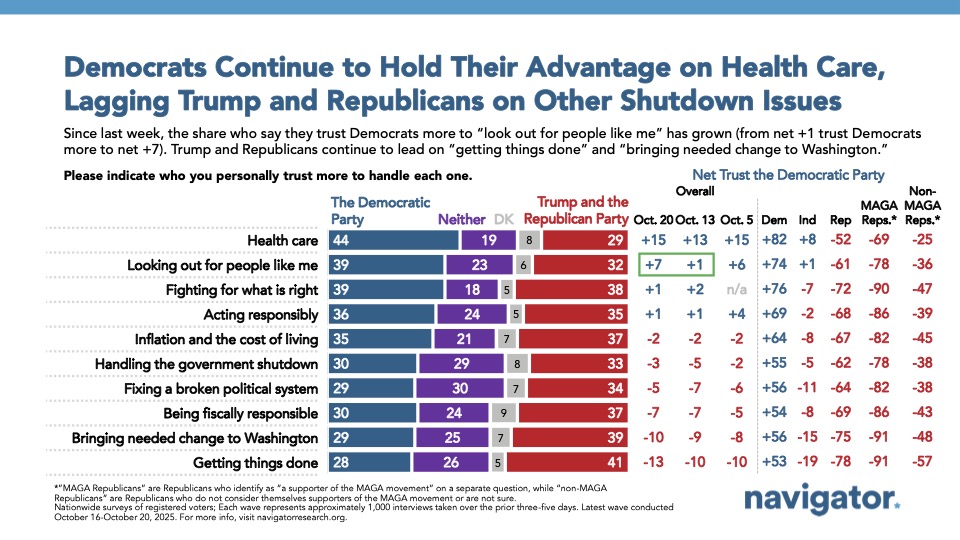
At a time when Democrats are somewhat less trusted than Republicans on a variety of traits, Democrats remain trusted on health care by 15 points.
More say Trump and Republicans should compromise with Democrats than the reverse. By 28 points (57 percent – 29 percent) Americans say Trump and Republicans should compromise with Democrats in Congress. But just by 10 points do Americans say Democrats should compromise with Trump and Republicans.
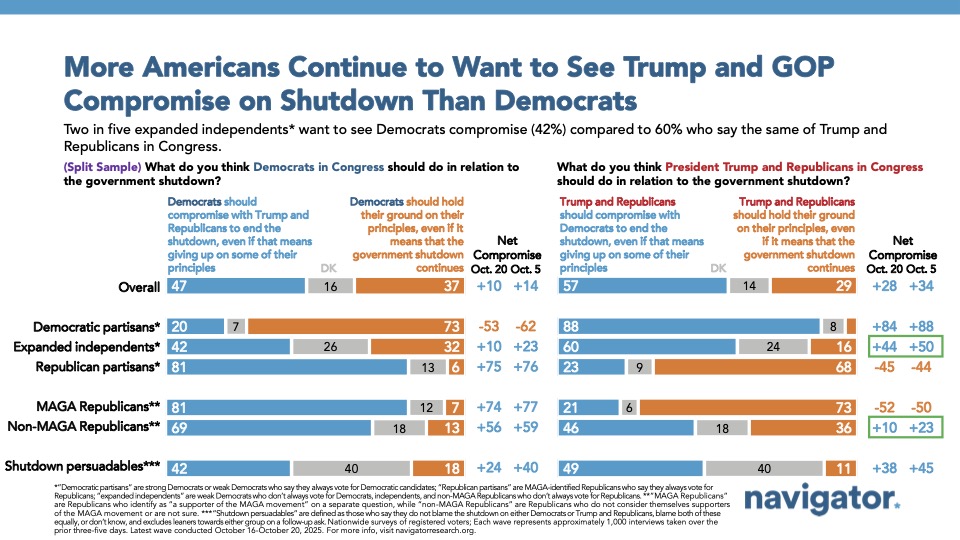
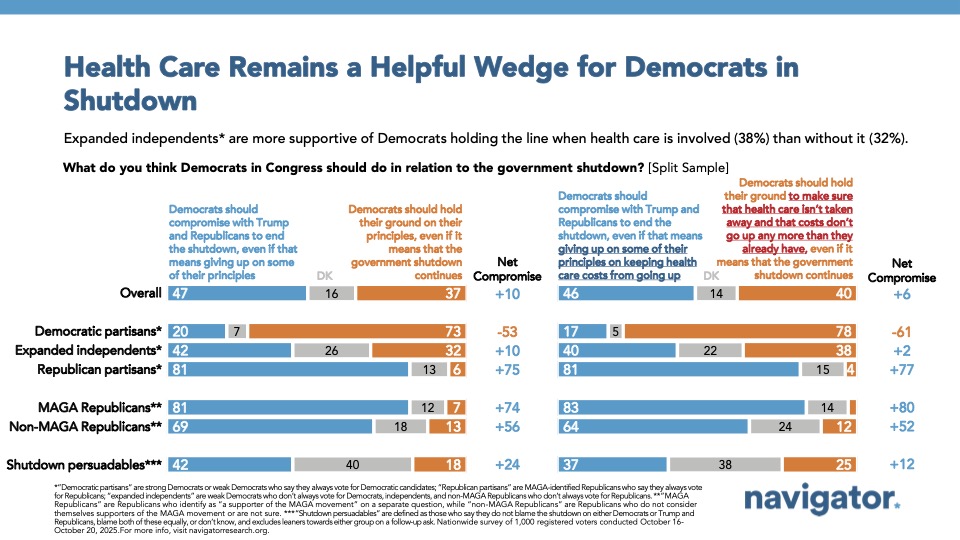
Asked whether Democrats in Congress should compromise to end the shutdown or hold to their principles, Americans say Democrats should compromise by 10 points.
Democrats should compromise with Trump and Republicans to end the shutdown, even if that means giving up on some of their principles.
Democrats should hold their ground on their principles, even if it means that the government shutdown continues.
The Toll on Trump
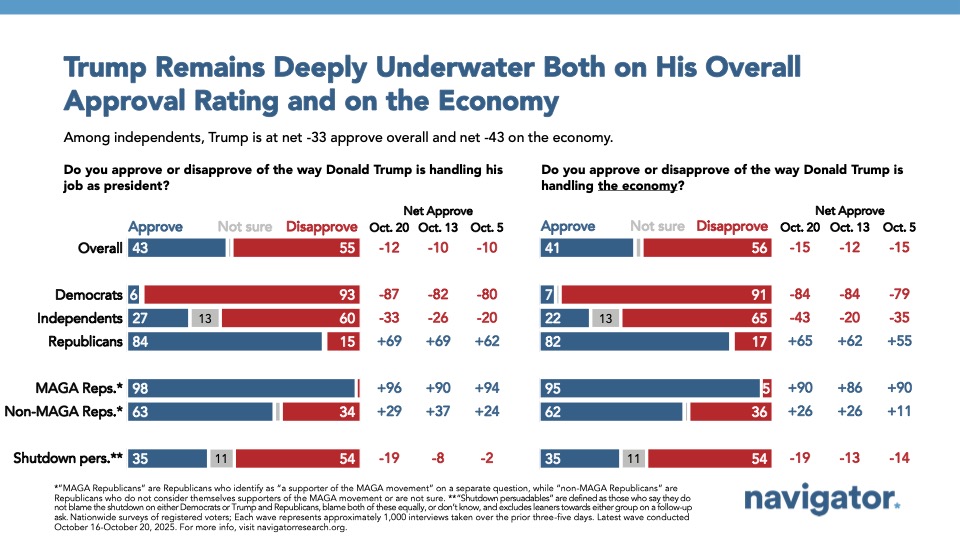
As the shutdown continues, President Trump’s overall approval rating (-12) and economic job approval (-15) remain underwater, nearly identical to where his ratings were two weeks ago.
Economic sentiment also remains consistently negative, with 59 percent feeling uneasy about their personal financial situation and 68 percent rating the economy negatively.