Today’s Navigator Research special report concerns one of the most important questions in politics: who do you trust? Pulling from Navigator’s longitudinal data, this report details how Americans’ trust in each major political party has shifted over the course of President Trump’s second term. Overall, these results suggest an improved environment for the Democratic Party – albeit one also demonstrating the public’s significant distrust with both parties.
Health Care
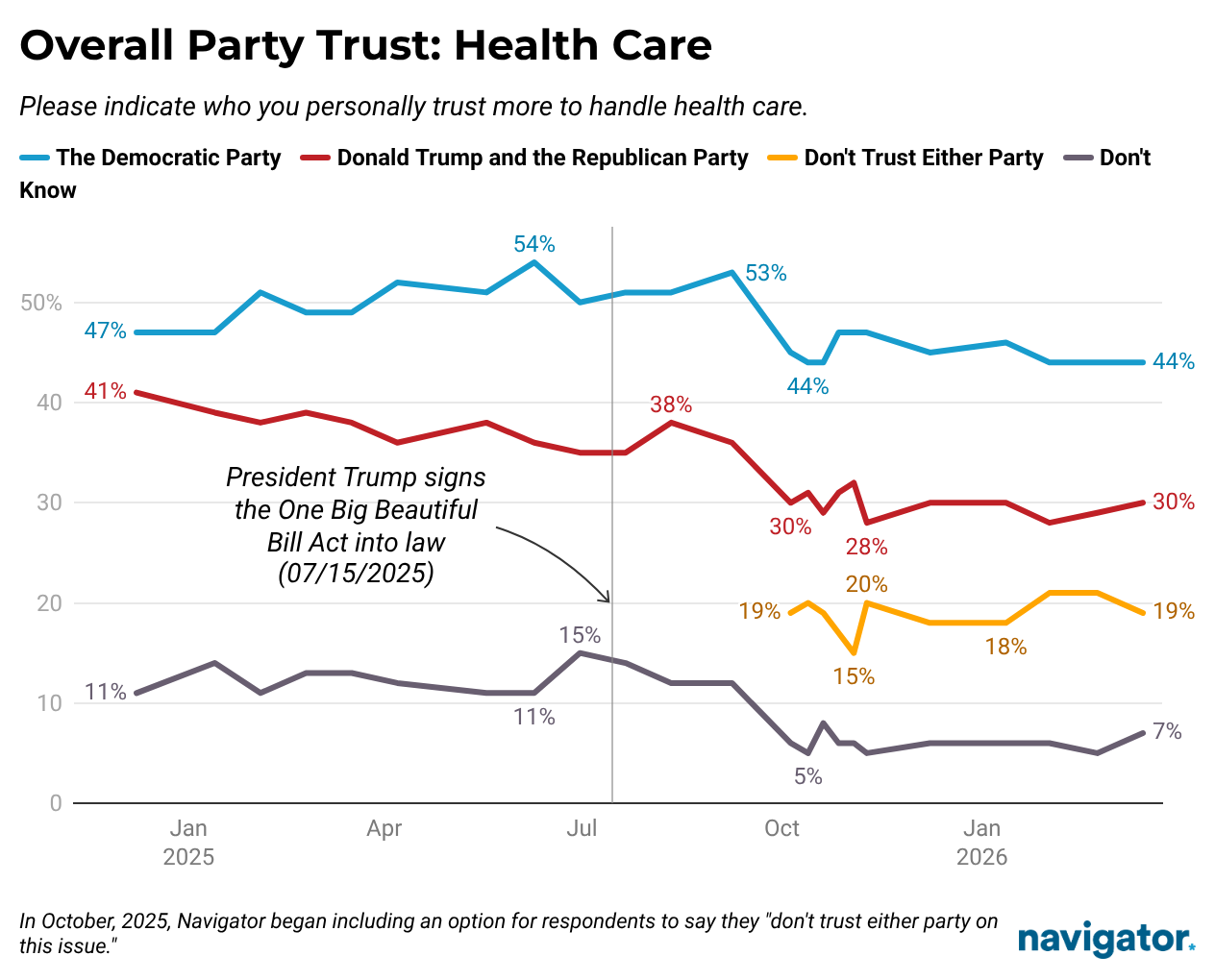
Democrats enter the conversation on health care with a clear advantage on party trust. Since December 2024, Americans have remained more trusting of the Democratic Party than President Trump and the Republican Party to handle health care. Trust in the Democratic Party on the issue peaked in June 2025, during the height of the health care debate surrounding the One Big Beautiful Bill Act, with 54% of Americans reporting more trust in the Democratic Party. In October 2025, when Navigator Research began providing respondents with a “don’t trust either party” option in surveys, trust in both parties fell (-8% for Democrats, -6% for Republicans). Today, nearly one in five Americans say they do not trust either party (19%).
Inflation and the Cost of Living
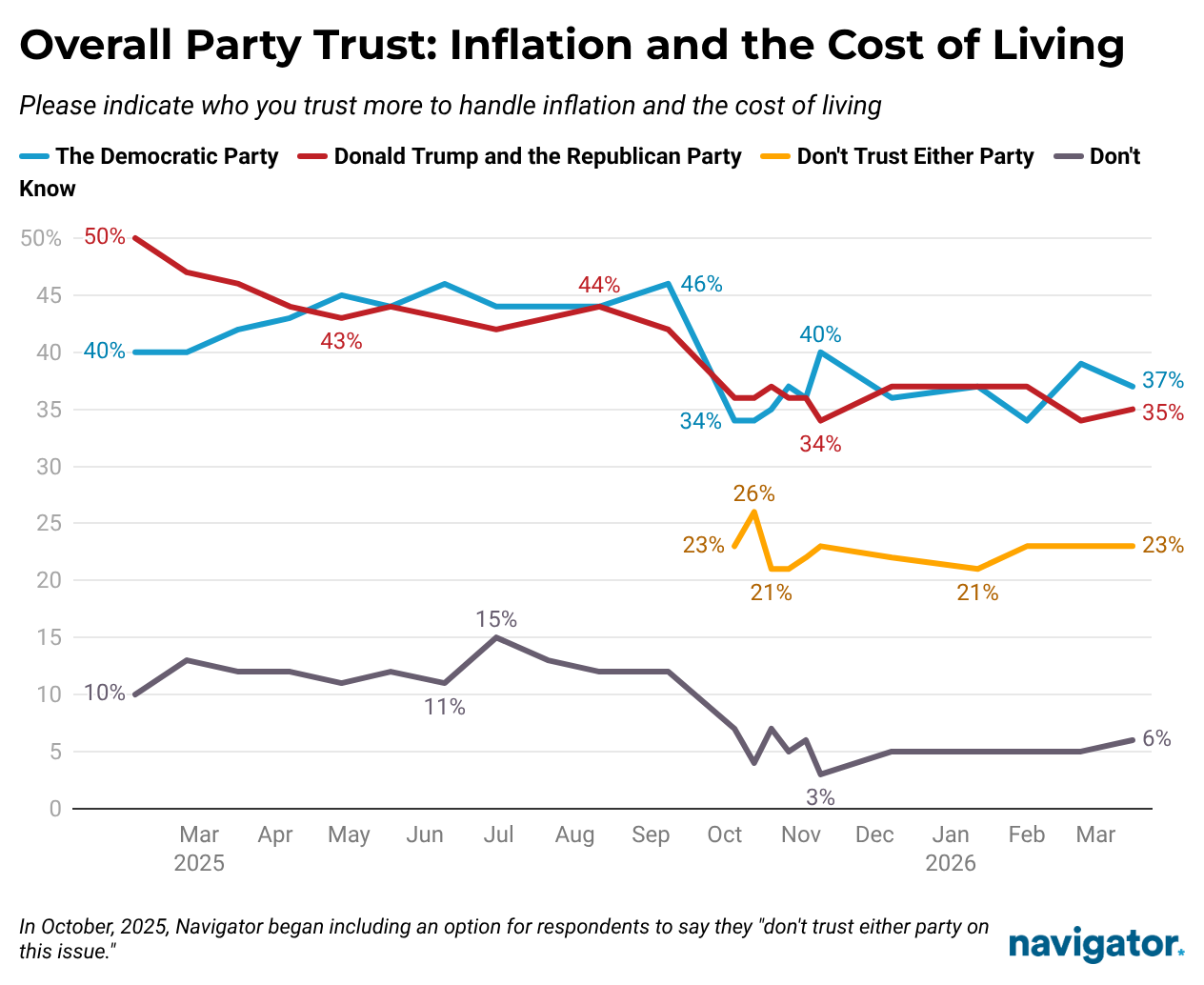
While more Americans reported greater trust in President Trump and the Republican Party on handling inflation and the cost of living in February 2025 (50% trusted Republicans – 40% trusted Democrats), since April 2025 party trust has been roughly even, with the parties trading narrow month-to-month leads in trust.
After Navigator allowed respondents to say they do not trust either party on the issue, overall trust declined significantly for both parties. The month the change was made, trust in the Democratic Party dropped 12% and trust in the Republican Party dropped 8%. This aligns with Navigator-hosted focus groups where many participants express frustration and disappointment with both political parties.
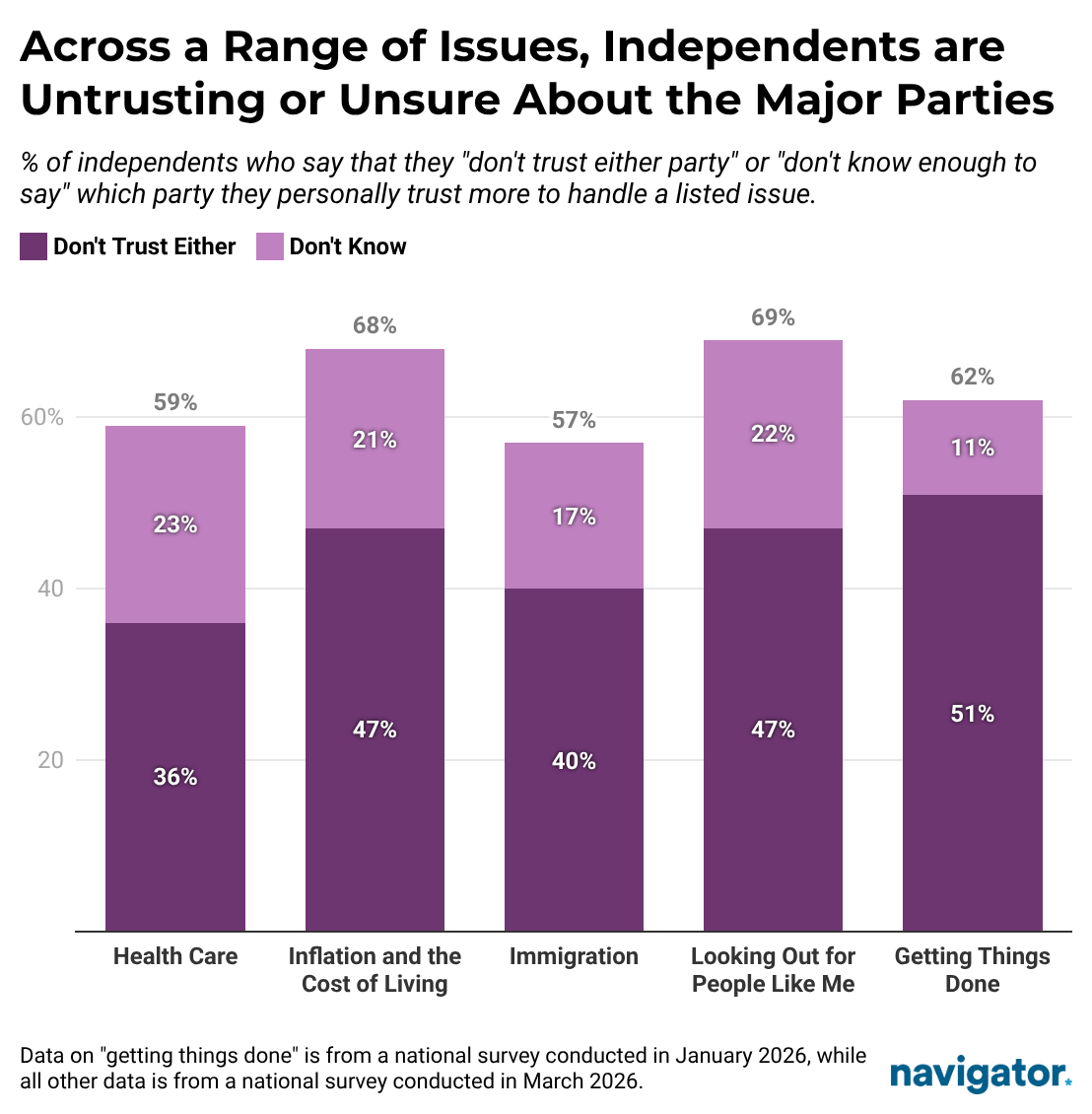
Today, Americans’ are mixed on who they trust on handling inflation and the cost of living, but lean towards the Democratic Party (34% trust Republicans – 37% trust Democrats). Around a quarter say they do not trust either party to handle inflation and the cost of living (23%), including 47% of independents.
Immigration
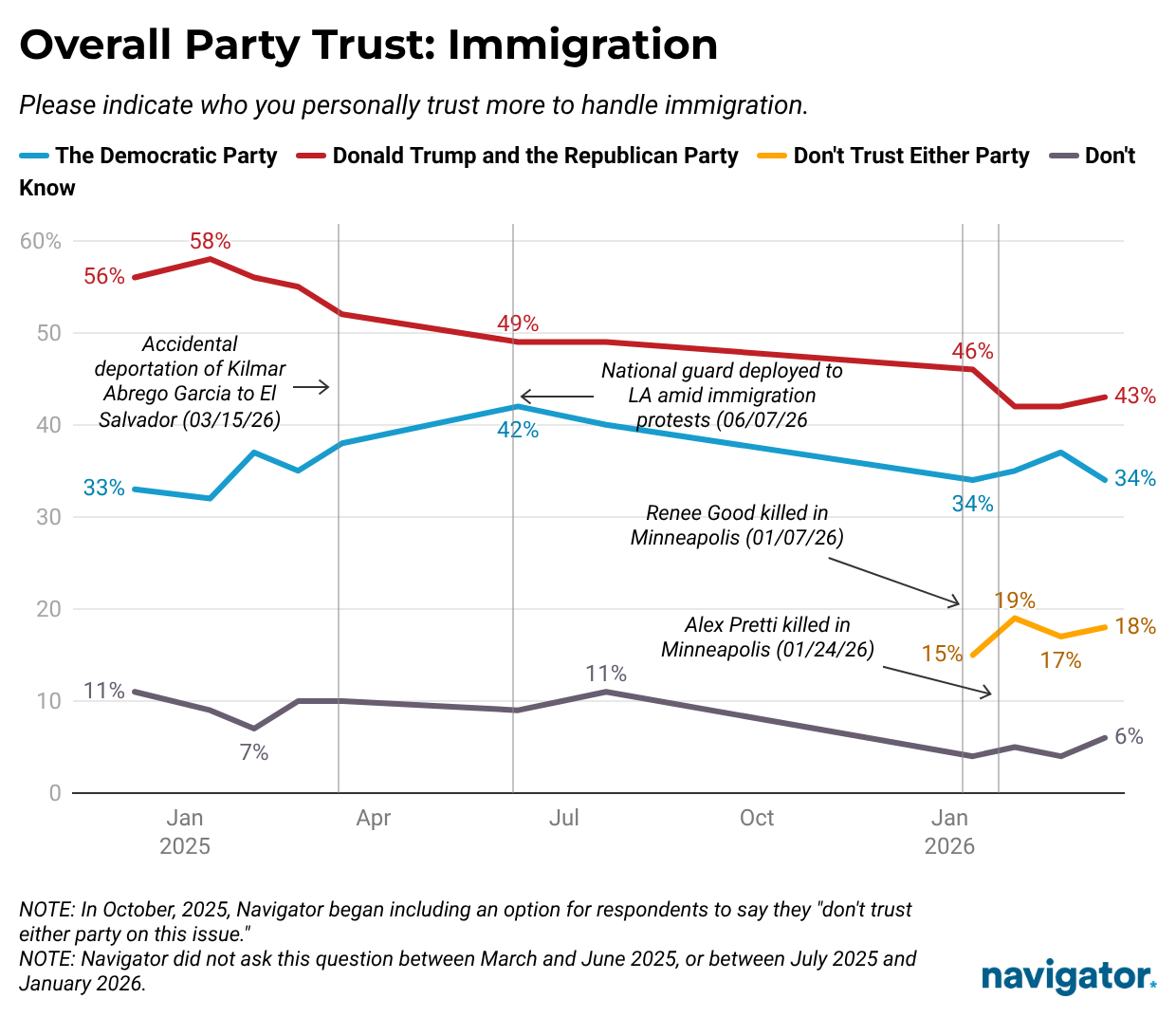
In January 2025, almost six-in-10 Americans said they trusted President Trump and the Republican Party more to handle immigration (58%). In late June 2025 – six months into the second Trump administration – trust in the Republican Party had dropped nine points (58% → 49%). While Navigator did not ask about trust on immigration between June 2025 and January 2026, when Navigator did reintroduce the question (now including a “don’t trust either party” option) trust in the Republican Party had shifted to 46%. Trust in the Republican Party further dropped after January– hitting an administration-low 42% in February 2026.
Sharper drops in trust in the Republican Party show a reaction to news reports of the Trump Administration’s immigration actions:
- In the early portion of President Trump’s second term, trust in the Republican Party to handle immigration dropped nine points (58% in January 2025 → 49% in June 2025). Important events in this period included the accidental deportation of Kilmar Abrego Garcia in March, and the deployment of National Guard troops to Los Angeles in June amid protests against immigration raids.
- Between January 2026 and February 2026, trust in the Republican Party to handle immigration saw a four point drop (46% → 42%), the sharpest single survey-to-survey decrease. This corresponds to immigration action in Minnesota, including the killings of Renee Good and Alex Pretti by federal immigration officials in January 2026.
Getting Things Done
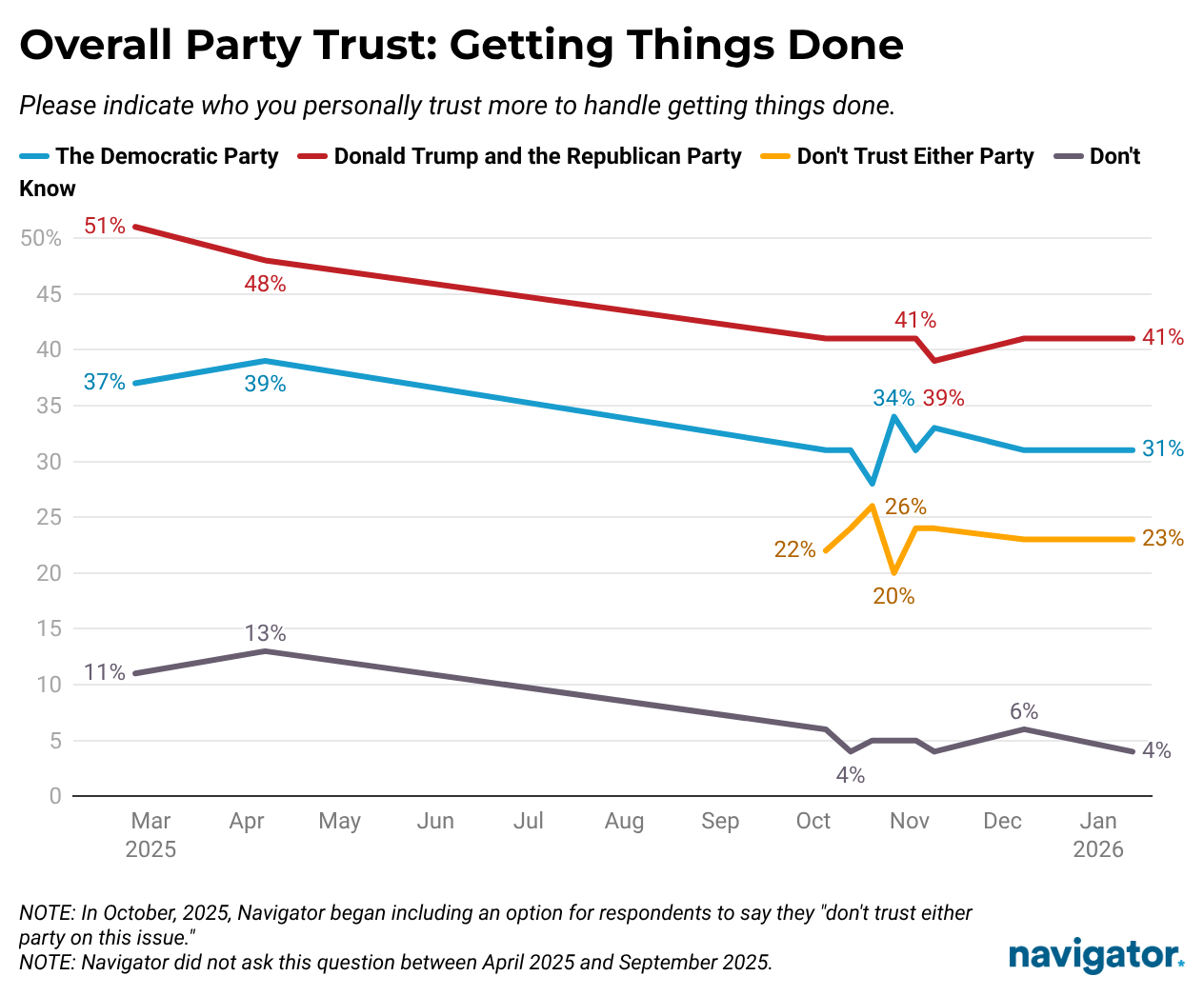
Americans today are ten points more likely to trust President Trump and the Republican Party on getting things done (41% trust President Trump and the Republican Party more – 31% trust the Democratic Party more). Notably, nearly a quarter say they do not trust either party to get things done (23%).
In April 2025, before allowing respondents to say they did not trust either party, 48% of Americans reported more trust in President Trump and the Republican Party on getting things done, while 39% reported more trust in the Democratic Party. When allowing respondents to indicate they did not trust either party in October 2025, overall trust dropped seven percent for the Republican Party and eight percent for the Democratic Party (48% → 41% and 39% → 31%, respectively).
Looking Out for People Like Me
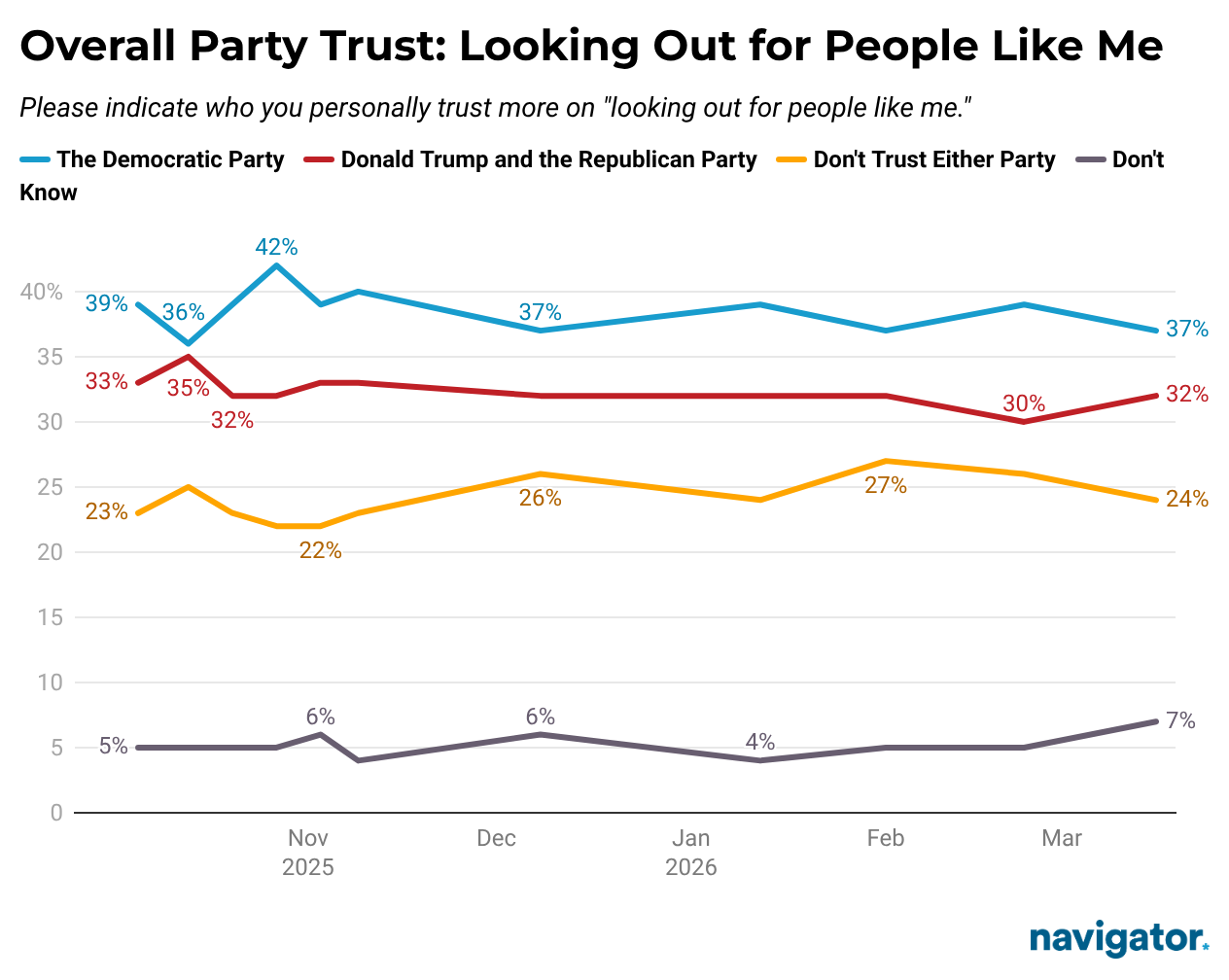
Overall, Americans today are modestly more likely to say they trust the Democratic Party on “looking out for people like me” than President Trump and the Republican Party (net +5). Just over three-in-10 Americans (31%) say they either “do not trust either party” (23%) or “don’t know” which party they trust more to look out for people like them (7%).
We see this frustration with politicians echoed in Navigator’s focus group research:
“I think all politicians suck. They say, ‘I’m going to do this and do that, and I’ll give you a candy cane.’ But yet they don’t do this and they don’t do that and they don’t give you the candy cane. They just want to have your vote and then they do what they want, just like Trump’s doing.” – ME woman, independent
“I can’t think of anybody [that gets it]. I think if they’re elected officials, they’ve run a campaign. They’ve gotten a lot of money. And like he said if they did experience hardship, it was a long time ago.” – MI woman, weak Democrat
Independents Don’t Trust Either Party on a Range of Issues
Across each issue examined in this report, a majority of independents say they either “don’t trust either party” or that they “don’t know enough to say” which party they personally trust more to handle a given issue. Independents’ high distrust and uncertainty presents an opportunity to deliver strong, solutions-oriented messaging and action on crucial issues – both to mobilize independents towards real fixes and to improve trust that the Democratic Party cares about people like them and is capable of “getting things done” to solve real problems.