President Trump’s Economic Approval Rating Is At Historical Low, One of Worst Ever
With costs continuing to rise, Americans are feeling the effects first hand. A majority disapprove of President Trump’s handling of the economy (net -19; 40% approve – 59% disapprove) and his handling of his job as president (net -18; 40% approve – 58% disapprove). Notably, economic disapproval is even higher among independents (72% disapprove), and includes a plurality of non-MAGA Republicans (39% disapprove).
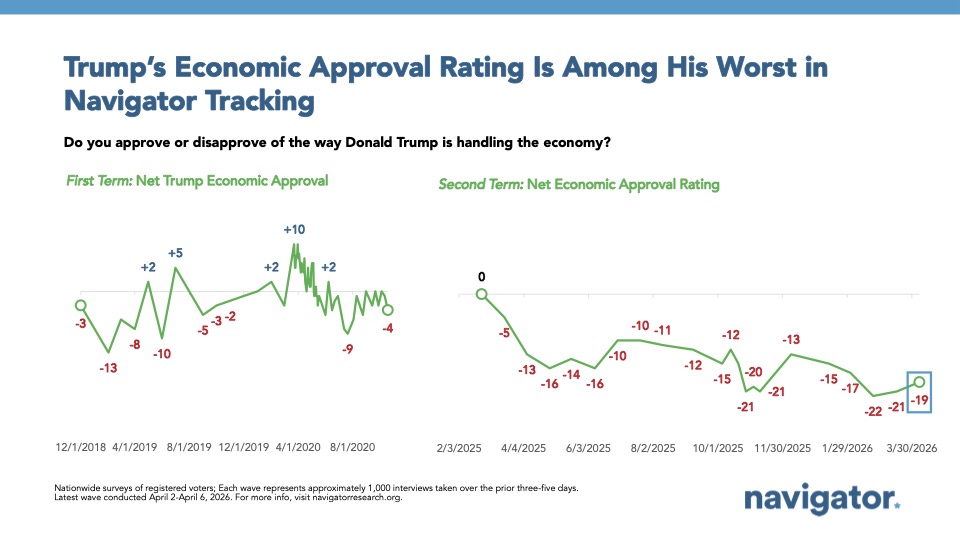
While Americans are expressing their disapproval of President Trump’s handling of the economy, they also feel strongly that he is focused on the wrong things (55% overall, including 63% of independents). People are pessimistic about the direction of the country by double-digit margins; Americans feel we will be worse off a year from now (43%) and that we were better off a year ago (40%).
Americans Lack Confidence in Both the Economy At-Large and Their Own Personal Financial Situation
Americans continue to rate both the economy and their own personal financial situation negatively. By a 37-point margin, Americans believe the state of the U.S. economy is “poor” or “not so good” (68% negative – 31% positive), including 82% independents and 63% of non-MAGA Republicans. And by a 19-point margin, Americans are feeling uneasy (58% uneasy – 39% confident) about their personal financial situation, including 71% of independents and nearly half (49%) of non-MAGA Republicans.
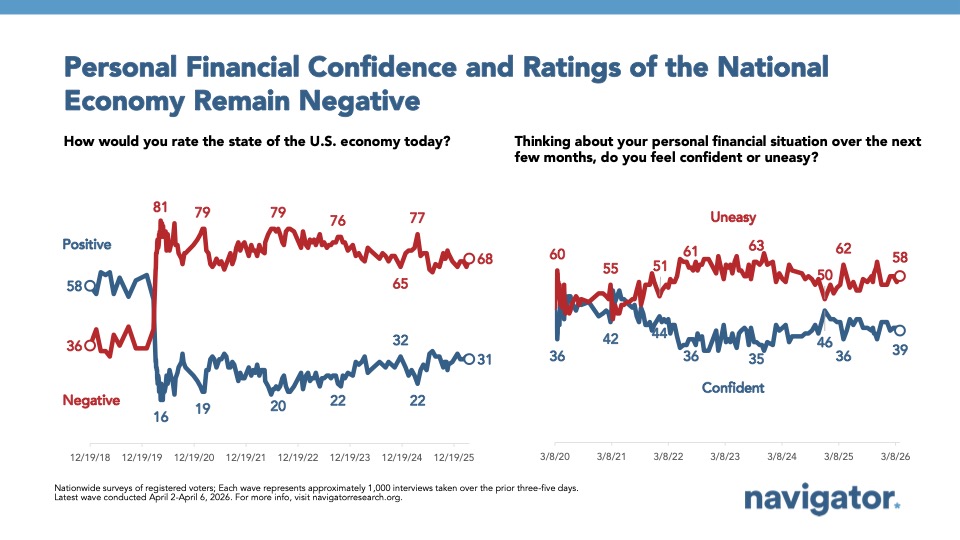
- Women are feeling more economic unease than men; 63% of women do not feel confident about their own financial situation compared to 53% of men.
- Self-identified service workers are most likely to rate the economy as “poor” or “not so good” (78%) and feel similarly uneasy about their personal finances (71%).
- By a 15-point margin, Americans who watch CNN or MSNBC are more likely to rate the economy poorly compared to Fox News watchers. They are also more likely to feel uneasy about their personal finances by a 12-point margin.
Americans are Feeling the Pain of Rising Costs
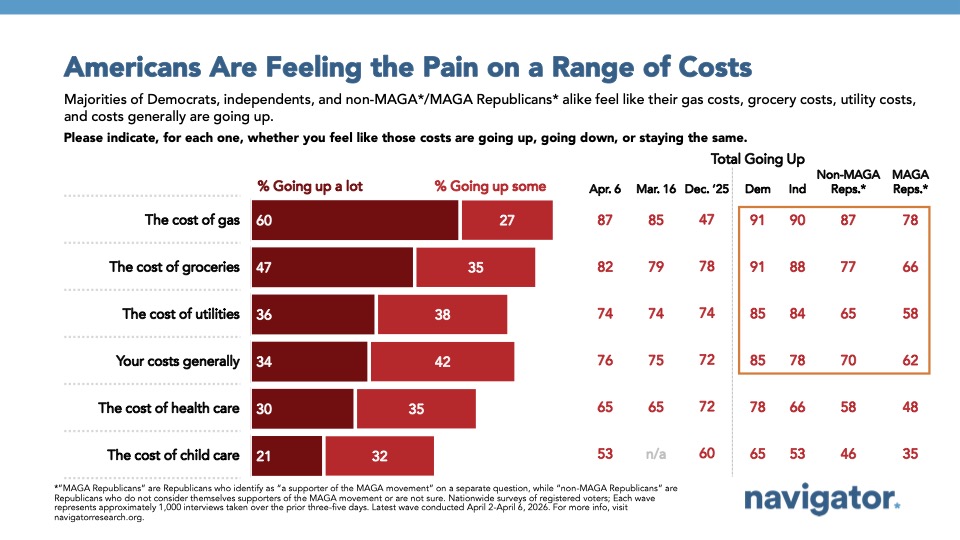
Across demographics and within every cost category, an overwhelming majority of Americans are feeling squeezed by rising costs. As many as nine-in-10 people feel gas prices are going up, eight-in-10 feel costs, generally, are going up and even seven-in-10 feel the cost of utilities is going up. It’s across the board.
People Judge the Economy Personally, Not Systemically
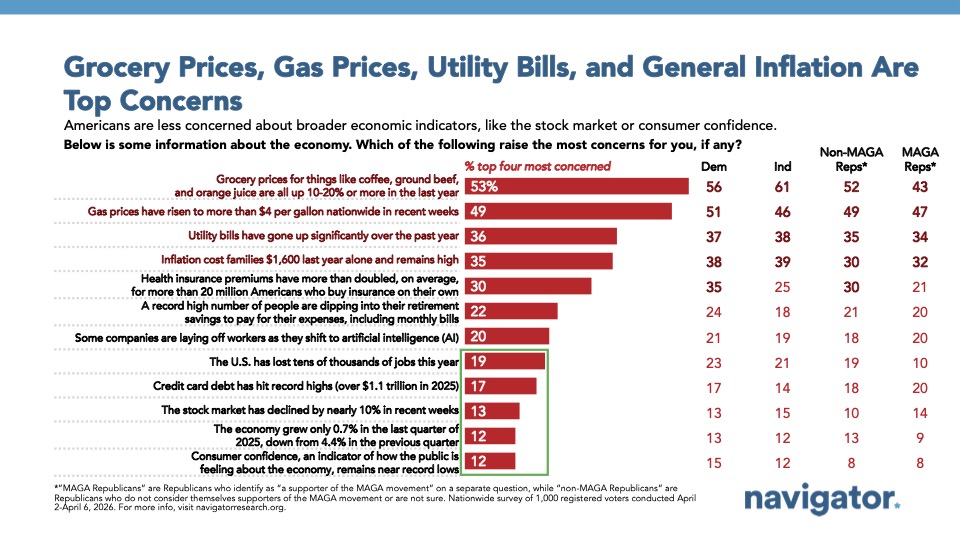
Americans’ biggest economic concerns center on rising costs of their day-to-day needs, like groceries, gas, and utility bills. Americans are less concerned about economic indicators like economic growth (12%), jobs reports (19%), or consumer confidence (12%). It’s the micro and personal, not the macro, that drives opinion.
To Save Money or Increase Income, Many Americans Are Making Dramatic Changes
Americans across ideologies are making changes to their day-to-day lives in order to combat rising costs. Over half of Americans are cutting back and going out less in order to save money (52%). Two-in-five are cutting coupons or shopping for discounts (41%), while nearly one-third are cancelling subscriptions (29%).
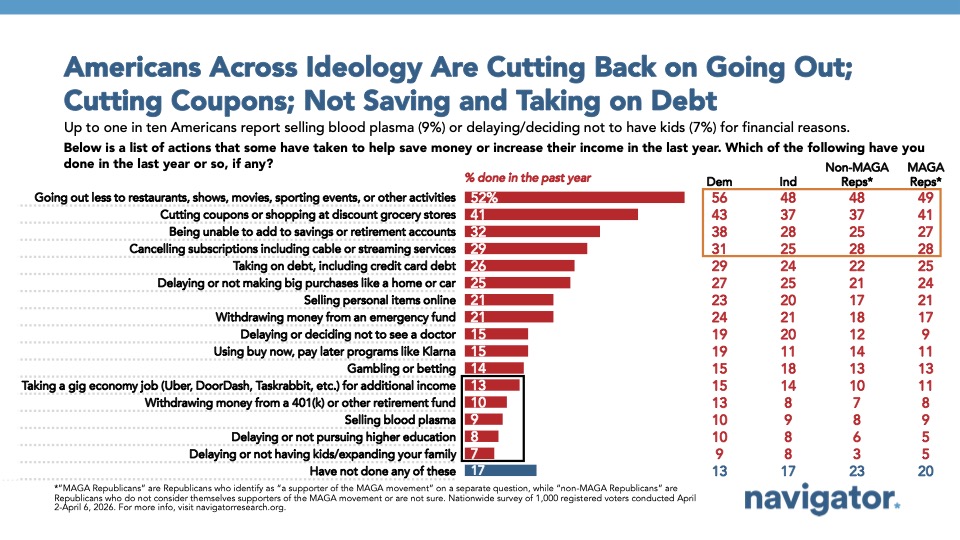
Americans are not only cutting back on non-essentials. They are also making large changes that can significantly impact their quality of life. A quarter have delayed buying a home or car in the last year (25%), 15% have delayed or decided not to see a doctor in order to save money, 8% have delayed and decided to not pursue higher education, 7% have delayed or decided against having kids, and nearly one-in-10 have even sold their blood plasma (9%).
As Americans try to keep up with rising costs, they also report taking on more debt (26%), using buy-now-pay-later programs (15%), and withdrawing from emergency funds (21%).
Democrats Have the Trust Advantage on the Issue Americans Care Most About
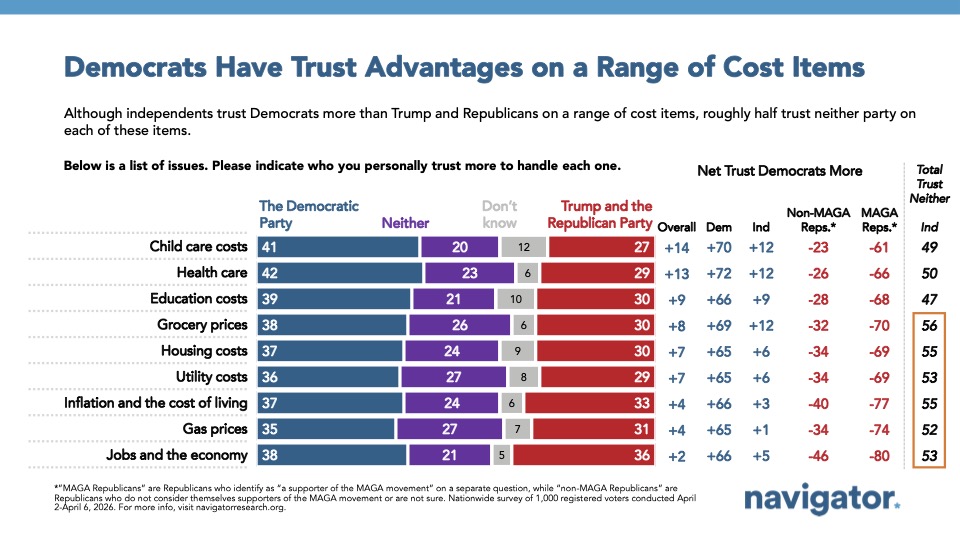
Americans don’t feel that President Trump and Republicans in Congress are prioritizing the most salient issue impacting them today—costs—and Democrats hold a trust advantage on a range of costs like health care, child care, groceries, housing, utilities, gas and more – albeit narrow on certain issues. However, one-in-4 do not yet trust either party to lower costs.