

Poll: Budget
This Navigator Research report covers what Americans think the government is spending too much and too little on.
Americans Think The Government Spends Too Much On Renovating The White House, Foreign Wars, And ICE
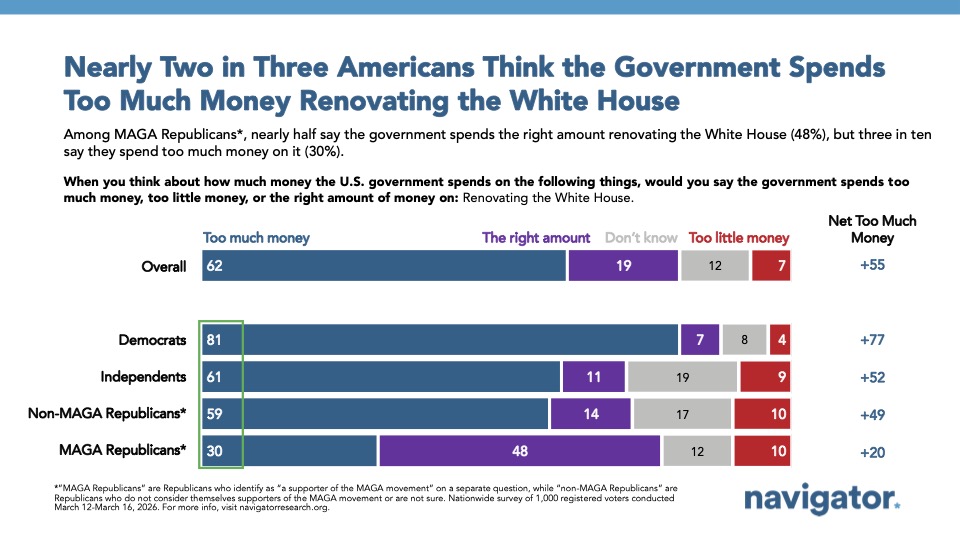
Almost two-thirds of Americans think the government is spending too much money renovating the White House (62% too much), including nearly half (47%) who say the government is spending “way” too much money. While many of the planned renovations to the White House, including the $400 million ballroom, are being paid for with private funds from donors and corporations, experts say that taxpayer dollars will be necessary in the future to maintain and keep up the structure.
Four times as many Republicans say the government is spending too much on White House renovations as say not enough (42% too much – 34% right amount – 10% not enough). Even 30% of MAGA Republicans say the renovations are costing too much while just 10% say not enough.
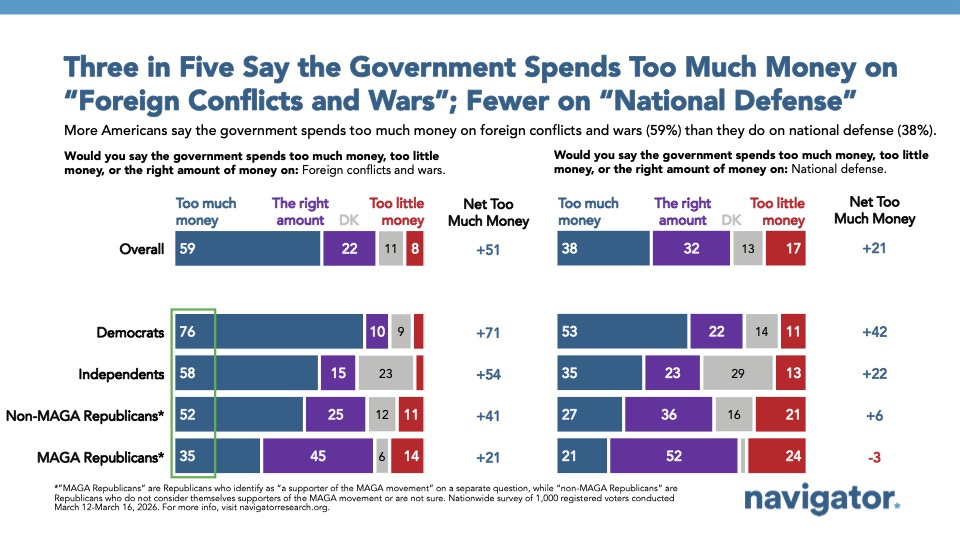
Nearly three-in-five Americans say the government is spending too much money on foreign wars (59% too much), including Republicans by nearly a 30-point margin (42% too much – 37% right amount – 13% not enough). This survey was fielded days before the Pentagon announced it was seeking $200 billion in additional funds for the war in Iran.
When framed as “national defense” instead of “foreign conflicts and wars”, the margin here narrows slightly. 38% say the government is spending too much on national defense and 17% say not enough. 32% say the government is spending the right amount on national defense.
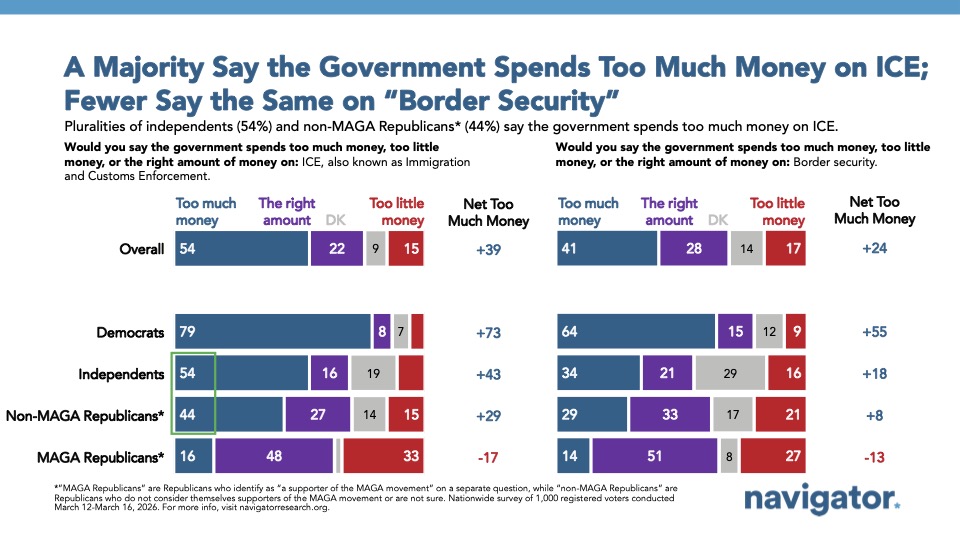
On ICE, a majority of Americans think the government is spending too much on the agency (54% too much – 22% right amount – 15% not enough). Even a plurality of Fox News viewers say the government is spending too much on ICE (42% too much – 33% right amount – 20% not enough). ICE has seen its budget increase from less than $10 billion to more than $80 billion in just one year. When the issue is framed as “border security”, Americans are less likely to say the government is spending too much. Only 41% say the government is spending too much on border security and 17% say not enough.
Americans Say Government Isn’t Spending Enough On Programs Cut By President Trump And Republicans In Congress
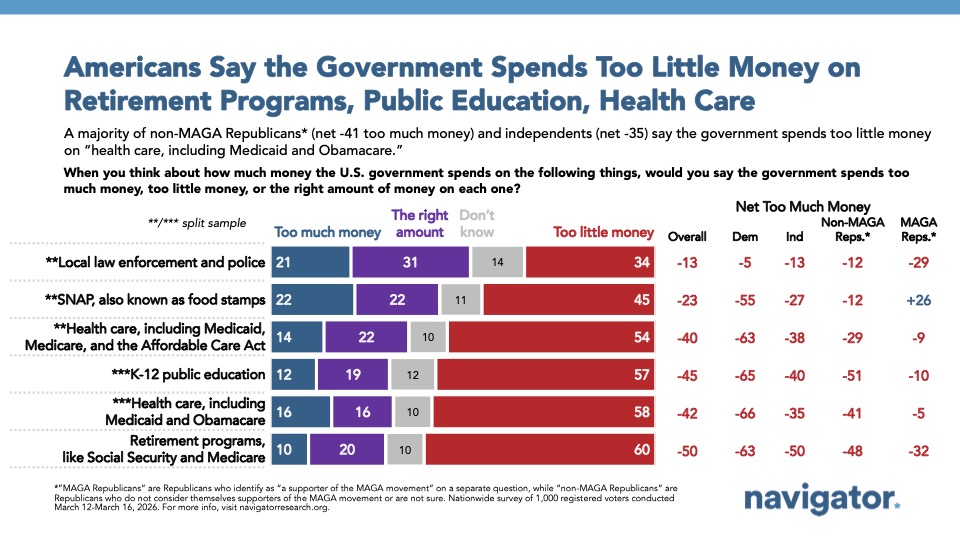
Three-in-five Americans think not enough money is being spent on retirement programs like Social Security and Medicare (60% not enough – 20% right amount – 10% too much). This trend is consistent across party lines, with even 44% of MAGA Republicans and 58% of non-MAGA Republicans saying the government is not spending enough on these programs. According to the Congressional Budget Office (CBO), the Republican budget will trigger nearly half-a-trillion dollars in cuts to Medicare. And last year after widespread outrage, the Trump administration backed away from a plan to cut Social Security disability payments for older Americans.
Similarly, 58% of Americans say the government isn’t spending enough on health care, namely Medicaid and the Affordable Care Act (ACA). There is a 13-point gender gap here, with 60% of women saying the government isn’t spending enough on health care compared to 47% of men. Trump and most Republicans in Congress have railed against extended tax credits to make ACA plans more affordable for millions of Americans. Additionally, the Republican budget cut nearly $1 trillion from Medicaid.
A majority of Americans think the government is not spending enough money on K – 12 public education (57% not enough – 19% right amount – 12% too much). This trend is consistent across political parties, with 72% of Democrats, 50% independents, and 45% of Republicans saying the government isn’t spending enough on K – 12 public education. The Trump administration has been working to dismantle the Department of Education, which has been charged with overseeing public education across the country. Additionally, the Republican budget’s Medicaid cuts will harm public schools across the country.
By a two-to-one margin, Americans say not enough money is being spent on food assistance or SNAP (45% not enough – 22% right amount – 22% too much). Even a quarter of people who voted for Trump in 2024 say not enough money is being spent on the program (25% not enough). Last year, as part of the Republican budget, Trump and Republicans in Congress cut SNAP by more than $180 billion.