Key takeaways
-
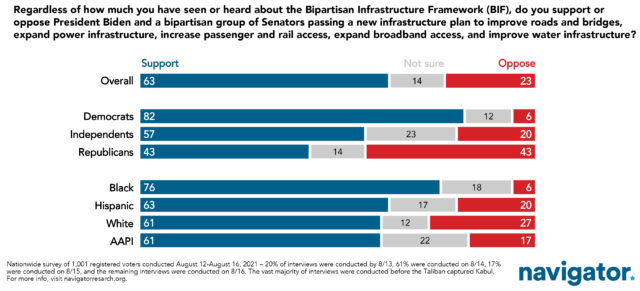
Nearly two in three Americans continue to support the Bipartisan Infrastructure Framework.
-
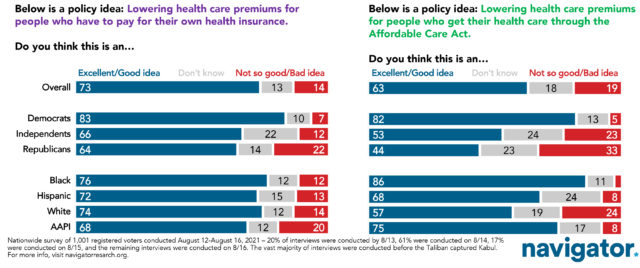
Lowering health care premiums for people who pay for their own insurance or get health care through the ACA is seen as an “excellent” or “good” idea.
-
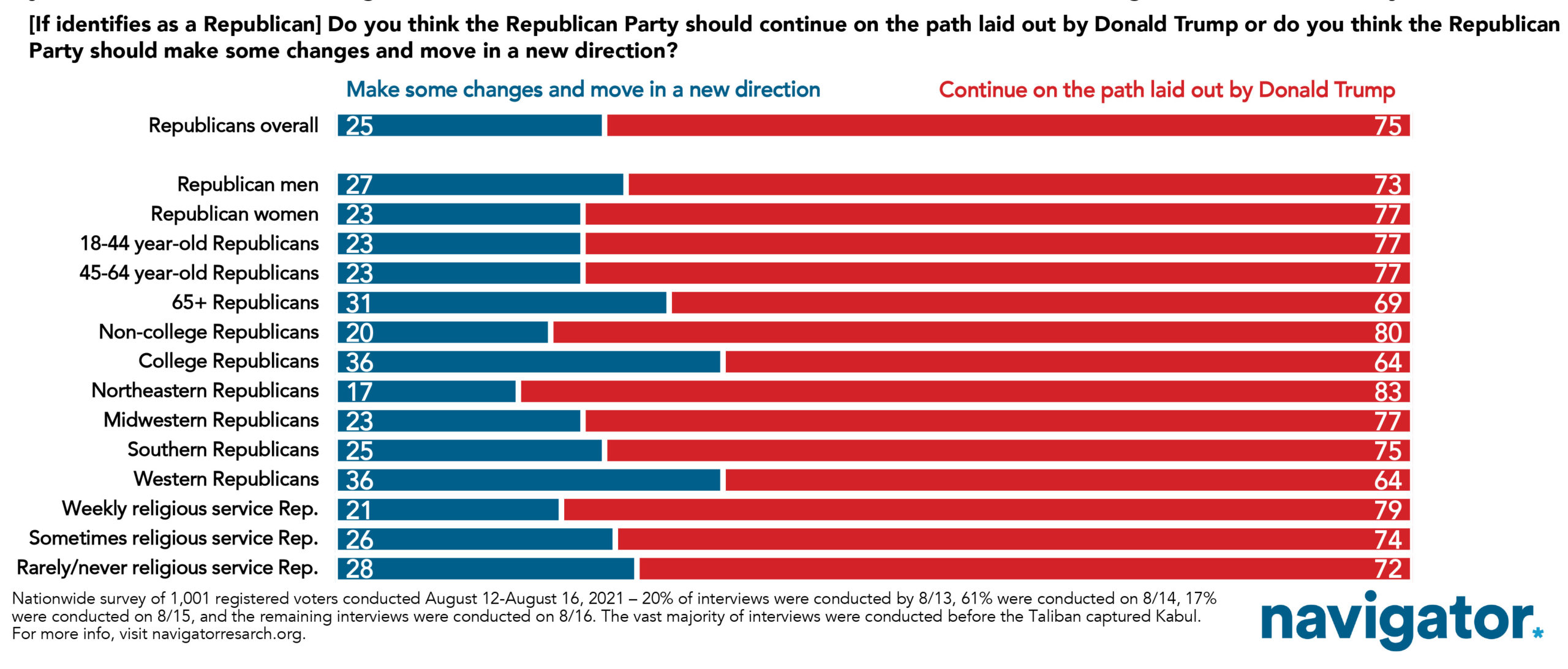
The vast majority of Republicans want their party to continue down the path laid out by Trump rather than change directions, while Democrats hold more divergent views on the future direction of their party.
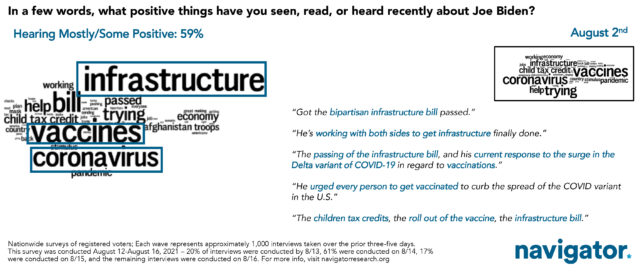
The Passage of the Infrastructure Bill, Coronavirus, and Vaccines Break Through on Biden Positives
Four in five Democrats (83%), 54% of independents, and 33% of Republicans are hearing “mostly positive” or a “mix of positive and negative” on Biden.
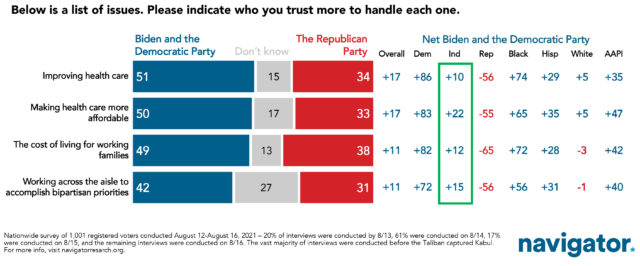
Biden and Democrats More Trusted on Health Care, Costs for Working Families, Working Across the Aisle
Among independents, Biden and Democrats hold double-digit leads on trust to improve health care (+10), make health care more affordable (+22), handle costs for working families (+12), and achieve bipartisan priorities (+15).
The Bipartisan Infrastructure Deal Remains Popular
Consistent with previous polling, more than three in five Americans support the bipartisan infrastructure bill, including a strong majority of independents (57%).
Roads, Bridges, Repairs, and Jobs Stand Out to Americans Most Who Have Heard of the Bipartisan Infrastructure Bill
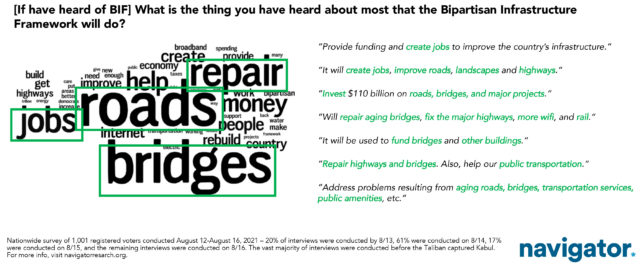
Americans who have heard about the Bipartisan Infrastructure Framework highlight the repairing of aging roads and bridges, investing in America’s infrastructure, and creating jobs in the process.
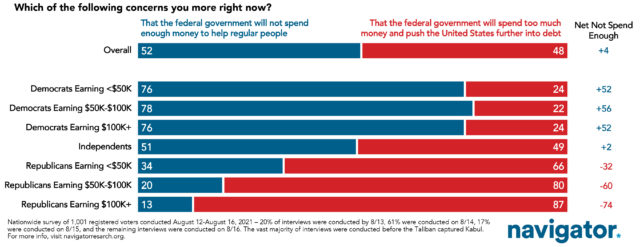
Slight Majority Are More Concerned the Federal Government Will Spend Too Little to Help People Rather Than Too Much
While Democrats across income levels and independents all are more concerned the government will spend too little than too much, lower-earning Republicans are 21-points more concerned the government will spend too little (34%) than higher-earning Republicans (13%).
Lowering Health Care Premiums Seen as Good Idea – Especially For Those Who “Pay For Their Own” Insurance
Two in three independents (66%) and Republicans (64%) say lowering health care premiums for people who have to pay for their own insurance is an “excellent” or “good” idea.
On Democratic Branding, “the Democratic Party” Is Viewed Most Favorably Overall
Among Democrats, 88% view “the Democratic Party” favorably, 58% view “progressive” politicians favorably, and 58% say the same of “liberal” politicians.
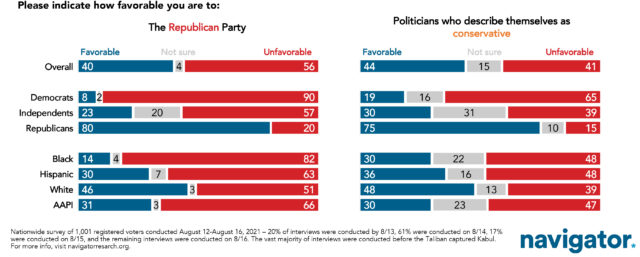
While the “Republican Party” Is Underwater By Double Digits, “Conservative” Politicians Are in the Positive
A majority of independents view the “Republican Party” unfavorably, while two in five say the same of “conservative” politicians.
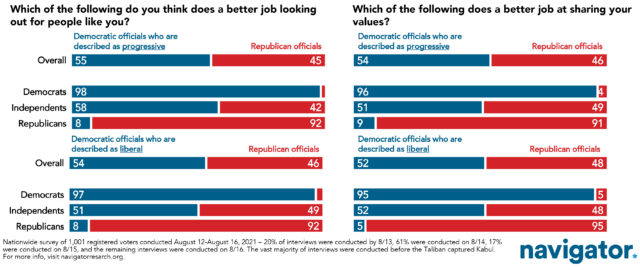
Progressive and Liberal Officials Are Seen as “Looking Out for People Like You” and “Sharing Your Values”
“Progressive” and “liberal” Democratic officials are more trusted to both look out “for people like you” and share “your values” than Republican officials, including among independents across tests.
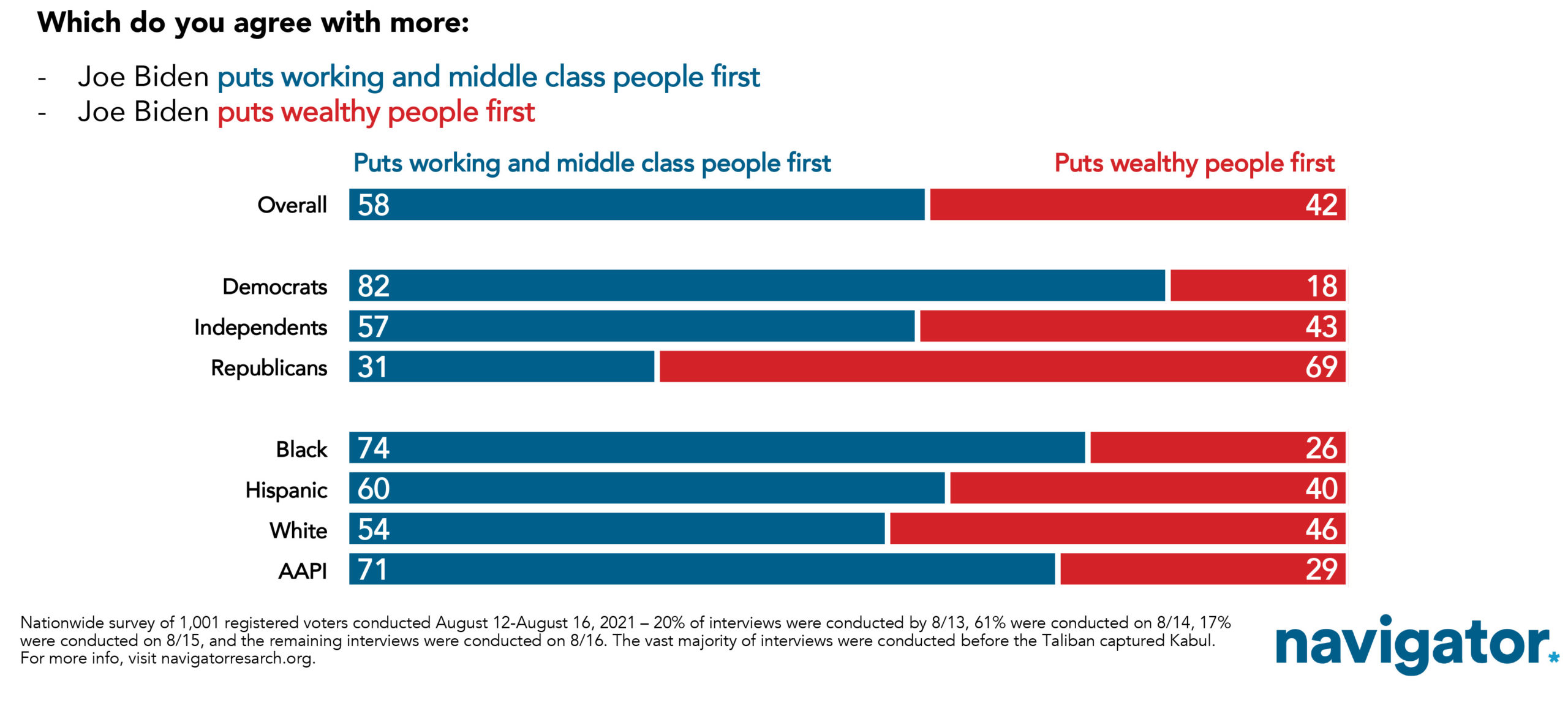
Three in Five Say Biden Puts Working and Middle Class First
Among independents, 57% say Biden puts working and middle class people first, as do nearly one in three Republicans (31%).
The Vast Majority of Republicans Want to Continue on the Path Laid Out By Donald Trump
Republicans most likely to support continuing along the path of Trump are women (77%), Republicans 18-44 or 45-64 years old (77%), non-college (80%), Northeasterners (83%), and those who attend religious services weekly (79%).
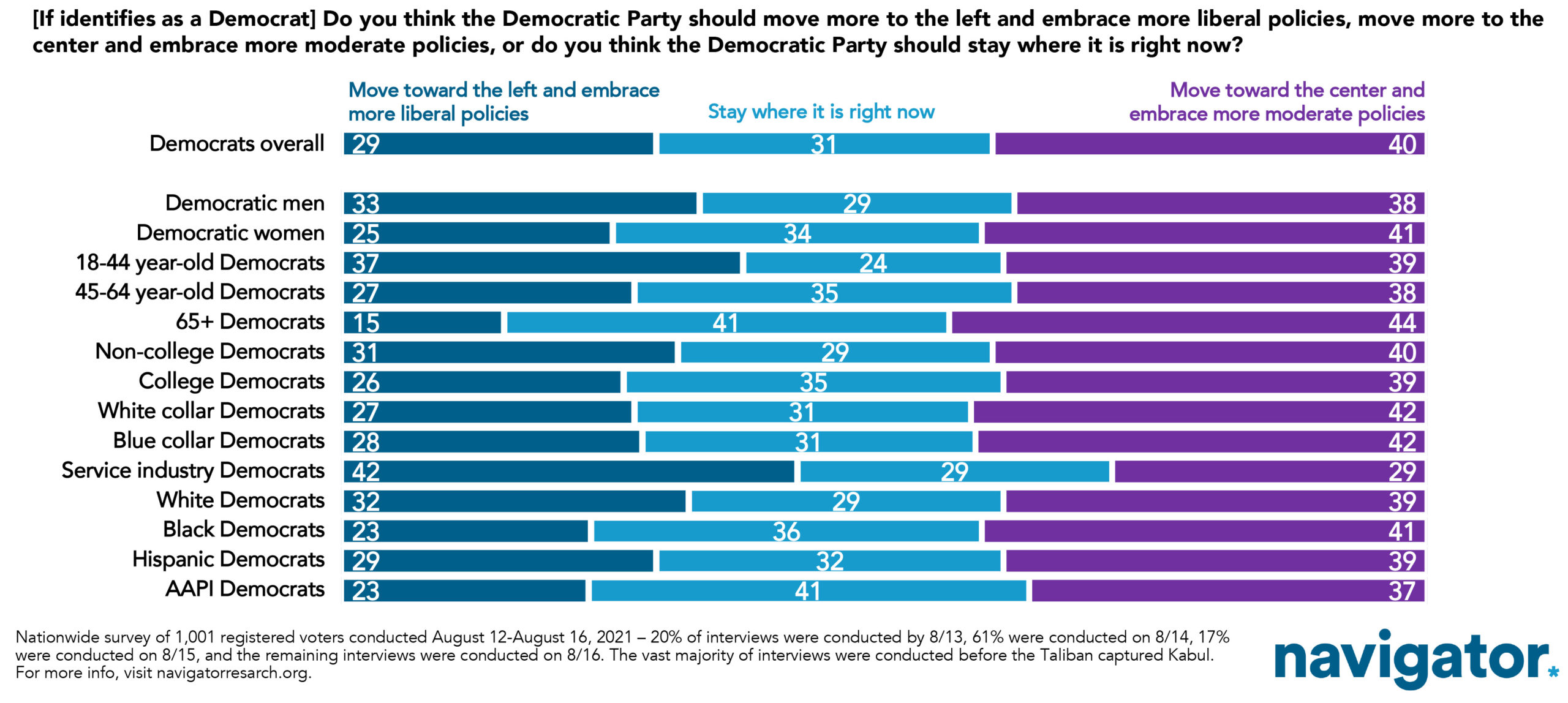
A Plurality of Democrats Support the Party Moving Center
While pluralities of most groups prefer a move toward the center, groups that are most pro-movement to the left are 18-44 year-olds (37%), non-college (31%), those in the service industry (42%), whites (32%), and Hispanic Democrats (29%).