
Poll: Republicans in Disarray
This Navigator Research report contains polling data on Americans’ latest perceptions of Republicans in Congress following the ousting of Kevin McCarthy as Speaker of the House, including favorability of prominent Congressional Republicans, what Americans have recently been hearing in the news about Republicans in Congress, and tracking on blame for a potential government shutdown this fall.
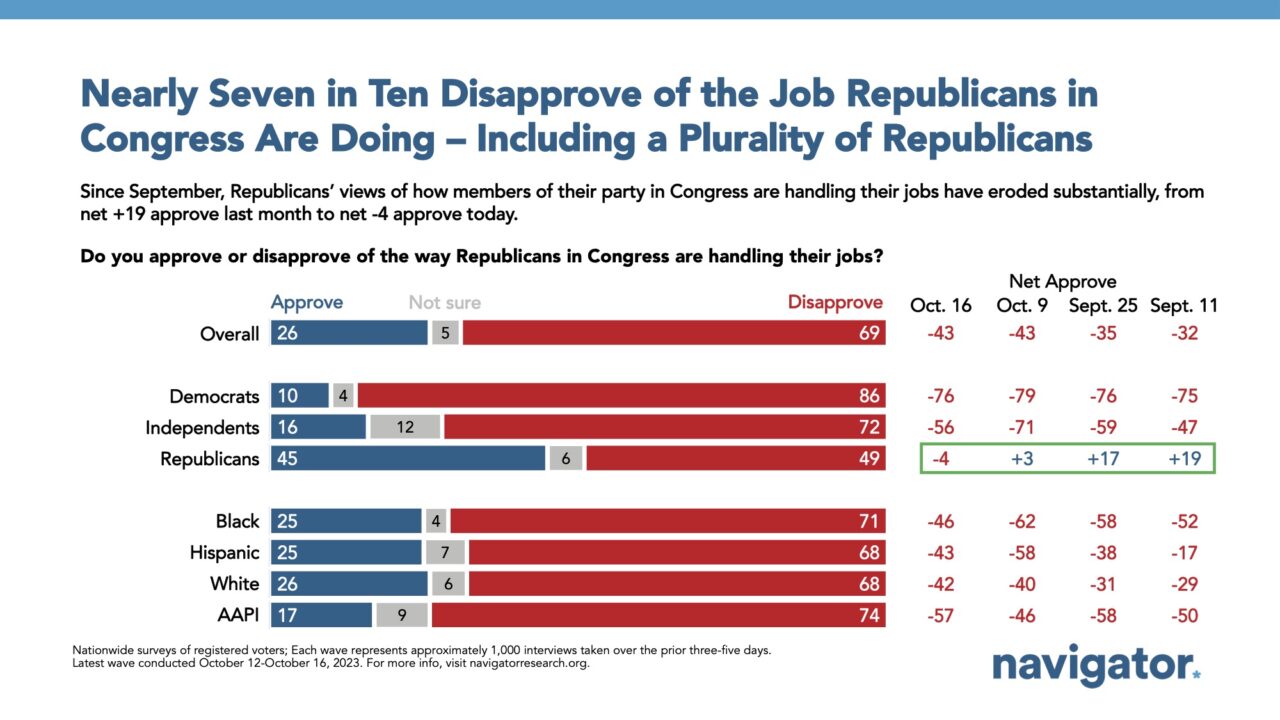
Seven in ten Americans disapprove of the way Republicans in Congress are handling their jobs.
For the first time, Republicans hold a net negative view of Republicans in Congress (net -4; 45 percent approve – 49 percent disapprove; a net negative 23-point shift since early September). Americans overall also disapprove of Republicans in Congress by a 43-point margin (26 percent approve – 69 percent disapprove), including over four in five Democrats (86 percent disapprove) and three in four independents (72 percent disapprove). Disapproval is equally high among moderate Americans (net -47; 22 percent approve – 69 percent disapprove) and among Republicans who describe themselves as not very conservative, Republicans in Congress have double-digit net negative ratings (net -17; 38 percent approve – 55 percent disapprove).
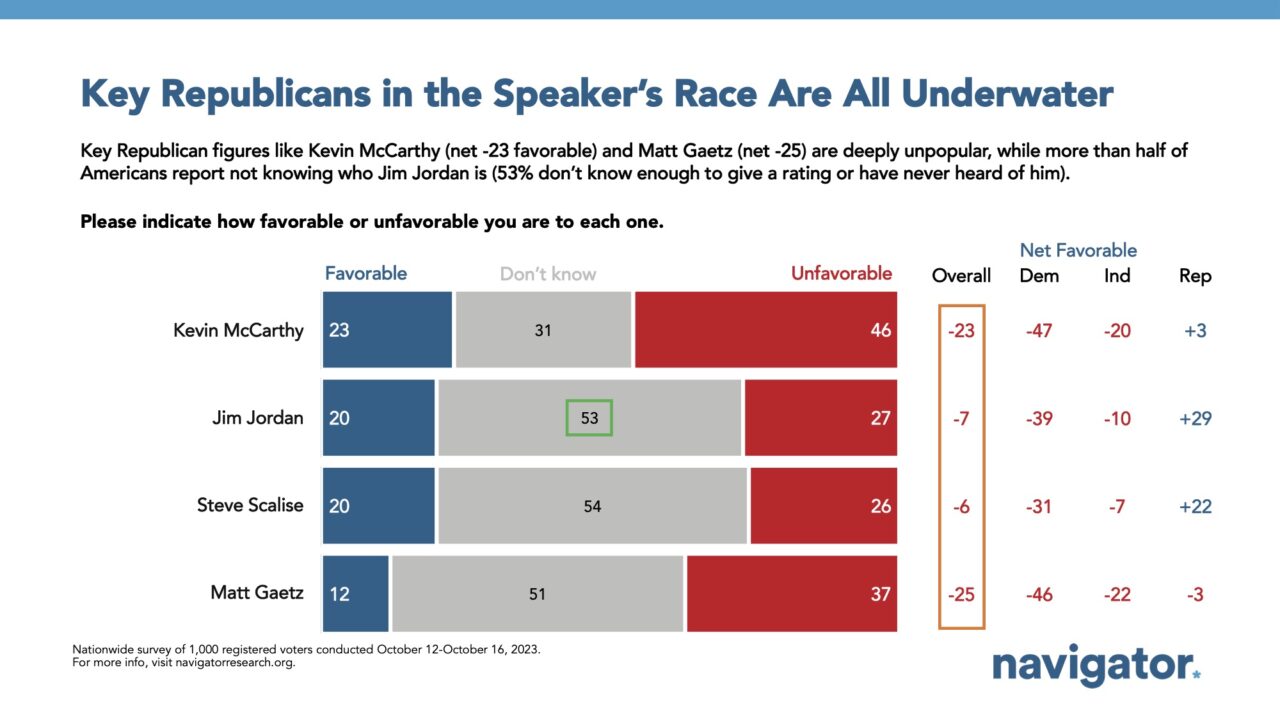
- Favorability of prominent Republicans are all underwater, including former Speaker Kevin McCarthy (net -23; 23 percent favorable – 46 percent unfavorable), Matt Gaetz (net -25; 12 percent favorable – 37 percent unfavorable, while 51 percent of Americans are unfamiliar with him), Jim Jordan (net -7; 20 percent favorable – 27 percent unfavorable, while 53 percent are unfamiliar with him), and Steve Scalise (net -6; 20 percent favorable – 26 percent unfavorable, while 53 percent are unfamiliar with him).
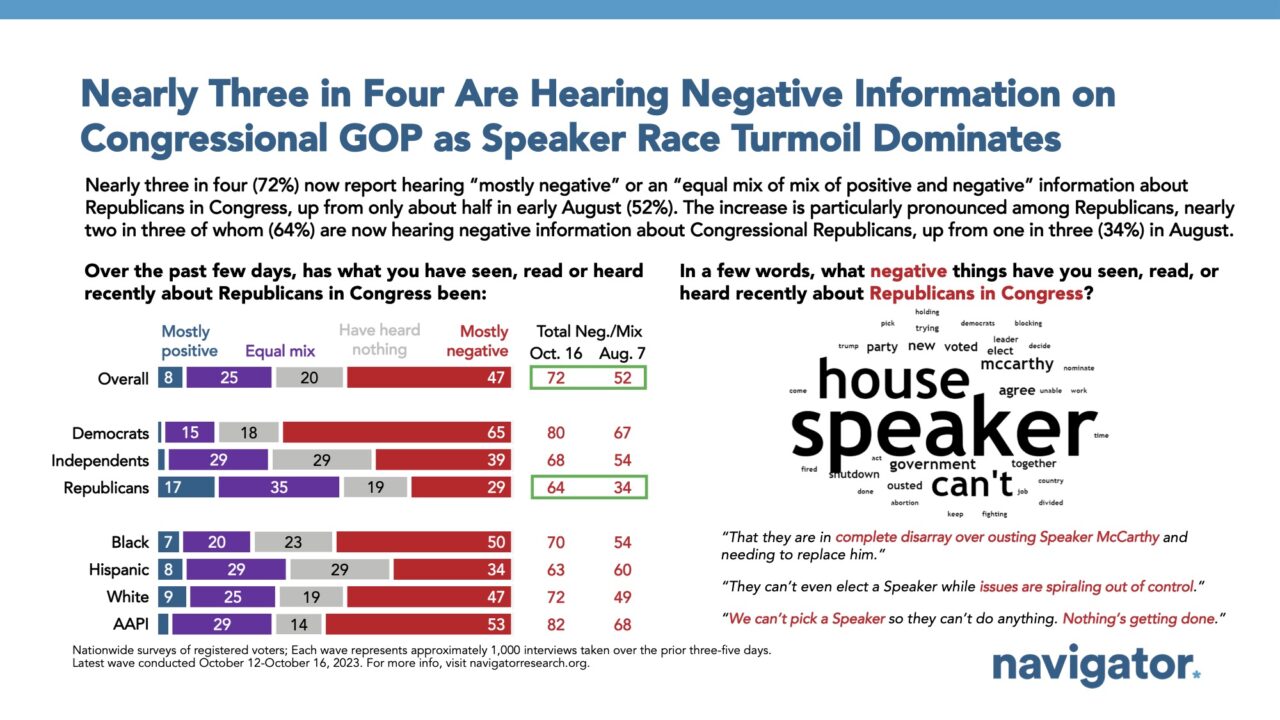
- Nearly three in four Americans report having heard something negative about Republicans in Congress in the past few days (72 percent), with nearly half of Americans saying what they have heard has been mostly negative (47 percent). This includes nearly two in three Republicans (35 percent mostly negative, with an additional 29 percent saying they have heard an equal mix of positive and negative). Most cite “House” and “Speaker” when describing what negative news they have been hearing recently about Republicans in Congress.
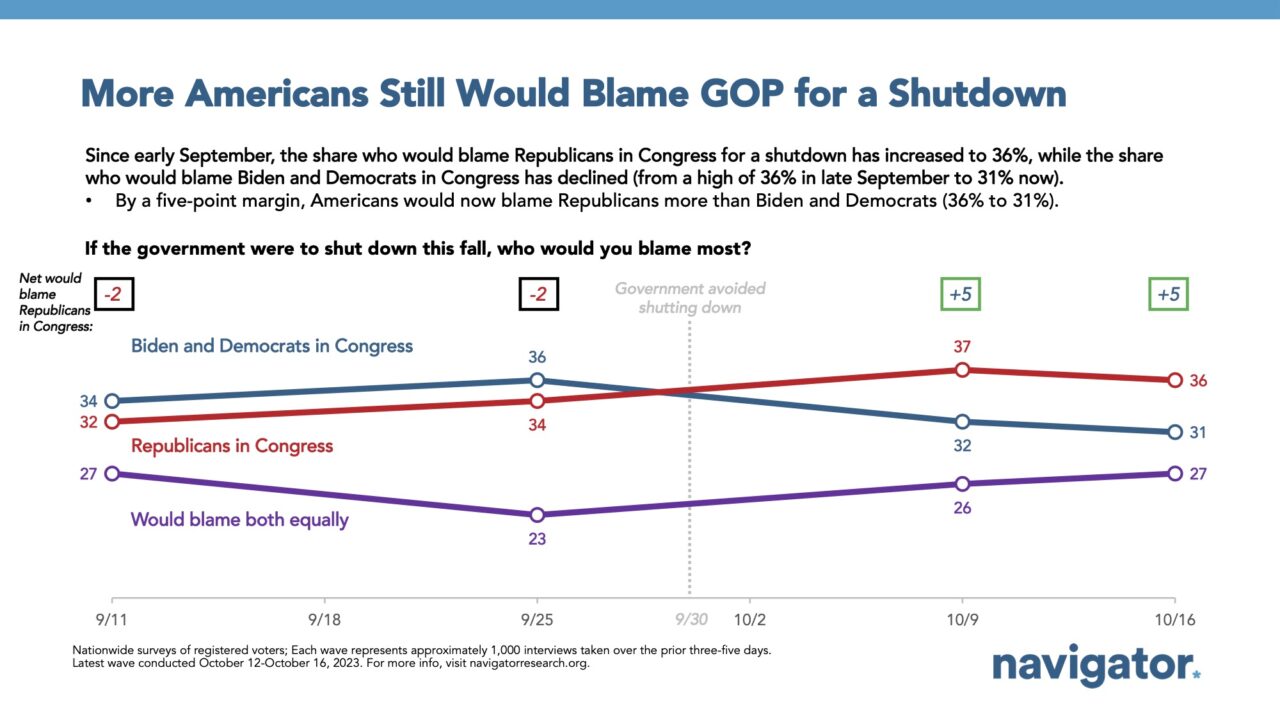
A plurality of Americans continue to say Republicans are more to blame if the government shuts down this fall.
Currently, by 5 points, more Americans feel Republicans in Congress are more to blame if the government were to shut down this fall (31 percent Biden/Democrats – 36 percent Republicans, with an additional 27 percent who would blame both parties equally). The share who blame Republicans has increased in recent weeks: last month, blame split roughly evenly between Biden and Democrats (34 percent) and Republicans in Congress (32 percent), which has shifted by a net 7 points toward Republicans. A majority of independents believe both parties are to blame (16 percent Biden/Democrats – 18 percent Republicans – 51 percent blame both parties equally).
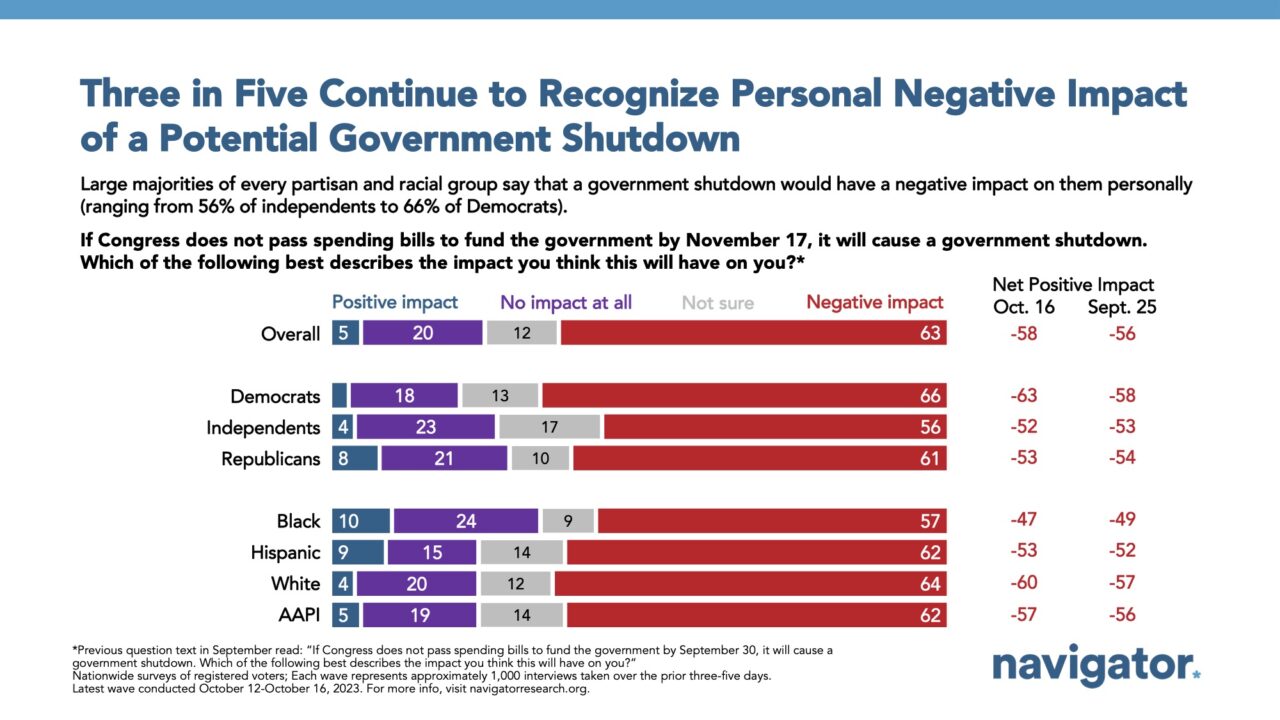
- By a 58-point margin, a significant share of Americans feel a government shutdown would negatively impact their lives (net -58; 5 percent positive impact – 63 percent negative impact), similar to our findings in late September (net -56; 7 percent positive impact – 63 percent negative impact).
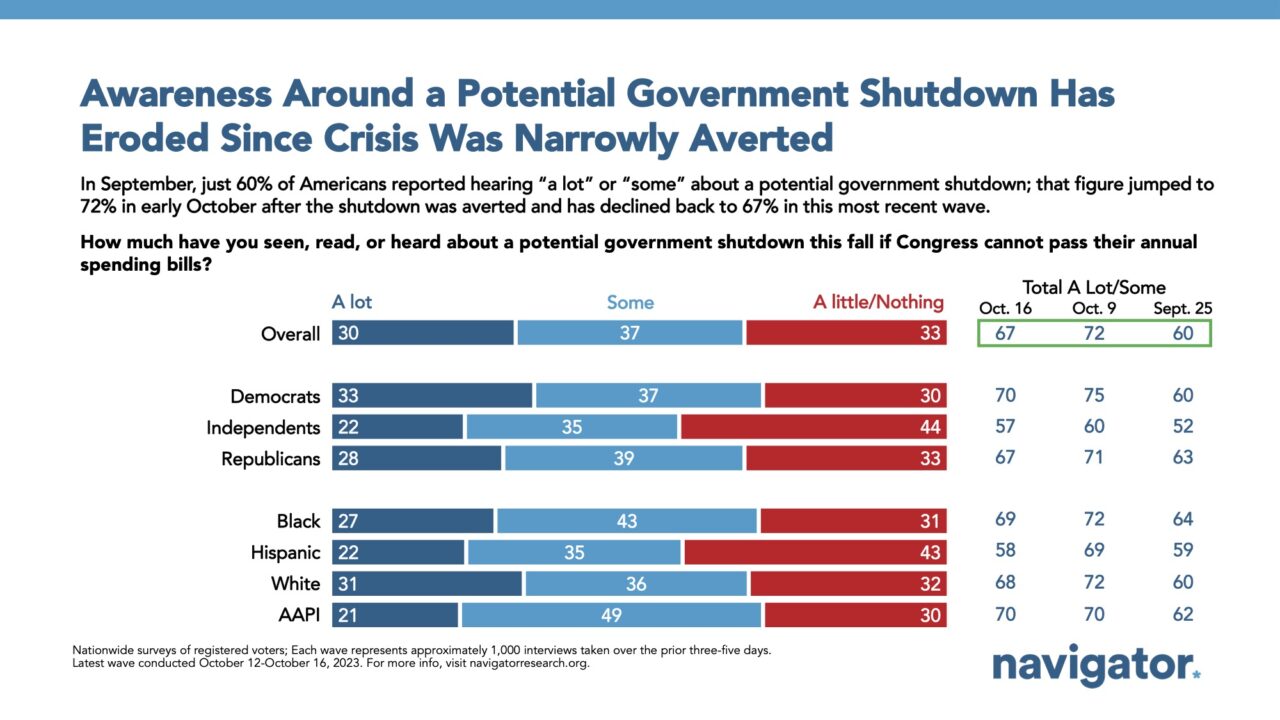
- Fewer Americans already report having heard less about a potential government shutdown this fall compared to earlier this month (from 72 percent to 67 percent). Currently, three in ten Americans report having seen, read, or heard “a lot” about the potential shutdown (30 percent), down 7 points from just a week ago (37 percent).