Healthcare is a Top Priority for Americans
Healthcare is among Americans’ top concerns, as 39% say they want the government to prioritize it, yet only 14% think President Trump and Republicans in Congress are focused on it. Jobs and the economy (44%) and inflation and the cost of living (59%) are other top priorities, but Americans don’t see Trump and Republicans focused on those either. Democrats’ priorities are seen as more aligned, as with healthcare on top of the list, much like Americans’ own (32%).
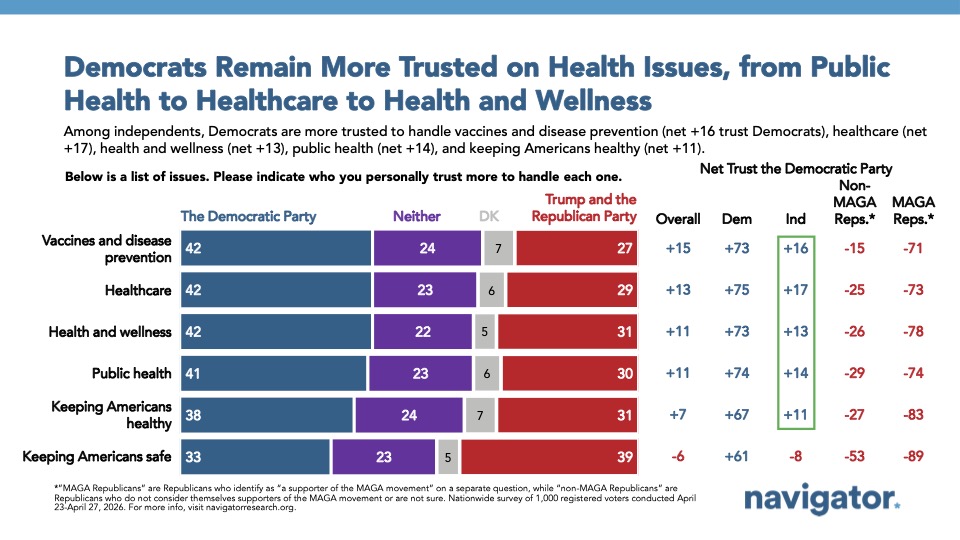
- Americans continue to trust the Democratic Party more to handle healthcare and a range of healthcare-related issues, though nearly one-in-four say they trust neither party to handle healthcare, disease prevention, health and wellness, and keeping Americans healthy.
Americans are Frustrated by Costs and Blame the Insurance and Pharmaceutical Industries for Their Issues
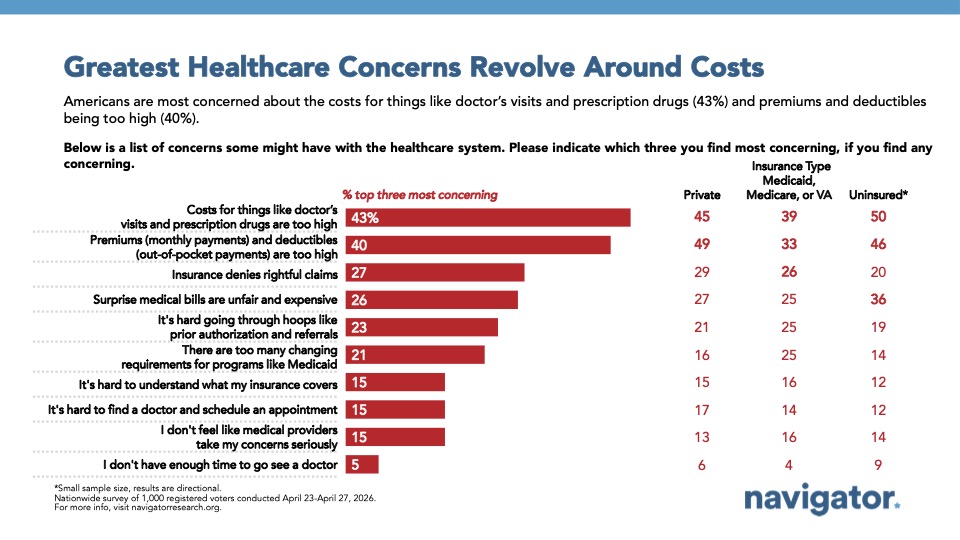
The top two concerns about the healthcare system are high costs of doctor’s visits and prescription drugs as well as premiums and deductibles (43% and 40% concerned, respectively). Other top concerns include insurance denying rightful claims (27% concerned) and surprise medical bills (26% concerned).
Only 5% are concerned they don’t have enough time to go to the doctor, while 15% are concerned about finding a doctor and understanding their insurance coverage.
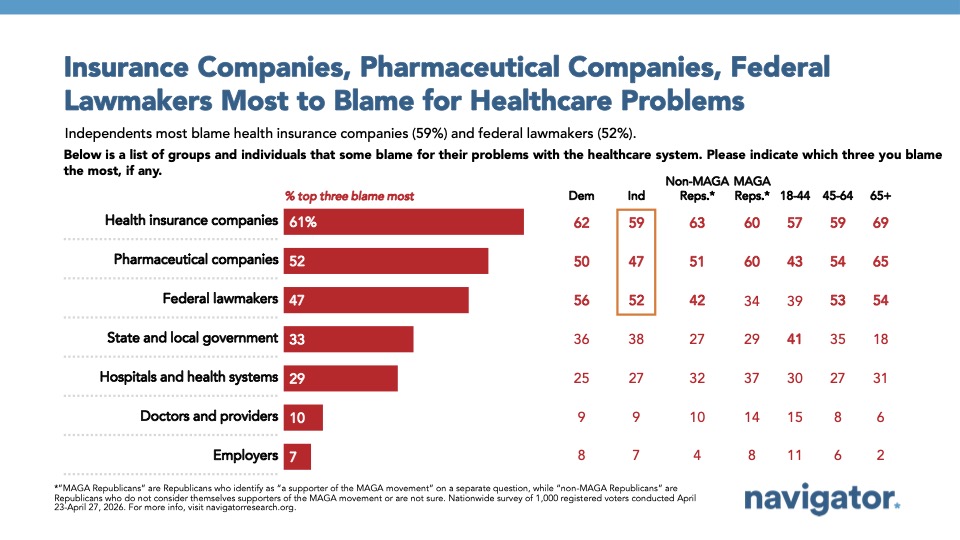
When asked who they blame for issues with the healthcare system, a majority said health insurance companies (61% blame) and pharmaceutical companies (52% blame). 47% blame federal lawmakers while just a third blame state and local governments (33%).
- Younger Americans are less likely than older Americans to blame federal lawmakers and more likely to blame state and local governments for health care issues. Only 38% of GenZ blames federal lawmakers compared to 57% of Boomers; 46% of GenZ blames state and local governments compared to just 22% of Boomers.
- MAGA Republicans place more blame on hospitals and health systems than on federal lawmakers (hospitals and health systems – 37%; federal lawmakers – 34%).
One-in-Three Are Not Confident in Their Ability to Access Healthcare
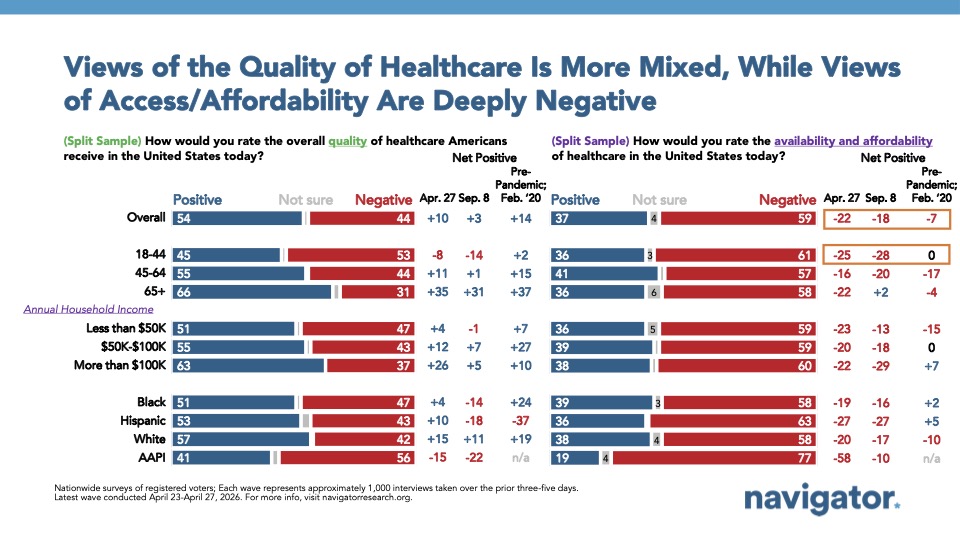
30% of Americans are not confident in their ability to access quality and affordable healthcare for the foreseeable future – up from 23% in 2020. Similarly, a majority rate the availability and affordability of healthcare in the US as either “not so good” or “poor” (59%), including 71% of Democrats, 62% of independents, and 46% of Republicans. Americans rate the quality of healthcare slightly better, with 54% rating it positively and 44% negatively.
- 45% of independents say they are not confident in their ability to access quality and affordable healthcare for the foreseeable future.
- Younger women rate the quality of healthcare in the country the most negatively, with 58% of women under the age of 55 saying the quality is either “poor” or “not so good.”
Perceptions of MAHA Are Split
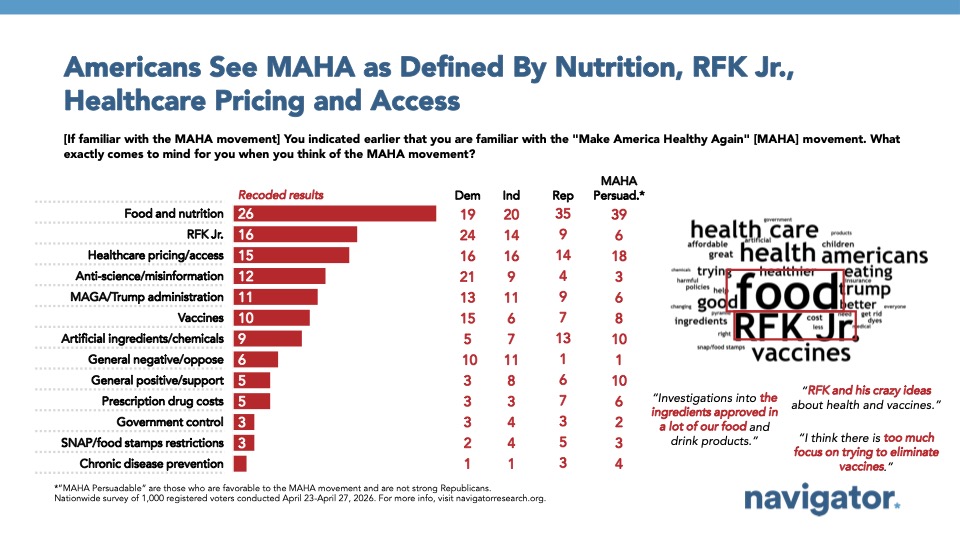
Americans’ views are split on MAHA (39% favorable – 40% unfavorable). While views are split, perceptions of MAHA have gotten worse since August when the movement was viewed favorably by nine points (43% favorable – 34% unfavorable). Americans are also split on what comes to mind when they think of MAHA. In an open-ended response, one-in-four say MAHA makes them think of food and nutrition, followed by RFK Jr. (16%), and healthcare pricing/access (15%).
- In an open-ended response, Americans who are favorable to the MAHA movement, but do not identify as “strong” Republicans (roughly 20% of the overall population), think most of food and nutrition (39%), healthcare access (18%), and artificial ingredients (10%).