
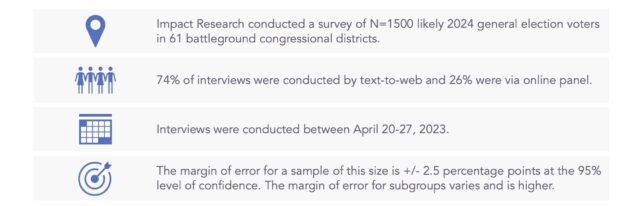
Methodology
Key Takeaways
- Democratic incumbents are viewed favorably both personally and for the job they’re doing, while Republican incumbents are underwater on both metrics. Battleground constituents in all district types are sour on the job their member of Congress is doing on the economy.
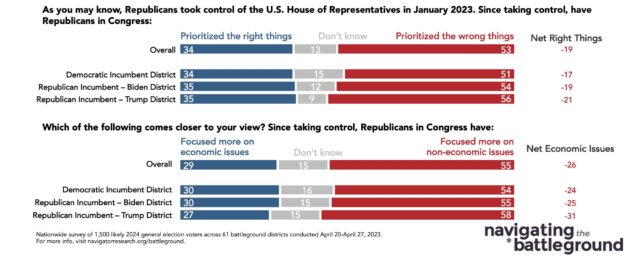
- Across the battleground, voters think Republicans are prioritizing the wrong things and focusing on non- economic issues. This sentiment is highest in Republican-held districts that Trump won in 2020.
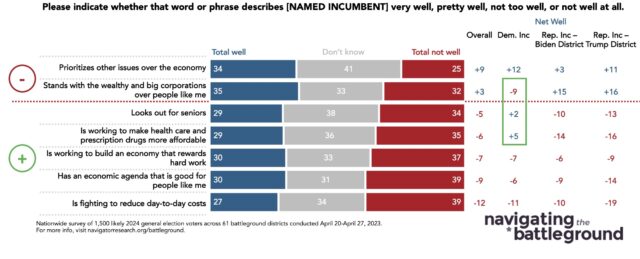
- Republican incumbents are not associated with positive economic traits or values statements. They are viewed as prioritizing other issues over the economy and standing with big corporations over regular people, and not seen as fighting to lower costs.
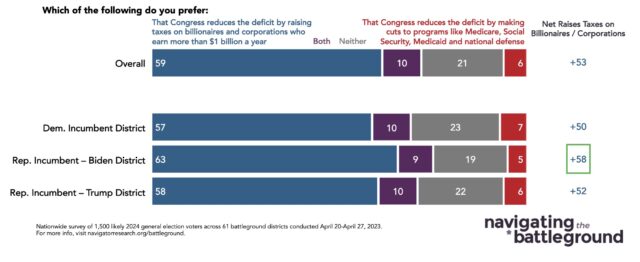
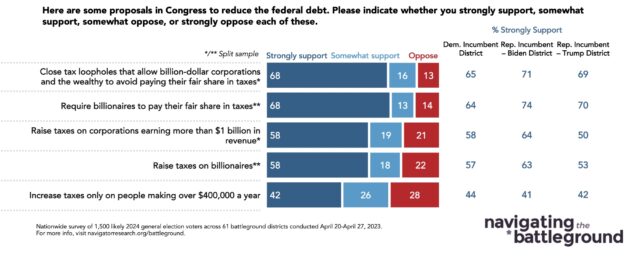
- Across the battleground, there is a strong preference for Congress to address the deficit by raising taxes on the wealthy and corporations. This approach is favored significantly more than cutting programs like Social Security, Medicare, or national defense.
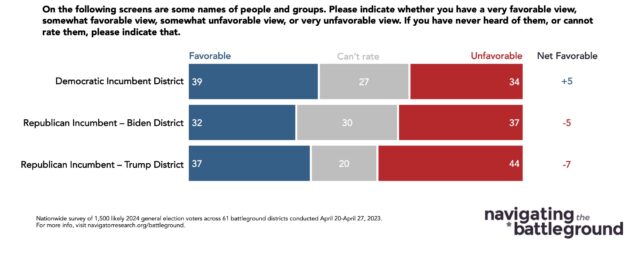
Democratic Incumbents Have Net Positive Favorability Ratings, While Republicans Incumbents Are Underwater
Democratic incumbents are narrowly net favorable (+5), while Republican incumbents in both Biden-won districts (-5) and Trump-won districts (-7) have net negative favorability ratings.
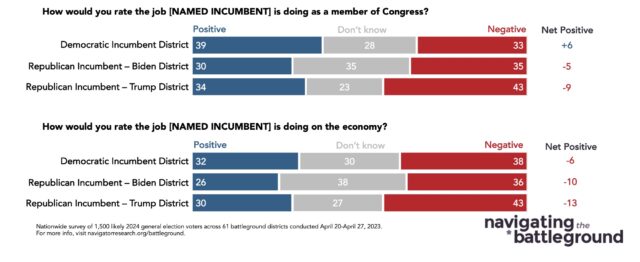
Democrats Have Positive Approval Ratings in Their Districts, While Republican Members are Underwater in Their Districts
Both Democratic and Republican members of Congress get a negative approval rating on the economy.
Across Battleground Districts, Most Think Republicans are Prioritizing the Wrong Things & Focused on Non-Economic Issues
Constituents in Trump-won Republican districts are marginally more likely to say those things about Republicans.
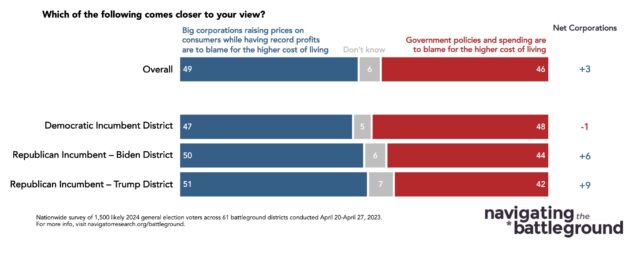
Constituents in Republican-Held Districts Blame Corporations More Than Government Spending for Higher Cost of Living
Democratic-held battleground districts are more evenly split between blaming government spending or big corporations.
Constituents are More Critical of Republican Incumbents on Economic Values and Priorities Than Democratic Incumbents
Democratic incumbents are described as looking out for seniors and working to make health care and prescription drugs more affordable; they are not associated with standing with the wealthy and big corporations over regular people.
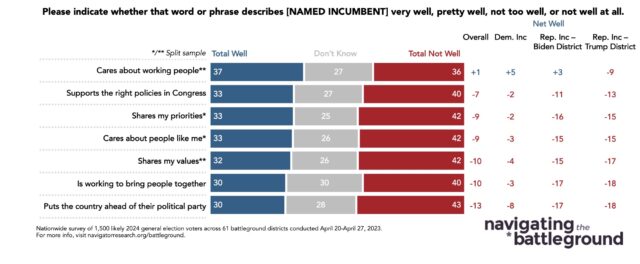
Constituents Reject That Republican Incumbents Care About People Like Them, Share Their Values, or Put the Country First
Voters are split on whether values statement describe Democratic incumbents, while Republican incumbents are much more underwater.
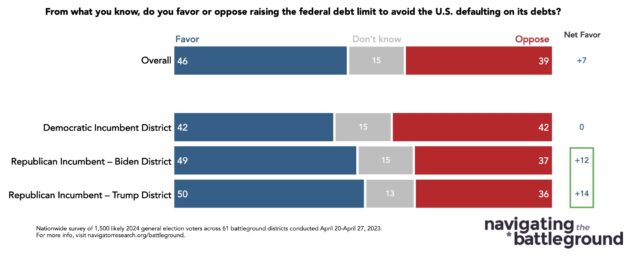
Battleground Constituents Support Raising the Debt Limit to Avoid the U.S. Defaulting on its Debts
Framing the debt limit debate around avoiding default increases support, especially in districts held by Republicans.
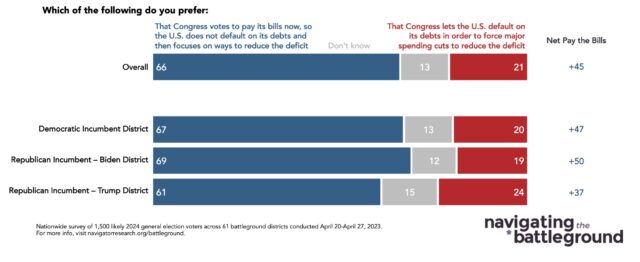
In Both Democratic- and Republican-Held Districts, Voters Prefer Congress to Pay its Bills and Not Let the U.S. Default
Majorities across district types prefer Congress votes to pay its bills now to avoid default.
Battleground Constituents Want Congress to Reduce the Deficit by Raising Taxes on the Wealthy Over Cutting Programs
Constituents in Biden-won Republican districts are most likely to prefer Congress raising taxes on billionaires and corporations.
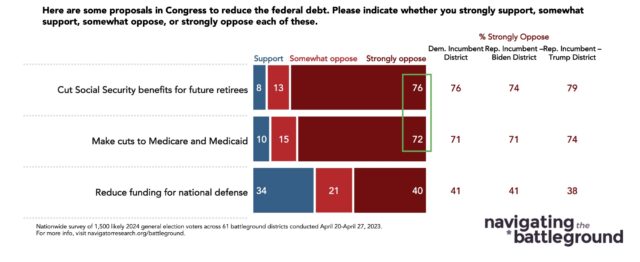
Across Battleground Districts, Three in Four “Strongly Oppose” Cuts to Social Security, Medicare, and Medicaid
Majorities in all the districts oppose cuts to national defense as well, but with less intensity.
Corporations and the Wealthy Paying Their Fair Share is Most Effective When Framing Revenue Increases to Reduce the Deficit
Majorities in all the districts oppose cuts to national defense as well, but with less intensity.
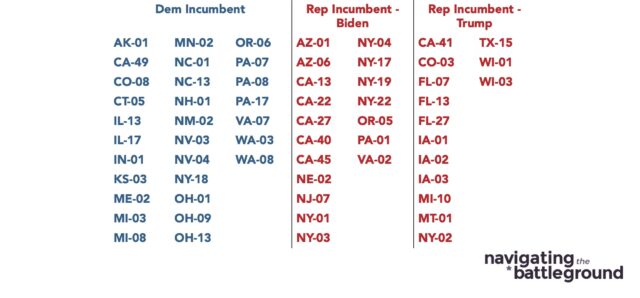
Appendix: Congressional Districts Included In Sample