

The War with Iran Continues to Break Through as Opposition Hits a New High
Six months in, news about the ongoing conflict with Iran is breaking through to more than three-quarters of Americans (77%, including 66% of passive news consumers). More than half (54%) oppose military actions against Iran, a new high in Navigator’s tracking. Opposition is especially high among independents (66% oppose). Net support for the war is at -15 (39% support – 54% oppose), the lowest it has been in Navigator tracking.
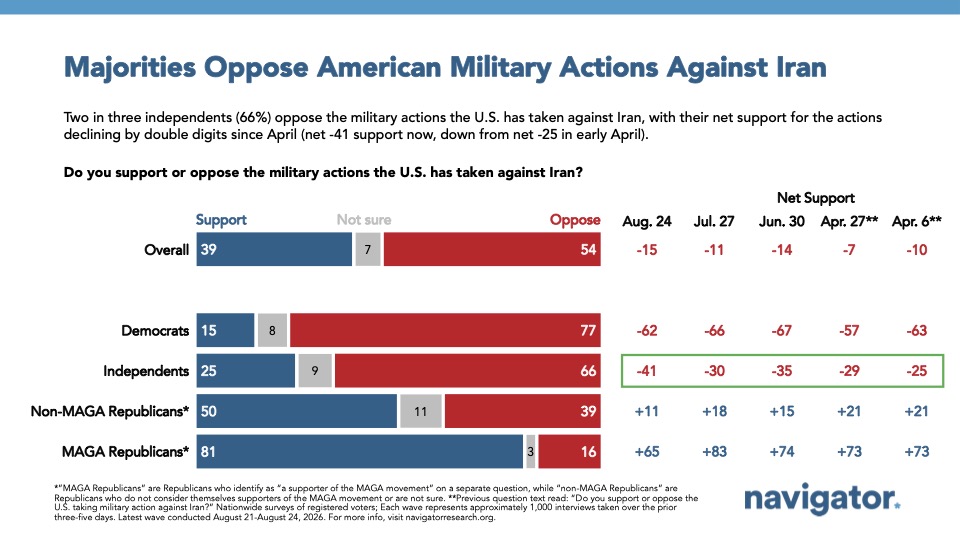
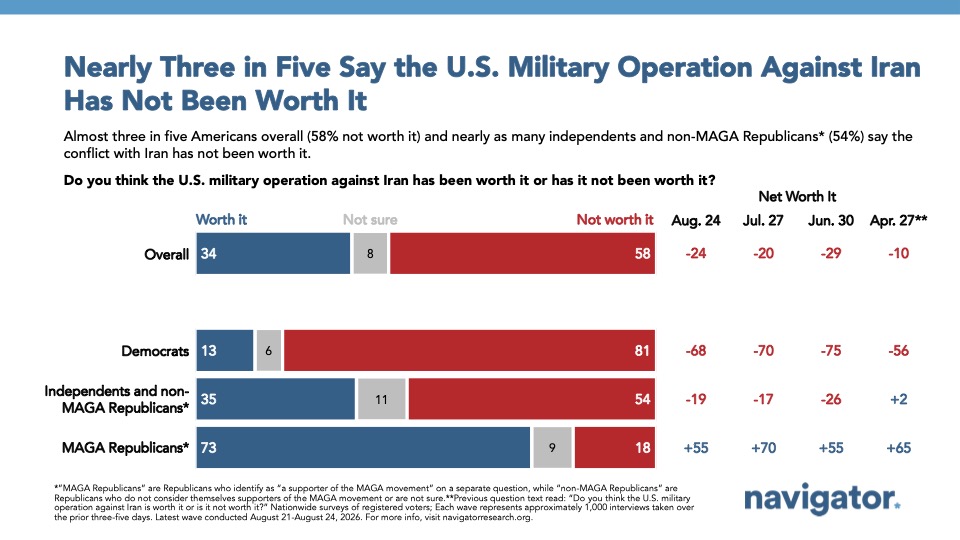
Similarly, 58% of Americans overall say the war in Iran has not been worth it, including 41% who strongly feel it has not been worth it. This is an eight point increase from April when 50% said the conflict was not worth it and 40% said it was. Now, only 34% say the war has been worth it, a six-point drop.
Democrats Hold a Small Trust Advantage Over Republicans on the Iran War
Democrats now hold a four-point trust advantage over President Trump and Republicans on the conflict with Iran (36% trust Democrats – 32% trust Republicans). In March, right after the conflict started, Trump and Republicans held an eight-point trust advantage on the issue (31% trust Democrats – 39% trust Republicans). However, nearly a third say they don’t trust either party on this issue (25%, including 55% of independents).
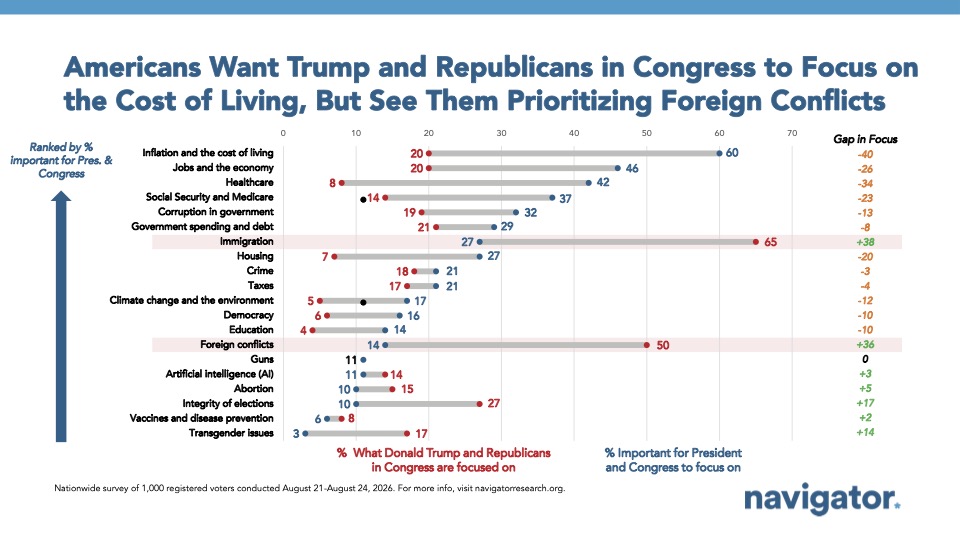
Americans Want President Trump and Republicans in Congress to Focus on the Cost of Living, But See Them Prioritizing Foreign Conflicts
Consistent with previous Navigator tracking, while Americans want leaders in Washington to focus on inflation and the cost of living (60%) along with jobs and the economy (46%), half (50%) see President Trump and Republicans in Congress most focused on foreign conflicts.
Americans Are Split on Whether War in the Middle East After 9/11 Made The U.S. Safer
Looking back now at 25 years since September 11, 2001, 45% of Americans agree that military interventions in the Middle East after the terrorist attacks did not make us safer, compared to two-in-five (40%) who say that the wars helped make the country safer.
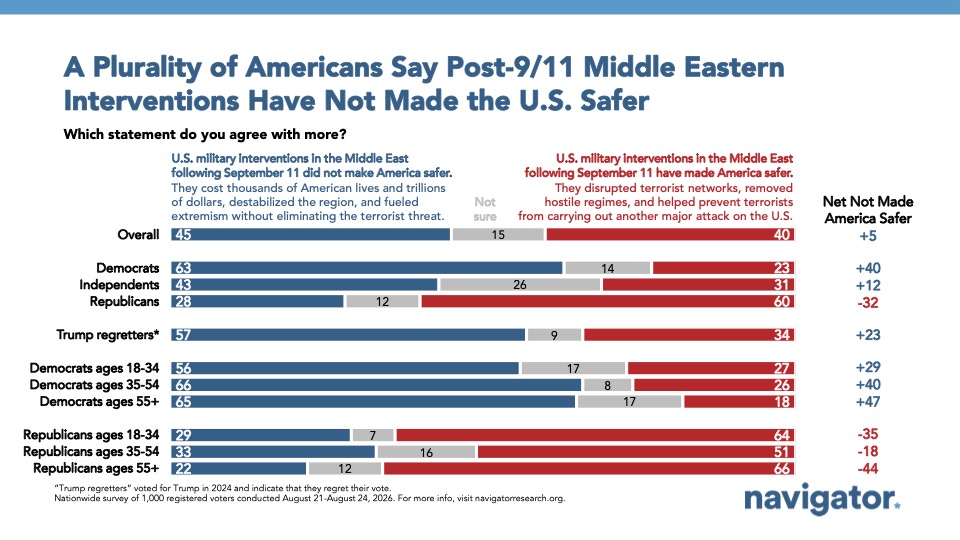
- There are some distinct generational differences: 51% of millennials (born between 1981 and 1997) say the interventions were not worth it compared to just 38% of Gen Z (both between 1998 and 2008). For comparison, a plurality (46%) of Gen X (born between 1965 and 1984) say the interventions did not make the U.S. safer while 43% of baby boomers (born between 1946 and 1964) say the interventions made the U.S. safer.
- Members of the military and those in a military household are more likely than civilians to say the interventions were worth it (47% – 38%).
- Those who regret their 2024 vote for President Trump are especially pessimistic on the success of post-9/11 U.S. interventions with 57% saying military interventions in the Middle East did not make America safer.
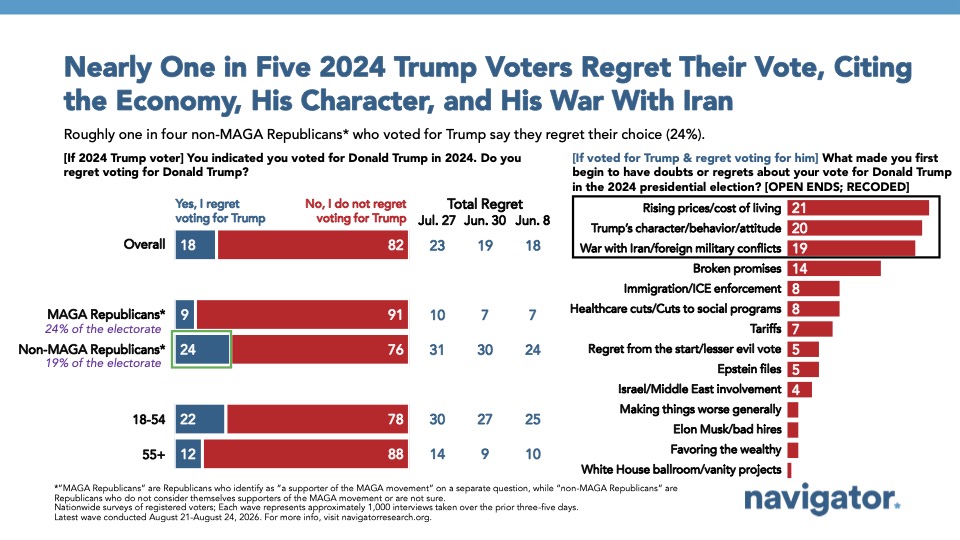
The Economy and Iran War Drive Trump 2024 Regret
Among those who regret voting for Trump in 2024 (18%), the two most cited reasons were the war with Iran and Trump’s foreign policy decisions (45%) as well as prices and the cost of living (43%). Similarly, when these Trump regretters were asked in an open-ended question what made you first begin to have doubts about their vote for Trump, two of the most popular words used were “prices” and “war.”
Follow Navigator for the latest news on Trump regret, coming later this week.