
Qualitative Research: Dial Group
This Navigator Research report is a special report containing findings from a live-reaction dial group* Navigator conducted in the Phoenix, Arizona metro area analyzing how soft partisans and independents responded to President Trump’s State of the Union address in real time.
Overall Reactions
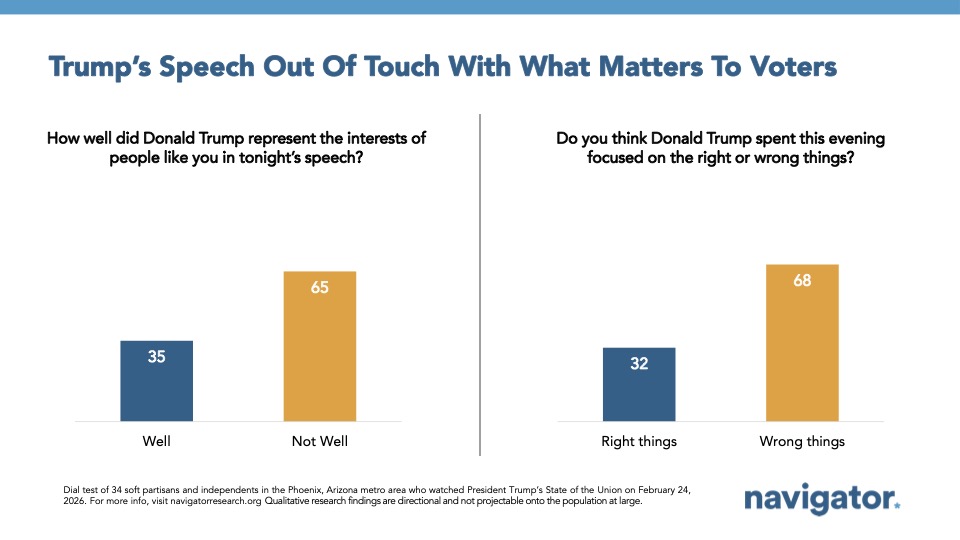
In the longest-ever State of the Union address, Trump centered his speech on stories of individual Americans and highlighted what he characterized as major accomplishments of his administration. He devoted comparatively little time to cost of living concerns, which are top of mind for a majority of Americans, while avoiding his most unpopular issues such as aggressive actions by ICE and the Epstein Files. We saw the dials spike when Trump shared heroic stories and discussed plans for improving economic security with no tax on tips or overtime. The dials dipped, however, when Trump touted the “golden age of America” and his non-stop “winning,” indicating a disconnect between the president and Americans on the economic state of our union.
Where He Excelled
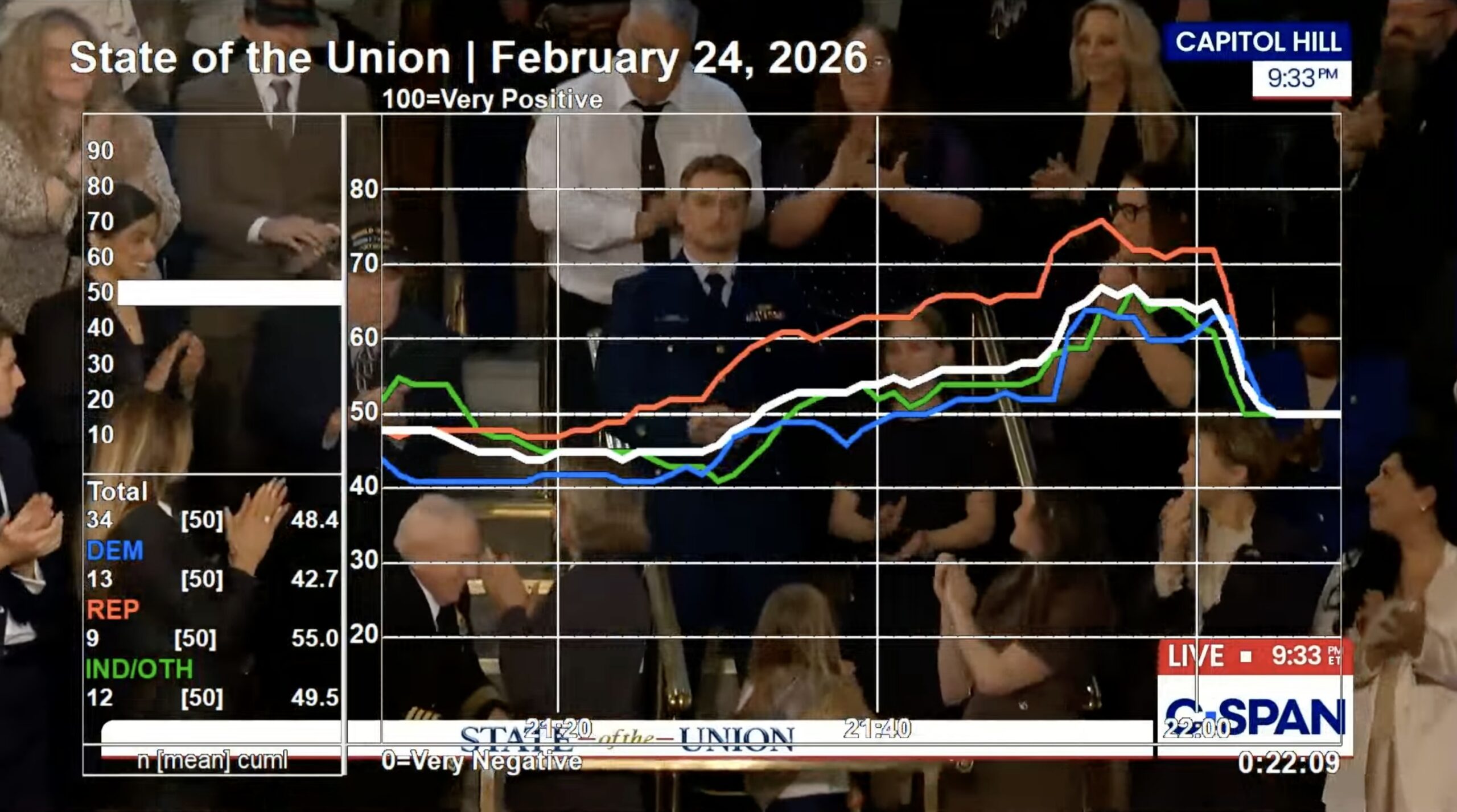
Some of the most well-received parts of Trump’s speech were when he highlighted his guests and stories of others. When Trump highlighted people like the men’s U.S. Olympic hockey team and members of the military, dials spiked. One of the biggest spikes of the evening occurred when Trump honored Scott Ruskan, a Coast Guard rescue swimmer who saved over 165 people when floods swept through Texas. Dials for Democrats, Republicans, and independents all rose above 60.
In a post-speech questionnaire, many Arizonans say the stories were the highlights:
- “I was pleasantly surprised to see how he remembered and honored many people tonight from the tragedies of everyday citizens to those who served in the military awarding the highest heroes—and he didn’t talk down or insult anyone.”
- “He spent a major portion of his time talking about other people.”
- “How many anecdotes and people he awarded.”
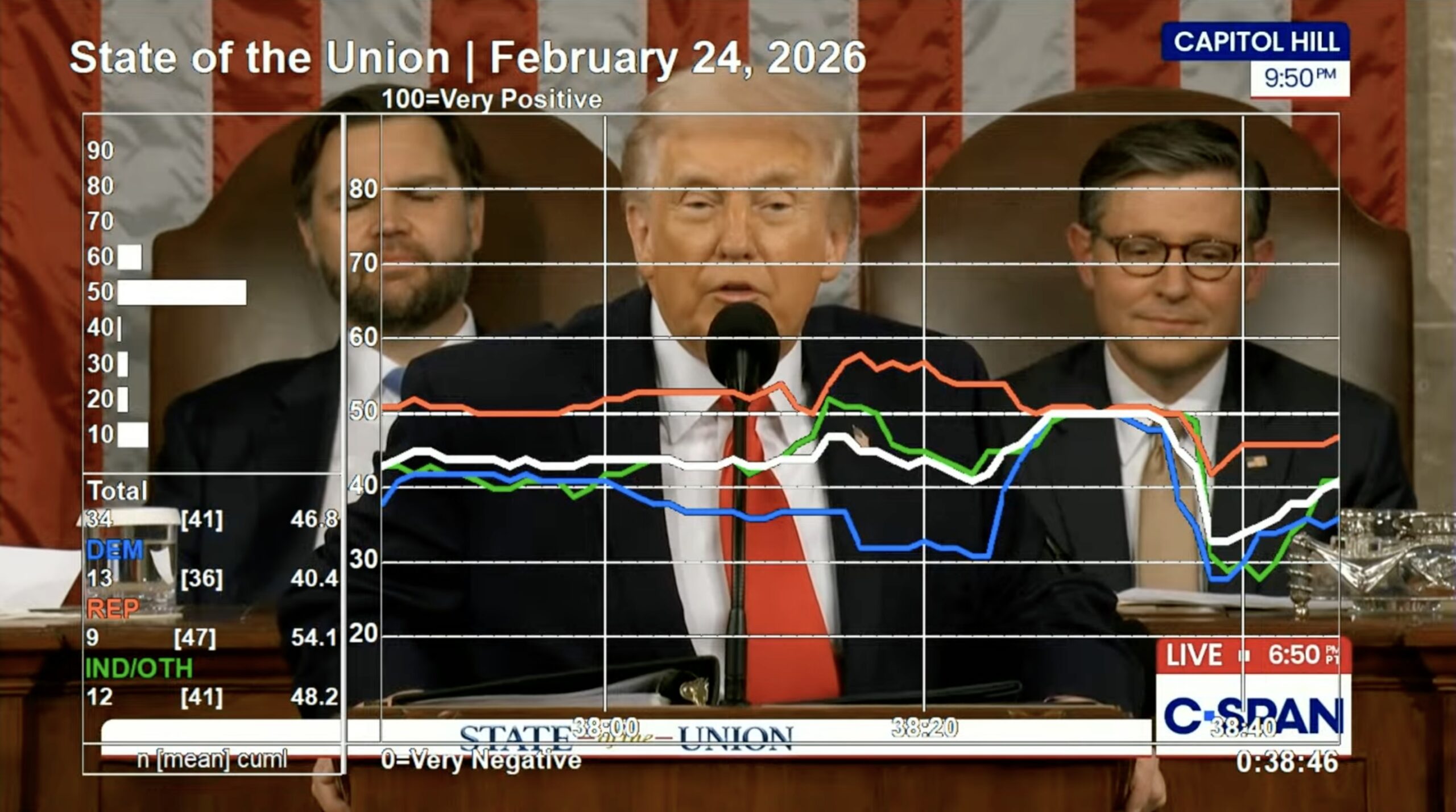
A few of Trump’s other popular moments were immediately followed or preceded by far less popular remarks. For instance, when Trump spoke about voter ID, the dials ticked up, particularly among Republicans and independents. However, when he called for the elimination of mail-in ballots, the dials dipped, especially among independents.
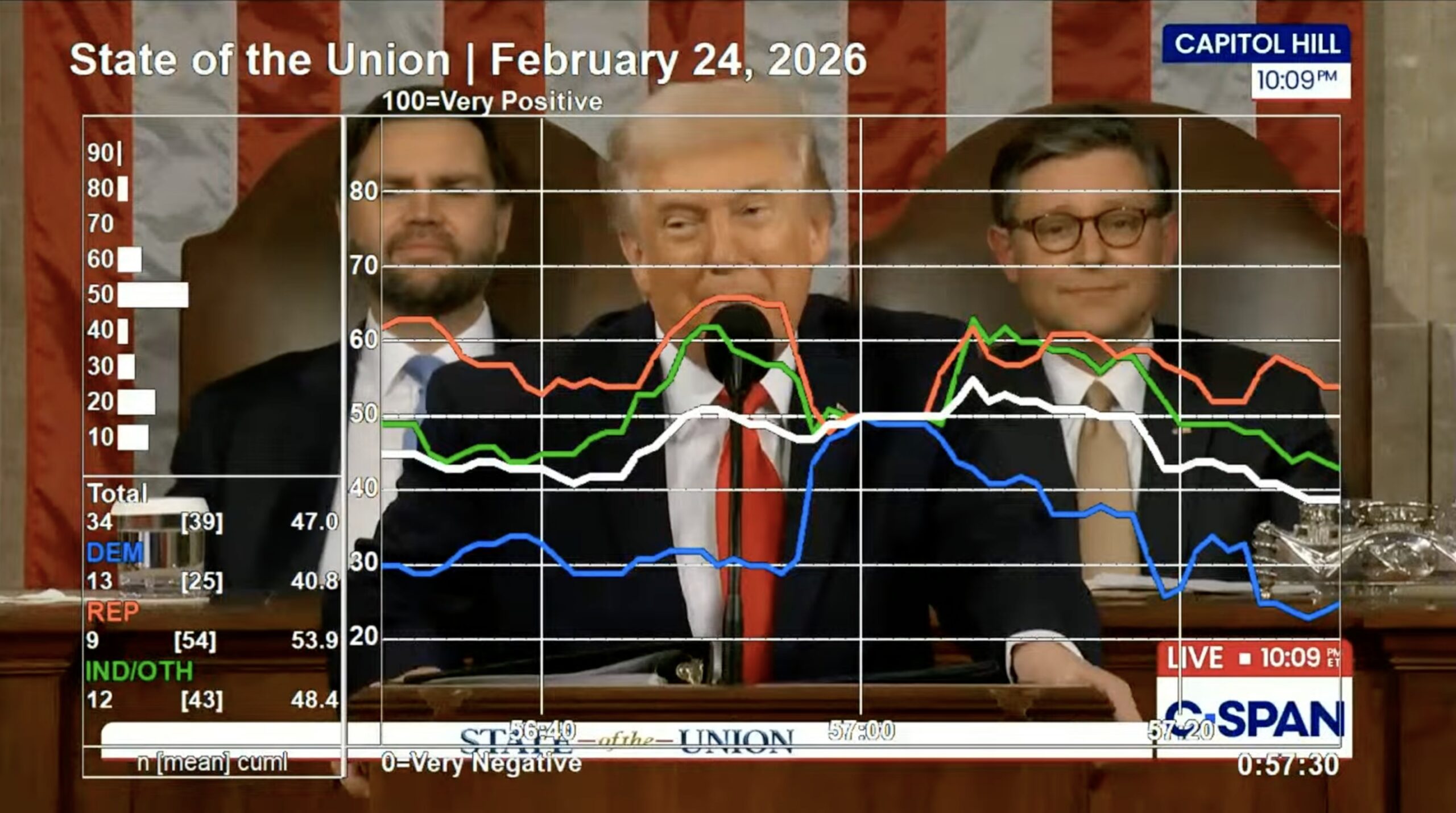
Similarly, when Trump spoke about taxes, he received high marks for his mention of policies lowering taxes on tips, overtime, and Social Security. However, when he mentioned the massive tax cuts for the wealthiest Americans in the Republican budget seconds earlier, dials dipped.
One of the biggest improvements participants noted in the pre- and post-speech measurements was Trump’s handling of health care. This is, in part, due to Republican lawmakers’ poor standing on health care. In a national survey Navigator conducted earlier this month, Democrats in Congress hold a 16-point advantage over their Republican counterparts when asked who respondents trust more on health care.
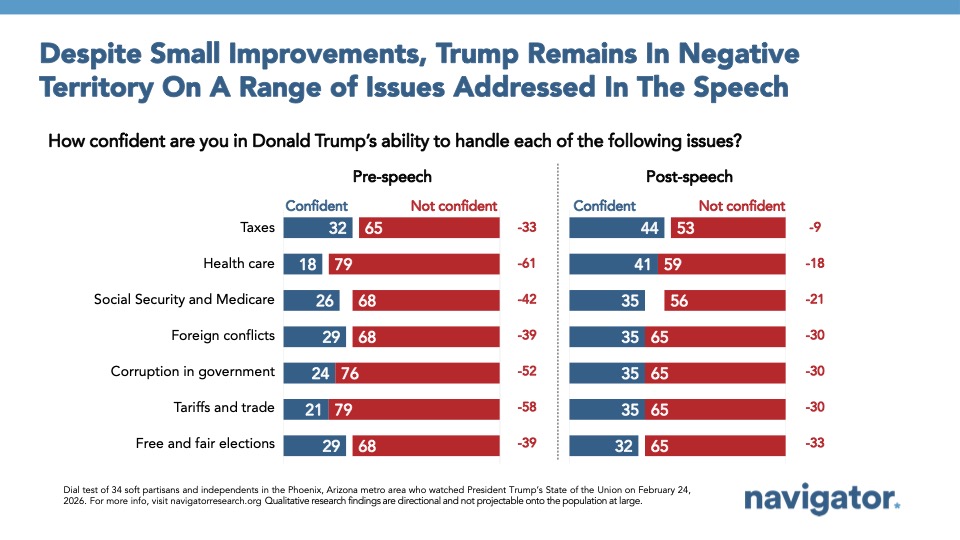
Trump attempted to gain support on health care by lying, including the false claim that he would always protect programs like Medicaid, which faces a $1 trillion cut due to his budget.
Where He Flopped
Throughout Trump’s speech, dials took a dip whenever Trump tried to sell Americans on a narrative of a “golden age” and non-stop “winning.” When Trump spent around 30 seconds on how Americans are tired of all the “winning,” dials fell below 30, with independents turning dials around 25.
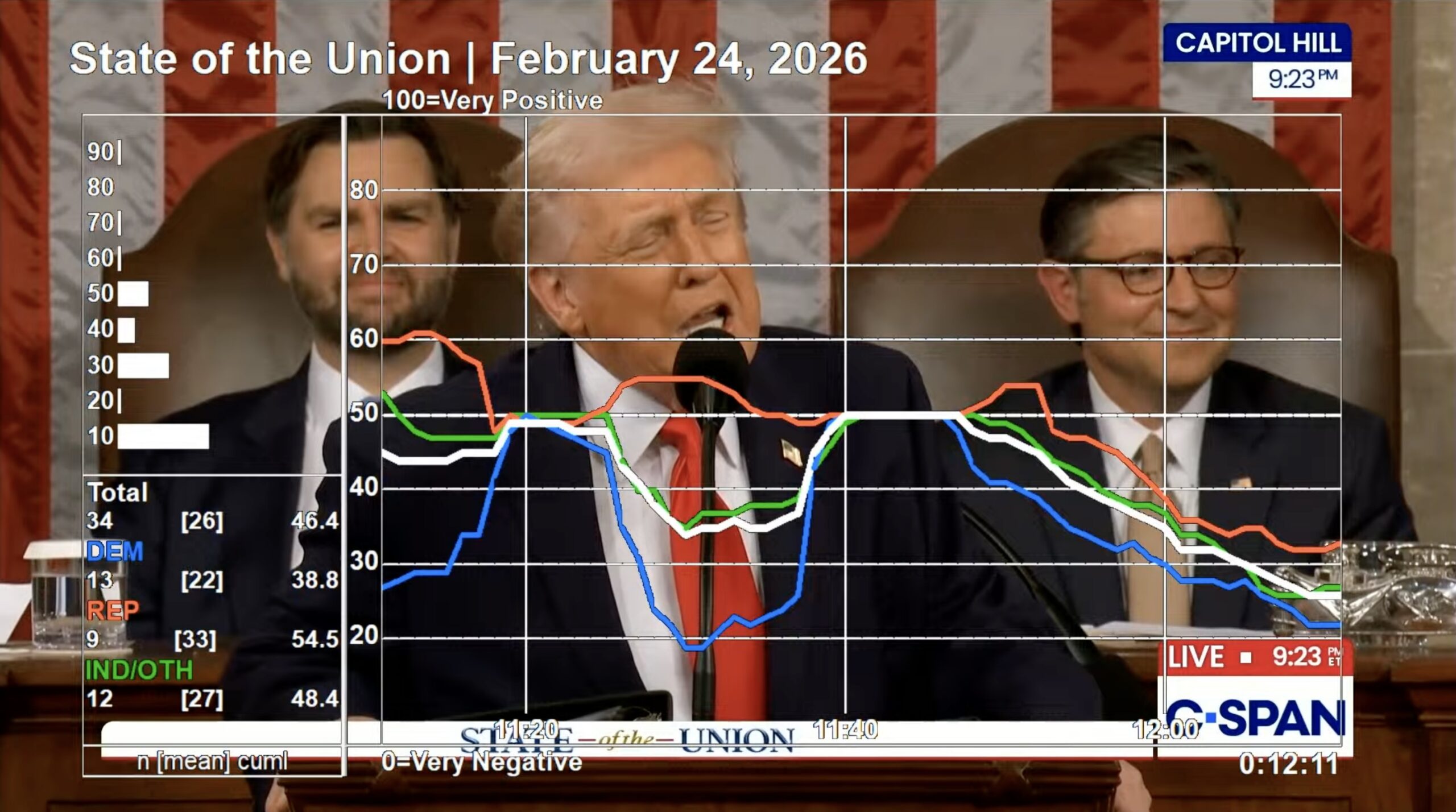
While Trump’s mention of specific policies – especially the ones widely known to be less popular – his first mention of tariffs saw dials take a sharp downturn. Overall, participants turned dials to around 40, with Republicans and independents just under 50, and Democrats turning more steeply around 20. Dials remained negative as he discussed alternative routes for incorporating his tariffs despite the Supreme Court’s recent ruling.
Though he largely remained on message, moments where he veered off into campaign-style rhetoric did not land well with soft-partisans. When talking about health care and prescription drug costs, Trump quickly remarked his second term should have been his “third term.” While the comment was short, participants took note and dials dropped across parties.
Where He Fell Flat
Participants noted Trump’s meandering throughout his speech, with several long periods of little dial movement. One participant noted after the speech that Trump treated the State of the Union “like an awards show.” Other participants noted:
- “Why did he talk about nothing? What kind of speech was that? He said nothing.”
- “His dragging on and constantly calling on Democrats.”
- “A distraction. Nothing was addressed. Just a lot of fluff and fake talk.”
- “It seemed like nothing really got accomplished. Too much time wasted clapping, standing, clapping.”
One specific policy area where Trump fell flat was immigration. While some remarks related to deporting violent criminals were popular, his remarks surrounding the cut-off of funding for DHS did not land with participants. Across parties, dials turned down below 50 and remained there as Trump veered off topic into snow cleanup.
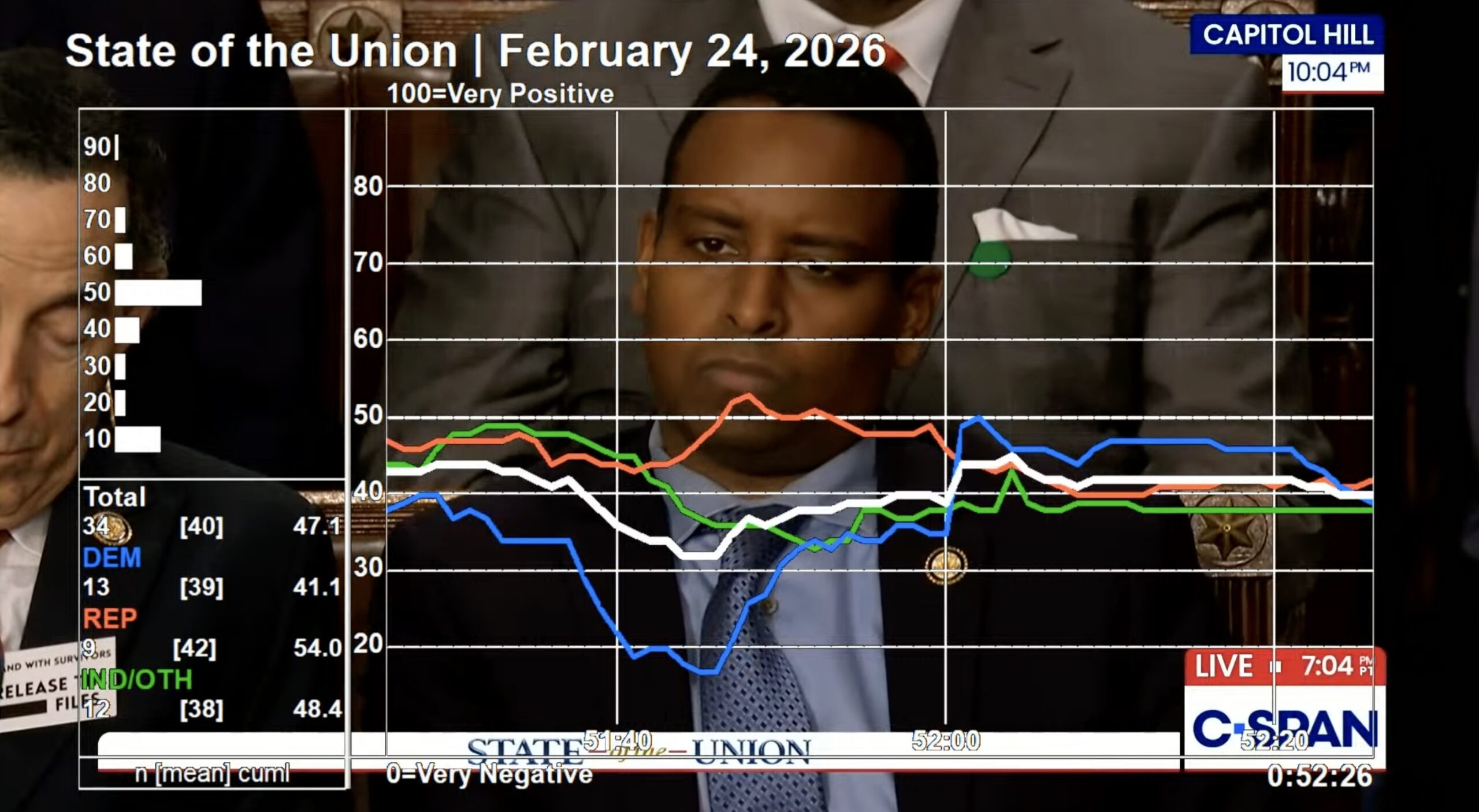
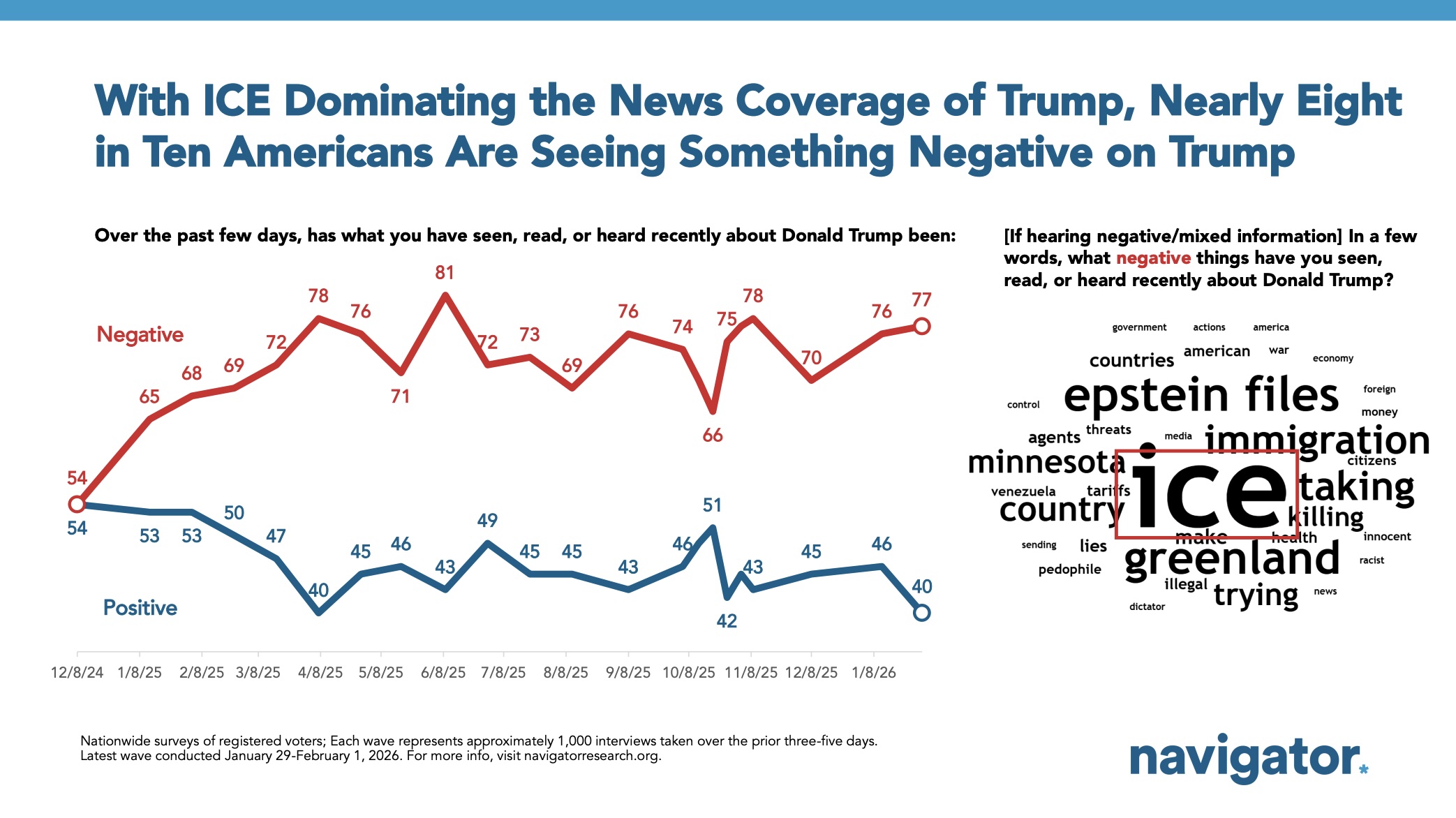
Noticeably, Trump didn’t mention several of his overwhelmingly unpopular policies or actions from this past year. Navigator’s survey from earlier this month showed when it comes to the negative news stories Americans are hearing about Trump, ICE and the Epstein files dominate the conversations. While Trump mentioned immigration in his speech, there was little focus on ICE, and no mention of Epstein files.
*GBAO conducted a live-reaction dial group on behalf of Navigator Research on February 24, 2026 during President Trump’s State of the Union address with 34 participants in the Phoenix, Arizona metro area. Participants included a roughly equal mix of soft partisans (not strong Democrats, not strong Republicans) and independents without a partisan lean. Participants were also a mix based on gender, race/ethnicity, and educational attainment.
Some quotes have been lightly edited for brevity. Qualitative results are not statistically projectable.