Navigator recently polled 3,000 midterm voters across the country to learn more about why they cast their ballots and what they’re looking for in their elected leaders. This report is the fourth in a series of findings from this survey.
From Lowering Costs to Healthcare to AI, Progressive Positions Drew Broad Support
Navigator asked midterm voters to weigh in on more than a dozen policy debates, and Americans sided with the progressive view across a wide range of issues.
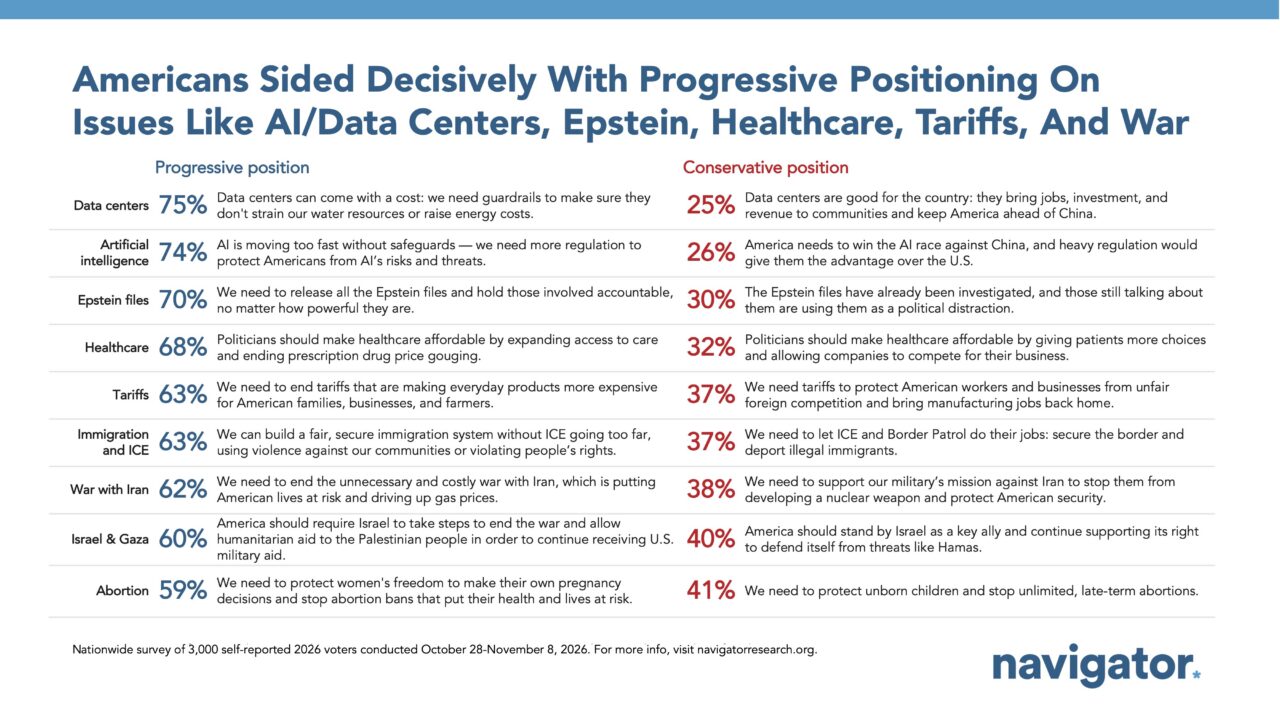
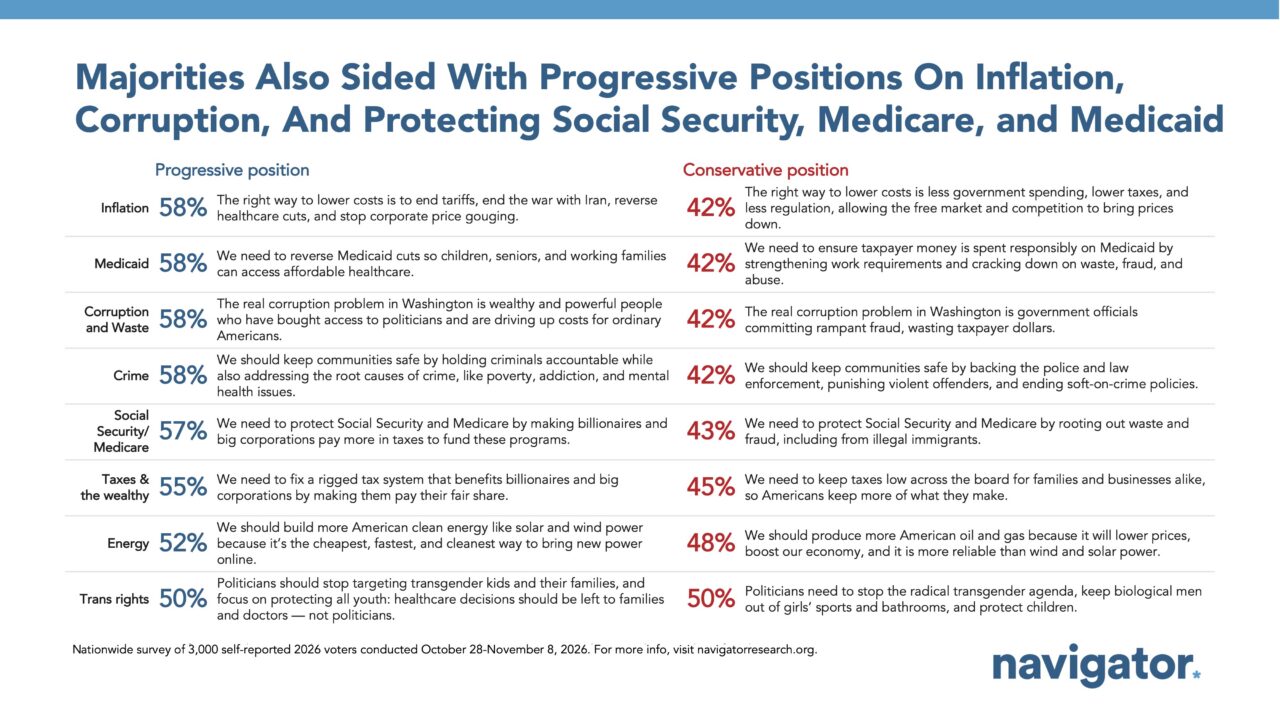
The progressive position on healthcare had the strongest support relative to the more conservative position, with more than two-thirds (68% progressive – 32% conservative) of midterm voters supporting expanding access to care and ending prescription drug price gouging. Nearly two-thirds also side with the progressive position on tariffs (63% progressive position – 37% conservative) and handling the war with Iran (62% progressive – 38% conservative). Over half also side with the progressive position when it comes to lowering costs and addressing corruption, both held 58% support for the progressive position compared to 42% support for the conservative position.
The progressive position also held strong support across key wedge issues like data centers, AI, and the Epstein files.
- By 50 points, voters agree we need guardrails on data centers to make sure they don’t raise energy costs.
- By 48 points, voters agree we need more regulation to protect against AI’s risks and threats.
- By 40 points, voters agree we need to release all the Epstein files and hold those involved accountable, no matter how powerful they are.
Even on traditionally strong Republican issues like immigration and crime, majorities of Americans agreed with the progressive position.
- Nearly two-thirds (63%) agreed that we can build a fair and secure immigration system without ICE using violence against our communities.
- Over half (58%) agreed that we should keep communities safe by holding criminals accountable and also addressing root causes of crime.
And while many Republican candidates and their allies fixated on fearmongering over transgender issues throughout this cycle, Americans are split (50% agree with the progressive position – 50% agree with the conservative position). However, support for the progressive position is high amongst core Democratic voters and notably, Democratic newcomers.
“Democratic Newcomers” Held Significantly More Progressive Positions Than Voters Overall Across Issues
The 2026 “Blue Wave” was in part fueled by new voters (11% of all midterm voters) who voted Democratic, some for the first time. About five percent of these new Democratic voters had not voted in 2024 or voted third party. About one-in-five (19%) Gen Z voters are Democratic newcomers, as are 12% of Latino American voters, and nearly one-in-10 (9%) of women of color voters.
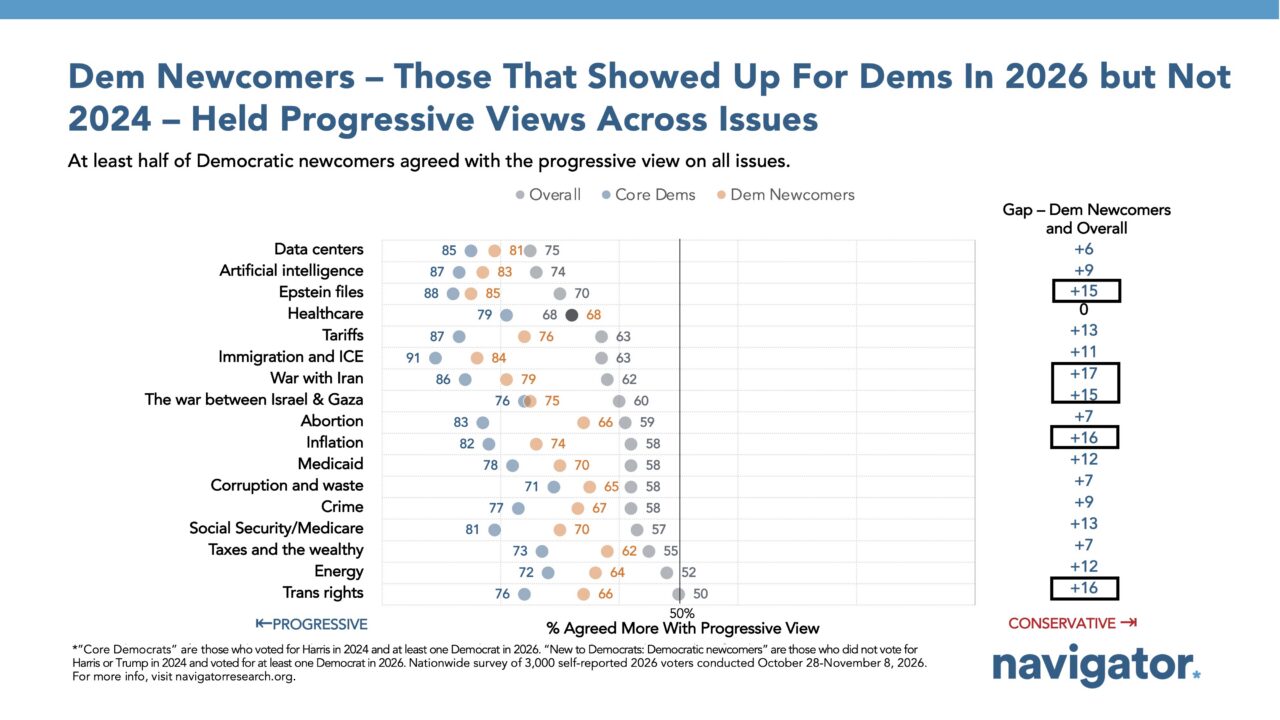
In Navigator’s issue debates, Democratic newcomers gave the progressive position a clear majority on every single issue.
Democratic newcomers gave the progressive position the largest margin when it came to the Iran war, tariffs, and handling lowering costs.
- By 58 points, Democratic newcomers agree that we need to end the war with Iran which is putting American lives at risk and driving up gas prices.
- By 52 points, Democratic newcomers agree that we need to end tariffs that are making everyday products more expensive for everyone.
- By 48 points, Democratic newcomers agree that the right way to lower costs is to reverse healthcare cuts and stop corporate price gouging.
Democratic newcomers also favored the progressive position by nearly 70 points on the Epstein files, immigration, and AI. Notably, two-thirds (66%) of Democratic newcomers also agree with the progressive positioning on trans rights, that politicians should stop targeting trans kids and leave healthcare decisions to families and doctors.
“Trump Defectors” Were Notably More Progressive Than Core Republicans On Issues Like Inflation, Tariffs, and ICE
About six percent of midterm voters this year had voted Democratic after voting for President Trump in 2024. Despite their previous vote choice, these “Trump defectors” agreed with the progressive positioning on a number of issues.
- Nearly seven-in-10 (69%) agree that in order to make healthcare affordable, we need to expand access and end prescription drug price gouging.
- Nearly two-thirds (60%) agree that the right way to lower costs is to end tariffs, end the Iran war, reverse healthcare cuts, and stop corporate price gouging.
- Nearly three-in-five (59%) agree that the real corruption problem is the wealthy and powerful who have bought access to politicians and are driving up costs for everyday people.
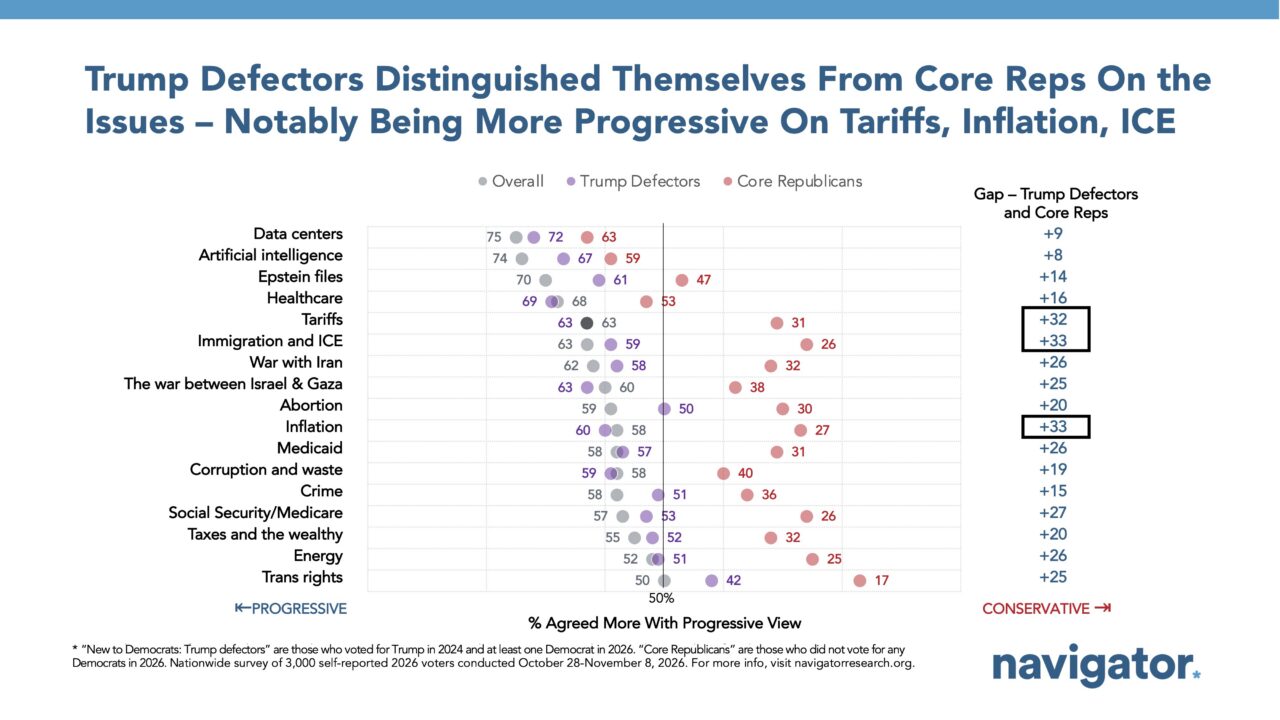
However, Trump defectors agreed much less with the progressive position on abortion rights, crime, and law enforcement issues.
- While 59% of voters overall agreed with the progressive position on abortion, Trump defectors were evenly split; 50% agreed that we need to protect the right to choose and stop abortion bans – 50% agreed the more conservative position.
- While 58% of voters overall agreed with the progressive position on addressing crime, Trump defectors were nearly split; 51% agreed that that keeping communities safe means holding criminals accountable while also addressing the root causes crime – 49% agreed that we should back police and law enforcement, punish violent offenders, and end soft-on-crime policies.
Nevertheless, on immigration, AI and data centers, and the Epstein files, Trump defectors – like voters overall – agreed strongly with the progressive position.
Trump defectors also held significantly different views from core Republicans on key issues like lowering cost, immigration and ICE, and tariffs.
- Trump defectors agreed more with the progressive view on reversing President Trump’s policies to lower costs by 33 points.
- These voters also agreed more with the progressive approach to immigration by 33 points.
- Trump defectors also agreed more with ending tariffs by 32 points.
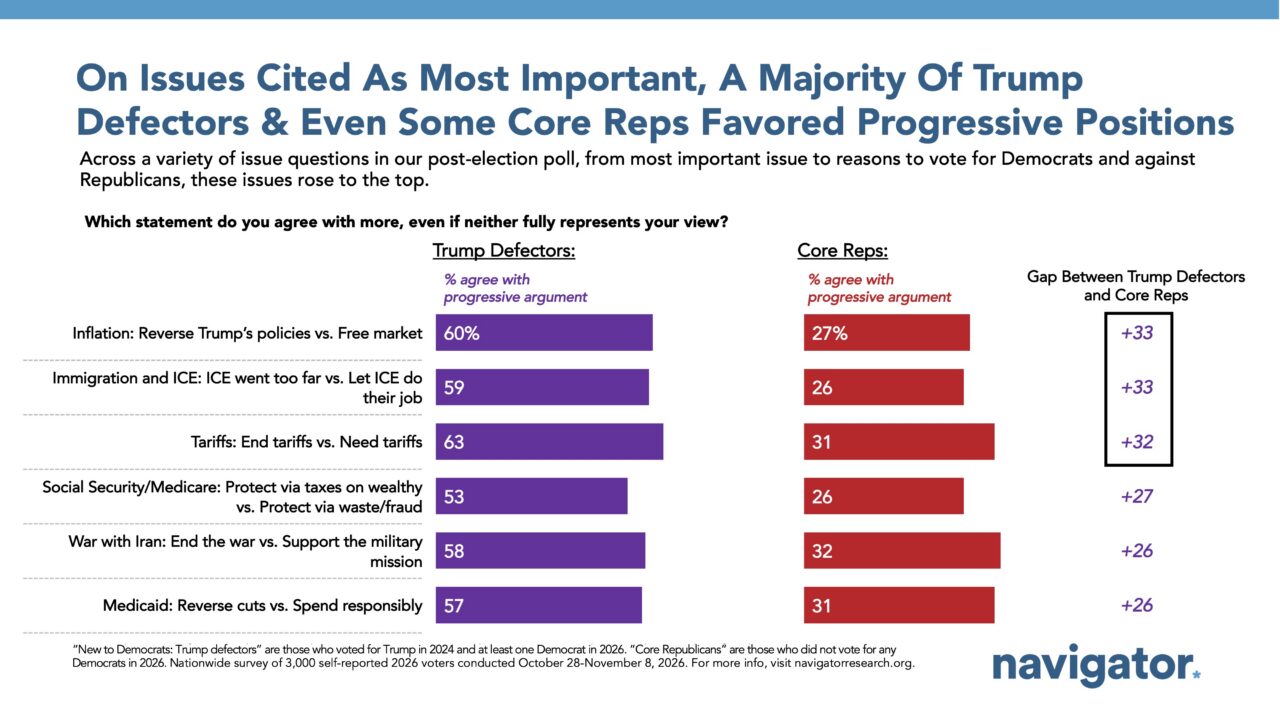
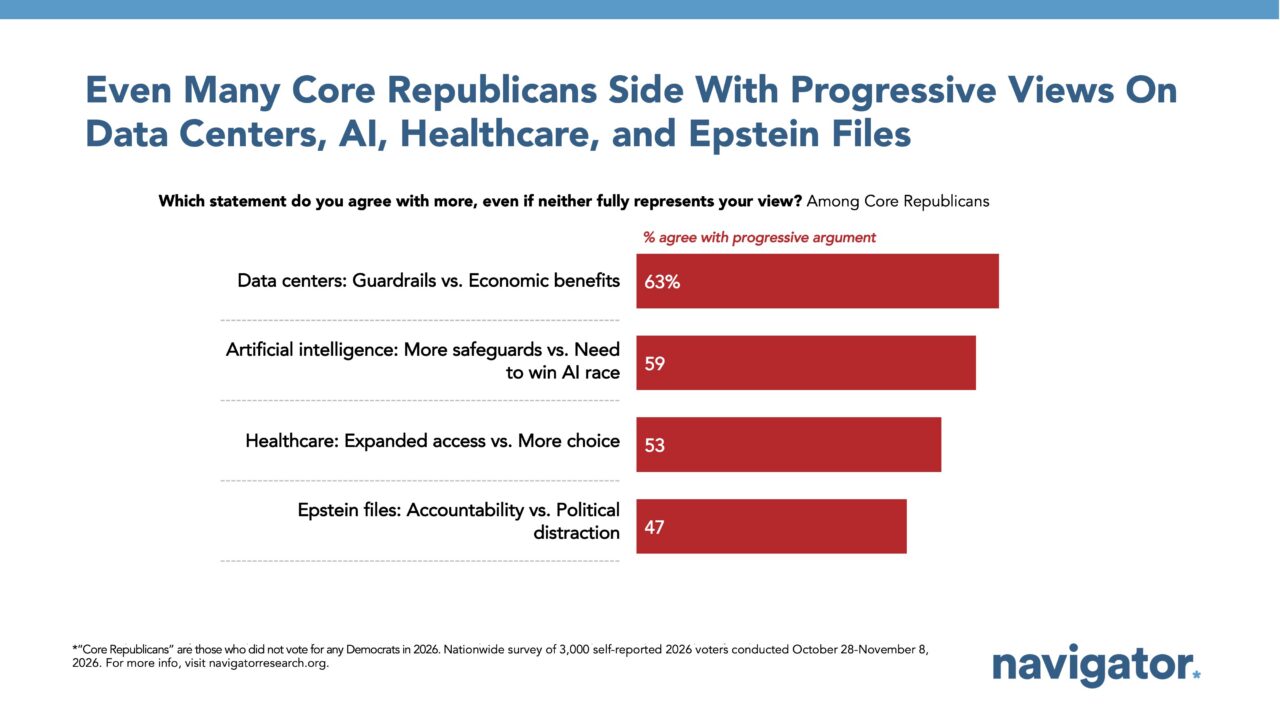
On the issue of AI and data centers, Trump defectors also held significantly more progressive views from core Republicans by nearly 10 points. And notably, even a majority of core Republicans sided with progressives on issues like data centers (63%), AI (59%) and healthcare (53%).