

Americans Still Don’t Like the Republican Tax Law and Do Not Think It Benefits The Middle Class
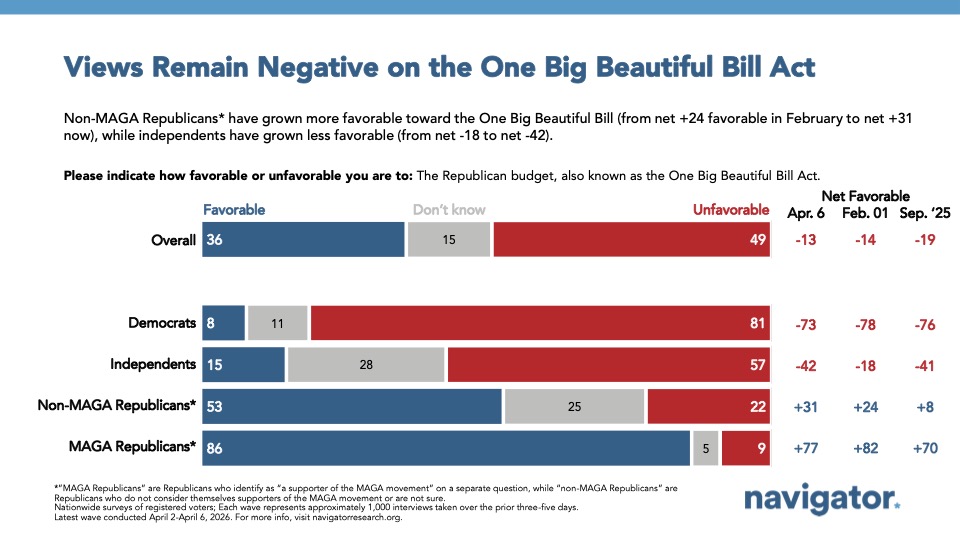
With most Americans having filed their 2025 income taxes, they still oppose the Republican tax law. The law’s favorability is net -13 (36% favorable – 49% unfavorable), still in the negative by double digits as it was when it passed last summer. In August, the law had a favorability of net -19 (33% favorable – 52% unfavorable).
- The law is more favorable among those who filed their taxes by April 6 (net -7; 41% favorable – 48% unfavorable) compared to those who hadn’t yet (net -20; 31% favorable – 51% unfavorable).
- Despite efforts from the Trump administration and Republicans in Congress to highlight the Republican tax law’s provisions on tips and overtime, the law is especially unpopular among self-identified service industry workers (net -24; 28% favorable – 52% unfavorable).
By a 20-point margin, more Americans believe the law does not benefit the middle class (48%) than those who say it lowers taxes for everyone for all Americans (28%). 24% of Americans – and 39% of independents – say they don’t know enough to say. That’s a greater margin than the share who say that the law’s costs outweigh its benefits (13-point margin, 44% agree – 31% disagree).
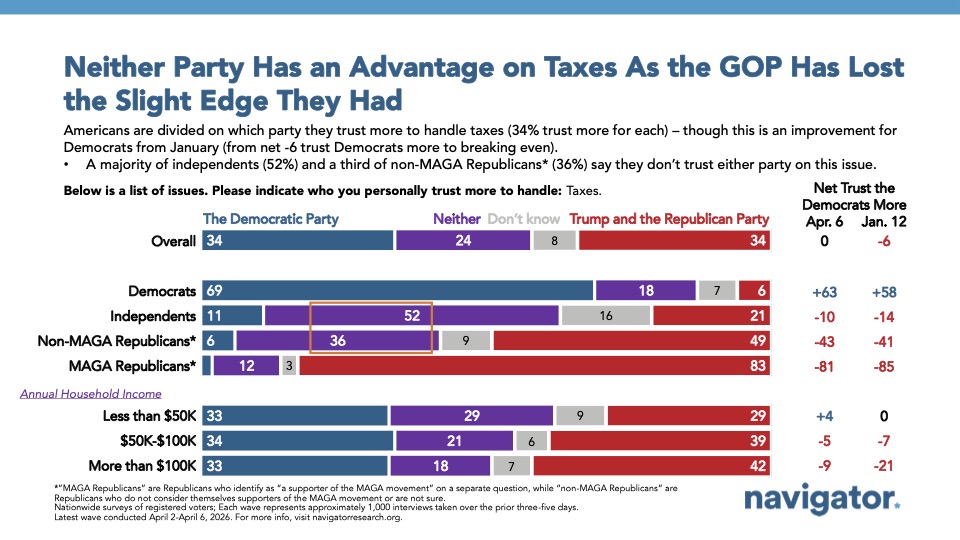
Republicans Have Lost Their Narrow Advantage On Taxes, With About a Quarter Saying They Don’t Trust Either Party
Americans are evenly divided on which party they trust more to handle taxes: 34% say the Democratic Party and 34% say President Trump and the Republican Party, with 24% saying neither and 8% saying they did not know.. In January, Trump and Republicans held a six-point advantage in trust on taxes (Democrats: 32% – Trump and Republicans: 38%) with 24% saying they don’t trust either party.
The Vast Majority Are Paying About the Same or More Than Expected in Taxes
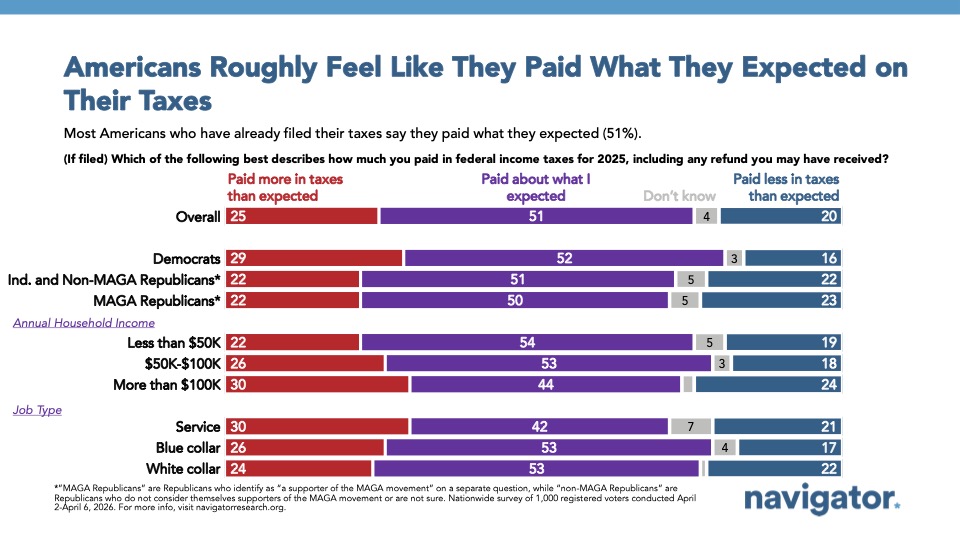
Despite claims from President Trump and Republicans in Congress that Americans across the board will be paying less in taxes due to the Republican tax law, most say they paid about what they expected or more this year.
Among those who already filed their taxes for 2025, only 20% say they paid less than they expected, 25% say they paid more than expected, and 51% say they paid about what they expected.
Among those who had yet to file their taxes for 2025, only 18% expect to pay less in taxes this year. 21% say they expect to pay more and 31% say they expect to pay about the same amount they have in previous years. Another 30% say they don’t know.
Messages Highlighting the Republican Tax Law’s Cuts to Medicaid and SNAP Are Most Effective
The most effective rebuttal to praise for the Republican tax law’s provisions focused on how the law cuts programs like Medicaid and SNAP:
- “Democrats who say the One Big Beautiful Bill raises costs on middle class families instead of helping them. It cut programs people depend on, like Medicaid and SNAP, to pay for tax cuts for billionaires and big corporations, leaving millions unable to put food on the table or afford health care.”
Less powerful but still successful messages focus on how tariffs and high gas prices would wipe out any potential tax savings from the law and called out that many would not benefit from the tax law at all and would still pay tax on tips, overtime, and Social Security:
- “Democrats who say because of Trump and Republicans, the average American could pay thousands more this year in costs because of tariffs and increased gas prices, which would wipe out any possible savings from the One Big Beautiful Bill.”
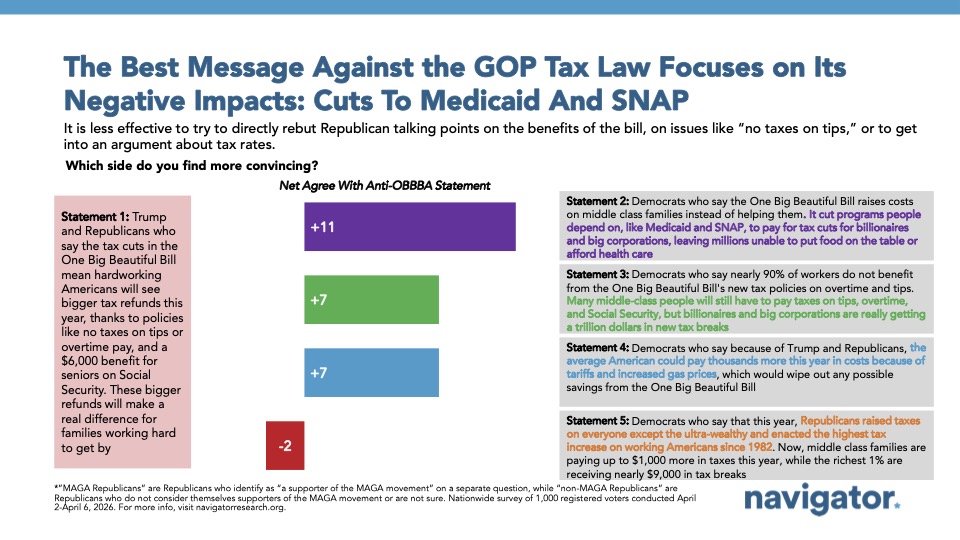
A message that focuses on process and specifics of the Republican tax law is ineffective and sends Americans into their partisan corners.
For more messaging recommendations on the Republican tax law, check out Navigator’s Dos and Don’ts from last summer.