“I went shopping for healthcare and decided I can either have healthcare or I can eat and pay rent.” – NC woman, uninsured (Navigator Focus Group, 4/23/26)
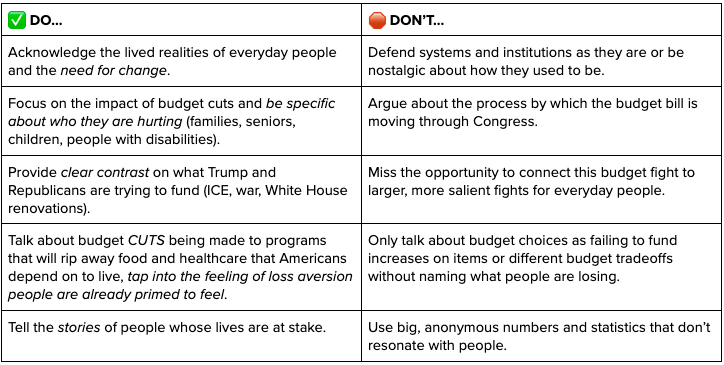
Americans are already feeling the impacts of the July 2025 Republican budget cuts which skyrocketed the cost of healthcare and made it harder to access food for families who need it. With another funding fight coming in Washington over the 2026-2027 federal budget, it’s an imperative for leaders to communicate support for programs that help everyday Americans.
The bottom line: Americans want elected leaders to prioritize the issues that impact them here at home, not make their lives harder and more expensive. They view further cuts to healthcare and food assistance as a non-starter. An effective message on the funding fight positions Congressional Democrats as on the side of everyday people, centers the real-life impacts of the budget cuts, and provides a clear contrast with what Republicans want to fund: tax cuts for billionaires, ICE, and foreign conflicts.
What The Data Is Showing
This funding fight is a valuable messaging opportunity because Americans are already primed to feel that President Trump and Republicans in Congress are focused on the wrong priorities. They believe Congress should address the issues that impact their day-to-day lives, like the cost of living, economy, and healthcare, while Republicans in Congress are focused on brutal and unpopular immigration enforcement as well as costly and dangerous foreign conflicts.
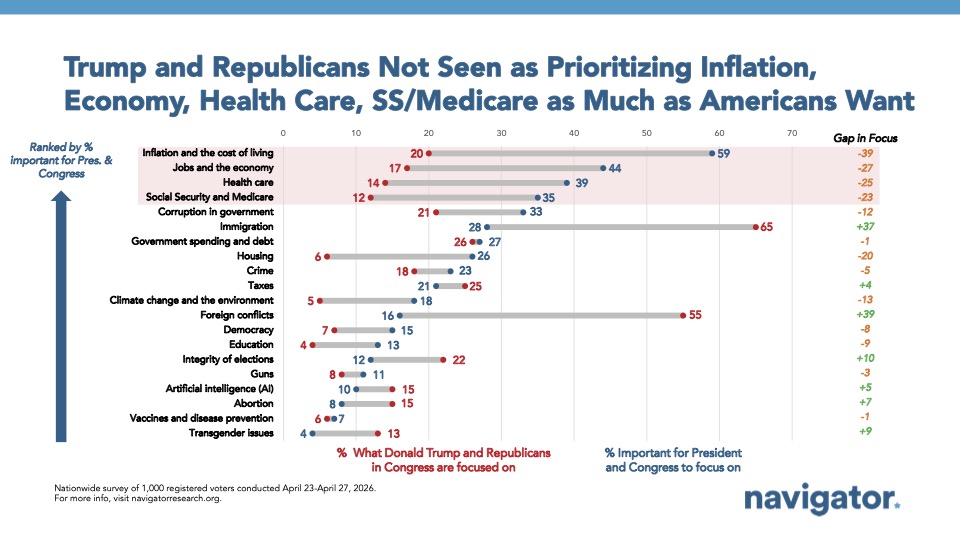
Democrats enter this conversation with advantages in party trust on many of the issues Americans want the President and Congress to prioritize: healthcare, the cost of living, and “looking out for people like me.” However, the challenge is making sure Americans can see and hear the Democratic message.
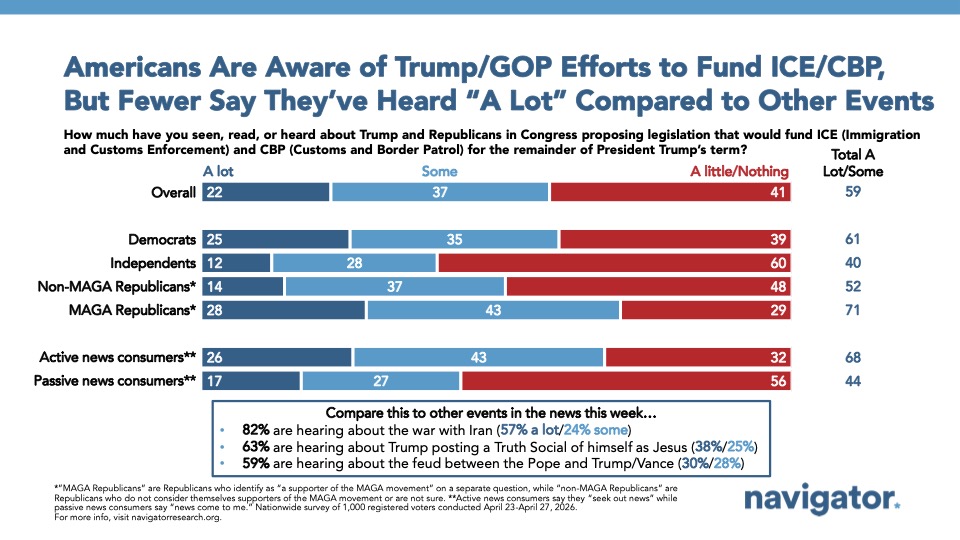
Over half of passive news consumers, those who do not seek out the news but rather have it come to them, have heard little to nothing about the current funding fight. But many of these same Americans are concerned about ICE brutality and healthcare cuts. This is a valuable opportunity to drive home the message that Republicans in Congress do not have the right priorities, especially to reach those who are not actively paying attention. Passive news consumers are much more likely to scroll through their feeds and have the news find them rather than seek it out. Communicators need to prioritize creative messengers and mediums that can game the algorithm in order to reach these Americans.
- Magnify your audience on the mediums you are already on. Social media collaboration posts with larger accounts or creators can easily put your content in front of audiences that you wouldn’t normally reach.
- Pick a fight. Social media feeds off of confrontation, be strategic about inserting yourself into the news cycle by pairing typical congressional content with more creative angles (Example: @repsarajacobs).
- Diversify your audience. Go on podcasts or YouTube shows, especially those not strictly focused on political topics to reach a new audience.
With public support for ICE at historic lows, Americans’ top concern about the Republican budget – which allocates billions to ICE – is the cutting of billions from healthcare and food assistance, especially as those costs continue to rise. However, Americans are not concerned about the process by which the budget is passed. An effective communications strategy around this funding fight must first and foremost center the impacts on families across the country.
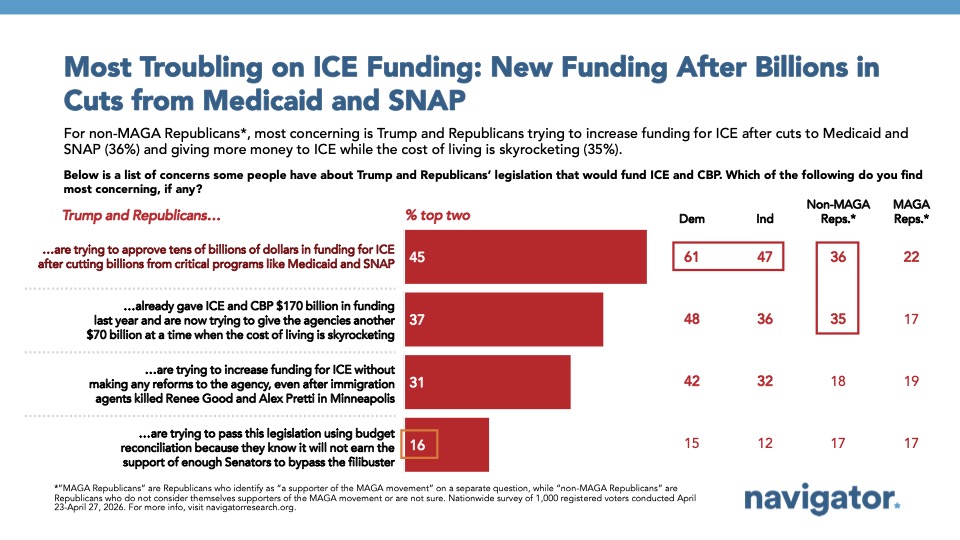
Cuts to healthcare and food assistance are deeply unpopular, especially when contrasted with what President Trump and Republicans in Congress actually want to spend the money on. Americans don’t want tax cuts for the rich, or an expensive and dangerous war, or more funding for ICE, or a White House ballroom. They want to be able to go see a doctor when they need and put food on the dinner table.
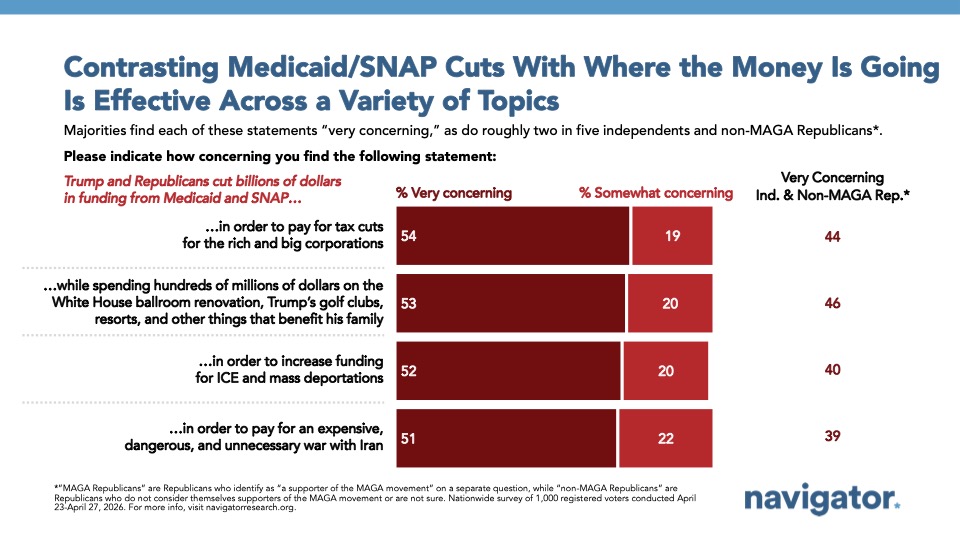
Democrats in Congress can effectively position themselves as champions of the American people on the core issues of this funding fight. This is one of the few opportunities where a process story can be utilized to paint a vivid picture of Republican budget cuts ripping away food and healthcare from families, and Congressional Democrats fighting to make lives easier, not harder, for everyday Americans.