Poll: Impeachment Inquiry
This Navigator Research report contains polling data on the public’s assessments of House Republican lawmakers’ recent calls to impeach President Biden, including the greatest concerns Americans have about the impeachment inquiry.
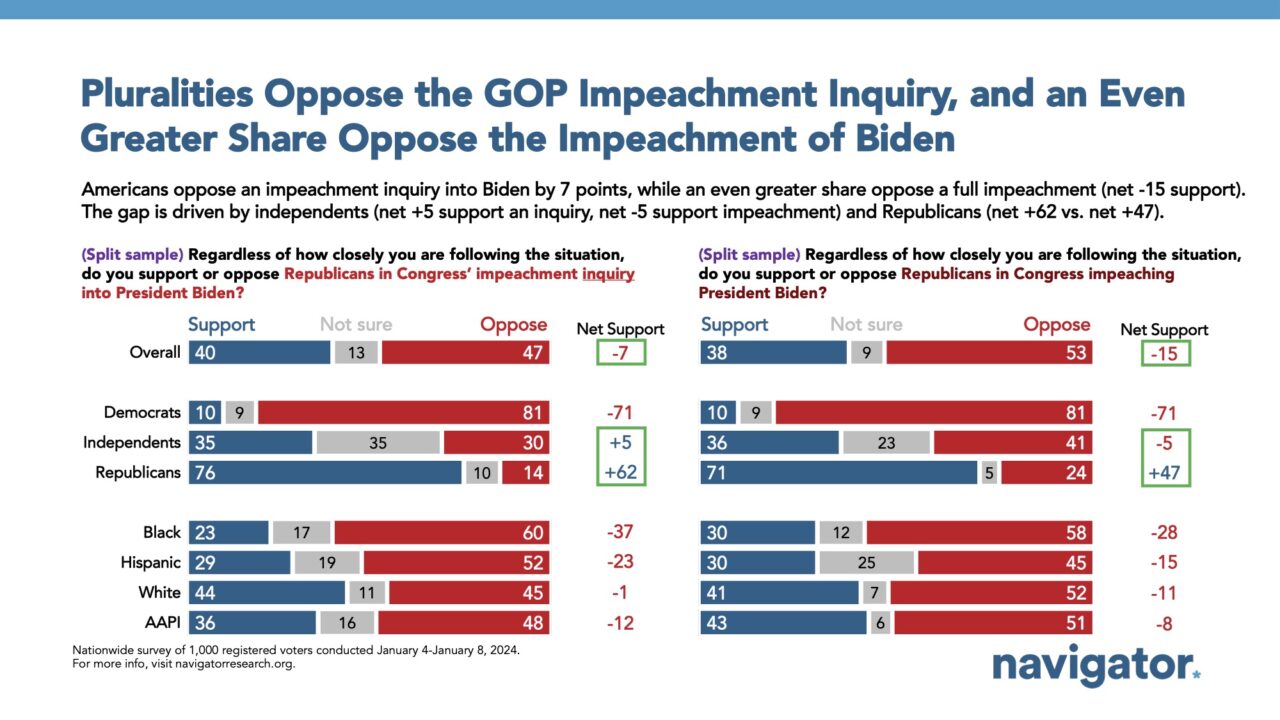
When described as an impeachment inquiry, a plurality of Americans are opposed to it, and opposition increases to a majority when described as impeaching Biden.
By a 7-point margin, there is plurality opposition to an “impeachment inquiry” into President Biden (40 percent support – 47 percent oppose, with an additional 13 percent who are not sure). But when described as moving forward with impeaching President Biden, net opposition grows to 15 points (38 percent support – 53 percent oppose), including a plurality of independents (net -5; 36 percent support – 41 percent oppose) and even a quarter of Republicans express opposition to impeaching President Biden (24 percent).
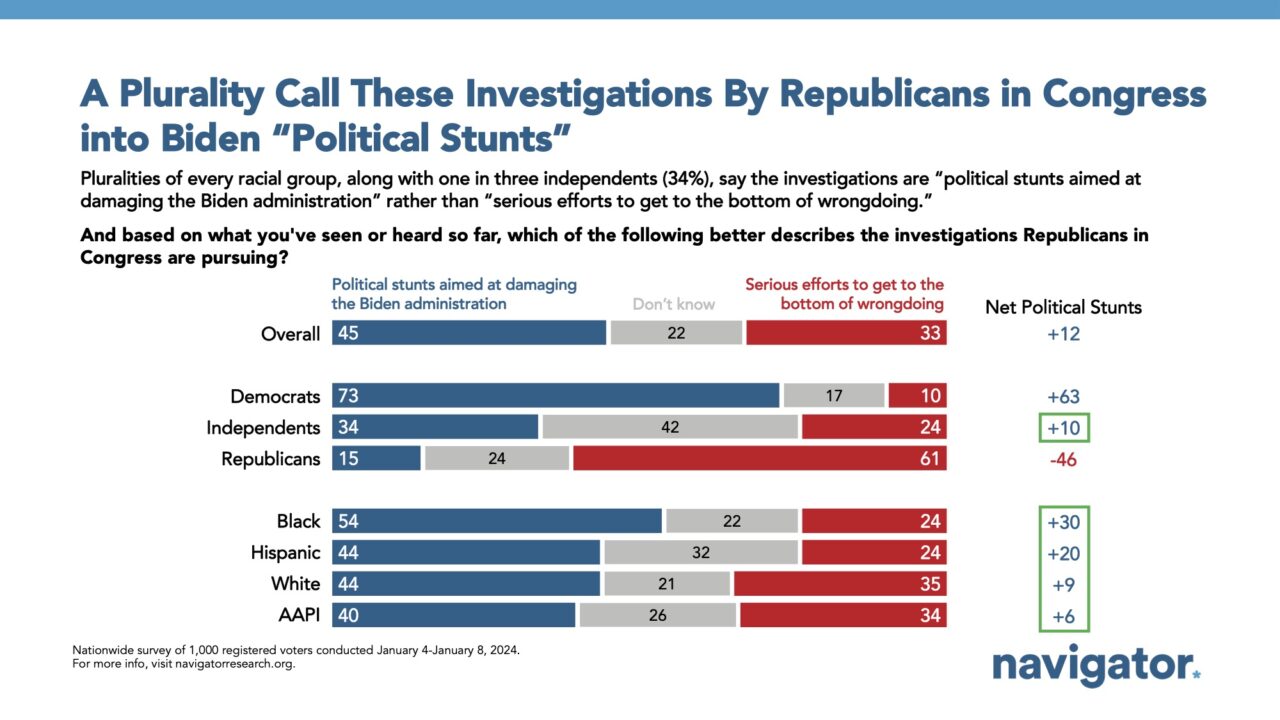
- When asked among a pair of statements which one Americans agree with more about investigations by Republican lawmakers into President Biden, Americans agree more that Republicans in Congress are pursuing “political stunts aimed at damaging the Biden administration” (45 percent) than believe they are “serious efforts to get to the bottom of wrongdoing” (33 percent), with nearly a quarter of Americans saying they don’t know enough to say (23 percent).
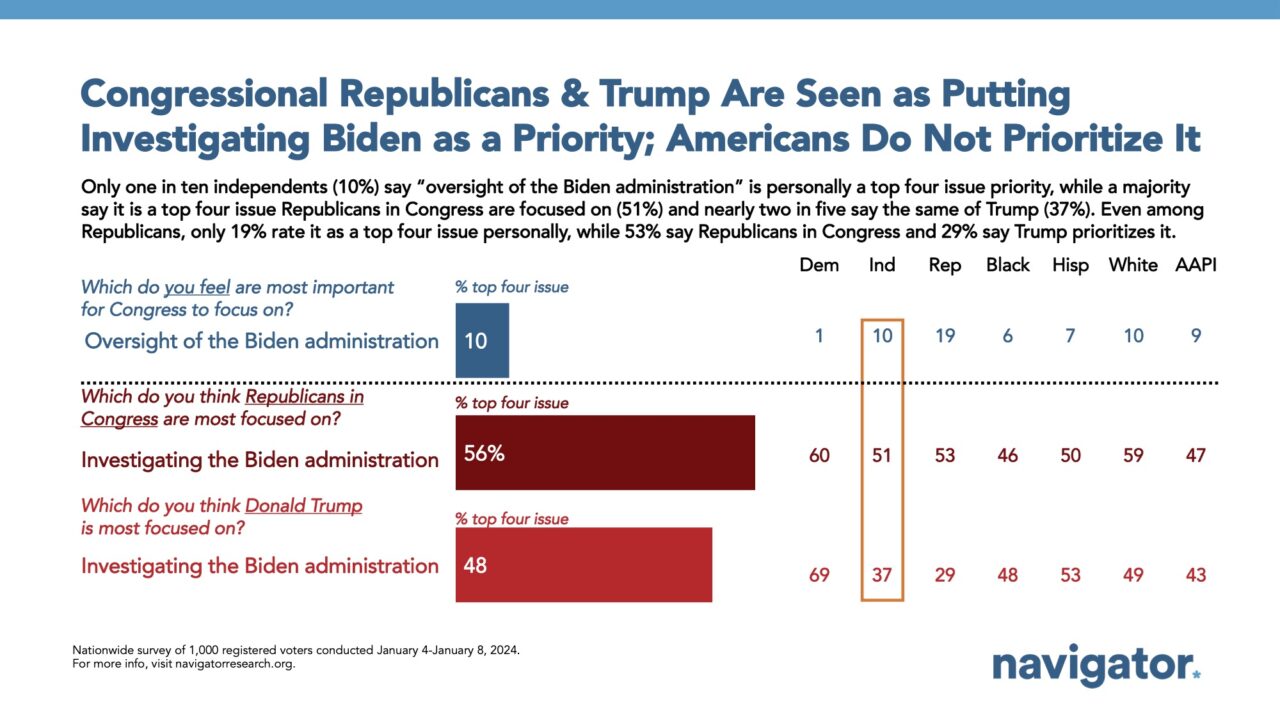
- While only 10 percent of Americans say “oversight of the Biden administration” is one of the top four issues that Congress should be focused on, nearly half believe that “investigating the Biden administration” is among the top four issues of focus for Donald Trump (48 percent) and an even higher 56 percent say it is the focus for Republicans in Congress (ranking first ahead of all other issues).
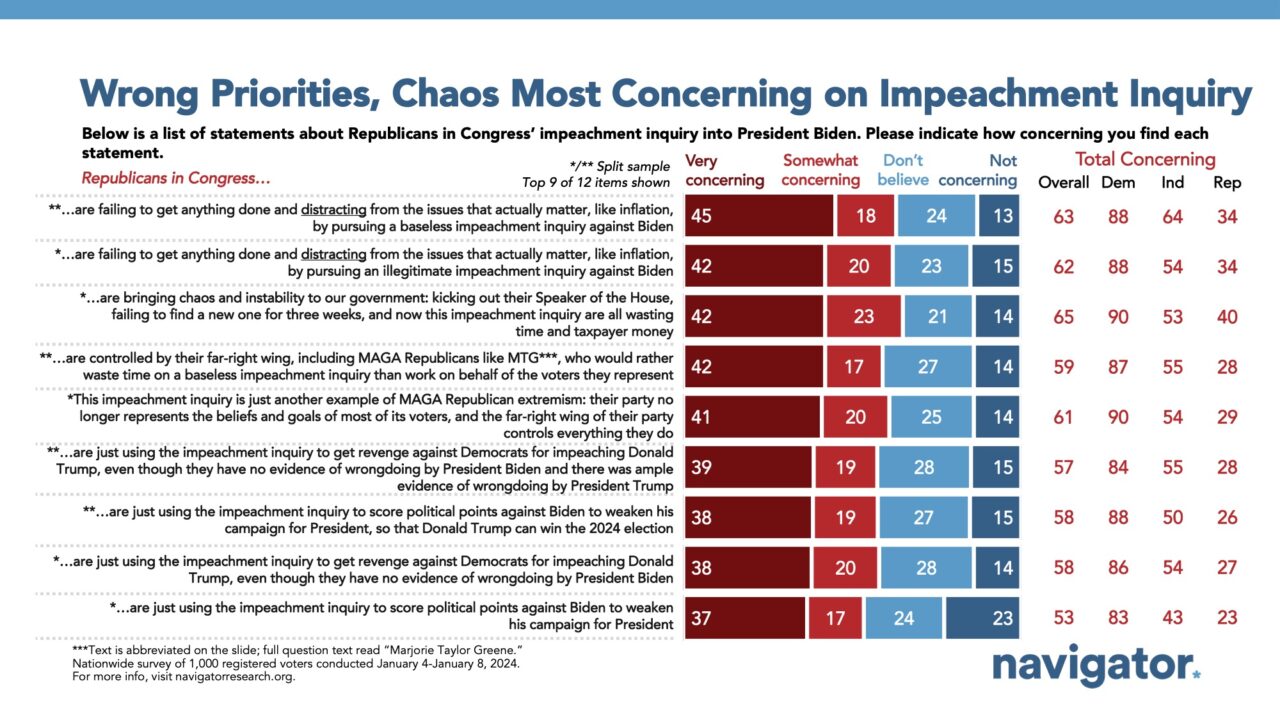
The strongest messaging against the inquiry emphasizes how Republicans are distracting from real issues and causing more chaos.
The greatest concerns about House Republicans’ impeachment inquiry is that they are bringing chaos and instability to our government, and that they are focused on this impeachment instead of addressing the issues that actually matter to Americans, like inflation. 65 percent of Americans are concerned by “Republicans in Congress bringing chaos and instability to our government: kicking out their Speaker of the House, failing to find a new one for three weeks, and now this impeachment inquiry [that ]is all wasting time and taxpayer money,” including a majority of independents (53 percent concerned) and two in five Republicans (40 percent concerned). Additionally, more than three in five Americans are concerned by “Republicans in Congress are failing to get anything done and distracting from the issues that actually matter, like inflation, by pursuing a baseless impeachment inquiry” (63 percent, including 64 percent of independents and 34 percent of Republicans). Other top concerns about the inquiry include:
- This impeachment inquiry is just another example of MAGA Republican extremism: their party no longer represents the beliefs and goals of most of its voters, and the far-right wing of their party controls everything they do (61 percent find this concerning, including 54 percent of independents and 29 percent of Republicans); and,
- Republicans in Congress are just using the impeachment inquiry to get revenge against Democrats for impeaching Donald Trump, even though they have no evidence of wrongdoing by President Biden and there was ample evidence of wrongdoing by President Trump (57 percent find this concerning, including 54 percent of independents and 27 percent of Republicans).