
Americans in the Battleground Oppose Government Weaponization Against Nonprofits and Law Firms
Strong majorities of Americans in the battleground oppose weaponizing the government against its citizens. Of the examples of Trump administration government weaponization, the policy that drove the most opposition was utilizing the IRS to revoke nonprofit status from organizations by claiming, without having to provide evidence, that the nonprofit groups support terrorists (70% oppose – 24% support). This proposed action is opposed by 80% of independents and 66% of non-MAGA Republicans.
The next most-opposed policy was punishing law firms that either had ties to the Biden administration or took on cases that the current administration opposed (64% oppose – 24% support). This policy is opposed by three-in-five battleground constituents in Congressional districts that Trump carried by at least 10.5% in 2024 (60% oppose – 25% support).
The strength of these two examples underlines Americans’ fear that the government – whether controlled by this administration, or the next – could be used as a weapon to target people that disagree with it publicly, and that this opposition transcends party identity.
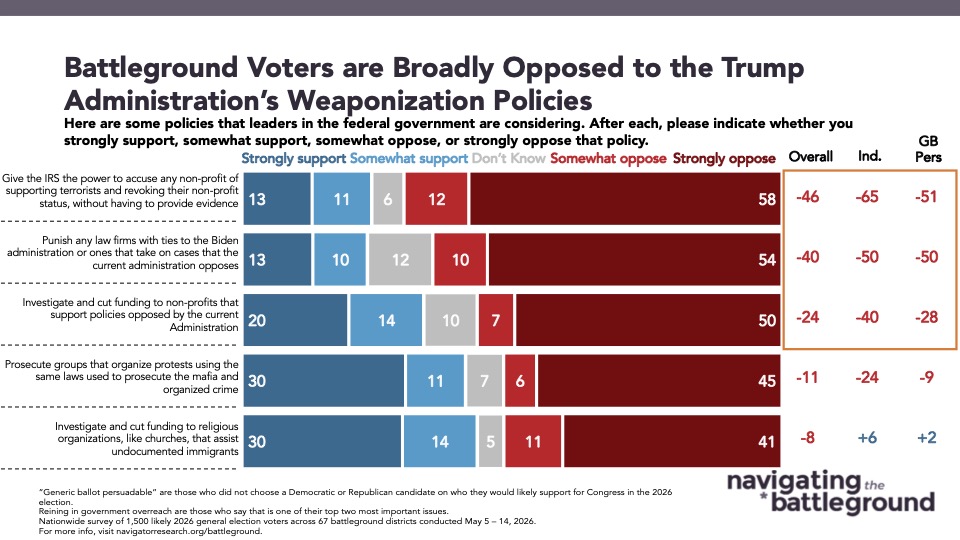
Other actions that are unpopular among Americans in the battleground include:
- Investigating and cutting funding to nonprofits that support policies opposed by the current administration (57% oppose – 33% support);
- Prosecuting groups that organize protests using the same laws used to prosecute the mafia and organized crime (52% oppose – 41% support);
- Investigating and cutting funding to religious organizations, like churches, that assist undocumented immigrants (52% oppose – 44% support);
- Dispatching the National Guard to police cities (52% oppose – 45% support); and
- Using the military to enforce immigration policies (52% oppose – 46% support).
Two policies received slightly more support than opposition: investigating and cutting funding to nonprofits that assist undocumented immigrants (49% oppose – 48% support) and cutting funding to universities that are failing to protect Jewish students from antisemitism (42% oppose – 50% support).
Messages that Focus on Giving the Federal Government too Much Power are Most Impactful
The biggest concern for Americans in the battleground after reviewing all of these policies and actions was that they give too much power to the federal government to shut down organizations that disagree with them (56% concerned). This is 42 points more effective than a message focused on hurting nonprofit organizations (14% concerned). However, 30% – including 58% of Republicans – say they don’t know which is a bigger concern.
The message on giving the federal government too much power performs 10 points better than a message focused on giving the Trump administration too much power (Federal government message: 56% concerned – Trump administration message: 46% concerned). The message on the Trump administration only draws concern from 16% of Republicans, whereas the message on giving the federal government too much power gets 30% concern from them.

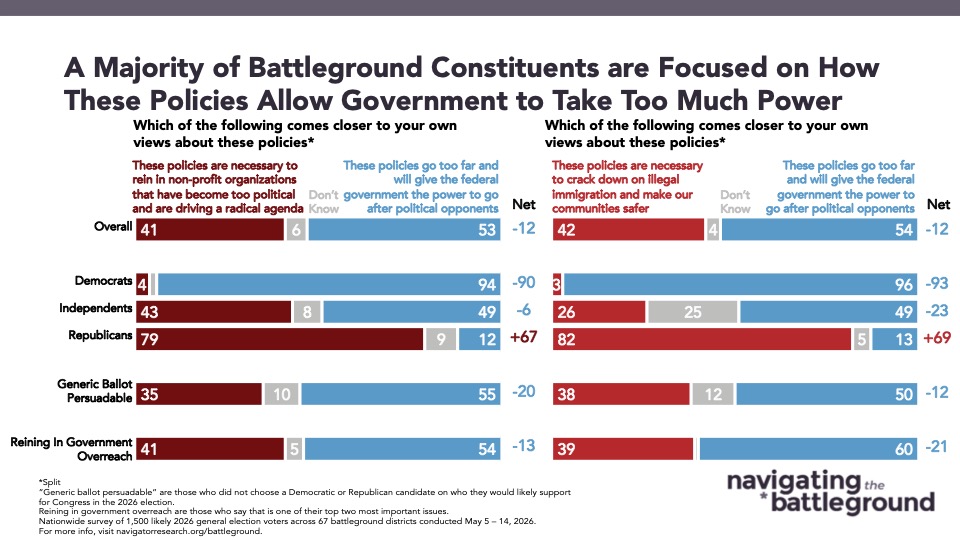
A majority of battleground constituents agree that these policies go too far and give the federal government the power to go after political opponents.
Reining in Government Corruption is a Bigger Priority for Americans in the Battleground than AI, the Iran War, and Foreign Affairs
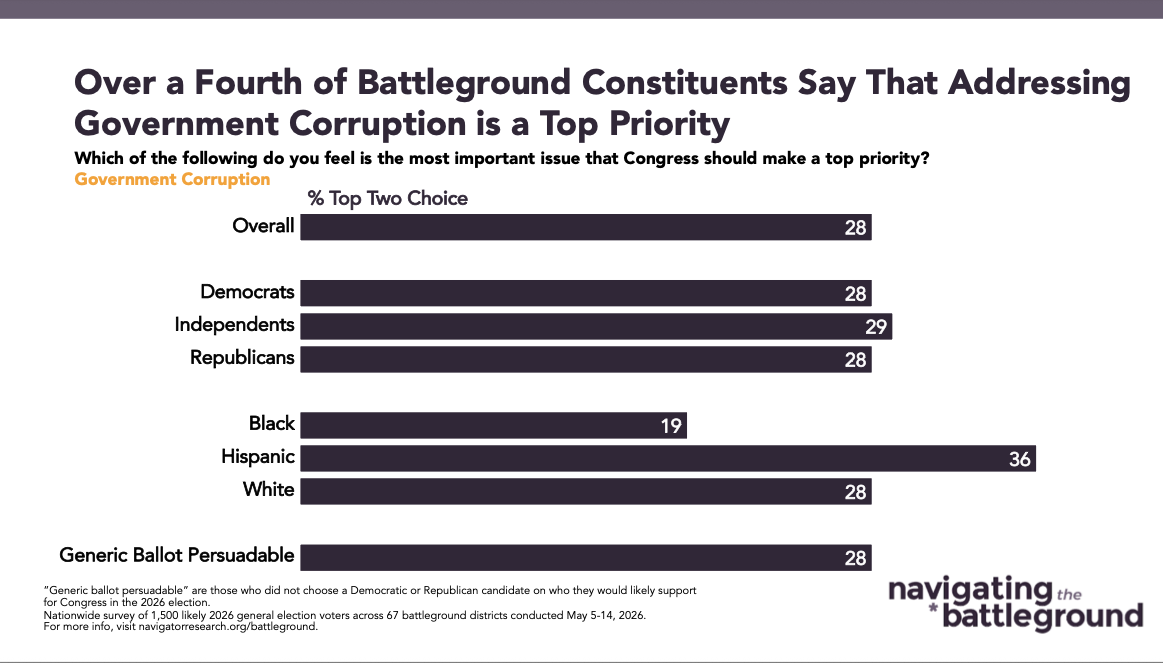
28% of Americans in the battleground selected “government corruption” as one of their two top priorities for members of Congress. This is more than those who selected artificial intelligence (2%), the conflict with Iran (6%), and foreign affairs (1%) combined.
Message Guidance
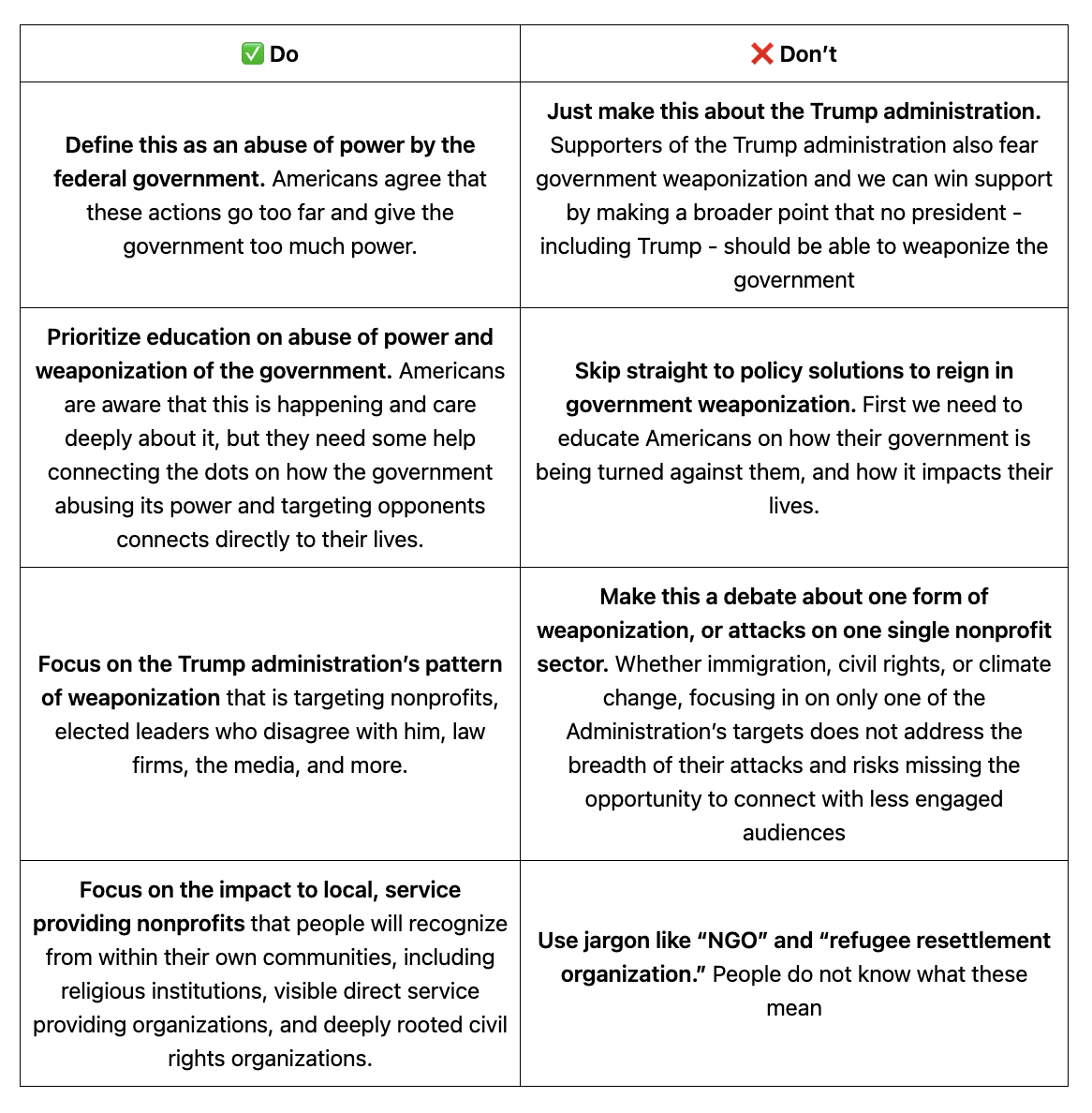
Americans in the battleground are concerned about the federal government abusing its power and weaponizing it against their enemies and for lawmakers’ personal gain. To meet them where they’re at, Navigator compiled tips for best messaging practices on government weaponization: