
Majorities Say Food Recalls Have Increased in Recent Years and Have Changed What They Eat
Food safety and recall issues have dominated recent headlines, and Americans are hearing about it. Nearly three-in-five (56%) say that there have been more food recalls in recent years, including a third (34%) who say there have been many more recalls recently compared to previous years. Concurrently, similar shares (58%) have reported changing what they eat because of recent food recalls, including nearly two-in-five (16%) who say they have made many changes.
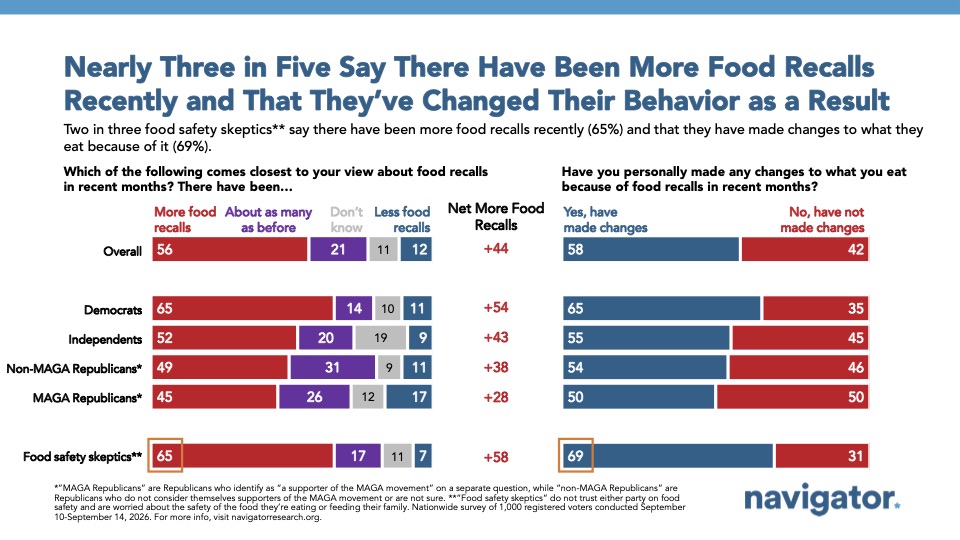
While men and women similarly say that there have been more recalls in recent years (53% of men say there have been more recalls, 59% of women say there have been more recalls), women are much more likely to have made changes to what they eat because of it.
- Three-in-five women (64%) have made changes to what they eat due to food recalls, compared to just over half of men (52%).
Gen Z in particular are more likely to perceive increased food recalls in recent years, and consequently change their eating habits.
- 66% of Gen Z say there have been more recalls in recent years, and 73% have made changes to what they eat because of it.
- 51% of millennials say there have been more recalls in recent years, and 61% have made changes to what they eat because of it.
- 58% and 55% of Gen X and baby boomers respectively say there have been more recalls in recent years, while about half have made changes because of it (58% Gen X have made changes to what they eat, 50% of baby boomers have made changes to what they eat).
Americans Are Worried About How Safe is the Food on the Dinner Table
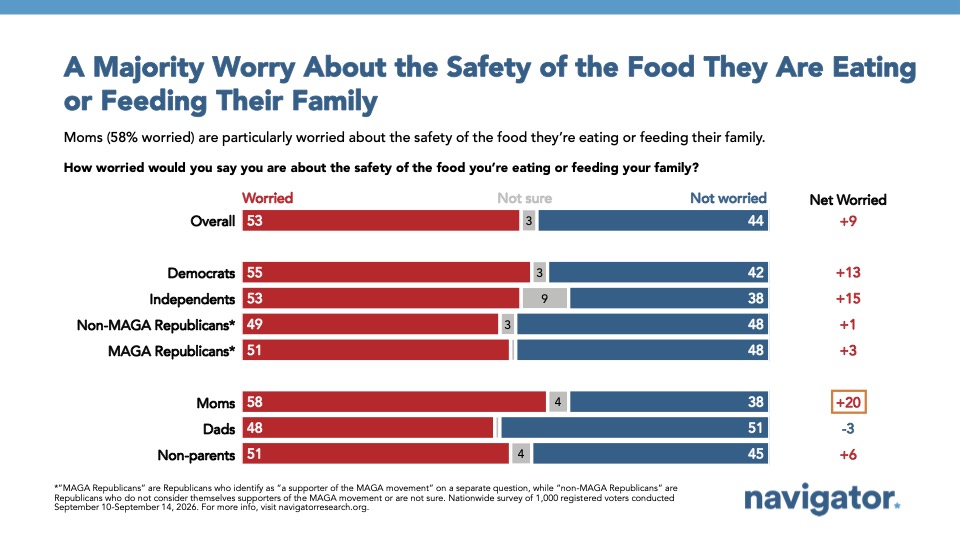
A majority (53%) are worried about the safety of the food they eat or feed their families, including 16% who are very worried. Concern is especially high amongst women, Gen Z, and non-white Americans.
- 61% of Gen Z are worried that the food they eat is not safe, compared to 54% of millennials, 55% of Gen X, and 46% of baby boomers.
- Women are 11 points more likely than men to be worried about the safety of the food they eat (58% worried women – 47% worried men).
- While white Americans are split (48% worried – 49% not worried), more than three-in-five people of color (61%) are worried about the food they eat or feed their families.
Americans Agree, President Trump is Making Our Food Less Safe
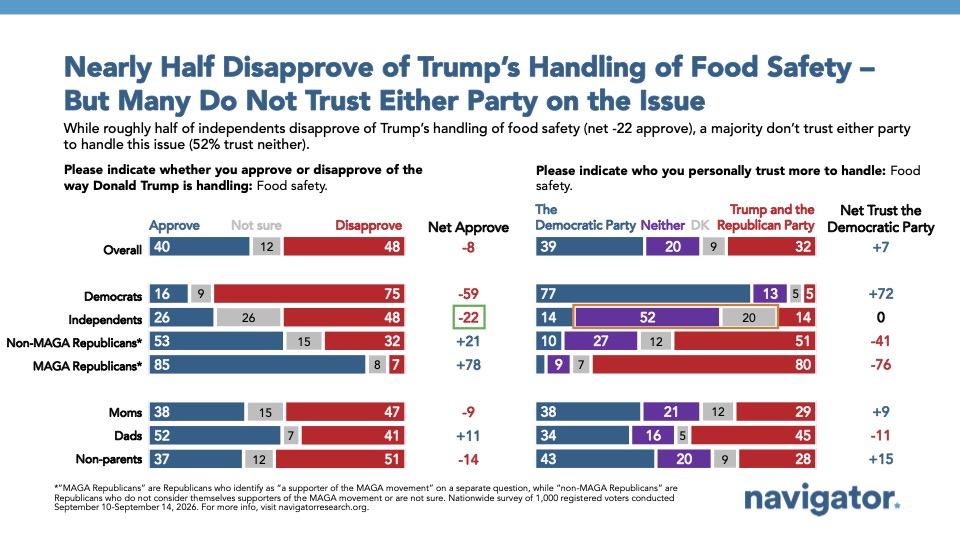
Nearly half of Americans (48%) disapprove of the way President Trump is handling food safety, including 36% who strongly disapprove.
When presented with opposing arguments, a majority agree with the Democratic statement that President Trump’s decisions have directly impacted the recent food safety concerns and recalls.
- 58% agree with the statement that food recalls are due to President Trump’s appointment of people with no medical training to power, like HHS Secretary Robert F. Kennedy Jr.
- 56% agree that recent food recalls are due to President Trump’s cuts to public health agencies and weakened oversight of big food corporations.
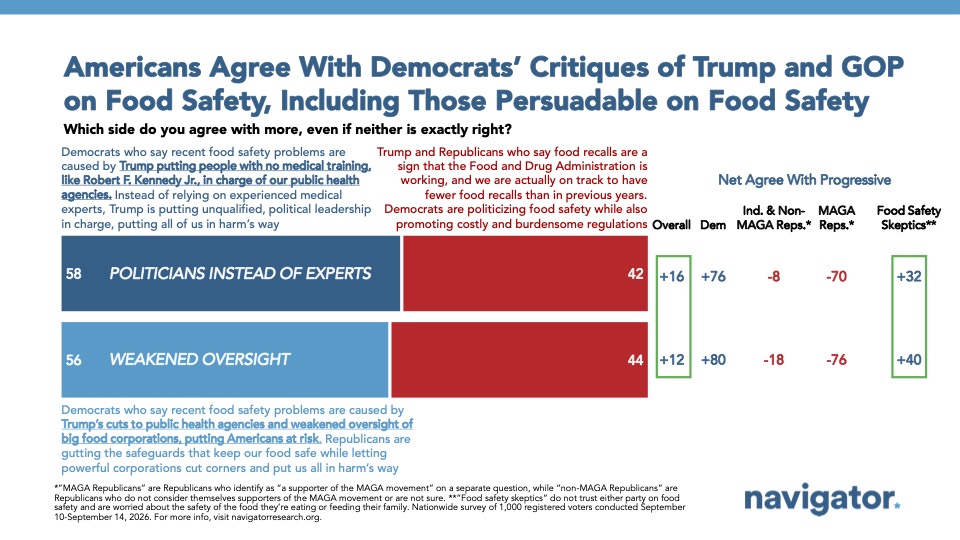
Notably, women are particularly receptive to the argument highlighting unqualified officials like RFK Jr., while the argument highlighting cuts and weakened oversight is effective across genders.
- By a 26-point margin, women agree more that recent food recalls are due to President Trump’s appointment of unqualified personnel like RFK Jr.; men are split and agree more with this statement by only a two point margin.
Two-in-Five Are Not Confident in the Safety of Food Generally, With Differences Across Gender and Generation
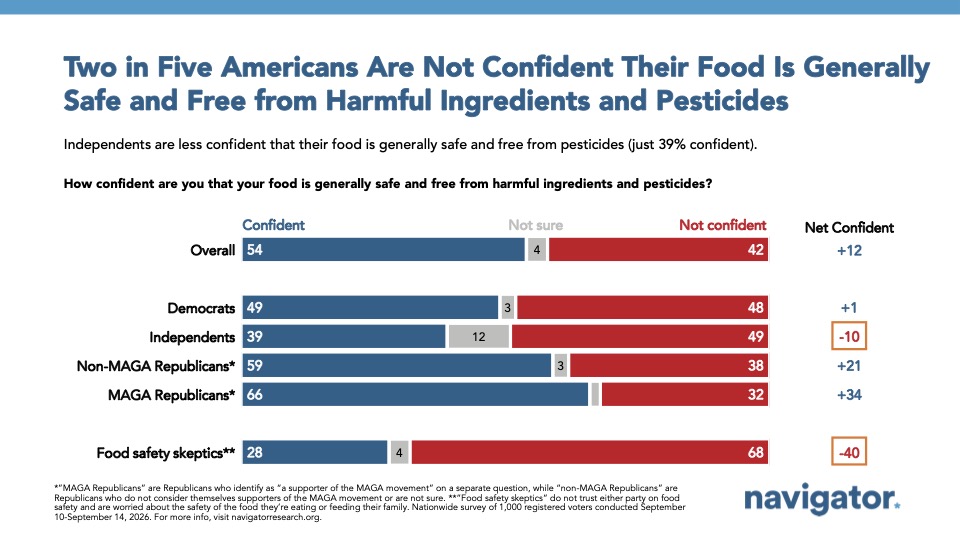
Many Americans are not confident that their food is generally safe and free from harmful ingredients or pesticides (42% not confident – 54% confident). However, distinct demographic differences exist:
- Women (52% not confident) are significantly more skeptical compared to men (32% not confident) when it comes to food safety in general.
- White Americans (57% confident) are most confident in food safety, while Latino Americans (41% confident) are least confident.
- Gen Z is most split (49% confident – 46% not confident) on food safety compared to other generations.
Americans Are More Confident Water is Safe From Pesticides Than Forever Chemicals
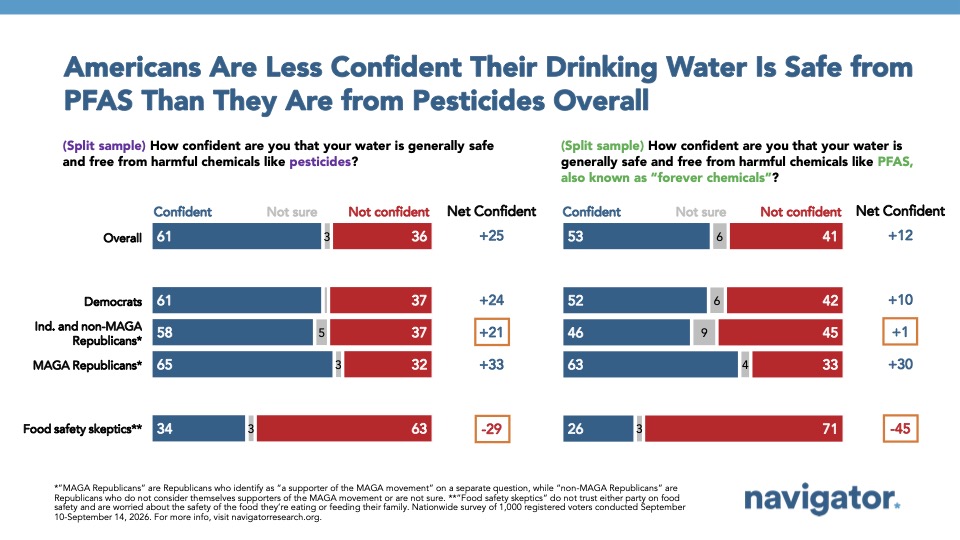
When it comes to water safety, Americans are more confident that their water is free from pesticides compared to “forever chemicals” like PFAS. Three-in-five (61%) are confident that their water is safe and free from pesticides, compared to just over half (53%) who are confident that their water is safe and free from PFAS. Independents are split when it comes to safety of potential pesticides in their water (45% confident water is safe and free from pesticides – 43% not confident), but are much less confident in safety from “forever chemicals” (33% confident water is safe and free from PFAS – 49% not confident).
Americans Point to Regulators and Food Corporations on Blame
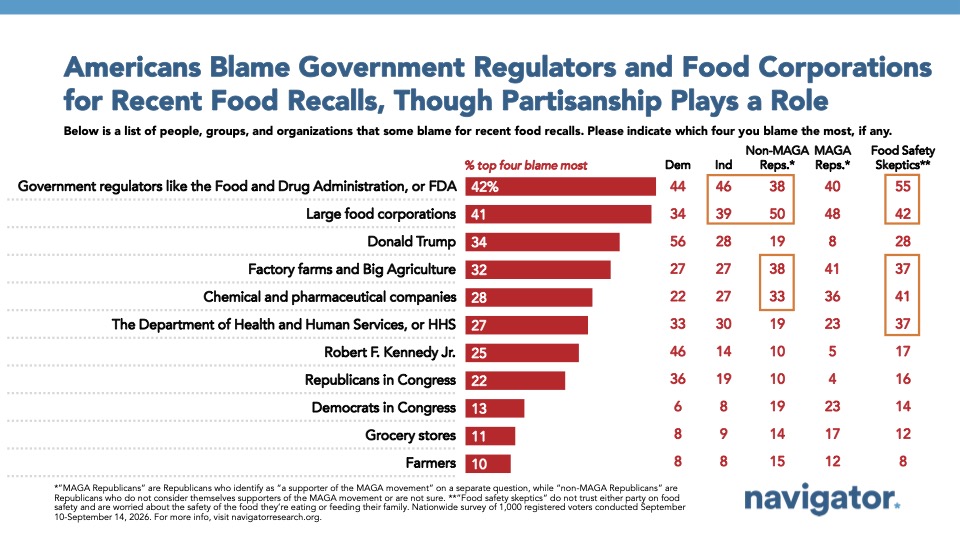
When asked who Americans blame for recent food recalls, many pointed to government regulators, like the FDA (42%), or large food corporations (41%). Roughly a third also blame President Trump (34%) and factory farms and big agriculture (32%).
Partisan differences also emerge when it comes to who Americans point to first for blame:
- Many Democrats blame Republican officials like President Trump (56%) and RFK Jr. (46%).
- Many independents blame government regulators (46%) but also large food corporations (39%).
- Nearly half of Republicans point blame first to large food corporations (49%) and many also blame factory farms and big agriculture (39%).
When it comes to trust to handle food safety, Democrats hold a narrow advantage, though neither party wins over the majority of Americans (39% trust Democratic Party more – 32% trust Trump and the Republican Party more). One-in-five (20%) Americans do not yet trust either party, and nearly one-in-10 (9%) still don’t know.
Nearly one-in-five Americans (15%) do not trust either party to handle food safety and are worried about the safety of the food they are eating or feeding their family. This group includes independent women, politically disengaged Americans, and also moms – key groups of the “MAHA movement” at a time when views of MAHA (43% favorable – 38% unfavorable – 19% don’t know) and RFK Jr. (41% favorable – 46% unfavorable – 13% don’t know) are deeply mixed.
These results together reflect broader doubts Americans have in government institutions and corporate powers to act in the best interest of everyday people. The most resonant message acknowledges the problems within a broken system, and provides an alternative like cracking down on corporate interests.