
Americans Are Split on How Safe our Food Is
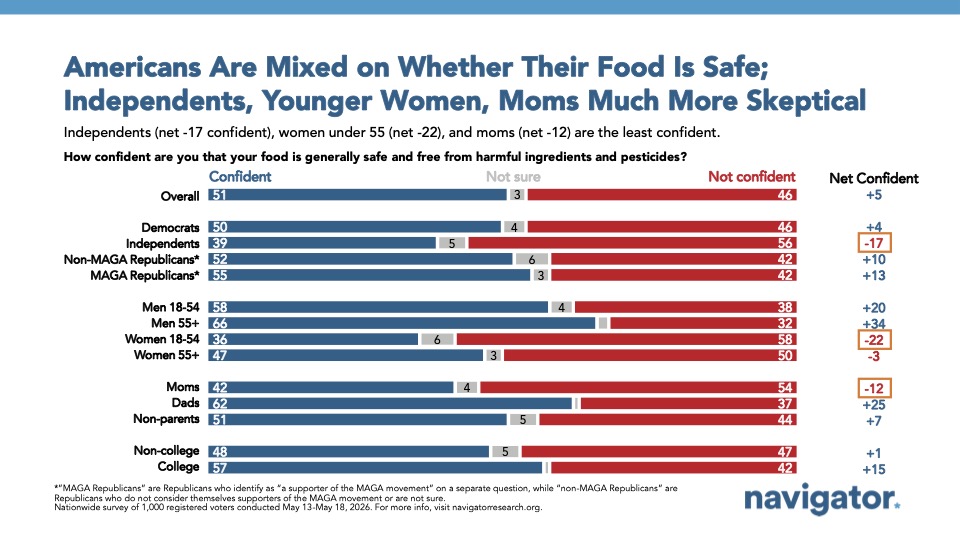
Love it or hate it, the Make America Healthy Again (MAHA) movement has made many Americans think harder about what’s on their plates. 51% of Americans are confident that their food is safe and free from harmful ingredients and pesticides, while 46% are not confident. Those least confident are independents (net -17), women under the age of 55 (net -22), and mothers (net -12). Men are generally more confident in the safety of food – with older men being the most confident (men 55+; net +34, men 18-54; net +20).
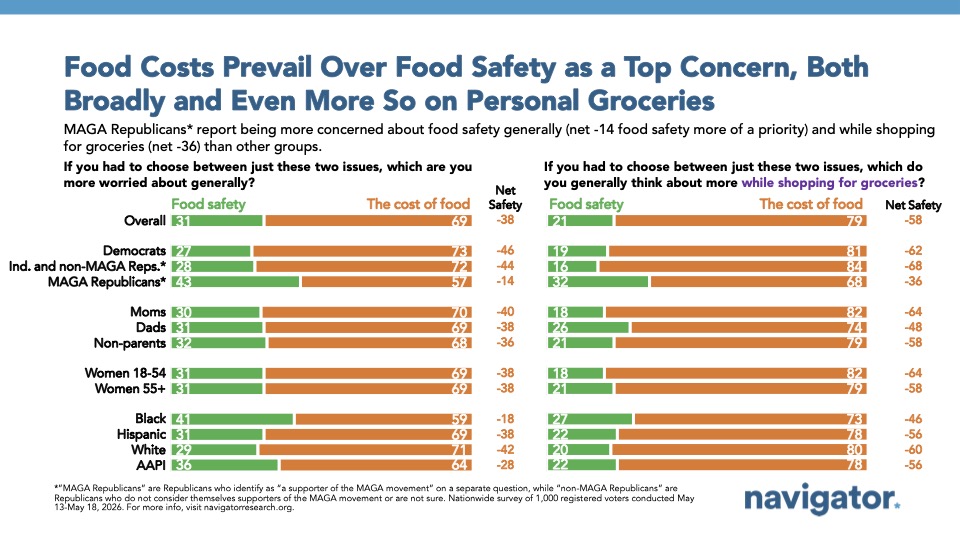
While costs are top of mind for Americans (86% say the cost of groceries is going up), nearly a third say they are even more worried about the safety of their food than the cost of food (31%), though most still put costs first (69%). Some groups historically most impacted by harmful pesticides over-index on being more concerned about food safety than cost, including 41% of Black Americans – compared to 29% of white Americans.
Food Safety Seen as Government’s Responsibility
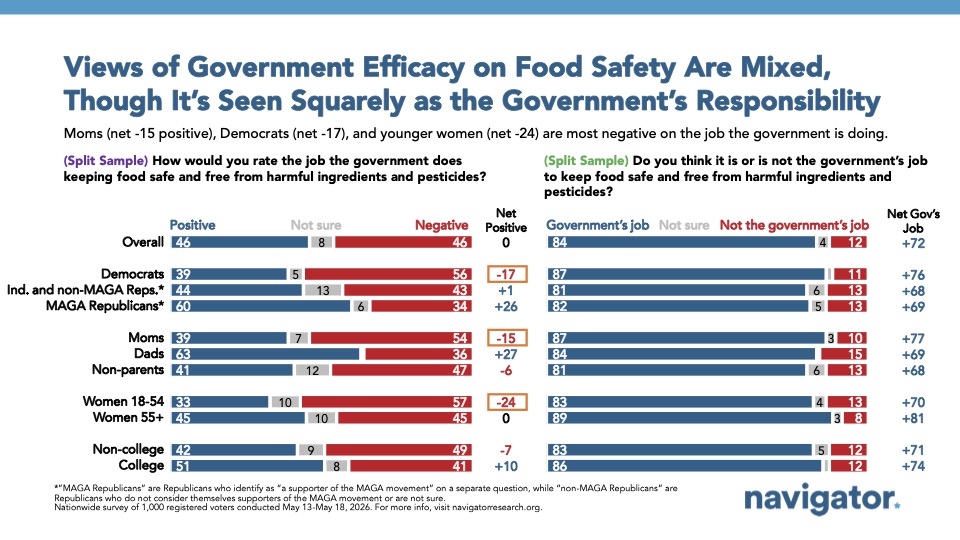
Overwhelming majorities agree it is the government’s role to keep food safe and free from harmful ingredients and pesticides (84%), including 87% of Democrats, 81% of independents and non-MAGA Republicans, and 82% of MAGA Republicans. Though when it comes to how well the government executes on keeping food safe, Americans are split (net 0; 46% positive – 46% negative). Younger women (18-54) give the government the worst ratings on keeping food safe from harmful ingredients and pesticides (net -24; 33% positive – 57% negative).
Health and Wellness Concerns over Corporations, Pesticides, and Processed Food Resonate with Americans
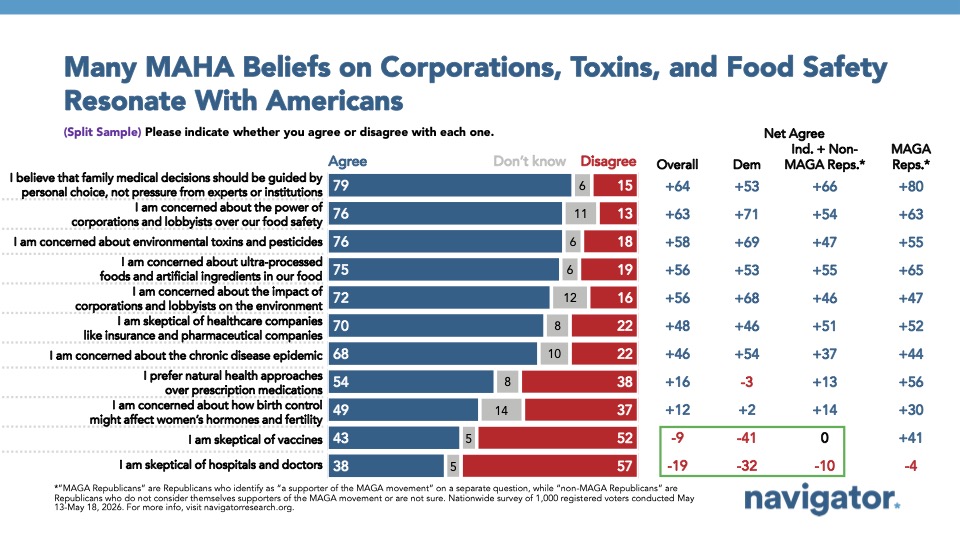
A range of health and wellness statements and concerns resonate with Americans. 79% of Americans say they believe family medical decisions should be guided by personal choice, not pressure from institutions, and 76% are concerned about the power of corporations and lobbyists over our food safety, including majorities across partisanship (and MAGA Republicans by net +63). The other top testing health and wellness statements include concern over environmental toxins and pesticides (76%) and concern over ultra-processed foods and artificial ingredients (75%).
While many health and wellness statements and ideas resonate with Americans, certain pillars of the MAHA movement do not. A majority disagree with the statement “I am skeptical of vaccines” (43% agree – 52% disagree), and an even more disagree with “I am skeptical of hospitals and doctors” (38% agree – 57% disagree). As Navigator heard in recent focus groups, many Americans have had negative experiences within our healthcare system which may contribute to skepticism, whether that’s unexpected or rising costs, complicated and confusing coverage plans, or inability to get the care they need .
What the MAHA Movement Stands for Is Still Largely Undefined
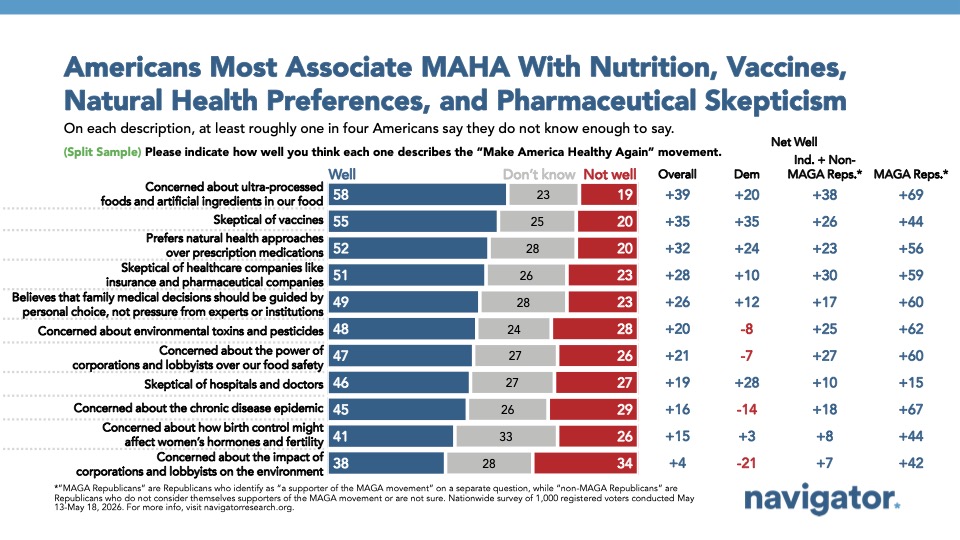
Americans widely share concerns about corporate influence, pesticides, and processed foods, but they don’t necessarily call it or identify them with MAHA.
- A majority believe “concerned about ultra-processed foods and artificial ingredients” represents MAHA well (58%), while 19% say it does not describe MAHA well and 23% don’t know enough to say.
- Concern about corporate and lobbyist power over food safety is largely undefined – with 47% saying it describes MAHA and 53% saying it either doesn’t describe MAHA or they don’t know.
- The concern around pesticides tells a similar story – with 48% saying “concerned about environmental toxins and pesticides” describes MAHA well and 52% saying it either doesn’t describe MAHA or they don’t know enough to say.
Views broadly of the MAHA movement are split (net 0; 40% favorable – 40% unfavorable), with 20% saying they don’t know enough to say – including 35% of independents and 32% of younger women.
Americans Support Banning PFAS Chemicals, Decreasing Pesticides, Removing Food Dyes
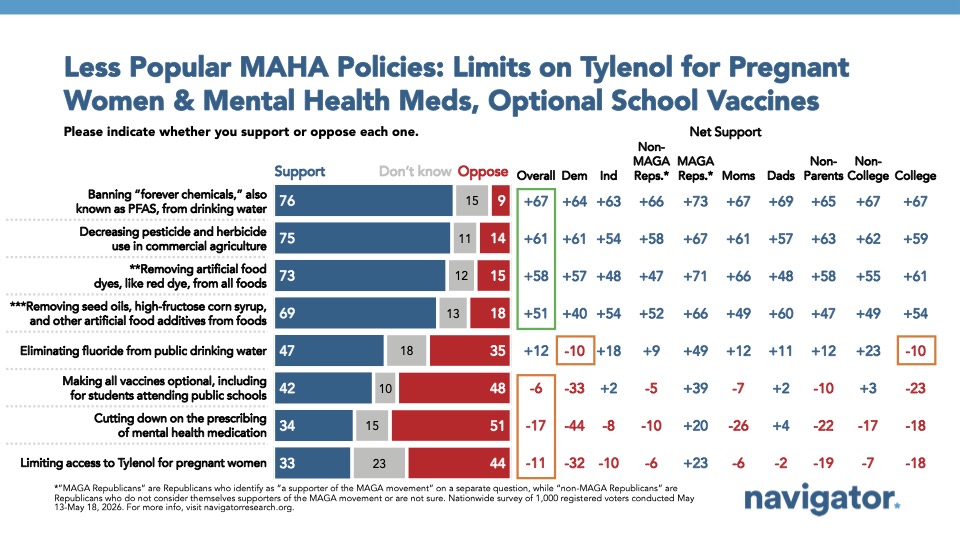
Americans across partisanship want harmful chemicals out of their food and water. 76% of Americans support banning PFAS or “forever chemicals” from drinking water, including 74% of Democrats, 71% of independents, and 78% of Republicans. Other popular health and wellness related policies include decreasing pesticide and herbicide use in commercial agriculture (75% support), and removing artificial food dyes, like red dye, from all foods (73% support). Policies where the MAHA movement has made headlines, like limiting access to Tylenol for pregnant women and cutting down on prescribing of mental health medication are far less popular – with support underwater by -11 points and -17 points, respectively.
Corporations Seen as Greatest Villain
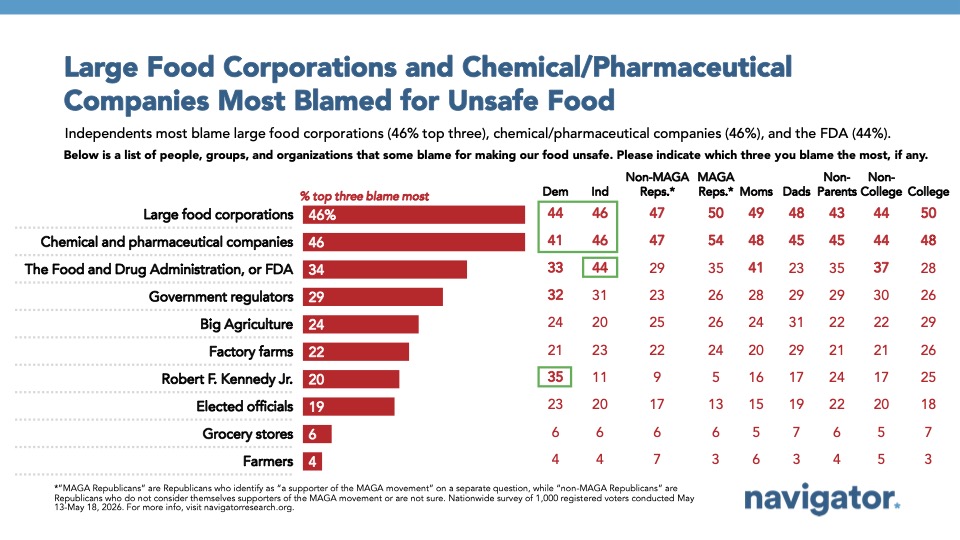
When selecting the top three entities they blame the most for making our food unsafe, nearly half (46%) blame large food corporations, including 44% of Democrats, 46% of independents, and 49% of Republicans. Again, nearly half (46%) blame chemical and pharmaceutical companies, including 41% of Democrats, 46% of independents, and 51% of Republicans. Less convincing food safety villains include RFK Jr. (20%), elected officials (19%), grocery stores (6%), and farmers (4%).