
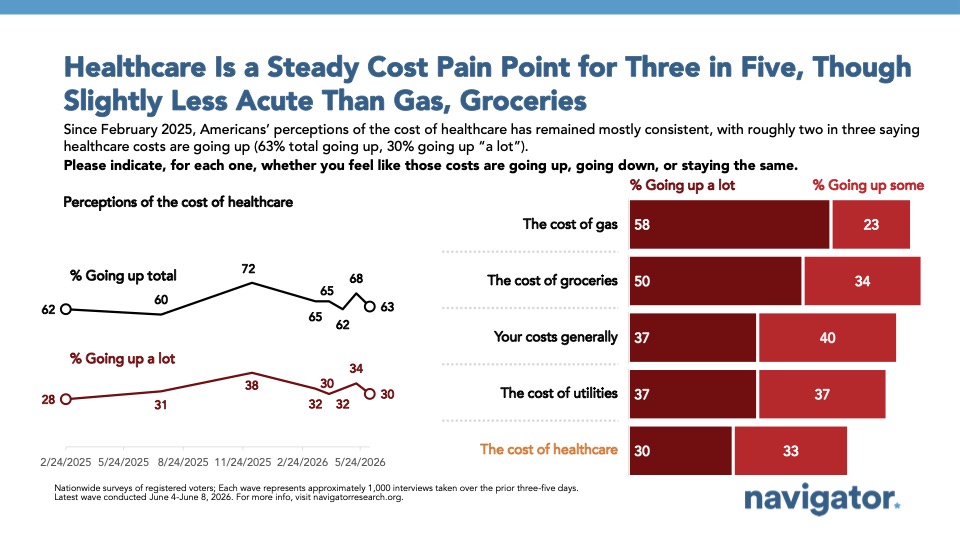
Rising Healthcare Costs Is a Steady Pain Americans Have Been Feeling
As Americans continue to face significant economic challenges, healthcare costs remain one of the most persistent pain points. Majorities have continuously cited healthcare costs as rising since February 2025 in Navigator tracking, and nearly two-thirds feel that way today.
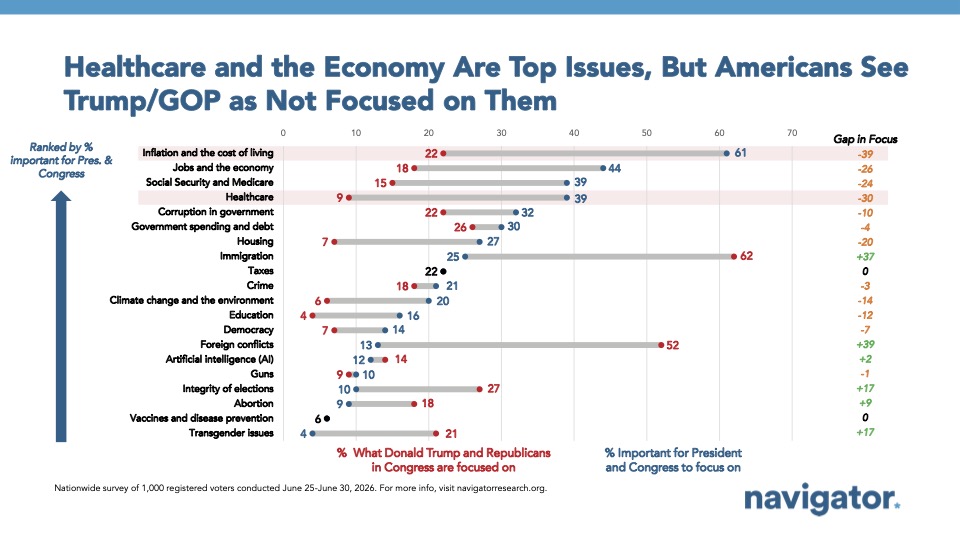
Yet, only about one-in-10 (11%) feel that President Trump and Congressional Republicans are prioritizing the issue. Americans see the current administration as more focused on the unnecessary and expensive war in Iran and brutal immigration tactics than the issues that impact their everyday lives. In contrast, Democrats in Congress are seen as more focused on healthcare, in addition to inflation and the cost of living which are Americans’ top concerns, though more needs to be done in order to build awareness around policy solutions. Nearly a third (30%) of independents and non-MAGA Republicans see Democrats as most focused on healthcare.
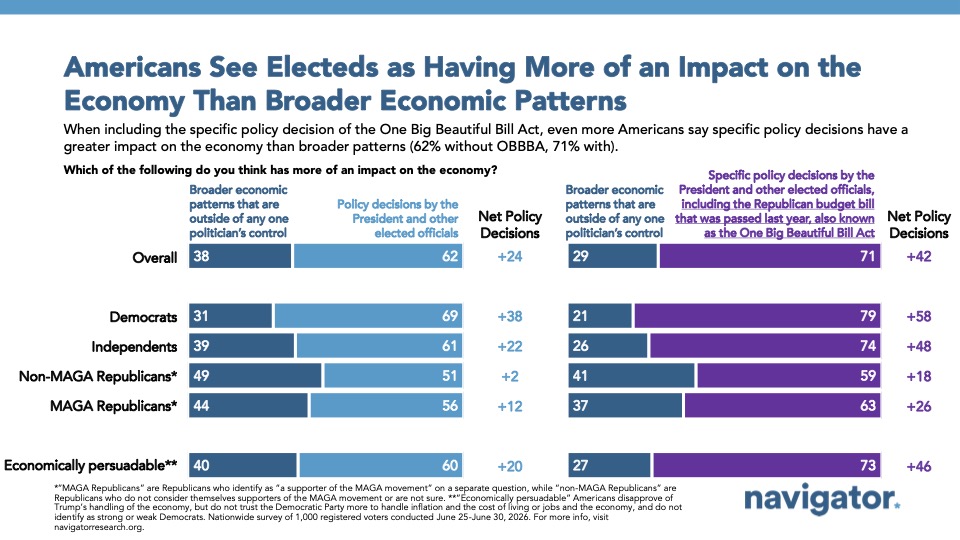
Additionally, when it comes to rising costs, 62% of Americans believe policy decisions by the president and other elected officials have more of an impact on the economy than broad economic patterns outside of any one elected official’s control. This includes 71% who believe the Republican budget bill, which gutted healthcare access, has more of an impact on the current economy than broader forces.
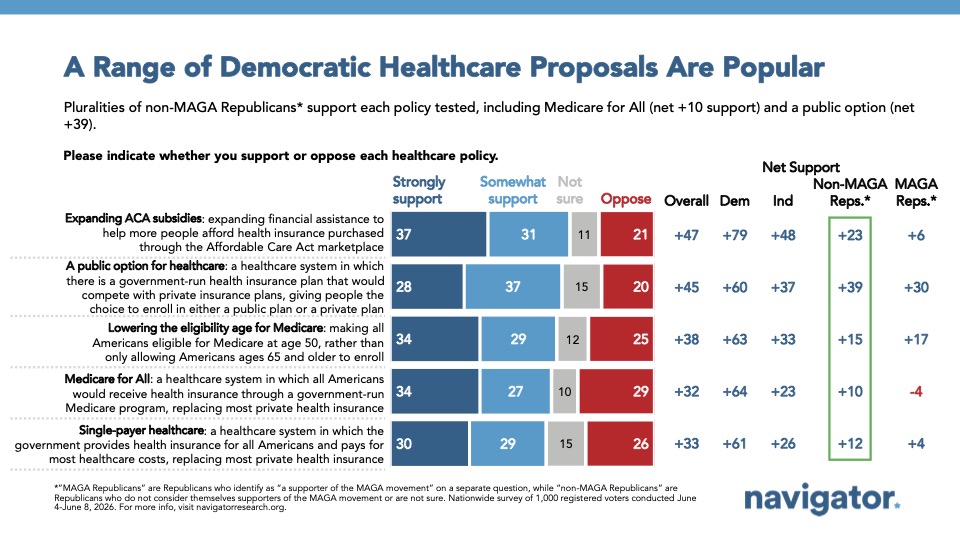
Americans Are Broadly Supportive of a Range of Democratic Healthcare Proposals, But Few Are Familiar With What They Actually Are
Healthcare policy solutions like expanding Affordable Care Act (ACA) subsidies (+47 support), a public option for healthcare (+45 support), and lowering the eligibility age for Medicare (+38 support) have broad support amongst Americans. Notably, a plurality of independents, non-MAGA Republicans, and even MAGA Republicans support a range of these policies. This data suggests that affordability-focused healthcare policies can effectively reach persuadable audiences that are otherwise difficult to engage with and underscores that Americans across partisan ideologies want more affordable, accessible care.
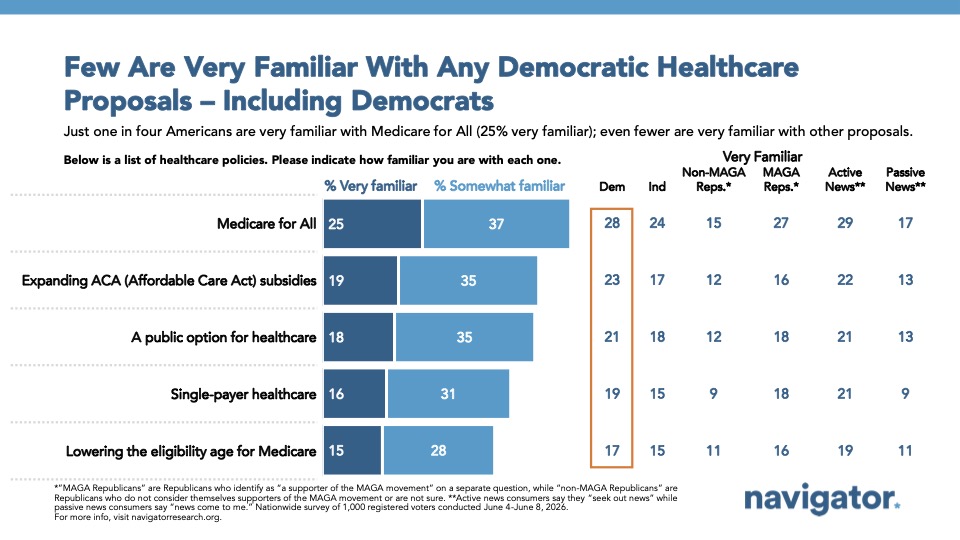
However, despite their popularity, few are actually familiar with the specifics of any Democratic healthcare proposals, including Democrats. Just less than one-in-five (19%) are very familiar with expanding ACA subsidies, the most popular proposal, including less than a quarter (23%) of Democrats. People are most aware of the Medicare for All proposal, but a lot of that awareness is driven by MAGA Republicans and more active news consumers. What we know is while many Americans are receptive to Democratic healthcare ideas once they hear about them, few currently know what they entail and significant education on the policies is still needed.
Medicare Expansion is Overwhelmingly Popular Among Americans
Expanding Medicare – both broadly for more Americans and more specifically to include dental, vision, and hearing coverage – is overwhelmingly popular. In particular, four-in-five independents and non-MAGA Republicans, and even MAGA Republicans, support expanding Medicare to include dental, vision, and hearing coverage.
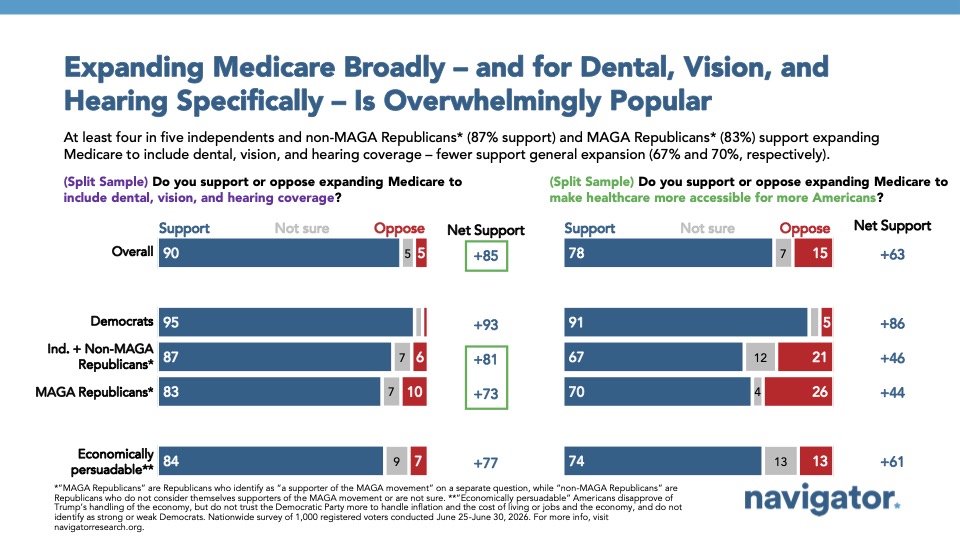
Support slightly weakens, though remains high for Medicare expansion programs even when adding a potential $350 billion price tag (+63 net support with costs, +74 net support without costs). Support weakens most strongly for non-MAGA Republicans, though remains high for independents.
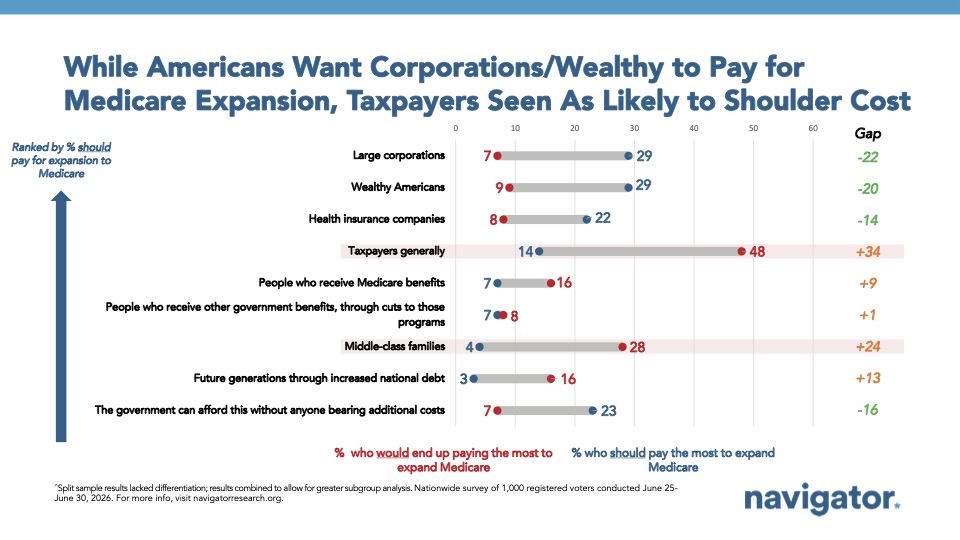
When it comes to who Americans say should foot the bill, large corporations, the wealthy, and health insurance companies top the list. Notably, only 7% believe people on Medicare or other government programs should have to shoulder additional costs for Medicare expansion. Despite who they think should pay for it, Americans believe taxpayers and middle-class families are likely the ones who will end up shouldering costs. Nearly half (46%) say their biggest hesitation on expanding Medicare programs is that it will raise taxes and hurt consumers.
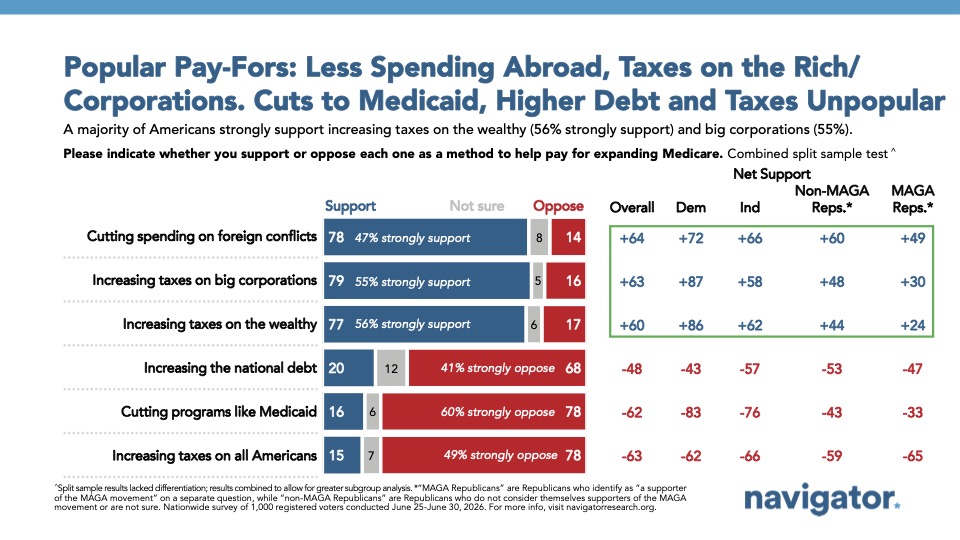
So how do Americans want to pay for expanded healthcare access? Cutting spending on foreign conflicts (78% support, including 47% strongly support), increasing taxes on big corporations (79% support, including 55% strongly support), and increasing taxes on the wealthy (77% support, including 56% strongly support). Americans overwhelmingly do not support cutting benefit programs or increasing taxes across the board in order to expand healthcare.