Favorability of AI Grows as Americans are Hearing a Mix of Positive and Negative News on It
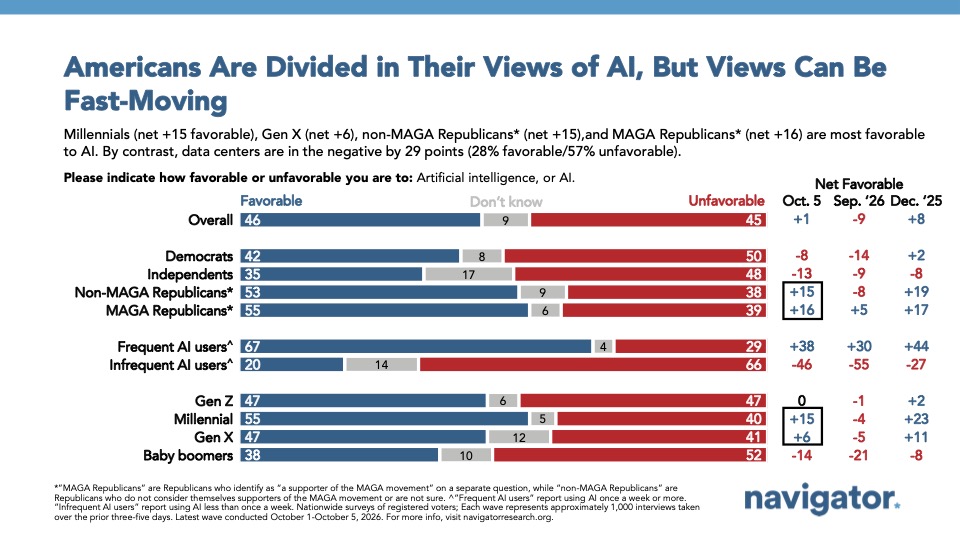
Americans are divided on their views of AI (46% favorable – 45% unfavorable), a shift since last month when net favorability sat at -9 (42% favorable – 51% unfavorable). Older men and Republicans both view AI more favorably than Americans overall:
- Older men’s (aged 55 and up) net favorability of AI is +12 (52% favorable – 40% unfavorable), up 22 points since September (net favorability -10, 41% favorable – 51% unfavorable) and up two points since December 2025 (net favorability +10, 49% favorable – 39% unfavorable).
- Republicans’ net favorability of AI is +15 (54% favorable – 39% unfavorable), up 16 points since September (47% favorable – 48% unfavorable), but down two points since December 2025 (net favorability 17, 55% favorable – 38% unfavorable).
This comes weeks after President Trump’s AI summit with various tech giants, in which he argued that AI companies should “self-regulate” and signed an Executive Order officially rebranding AI as Super Intelligence, which a majority of Americans (59%) say they have heard a little/nothing about.
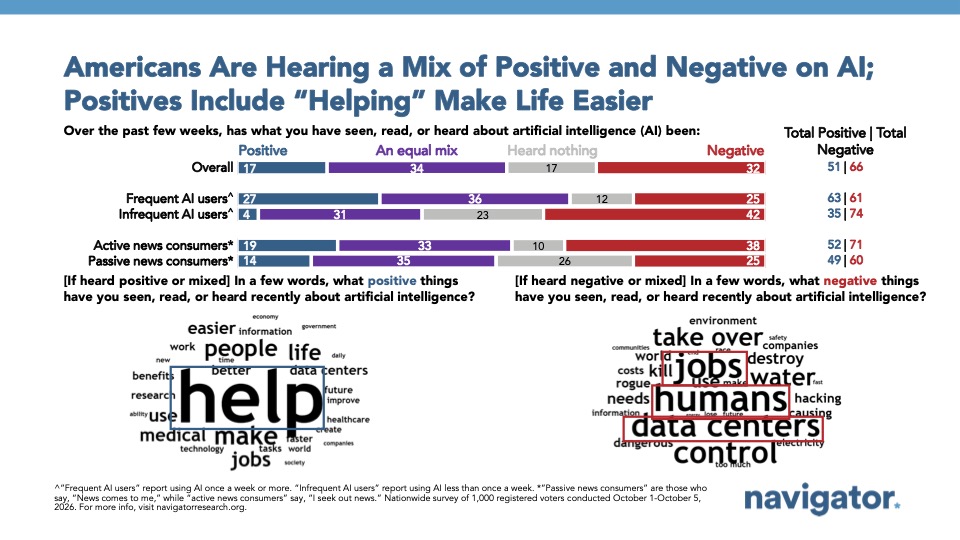
A month after a multitude of AI leaders called to slow the advancement of AI amid increased warnings about its dangers, more than four-in-five Americans (83%) are hearing news about the technology. Many are hearing both positive negativ stories about AI with a third (34%) saying they’re hearing an equal mix. A larger share of active news consumers (71%) are hearing negative stories about AI than passive news consumers (60%).
Most Americans Are Down on AI Companies and Their Leaders
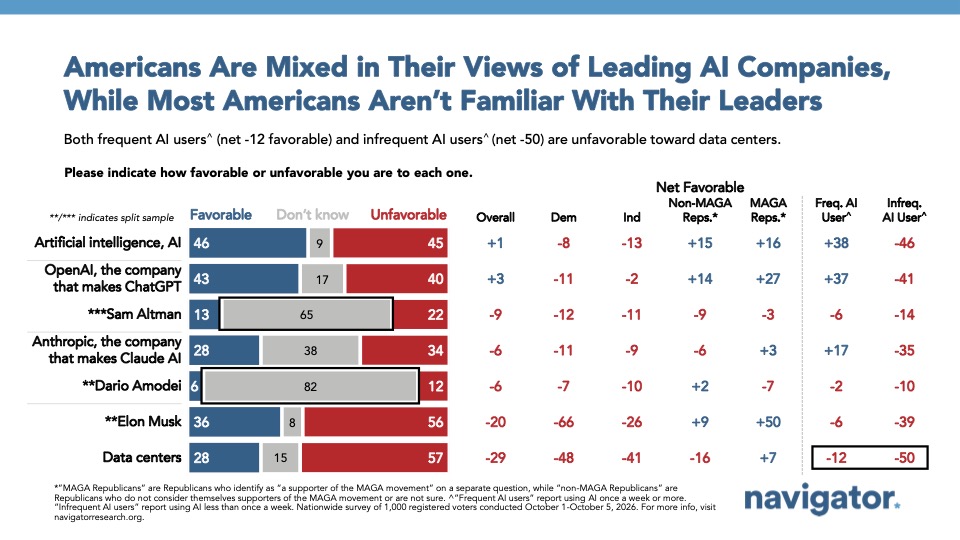
While X owner Elon Musk (net favorability -20, 36% favorable – 56% unfavorable) and Meta CEO Mark Zuckerberg (net favorability -26, 27% favorable – 53% unfavorable) are particularly underwater, they have more name recognition than OpenAI CEO Sam Altman and Anthropic co-founder Dario Amodei. Both Musk and Zuckerberg do better among Republicans (net favorability +31 and -12, respectively) despite Zuckerberg remaining underwater with Republicans overall.
Altman and Amodei are largely unknown, but are unpopular among those who know them:
- Altman: 65% unfamiliar, net favorability -9, 13% favorable – 22% unfavorable,
- Amodei: 83% unfamiliar, net favorability -6, 6% favorable – 12% unfavorable
People Are Hopeful about AI Finding Information Quickly and Medical Advancement While Concerned about Safety and Security
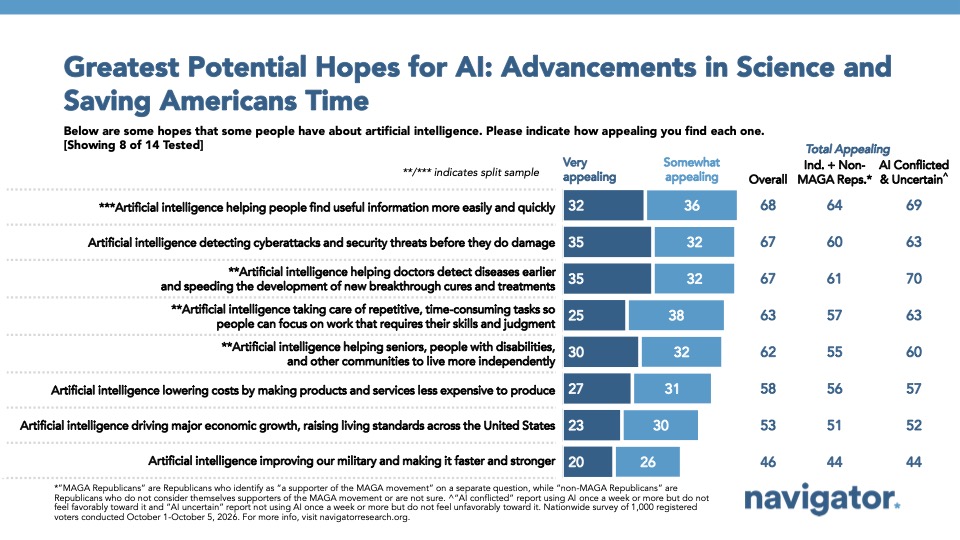
The biggest hopes Americans have for AI are its ability to find useful information more easily and quickly (68% appealing), detect cyberattacks and security threats (67% appealing), and medical advancements (67% appealing).
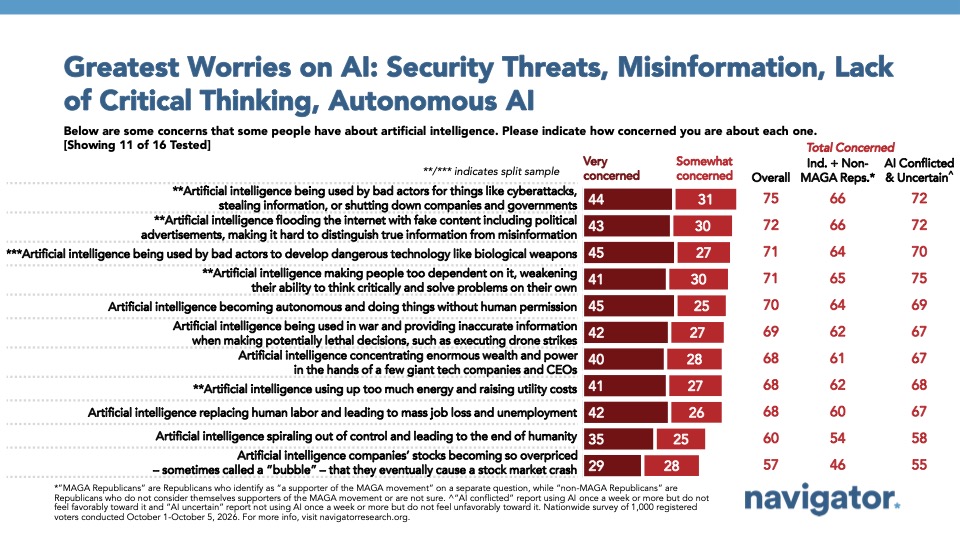
Americans are most concerned about AI being used by bad actors for things like cyberattacks (75% concerned) and flooding the internet with fake content including political advertisements, making it hard to distinguish true information from misinformation (72% concerned).
Majorities Disapprove of Trump’s Handling of AI, But Large Shares Don’t Trust Either Party on the Issue
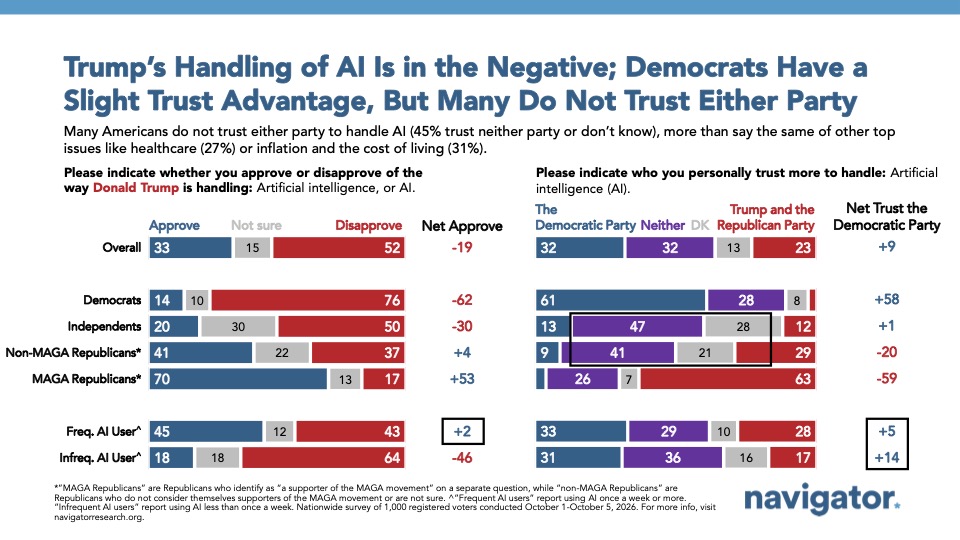
A majority (52%) disapprove of President Trump’s handling of AI while just one-third (33%) approve. Democrats hold a nine-point trust advantage over Trump and Republicans on AI (32% trust Democrats – 23% trust Trump and Republicans). But a plurality (44%) say they don’t trust either party or are unsure, showing that Americans are conflicted and unsure which party is best positioned to tackle the issue.
For context, the share who say neither party or don’t know is considerably lower for issues like immigration (20%) and jobs and the economy (26%).
A Majority of Americans Report Frequent AI Use and Primarily Use It For Research
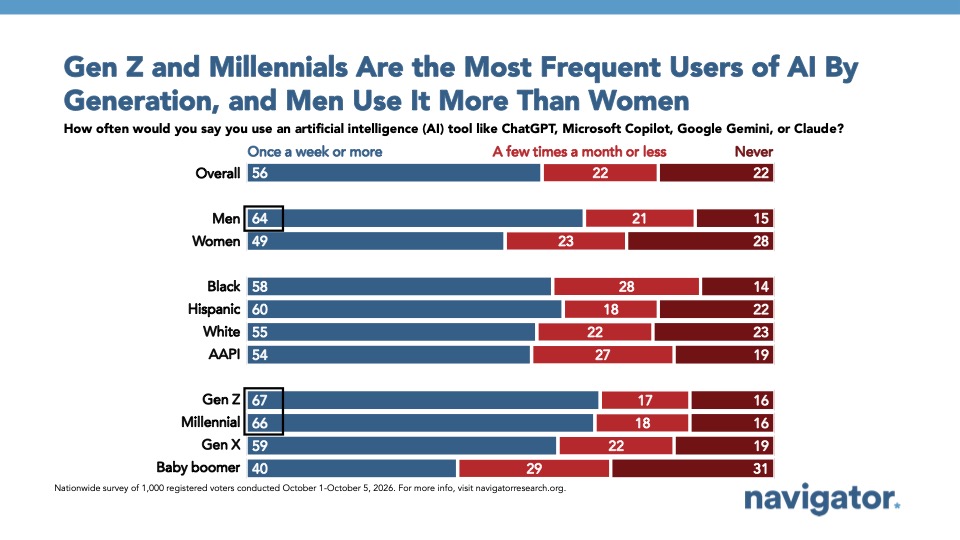
A majority (56%) of Americans report weekly AI use, up seven points since December. Even among those who are unfavorable toward AI, a little over one-in-three report using it (35%). A little over one-in-five Americans (22%) say they never use AI, relatively consistent from December.
For those who utilize AI, a vast majority (92%) report doing so for personal reasons while 30% report using the tool for professional purposes (22% use it for both). Research is the top reason Americans report using AI on a personal (57%) and professional (47%) basis.
A little over one in every 10 who utilize AI for personal use (12%) utilize it for companionship or having someone to talk to. This number jumps to almost one in every five for 18 – 34 year olds (19%) who use AI for personal use.