Poll: Americans on Project 2025
This Navigator Research report contains polling data on the latest perceptions of Project 2025, including levels of support for Project 2025, whether Americans believe Project 2025 accurately represents what Republicans in Congress stand for, and what policies Americans associate most with Project 2025.
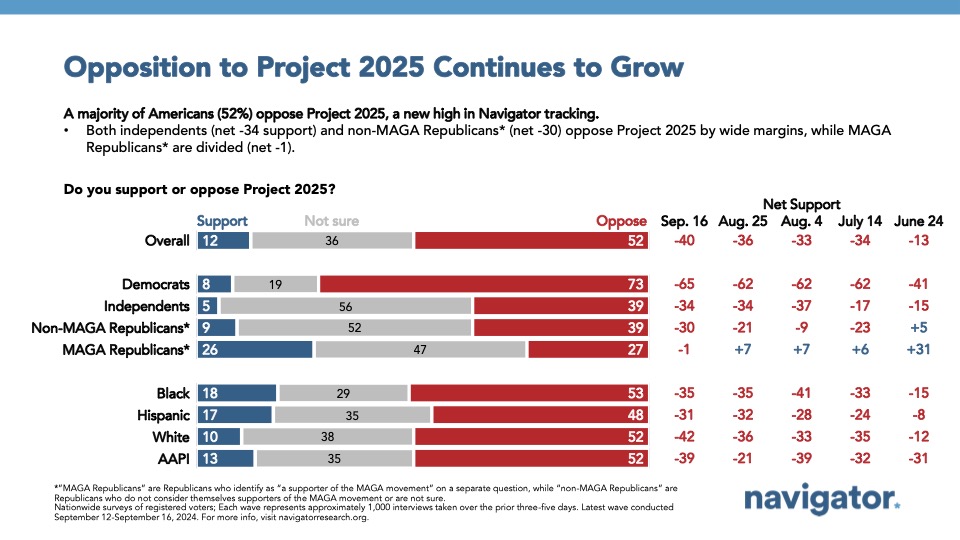
A majority of Americans now overwhelmingly oppose Project 2025.
By a 40-point margin, Americans now oppose Project 2025 (52 percent oppose – 12 percent support), including 43 percent who say they strongly oppose it. While Democrats overwhelmingly oppose Project 2025 (73 percent oppose – 8 percent support – 19 percent not sure), a plurality of independents (39 percent oppose – 5 percent support – 56 percent not sure) and Republicans (33 percent oppose – 18 percent support – 49 percent not sure) say they are not sure. Republicans who support the MAGA movement (26 percent) are also much more likely to support Project 2025 than Republicans who do not support the MAGA movement (9 percent).
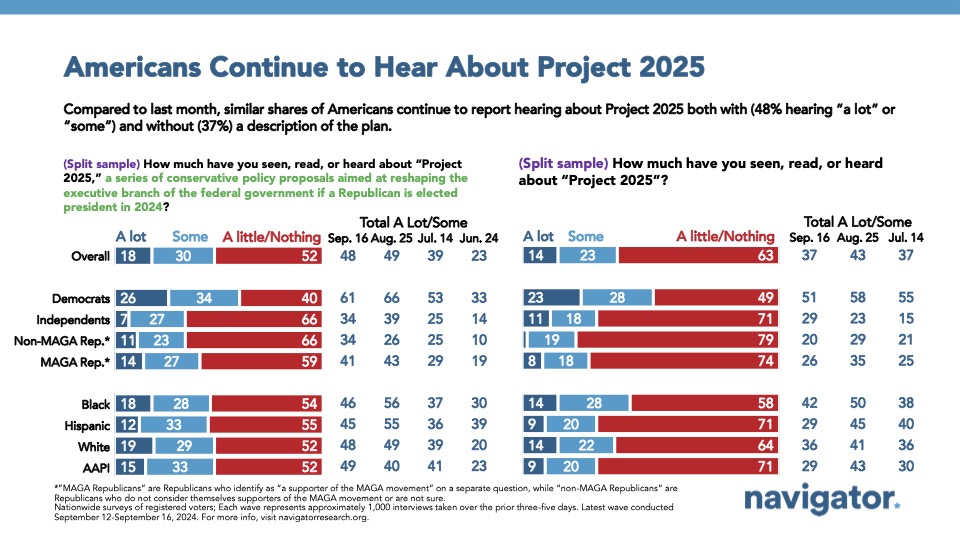
- 48 percent of Americans have now heard “a lot” or “some” about Project 2025, a 25-point increase since this past June (23 percent). Democrats are most likely to have heard about Project 2025 (61 percent), compared to a third of independents and Republicans (34 percent each).
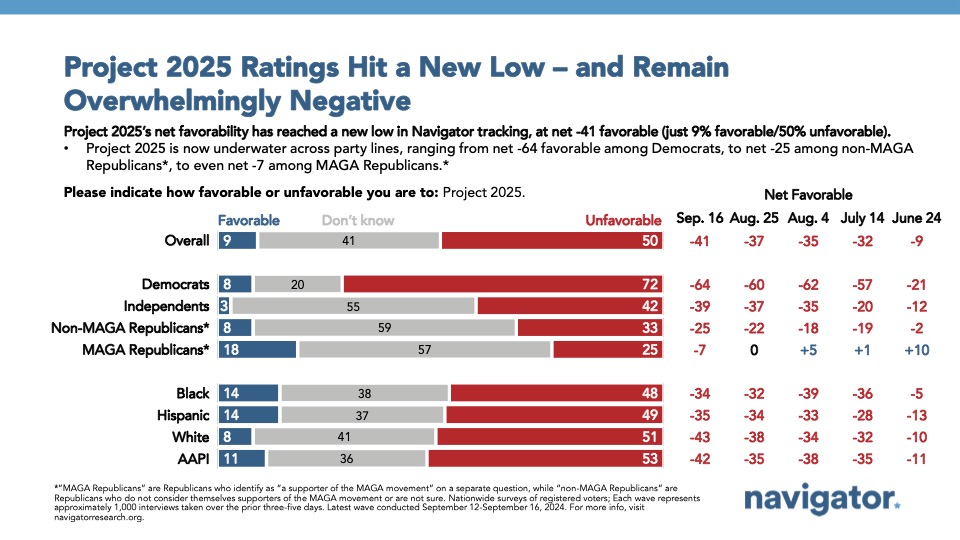
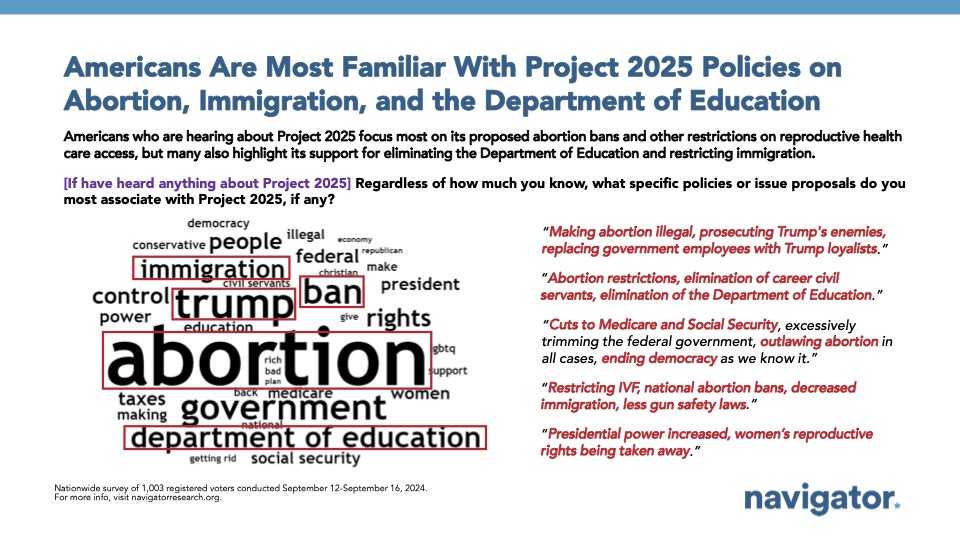
Americans are most familiar with Project 2025 policies on abortion, immigration, and the Department of Education.
When describing what issues or policies are most associated with Project 2025, Americans most frequently cite abortion bans and the Department of Education. Among those who report hearing something about Project 2025 (68 percent), abortion emerges as the issue most often associated with the plan, followed by policies concerning the Department of Education. Many also cite “Trump,” “ban,” “take away,” and “rights” as associated with Project 2025.
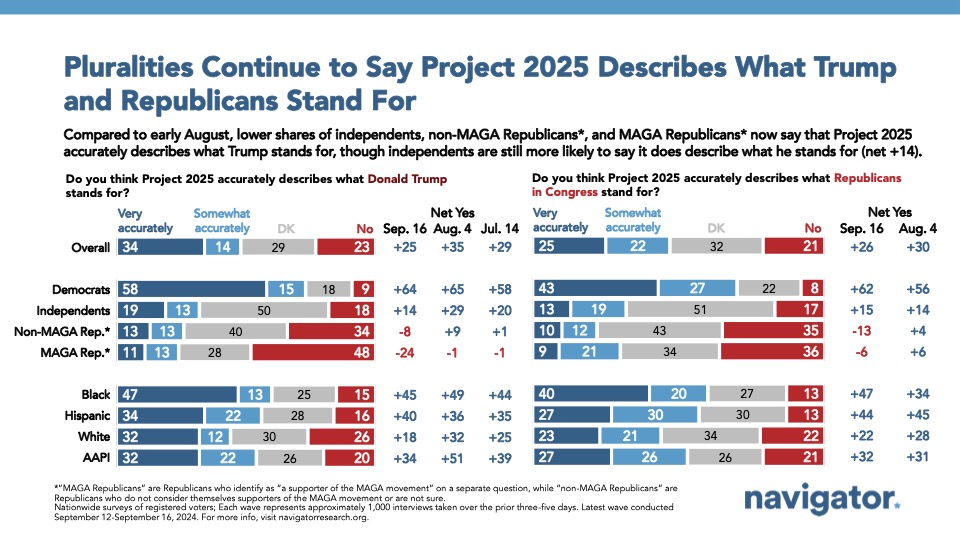
Pluralities continue to believe that Project 2025 accurately describes what Donald Trump stands for.
Nearly half of Americans believe Project 2025 accurately describes what Trump and Republicans in Congress stand for. A plurality of Americans believe that Project 2025 accurately describes what Republicans in Congress stand for (47 percent), including 70 percent of Democrats, 32 percent of independents, and 26 percent of Republicans. Similarly, by a 25-point margin a plurality believes Project 2025 accurately describes what Donald Trump stands for (48 percent).