
Poll: Health Care Tax Credits
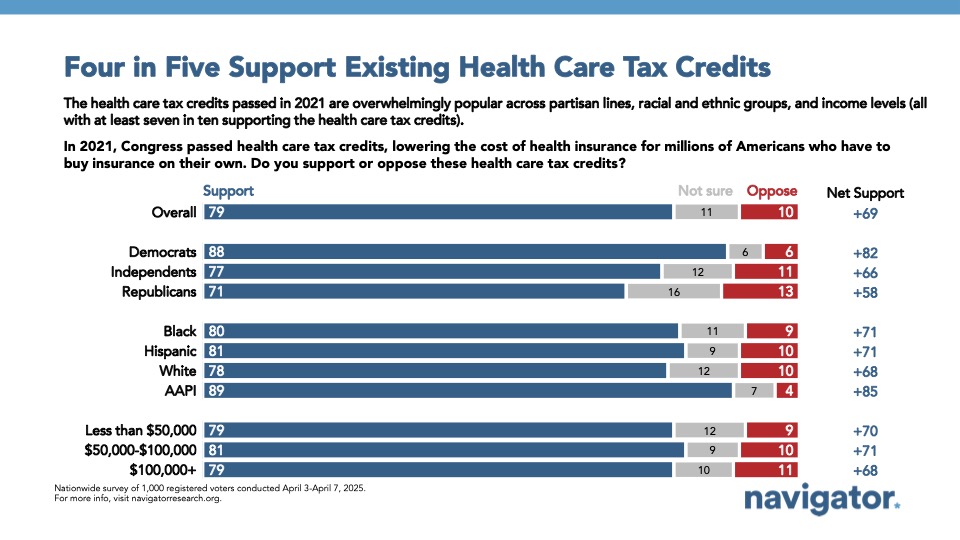
An overwhelming majority of Americans support extending health care tax credits.
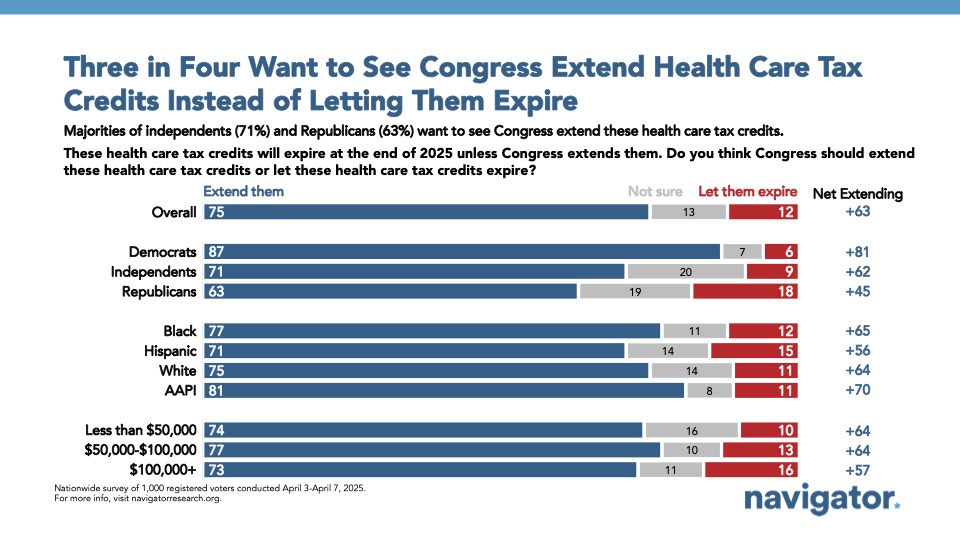
Nearly four in five Americans (79 percent) support the existing health care tax credits, cutting across partisanship and ideology with 77 percent of independents and 71 percent of Republicans supporting the tax credits. Not only is there a strong base of support for the existing tax credits, but deep support for extending them as the deadline approaches for Congress to act. Three in four Americans (75 percent) support an extension, including 49 percent who say they “strongly support” extending the credits. Support cuts across partisanship with 71 percent of independents and 63 percent of Republicans supporting the extension. A majority of 2024 Trump voters (61 percent) support extending the current credits and a third (30 percent) strongly support the extension.
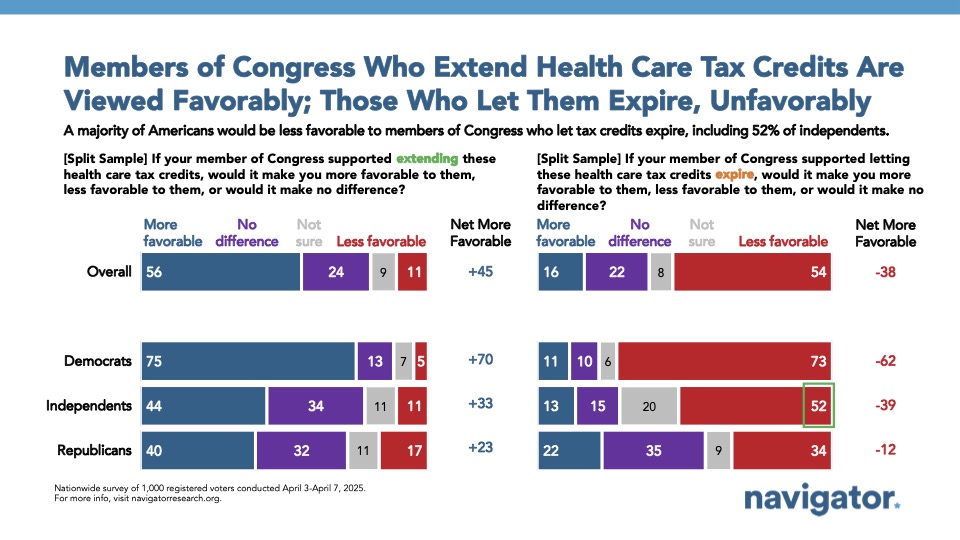
Members of Congress who support extending health care tax credits are viewed more favorably by a net 45 points.
Americans view members of Congress who support extending health care tax credits more favorably (56 percent more favorable – 11 percent less favorable), including independents by 33 points and Republicans by 23 points. Members of Congress who support letting these tax credits expire are viewed more unfavorably by 38 points (16 percent more favorable – 54 percent less favorable), including independents by 39 points and Republicans by 12 points.
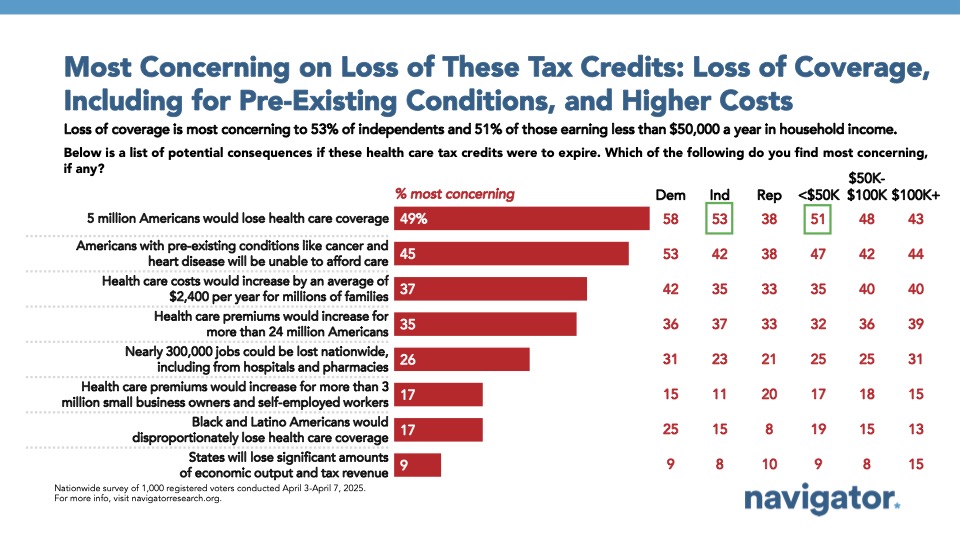
The human impact raises the most concerns. Americans are most concerned that “5 million Americans will lose health care coverage” (49 percent), “Americans with pre-existing conditions like cancer and heart disease will be unable to afford care” (45 percent), and that “health care costs would increase by an average of $2,400 per year for millions of families” (37 percent).
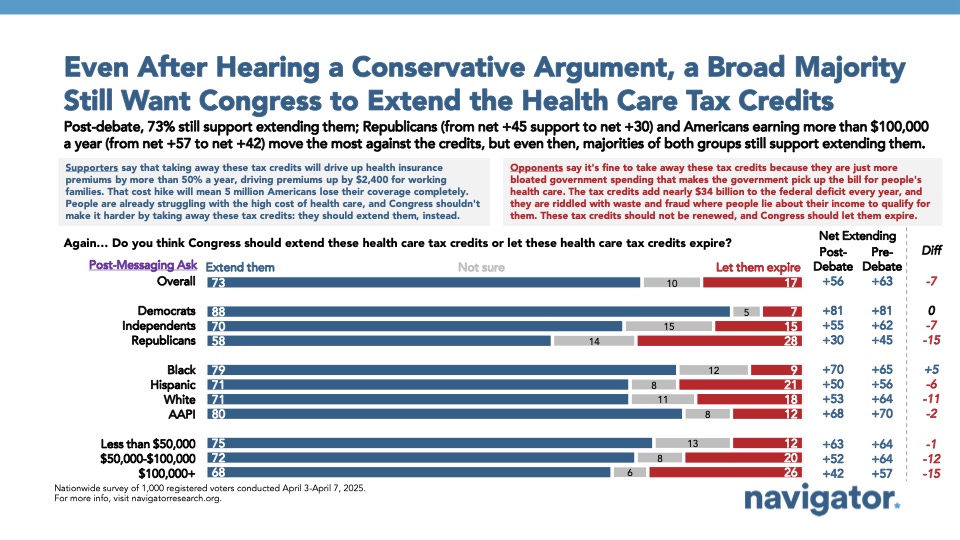
Even when hearing competing arguments from conservatives against extending these health care tax credits, 73 percent of Americans say that Congress should extend them, including 70 percent of independents and 58 percent of Republicans.
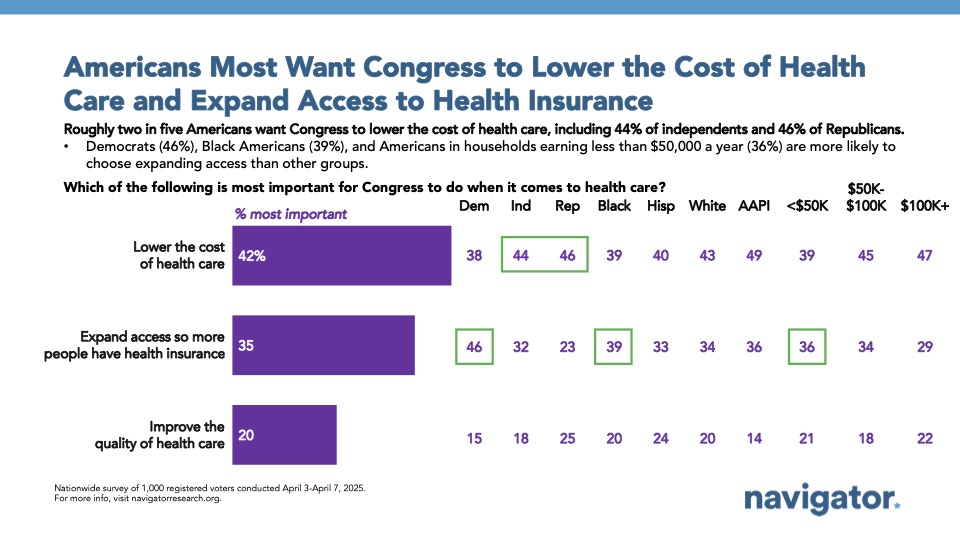
Americans say it is most important for Congress to prioritize lowering health care costs and expanding access.
42 percent of Americans say that lowering the cost of health care should be a top priority for Congress, followed by 35 percent who say expanding access to health insurance is most important. Priorities differ along party lines, with Democrats placing more importance on expanding access and independents and Republicans placing more emphasis on lowering cost. Nonetheless, expanding access and lowering costs are priorities across party lines.
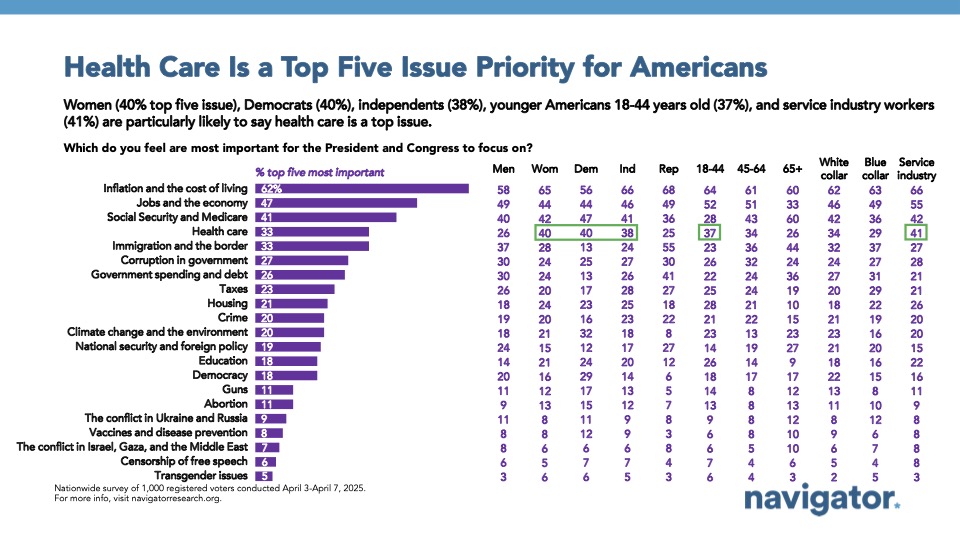
When asked what the President and Congress should be focused on, health care is the fourth most selected priority, with one third of Americans naming it among the top 5 priorities (33 percent). When asked what they perceive Donald Trump and Republicans in Congress are most focused on, only 7 percent listed health care as being among their top five priorities.