

Poll: Women
This Navigator Research report covers what the women want the government to prioritize, impacts of specific cost increases, and perceptions of elected officials.
In honor of Women’s History Month, Navigator conducted focus groups among women in battleground states and from a variety of backgrounds, and heard their personal accounts of their economic experiences and views on being a woman in society. One major theme emerged: Women across the country, no matter their background or occupation, are struggling to make ends meet and are feeling an overwhelming lack of support. This special Navigator report will dig into our survey research to better understand the economic pain points and why so many women in America feel left behind.
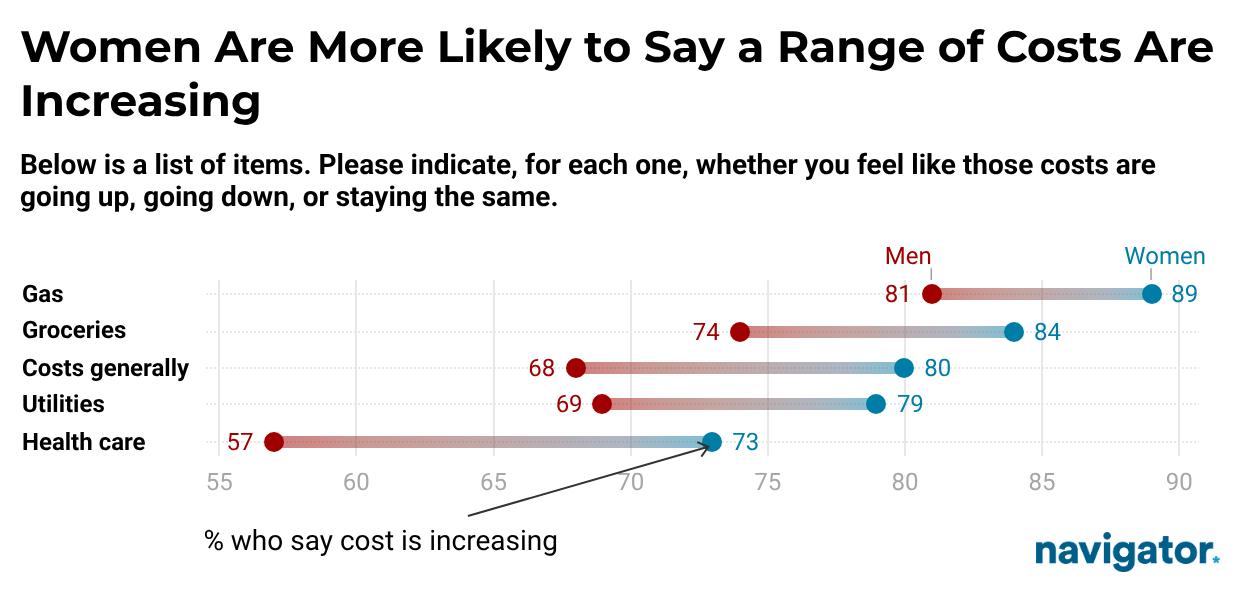
Women Are More Likely to Say Costs Are Increasing
Recent Navigator polling found Americans overall are struggling with costs, as three in four report rising costs (75%), but women are more likely than men to say a range of their costs are increasing. Women are 16 points more likely to say the cost of health care is increasing (women: 73% increasing – men: 57% increasing) and 12 points more likely to say their costs generally are increasing (women: 80% increasing – men: 68% increasing). Women are also 10 points more likely to say both the cost of groceries (women: 84% increasing – men: 74% increasing) and utilities are increasing (women: 79% increasing – men: 69% increasing).
- On the cost of health care, Democratic women are 10 points more likely to say it’s increasing than Democratic men. Independent women are 15 points more likely to say the cost of health care is increasing than independent men, and Republican women are 18 points more likely than Republican men.
- On the cost of groceries: Democratic women are six points more likely to say the cost is increasing than Democratic men, independent women are 10 points more likely, and Republican women 14 points more likely.
Women Want Lawmakers to Prioritize Lowering Costs and Health Care
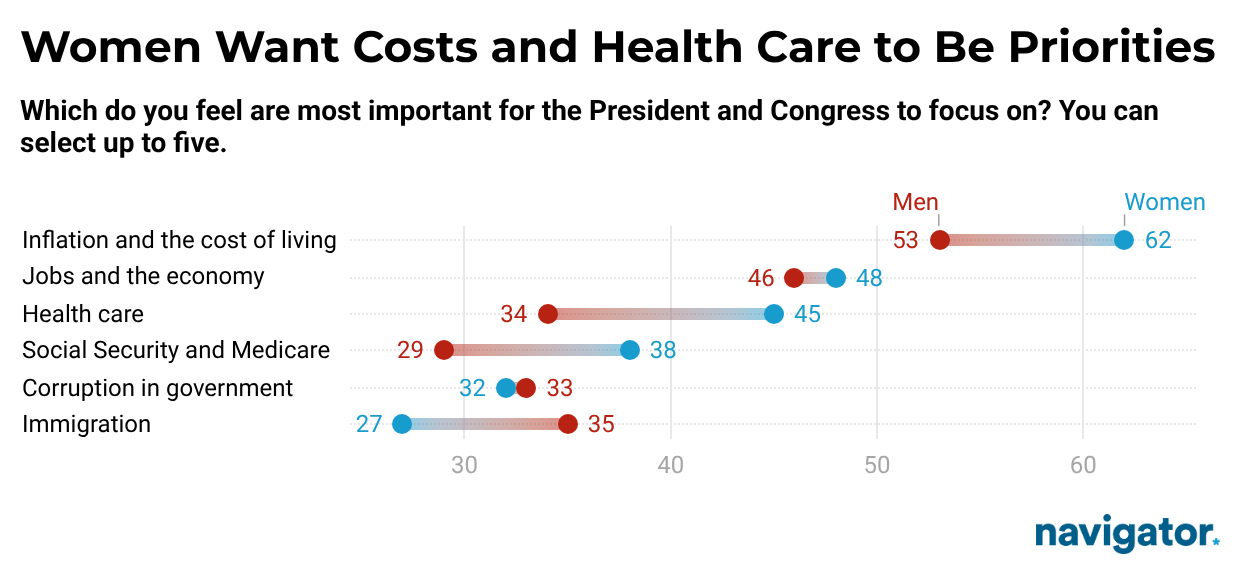
As costs continue to rise, it’s no surprise that Americans want the president and Congress to focus on the cost of living, the economy, and health care. As women are more likely to be feeling the pain of rising costs, they are also even more likely to want the president and Congress to prioritize the cost of living, the economy and health care. Notably, women are 11 points more likely to say health care should be a priority for the president and Congress (women: 45% – men: 34%). Women are eight points less likely than men to want the government to focus on immigration (women: 27% – men: 35%).
Women across parties are more likely to want the government to prioritize costs and health care: Democratic women are six points more likely to want the government to prioritize the cost of living, and nine points more likely to believe health care should be a priority compared to Democratic men. For independent women, the gap is net +7 on the cost of living and net +14 on health care. Republican women are net +9 on wanting the cost of living to be a priority compared to Republican men, and net +9 on health care.
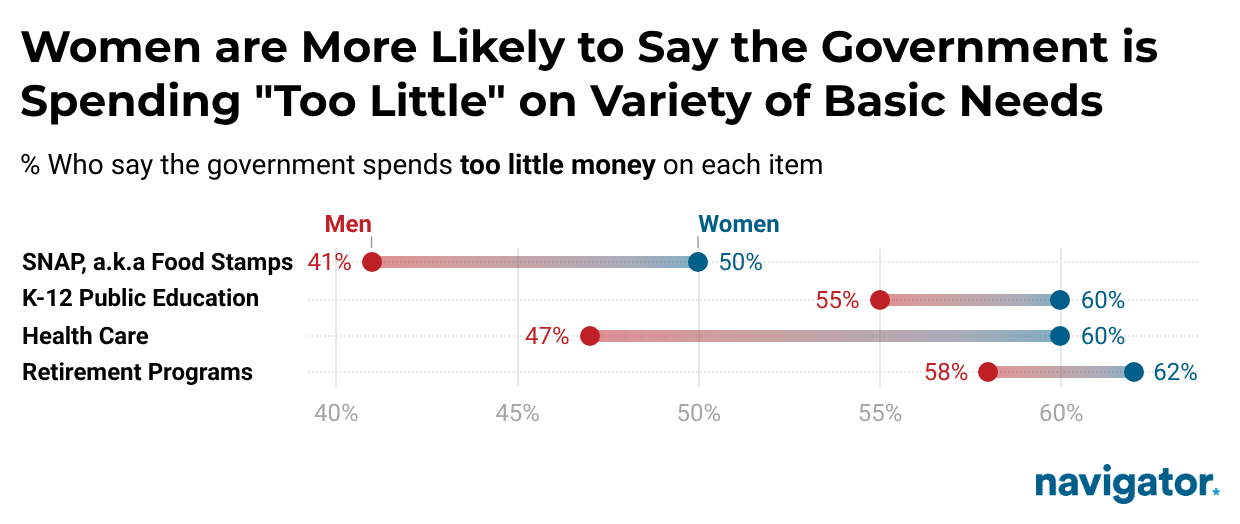
As women want the government to focus on costs and health care, they also are more likely to say the government spends too little on a range of issues and programs. Half of women say the government spends too little on SNAP (women: 50% – men: 41%). 60% of women say the government spends too little on health care – compared to only 47% of men who say the same.
- 59% of men and women say the government spends too much money on foreign wars and conflicts, including mothers by 53 points (60% too much – 7% too little).
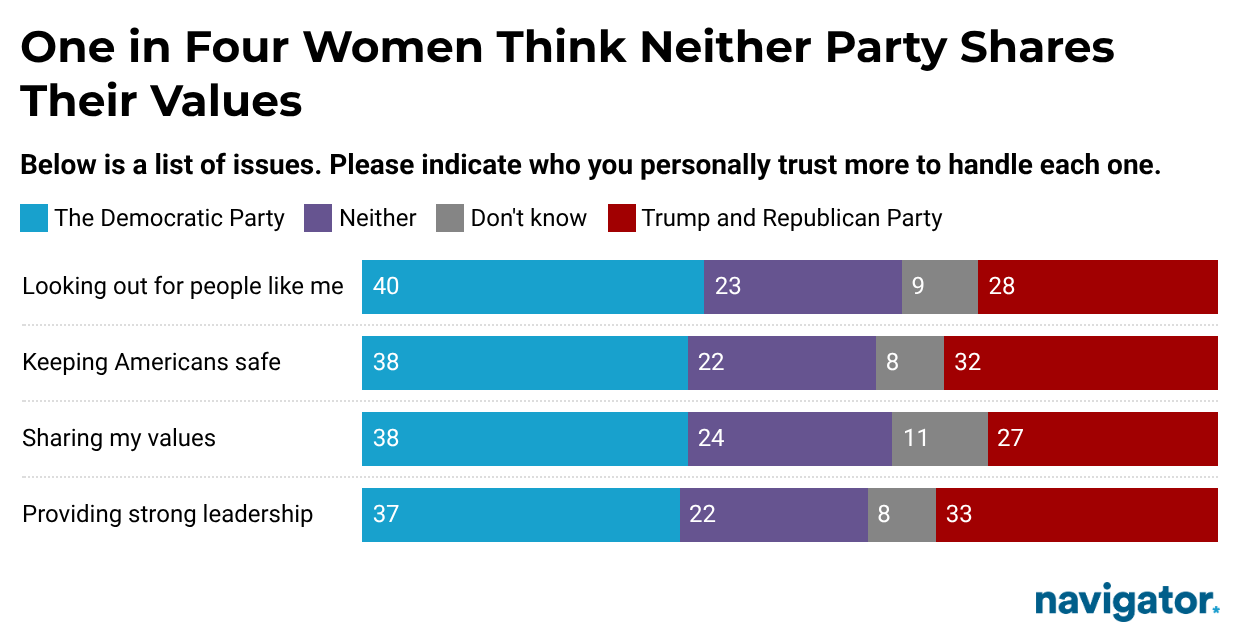
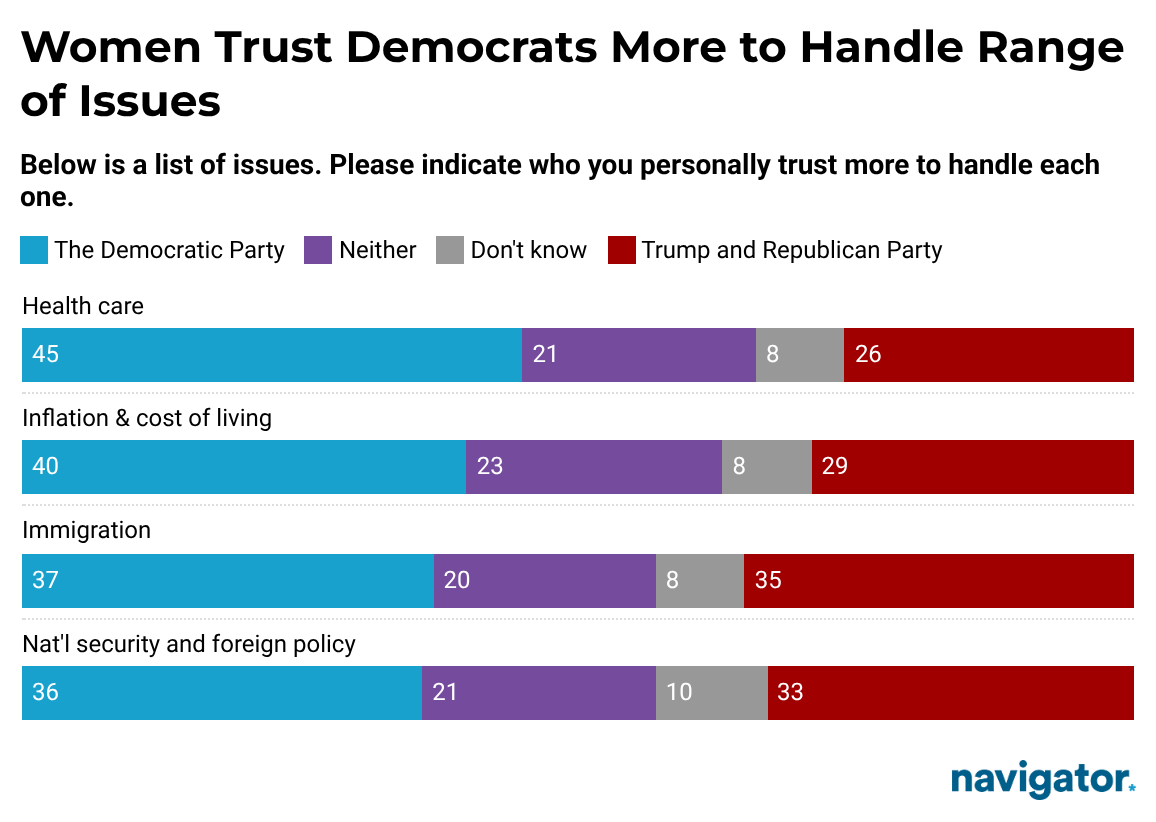
Women trust Democrats in Congress more to handle the issues most important to them. By 11 points, women trust Democrats more to handle inflation and the cost of living (40% trust Democrats in Congress – 29% trust Republicans), and trust them more to handle health care by nearly 19 points (45% trust Democrats in Congress – 26% trust Republicans in Congress). Notably, across a range of issues, one in five women say they trust neither party.
Women Believe the Political System is Dysfunctional, But Fixable
An October 2025 Navigator survey found that 74% of both women and men believe the political system is dysfunctional. Then when asked if the system is fixable, a majority of women said the political system is fixable (56%) and just less than half of men said the same (49%).
When it comes to why Americans believe elected officials can’t get things done – the leading culprits are self-enrichment and that they’re out of touch with the American people. A January Navigator survey found that among both men and women, elected officials being too focused on enriching themselves and their donors is seen as the top reason leading them to not getting things done (78% of women – 81% of men). Among men, a close second is that they are unwilling to stand up to the most extreme members of their party (81%). Among women, the second most selected reason is that they are out of touch and don’t understand the struggles everyone else faces (78%).
- From Navigator’s March focus groups: “I feel like the political leaders, even the women political leaders, are so out of touch with reality and what it’s like to be a real American woman.” – PA Hispanic woman, weak Republican
Looking out for People like Me
Women trust Democrats more to look out for people like them (net +12; 40% trust Democrats in Congress – 28% trust Republicans in Congress). Similarly, Democrats are seen as more trusted when it comes to “sharing my values” (net +11; 38% trust Democrats in Congress – 27% trust Republicans in Congress). However, when it comes to “sharing my values” and “looking out for people like me,” over one in five say they don’t trust either party (23% and 24%, respectively). Women with children under the age of 18 are even more likely to trust neither party to look out for people like them – with 29% saying they trust neither party (compared to 20% of women without children).
Recommendations:
- Women are inclined to trust Democrats in Congress more, and it’s not a surprise, with Trump saying ‘it’s not possible’ to do the things women say they care about. Yet this trust is not pervasive; in fact, a large number of women say they don’t trust either party.
- Health care concerns are not limited to Medicaid cuts or ACA subsidies. Women report concerns about the safety of the medicine they take and the food they eat, and worry they are not getting the right information or the best care.
- Women face a wide variety of tough challenges, and feel they are on their own, without any support or even empathy from elected officials. To establish rapport and trust, progressives need to demonstrate they truly get it, and have — or aspire to — walk a mile in women’s shoes.