
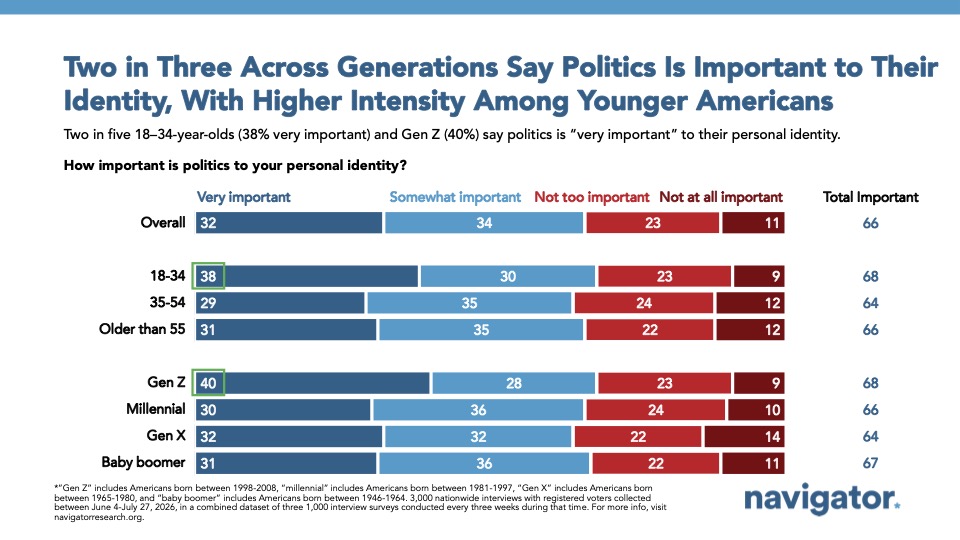
More Younger Americans Consider Politics “Very Important” to Their Identity
Younger Americans are more likely to rate politics as “very important” to their personal identity (38% for Americans ages 18-34, 40% for Gen Z, ages 18-29) while it’s closer to 30% with most other age groups.
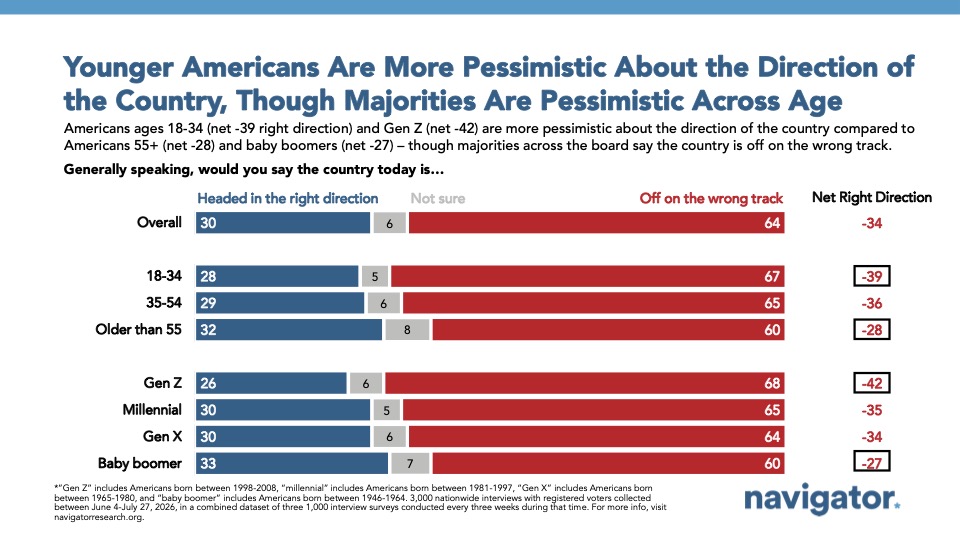
Younger Americans Are More Pessimistic About the Direction of the Country and Regret their Vote for Trump
Across every age and generation, majorities of Americans agree that the country is “off on the wrong track,” with Gen Z holding this sentiment particularly strongly (26% headed in right direction – 68% headed on wrong track).
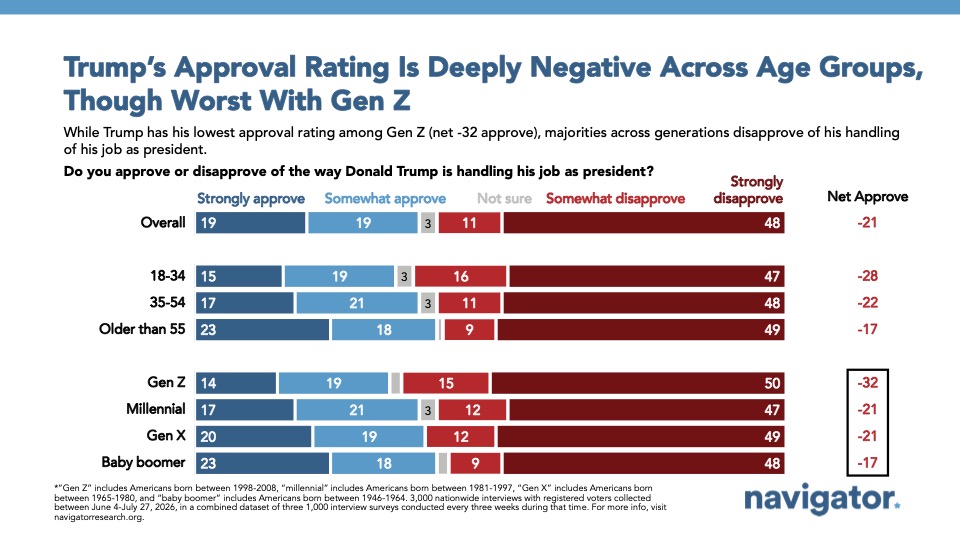
Younger Americans are not happy with the nation’s leadership either. Trump’s overall net approval rating is underwater with Americans of all ages and generations (-21 net approve), especially Gen Z (-32 net approve). Younger Americans’ disapproval comes as a departure from the gains Trump made with them in 2024. As a comparison, Trump fares only slightly better with Baby Boomers and Americans 55 and older, at a net approval of -17, though he is still deeply underwater.
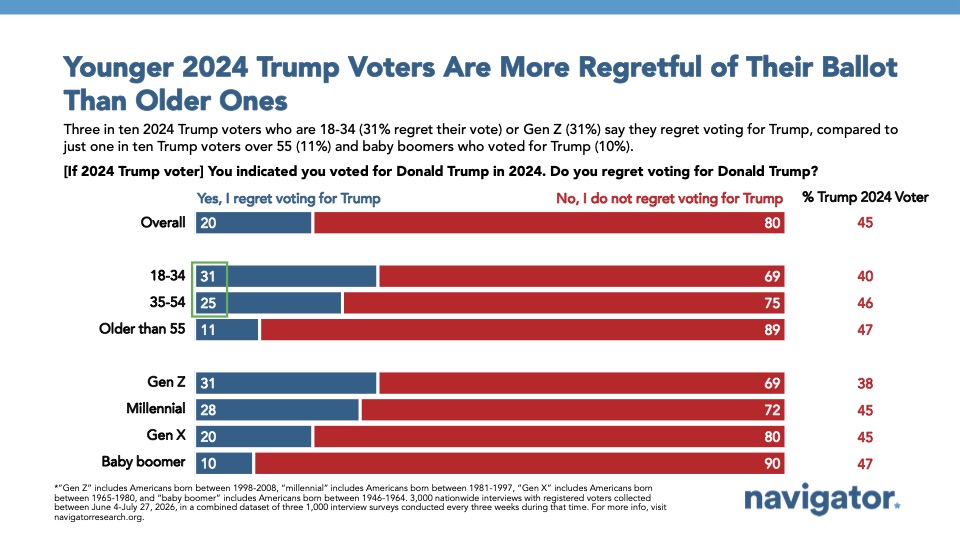
Among 2024 Trump voters, regret is higher among younger generations: nearly a third of Americans ages 18-34 (31%) and a quarter of Americans 35-54 (25%) now say they regret their vote, compared to about one-in-ten of those 55 and older (11%).
Younger Americans Are Dissatisfied With Both Parties on the Economy
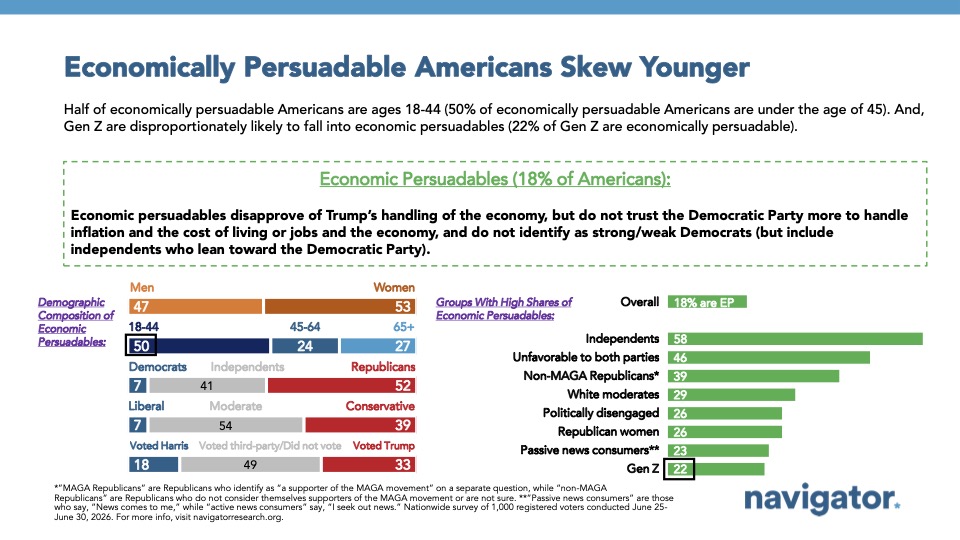
People who disapprove of Trump’s handling of the economy but also don’t trust Democrats on the issue (defined by Navigator as “Economic Persuadables”) are far more likely to be younger. Americans between the ages of 18 and 44 make up half of this group, while 24% are between 45 and 64, and Americans older than 65 make up only 27% of the group.
Younger Americans Trust the Democratic Party More Than Older Americans
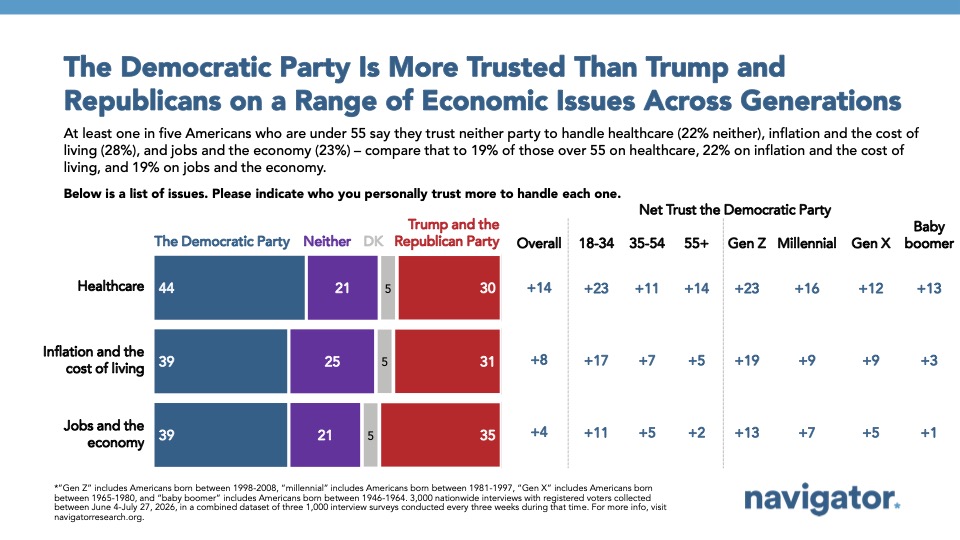
Overall, Americans trust Democrats more than Trump and Republicans on healthcare (net trust +14), inflation and the cost of living (net trust +8), as well as jobs and the economy (net trust +4). Net trust of the Democratic Party grows among younger Americans and is particularly high on healthcare at +23. On inflation and the cost of living, net trust in the Democratic Party is +19 for Gen Z, 10 points higher than millennials (net trust +9) and Gen X (net trust +9).
Older Americans are More Likely to Actively Seek Out the News Than Younger Americans
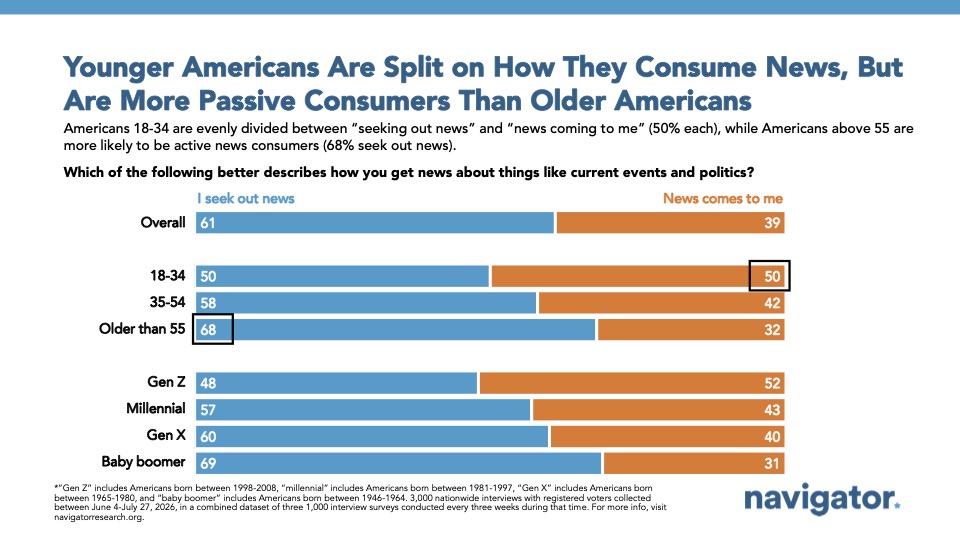
Americans 55 and up are more likely to actively seek out the news (68%) than younger Americans (50% for ages 18-34), with Gen Z evenly split between actively and passively consuming news. Navigator Research’s recent online discussion boards found that passive news consumers, especially younger ones, still get their news, they just do so on nontraditional platforms and through new forms of media.
When it comes to where Americans get their news, sources are divided along generational lines with 53% and 49% of Gen Z and millennials, respectively, relying on social media websites. This compares to just 35% and 21% of Gen X and Baby Boomers,, respectively. The top sources for older Americans (55+) are local television (49%) and broadcast television news like CBS, NBC, and ABC (45%).
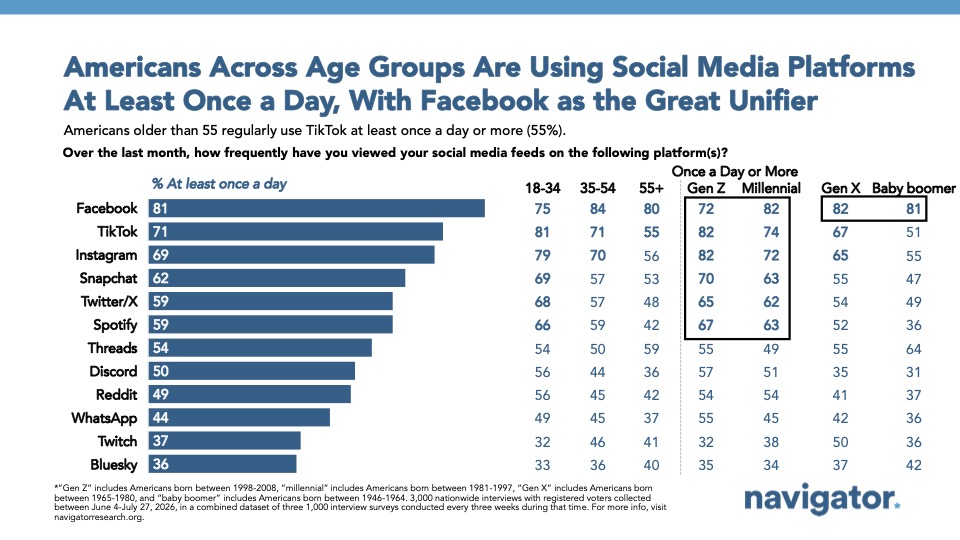
A majority of Americans across generations report using a social media platform at least once a day. Facebook is the most popular platform with at least 70% of Americans of all ages checking it at least once a day. On platforms like TikTok there is more variation across generations with 82% of Gen Z using it at least once a day, 74% of millennials, 67% of Gen X, and 81% of Baby Boomers.