President Trump’s war with Iran remains unpopular. A majority (52%) oppose the military actions the U.S. has taken against Iran, including nearly six-in-10 independents.
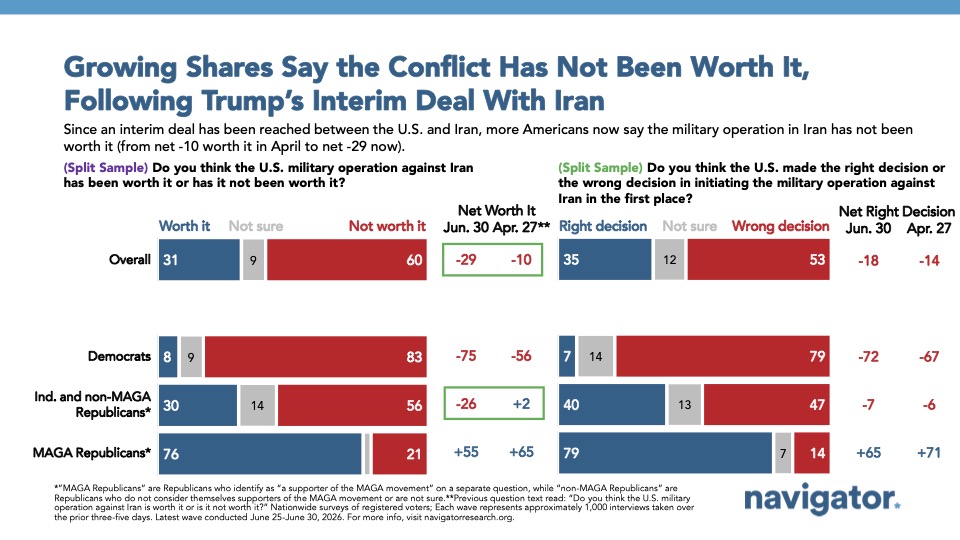
Opposition is growing, not fading: six-in-10 Americans now believe the military operation in Iran hasn’t been worth it, a 10-point increase since April. A majority also say the U.S. made the wrong decision in initiating the operation in the first place, including 62% of independents and, notably, nearly one-in-four (24%) Republicans. That level of defection on the decision itself is the clearest signal that doubts about the war cut across party lines.
Support rises steadily with age, but no generation under 65 comes close to majority support for the war:
- Gen Z is least supportive of the war in Iran (30% support)
- Millennials and Gen X have similar levels of support at 36% and 37%, respectively
- 44% of Baby Boomers and 55% of the Silent Generation support Trump’s military actions in Iran
Younger Americans are also less likely to say that the U.S. military operation against Iran has been worth it. About a quarter of Gen Z and Millennials say it has been worth it, compared to 37% of Baby Boomers and 40% of the Silent Generation.
Men and women differ by nine points in their support for the military actions taken against Iran (43% and 34% support, respectively). There is a 10-point gap in men and women’s belief that the military operations have been worth it (36% to 26%).
Trump’s Approval on Foreign Policy in Decline, But Americans Divided On Who to Trust
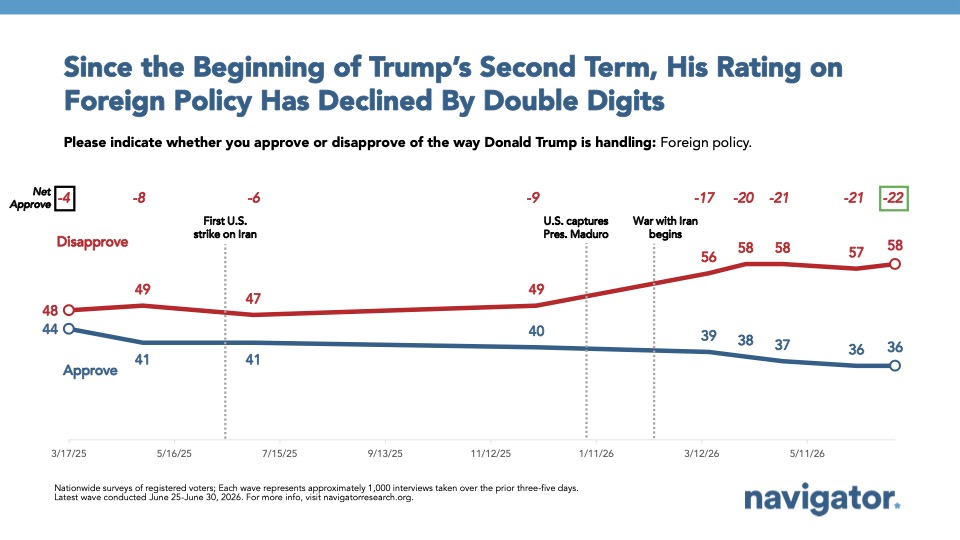
Since the start of Trump’s second term, his approval rating on foreign policy has steadily declined.
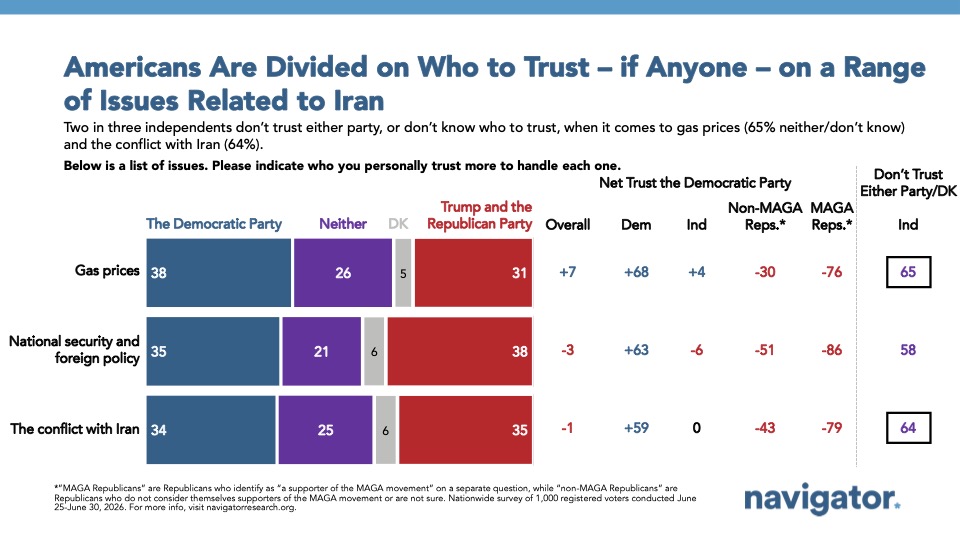
But at the same time, Democrats in Congress have not built trust in their ability to handle foreign policy and national security issues or the conflict with Iran. In February of this year, 35% of Americans put their trust in Democrats on issues of foreign policy and national security, and 34% trusted Democrats on the conflict with Iran. Today, four months into the conflict, that number remains unchanged. Trust in Trump and the Republican Party on foreign policy and national security has decreased four points since February, while trust in neither party gained four points. Trust in Trump and the Republican party on the conflict with Iran has decreased two points from February, while trust in neither party gained two points, a change within the margin of error.
Most Concerning Elements of the Conflict are Costs to Americans
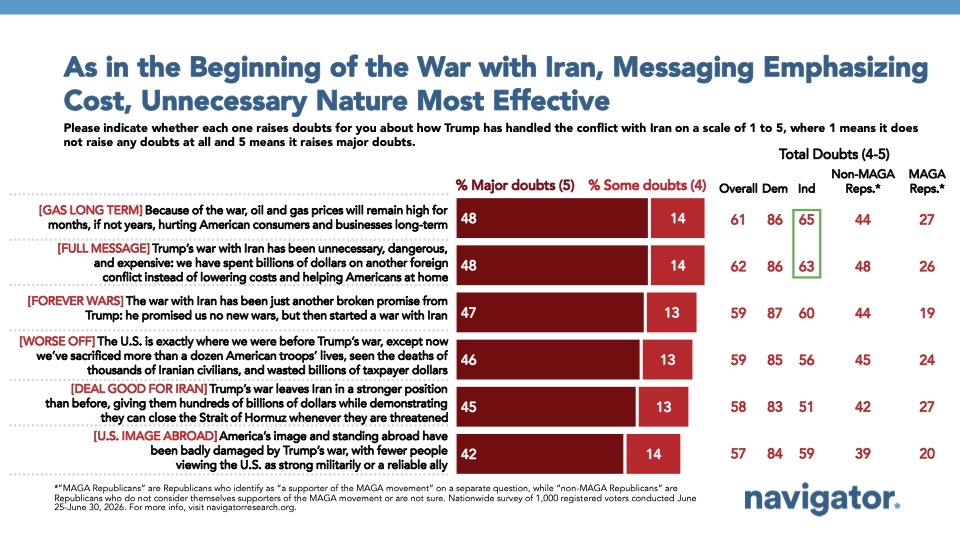
When asked which elements of the conflict raise doubts on how Trump has handled the war, concerns related to costs registered at the top. Americans are less concerned about the impact the war has had on America’s standing in the world.
- Trump’s war with Iran has been unnecessary, dangerous, and expensive: we have spent billions of dollars on another foreign conflict instead of lowering costs and helping Americans at home (Raises doubts for 61%)
- Because of the war, oil and gas prices will remain high for months, if not years, hurting American consumers and businesses long-term (Raises doubts for 62%)
- America’s image and standing abroad have been badly damaged by Trump’s war, with fewer people viewing the U.S. as strong militarily or a reliable ally (Raises doubts for 57%)
Americans Worry Diplomacy Will Fail and War Will Resume
Additionally, Americans do not have a high level of confidence in the Trump administration’s diplomacy. An overwhelming majority (71%) of Americans are concerned that negotiations between the Trump administration and Iran will fail and the war will resume. This includes 84% of Democrats, 71% of independents, and 58% of Republicans, including half of MAGA Republicans.
The Most Concerning Elements of the Deal Are Costs to American Taxpayers
When asked to select the two most concerning aspects of Trump’s recent deal with Iran, Americans are most concerned by costs, Trump’s deal with Iran being worse than the 2015 agreement, and the looming possibility war could resume.
- The deal includes the U.S. being on the hook for up to $300 billion in taxpayer dollars to rebuild Iran (32% top two concerns)
- This deal is worse than the previous deal we had with Iran, and gives Iran more power and money than they had before (26% top two concerns)
- This is just a tentative deal and the 60-day deadline to reach a diplomatic agreement is unrealistic, meaning the conflict could resume (25% top two concerns)
Trump’s Next Foreign Intervention Already Unpopular
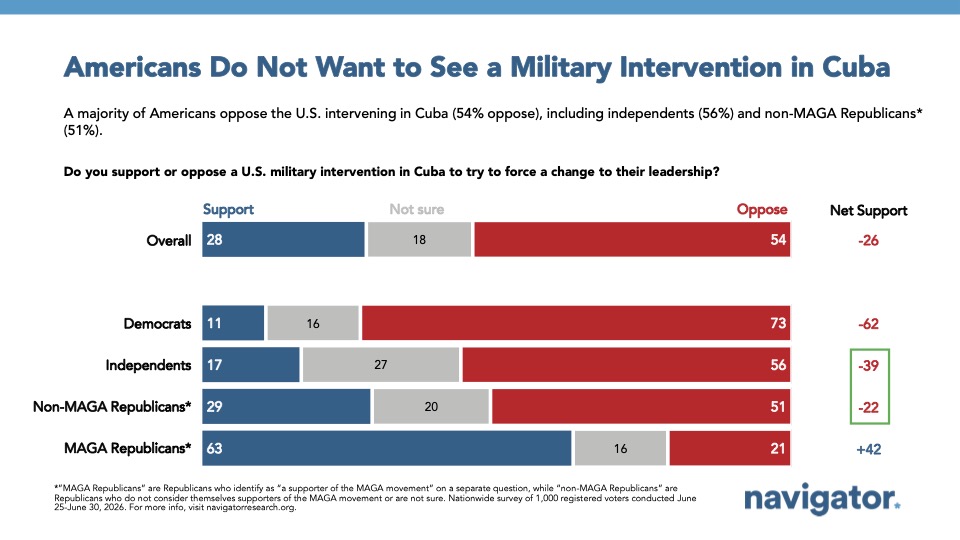
The Trump administration is preparing for a potential, although far from confirmed, military invasion of Cuba, if ordered by Trump. But most (54%) Americans oppose U.S. military intervention into the island to try to force a change to the country’s leadership.