Americans Are Divided Over Voter Suppression And Voter Fraud
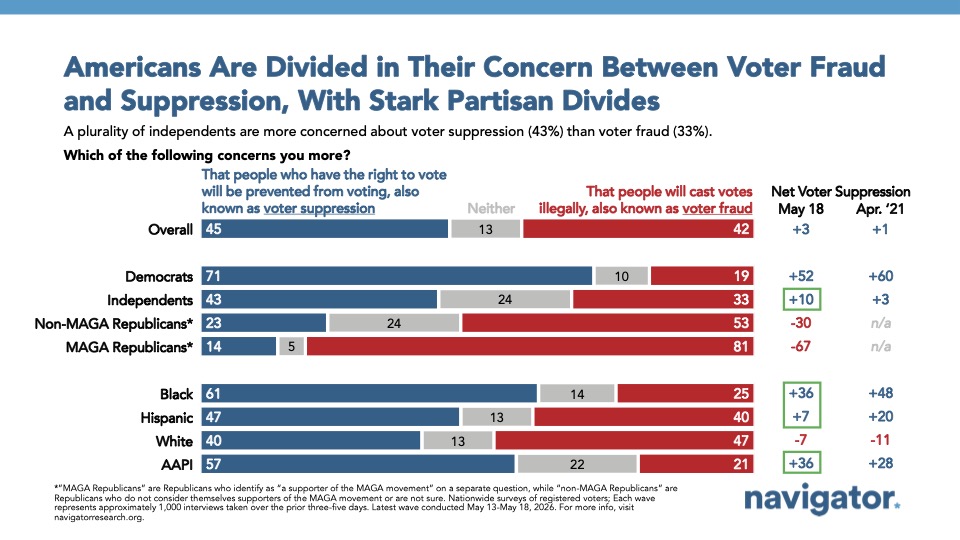
Since 2022, Americans have been slightly more concerned about voter suppression than about voter fraud. However, roughly four-in-10 continue to be concerned that people will cast votes illegally, and a little over one-in-10 (13%) are not concerned about either.
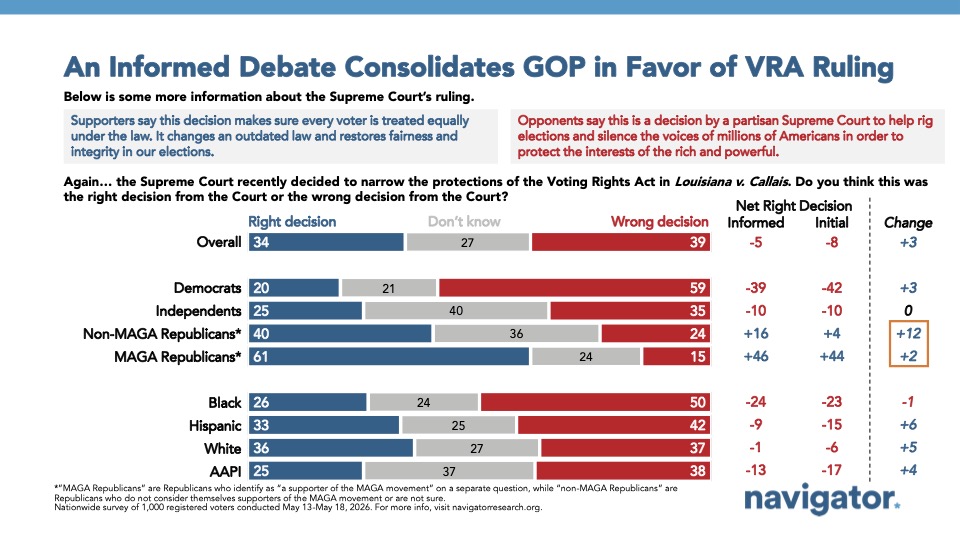
Americans Believe Narrowing Protections of the Voting Rights Act Was the Wrong Decision But Many Still Don’t Know
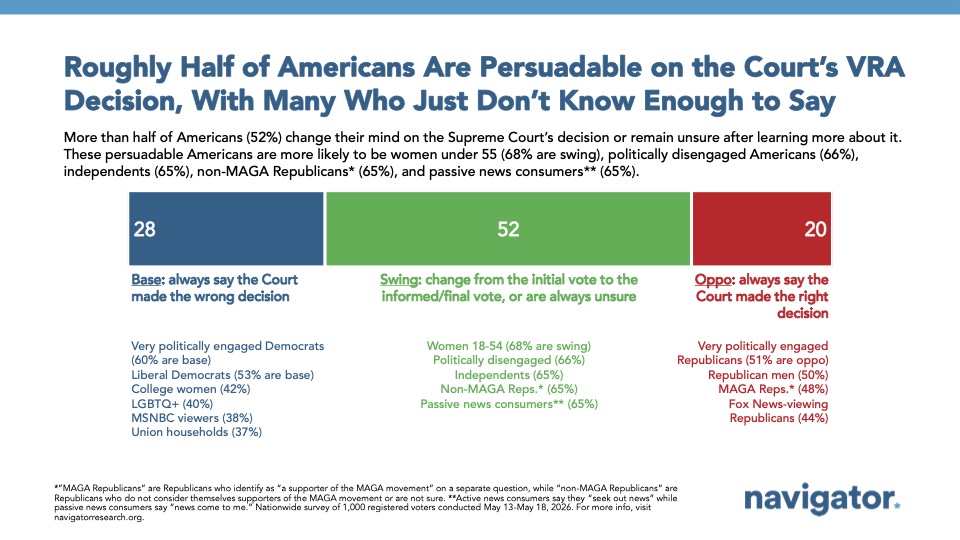
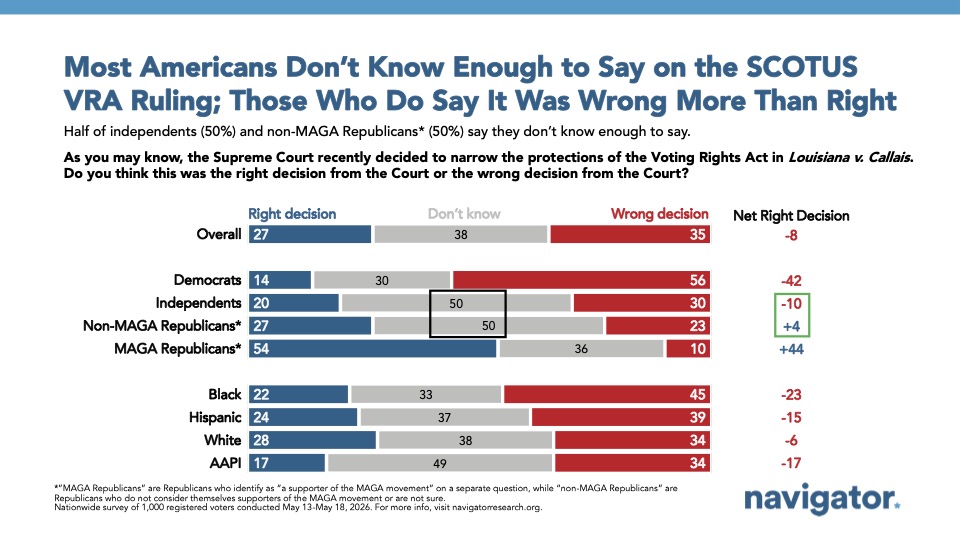
Before any education or messaging, slightly over a third (27% right decision — 35% wrong decision) of Americans believe the recent Supreme Court decision to narrow the protections of the Voting Rights Act, Louisiana v. Callais, was wrong, including 30% of independents and 45% of Black Americans. However, over half (51%) of independents and 38% of Americans overall still don’t know enough to say.
After presenting information on both sides of the issue, Americans further consolidate their opinions along partisan lines (34% right decision — 39% wrong decision), while 27% still don’t know enough to say.
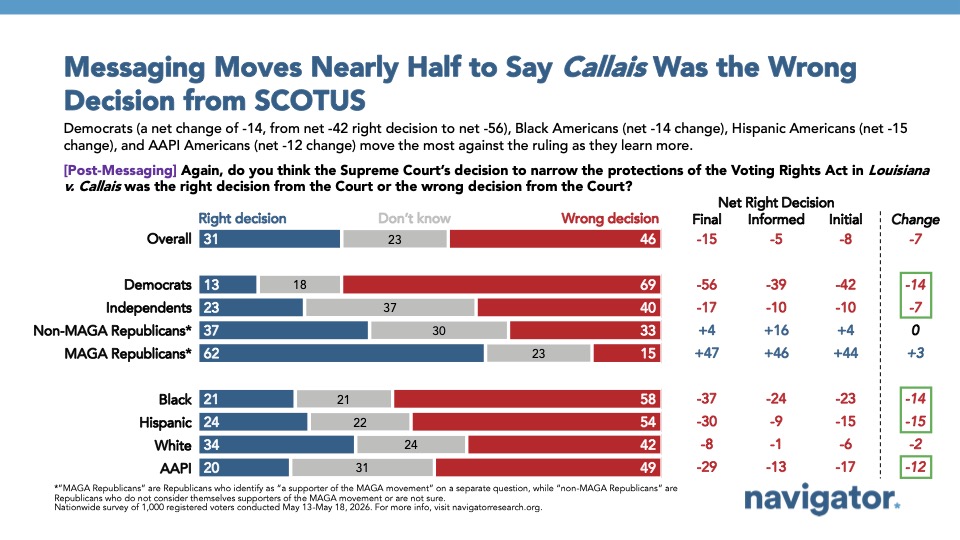
Effective Messaging Focuses On Partisan Rigging Of Maps In Order To Stay In Power
After various arguments on the impact of the ruling, nearly half (46%) believe this was the wrong decision, including 40% of independents and 58% of Black Americans. While we see effective messaging can move the needle on the issue (35% wrong decision to 39% wrong decision after hearing informed arguments from both sides and 46% wrong decision after messaging), nearly a quarter (23%) still feel that they don’t know enough to say.
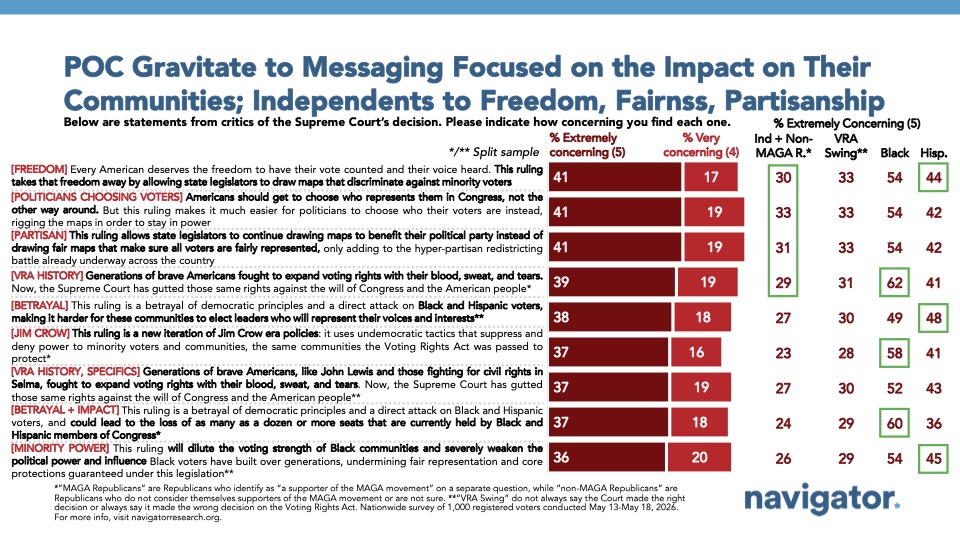
Majorities of Americans are concerned about a range of arguments on how the Callais decision has gutted protections for voting rights.
- Americans overall (60%) are most concerned about how this ruling makes it easier for politicians to rig maps in order to choose their voters to stay in power to benefit their own political party.
- Black Americans are also deeply concerned about how this ruling allows politicians to choose their voters (76%), but also that this ruling is a betrayal of democratic principles and has a direct impact on Black and Hispanic representation in Congress (77%) and how the Supreme Court is trying to gut the rights fought for by generations of brave Americans (76%).
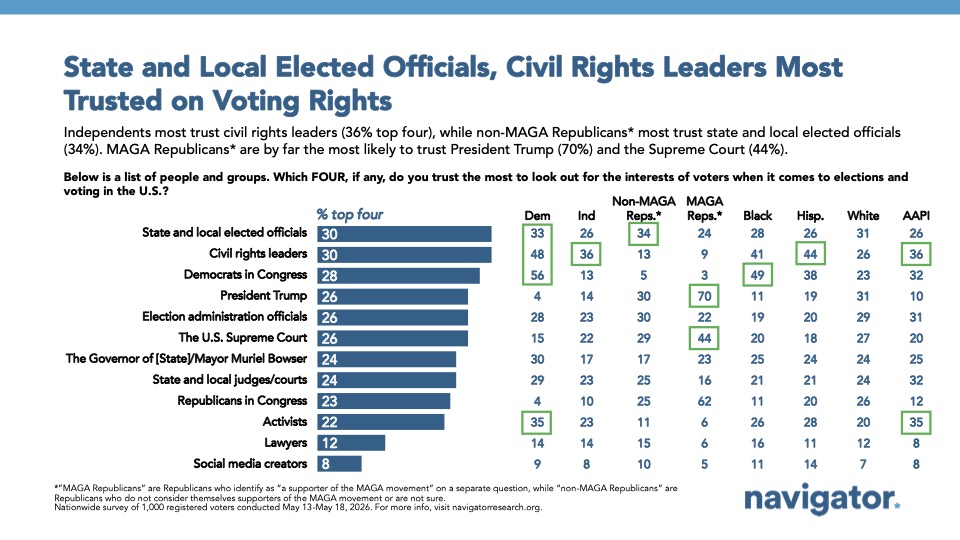
More Trust Local Officials and Civil Rights Leaders To Look Out For Voters’ Interests
State and local officials (30%) and civil rights leaders (30%) are among the most trusted across partisan lines to look out for voters’ interests. Black Americans continue to trust Democrats in Congress (49%) and civil rights leaders (41%) most.
Americans Know Who Will Benefit And Who Will Be Harmed
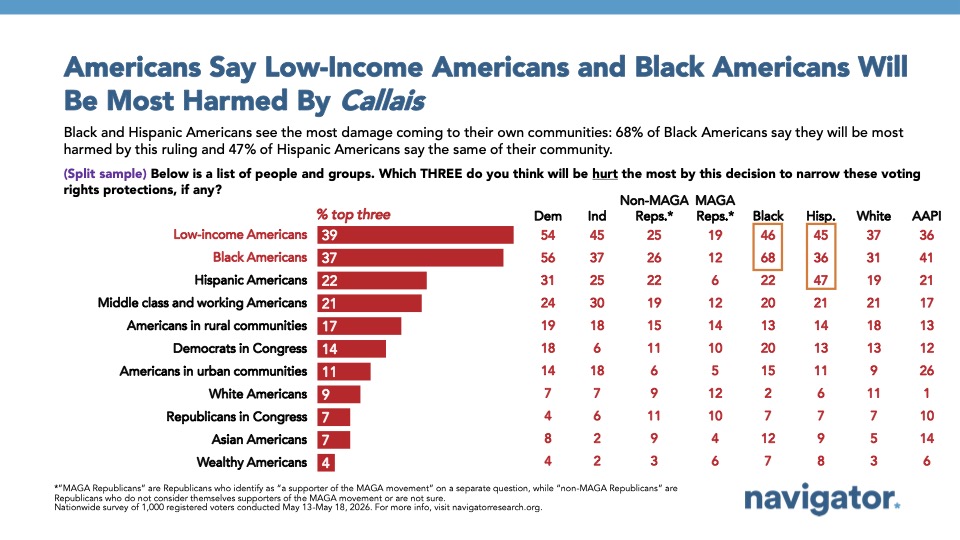
Before any messaging, many intuitively understand who will be harmed by this decision — low-income (39%), Black (37%), and Hispanic (22%) Americans — and also conversely who will most benefit — Republicans in Congress (34%), wealthy (34%), and white (32%) Americans.
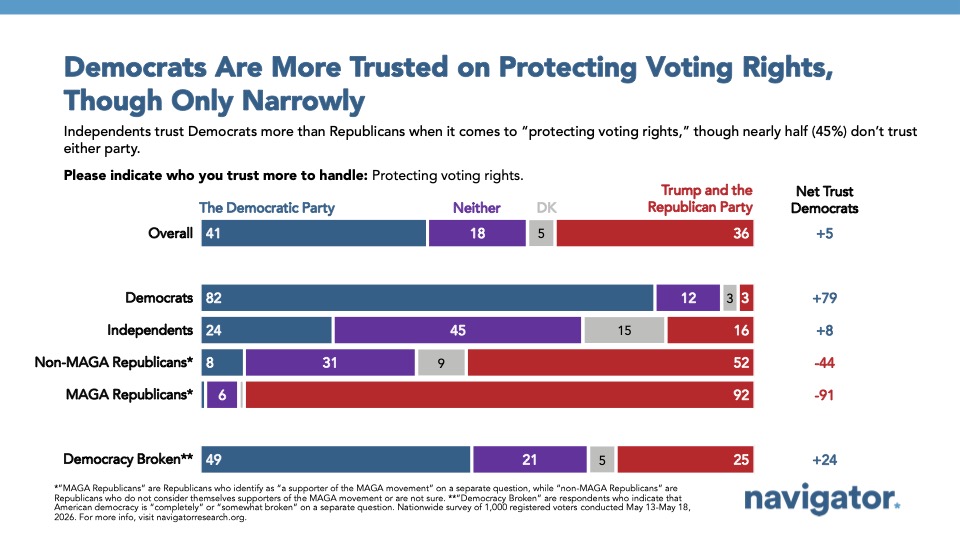
Democrats Are More Trusted To Protect Voting Rights, Though Many Still Do Not Trust Either Party
Democrats are more trusted by Americans to protect voting rights by just a five-point margin, while nearly one-in-five (18%) are not sure who to trust before any messaging is shown.
While The War in Iran Continues To Dominate The News, Most Americans Have Heard At Least Some on Voting Rights And Redistricting
Americans are generally aware of redistricting flights happening across the country, but awareness pales in comparison to dominant issues like the ongoing war in Iran (81%).
- 59% have heard a lot or some about states making changes to their congressional maps.
- 52% have heard a lot or some about the recent Callais ruling, which will change how maps can be drawn.
- 45% have heard a lot or some about the recent Virginia Supreme Court ruling against the maps that were approved by Virginia voters.
- 38% have heard a lot or some about the recent Callais ruling without additional context.
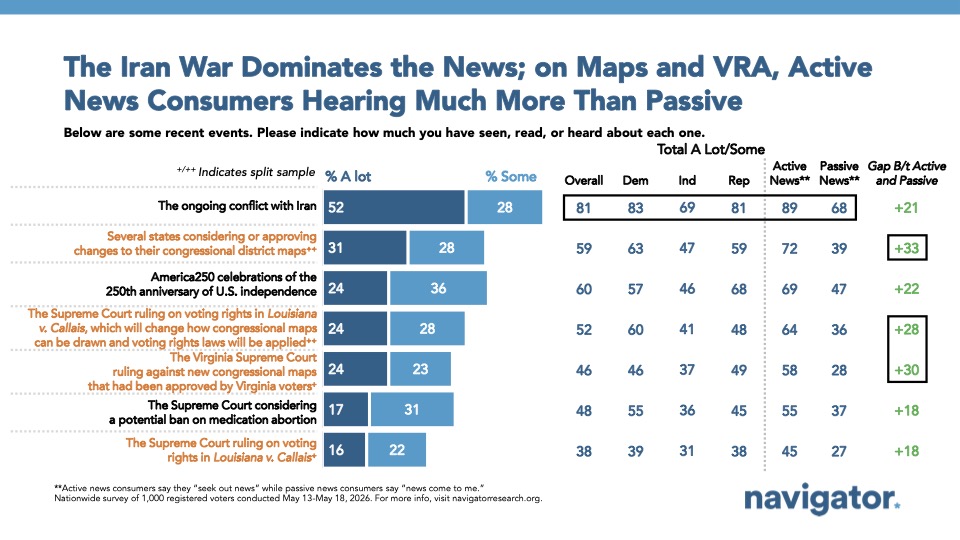
Additionally, only about a third or less of passive news consumers have heard a lot or some about any redistricting or voting rights news, and local TV and online news consumers are much more likely to have heard anything about redistricting compared to social media users. Americans’ opinions on voting rights and redistricting are movable if presented with an effective argument, but this issue is only just beginning to break through. Communication—far and wide—and education is needed in order to further move public opinion following Louisiana v. Callais.