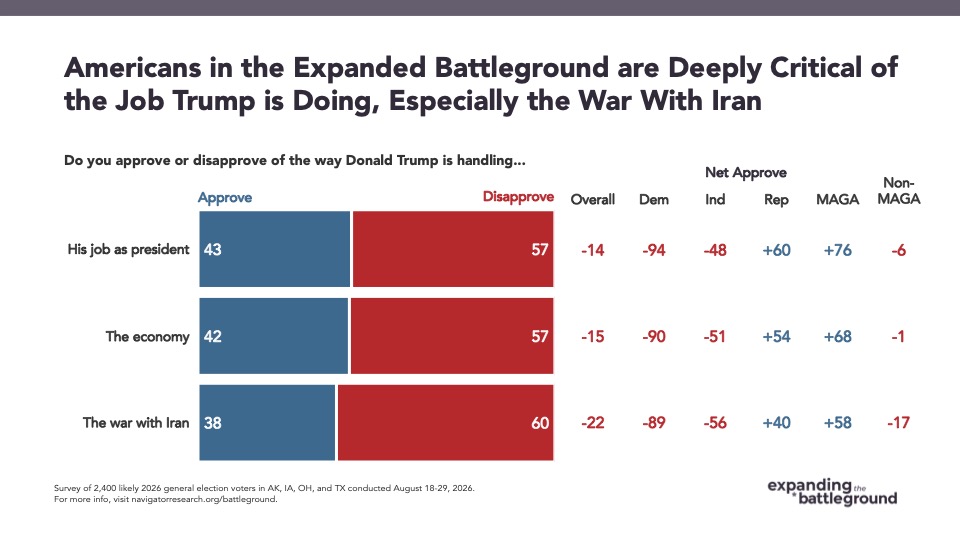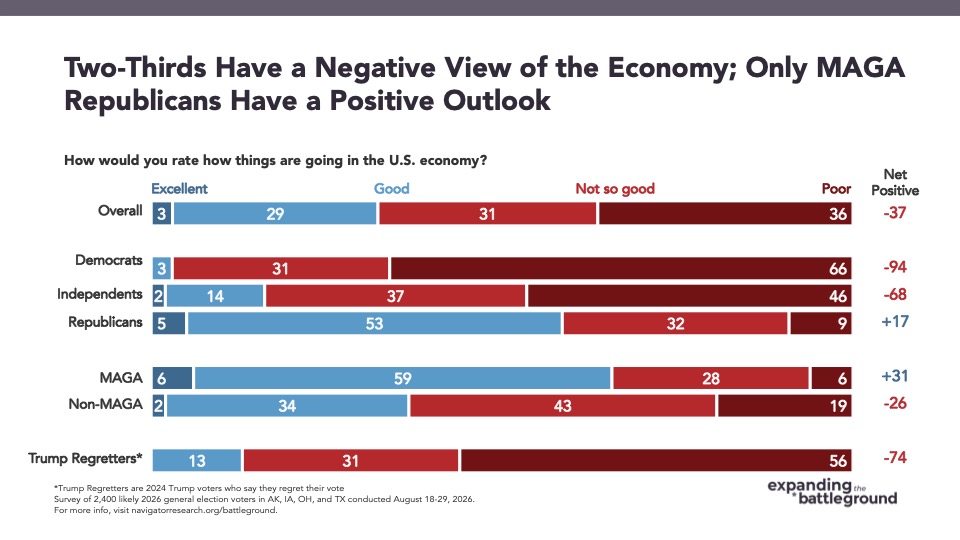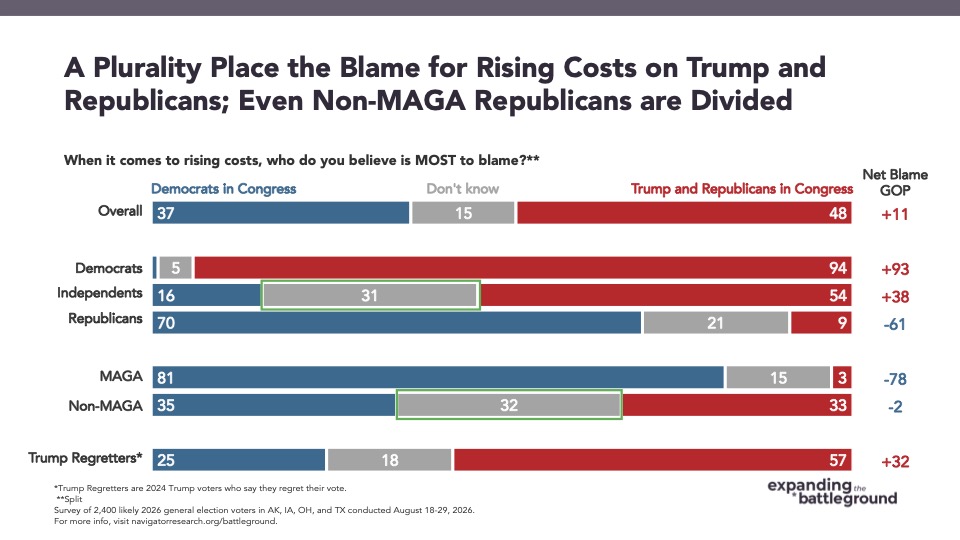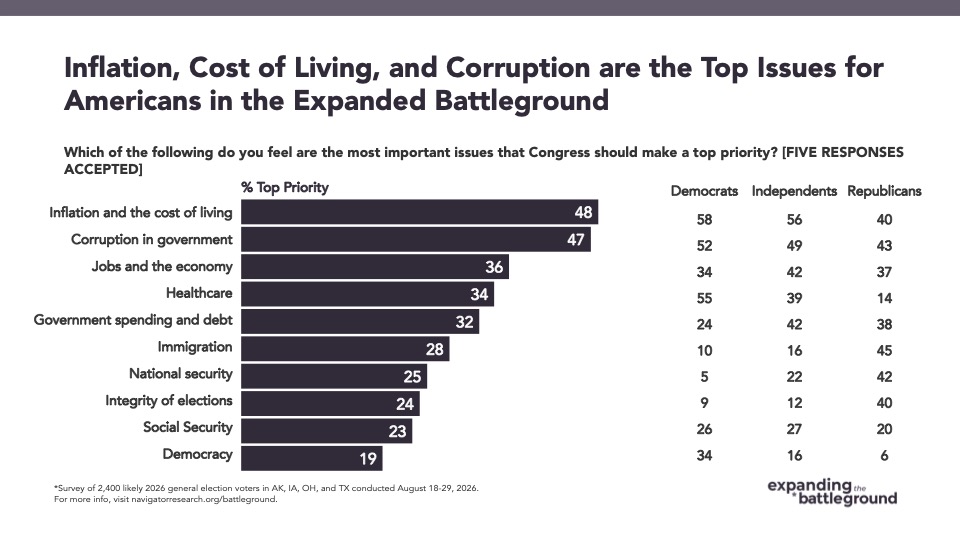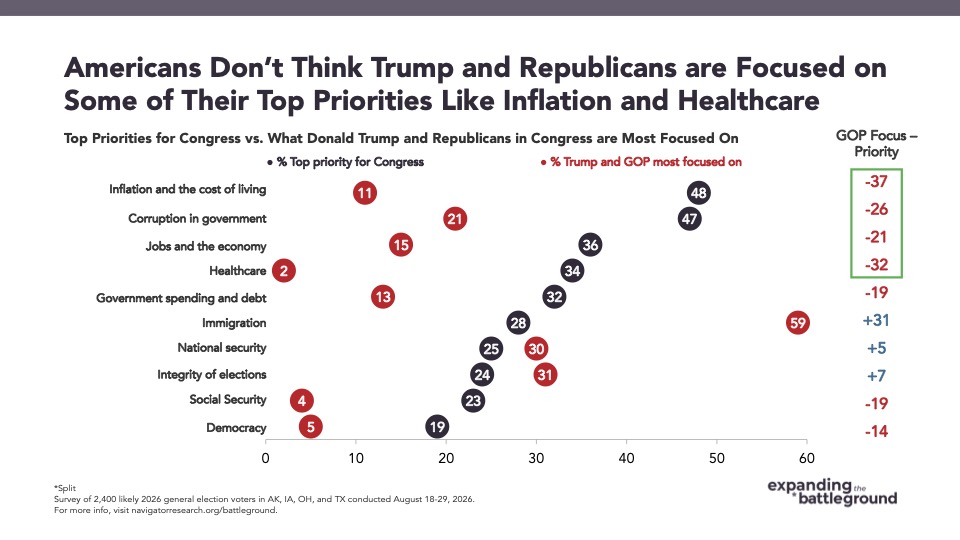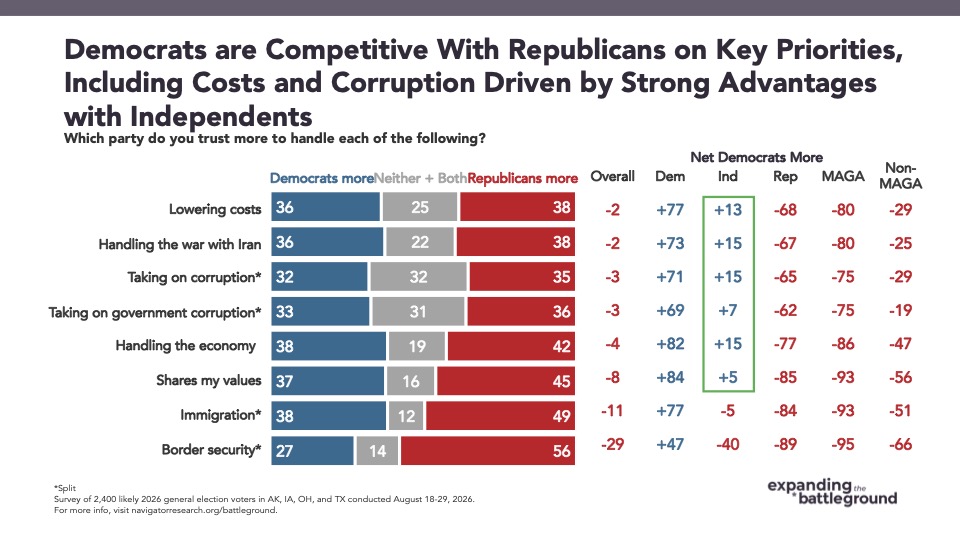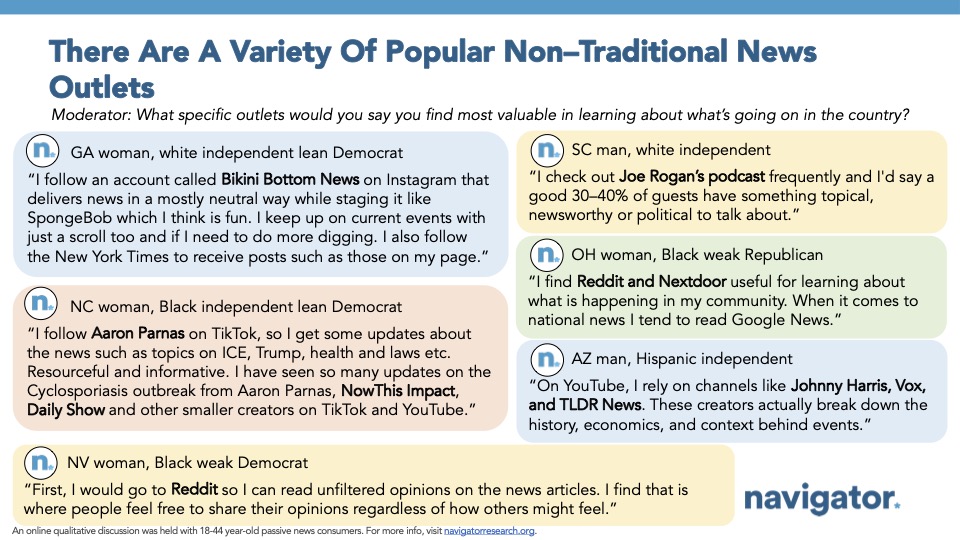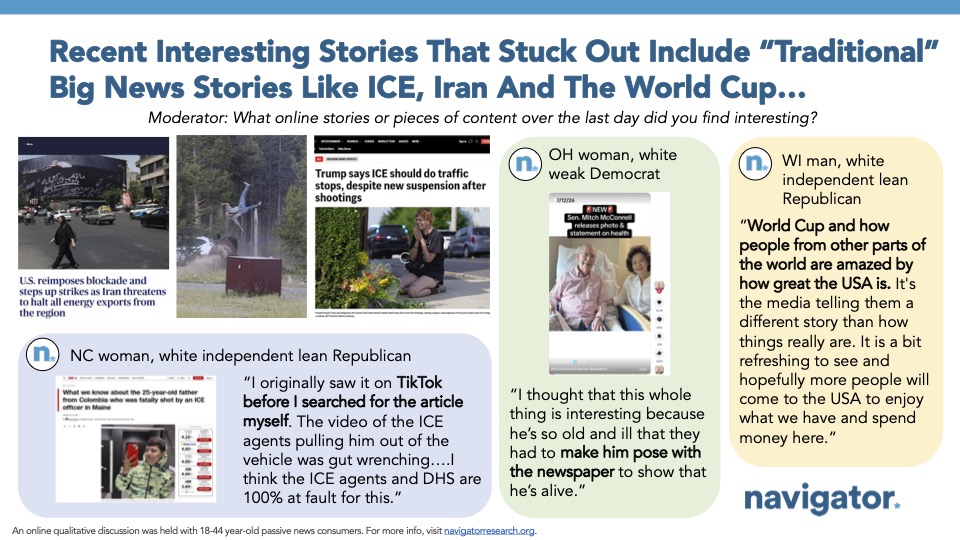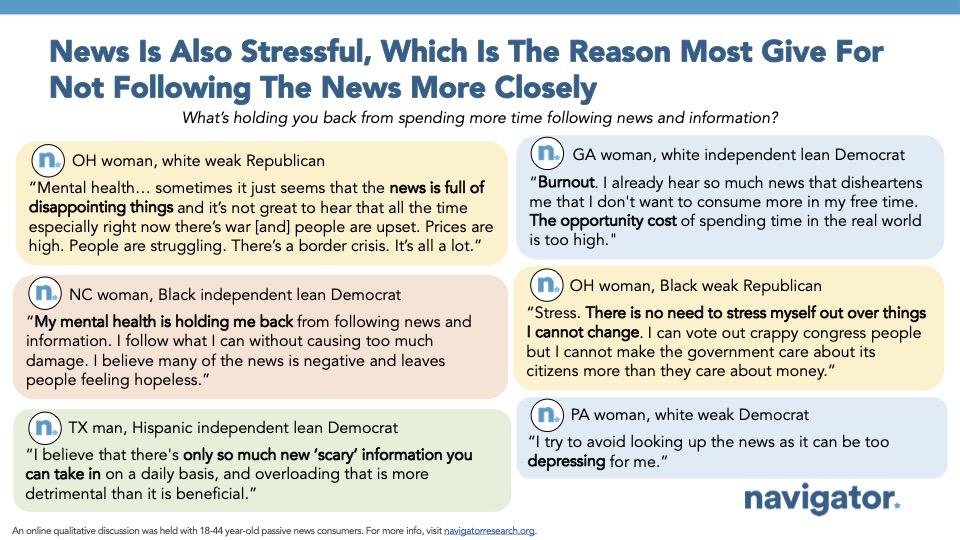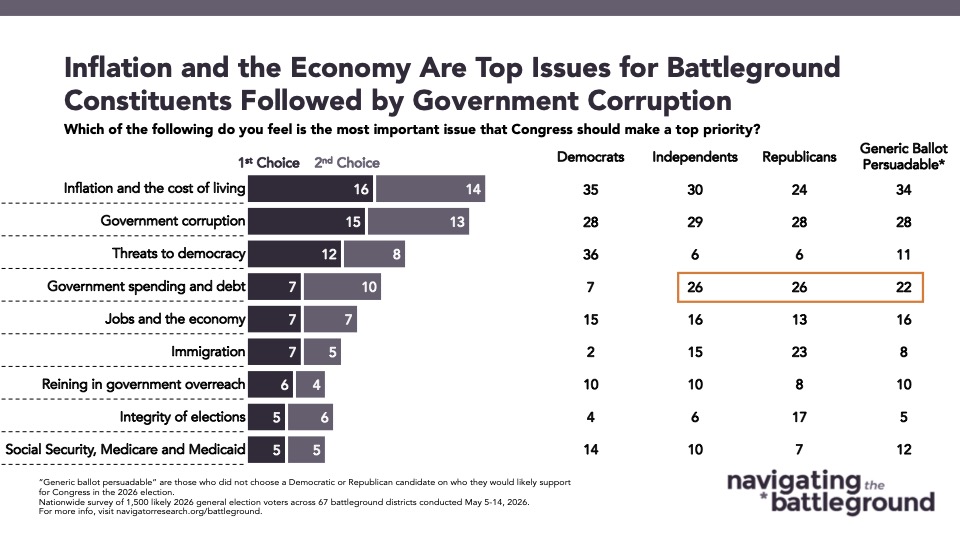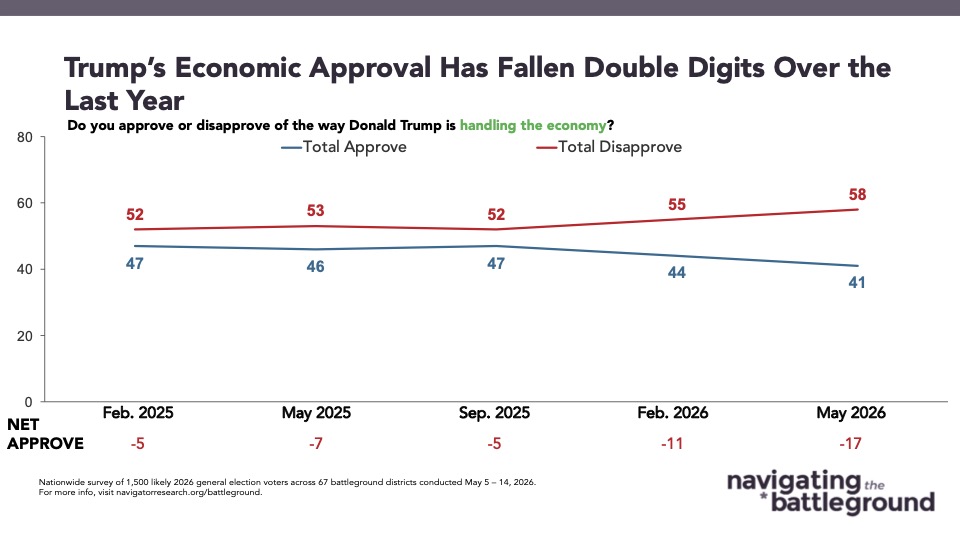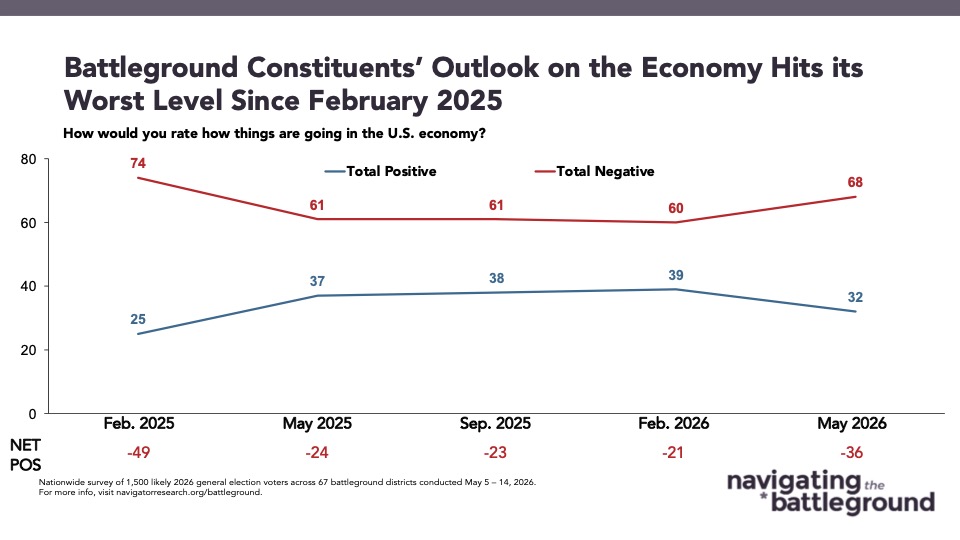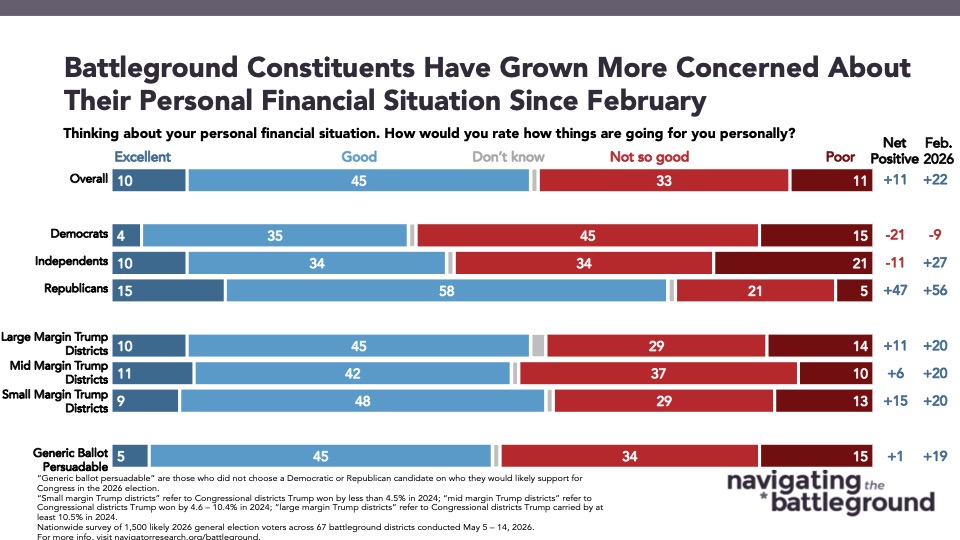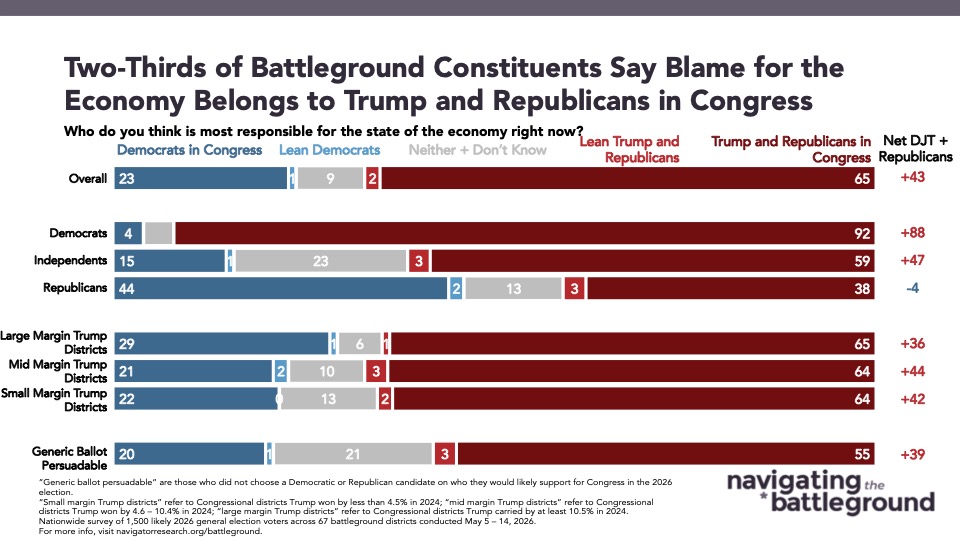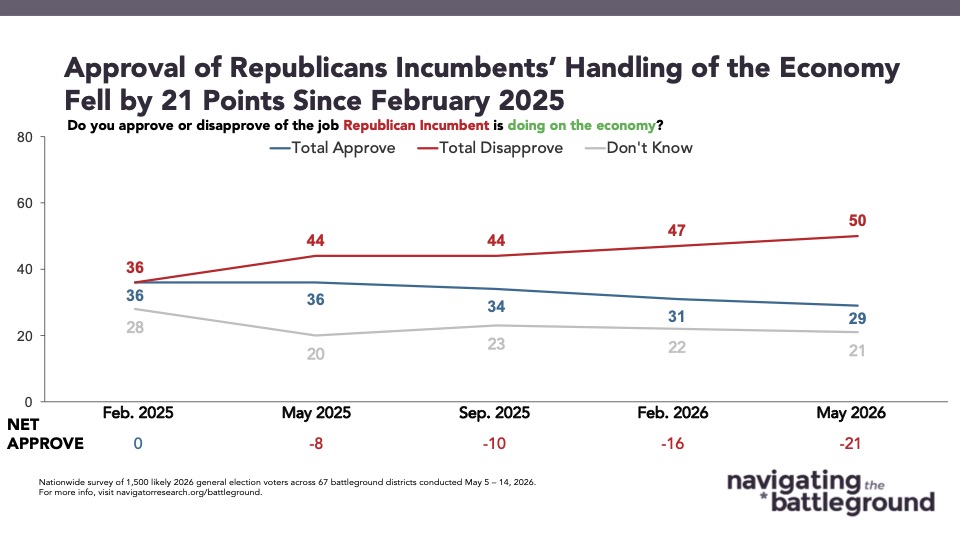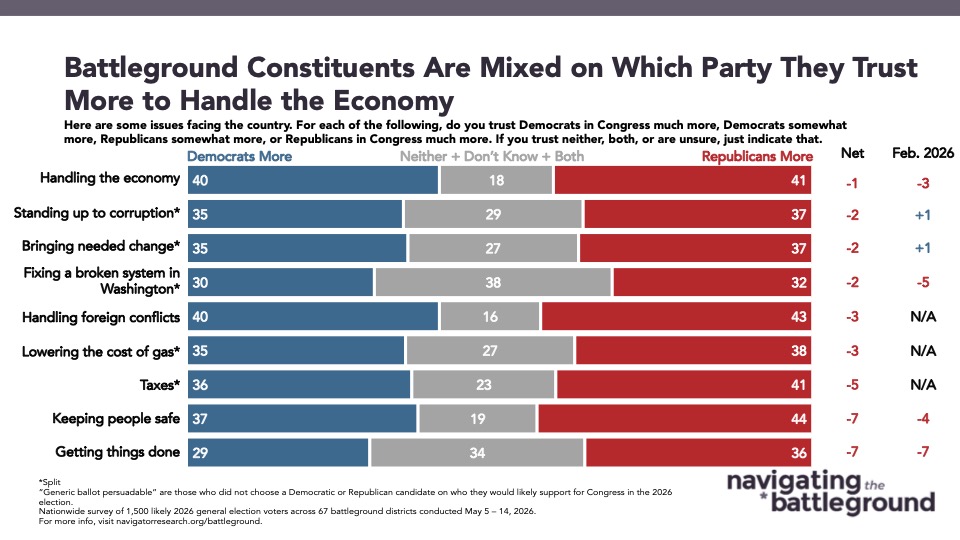
Recent press reporting has described compounding financial pressures for American farmers, from cost-raising tariffs to record-high diesel prices. At the same time, in Iowa – a state President Trump won by nearly 15 points in 2024 – our Expanding the Battleground polling found a majority disapprove of his handling of the presidency, economy, and Iran war – all top-of-mind issues for Americans. Navigator went to Iowa to hear directly from nearly two dozen farmers on these issues. Here’s what we found.
Tariffs Are Impacting Farmers, But Many Remain Loyal to Trump
Nearly every Iowa farmer we spoke to described being affected by President Trump’s tariffs, citing higher costs and market instability. Even so, not all were opposed to tariffs, viewing them as “reciprocal” and instead seeing a potential long-term benefit. Many described wanting a fairer playing field in trade, especially with China, even as they’re frustrated by today’s high input costs and market volatility. Opinions were decidedly mixed on tariffs targeting Canada: several worried they’d drive input prices even higher, encouraging some to purchase potash fertilizer now before the price increases.
- “We’re fighting with Canada right now. They’re the number one supplier of potash. Potash is actually a pretty good price right now. What happens if it goes up by 50%?… I’m not totally anti-Trump, but man, let’s not make everybody mad.” – Crop farmer, independent lean Democrat
- “I want a free market. I want China to be able to buy our beans, but I think the Chinese people ought to be able to buy our products. And when they can’t, then I think a tariff is reasonable, and I don’t think it’s punitive. I don’t think it’s being ornery. I don’t think it’s being cocky. I don’t think it’s being arrogant. I think it’s just a tool to attempt to get a level trade.” – Crop farmer, strong Republican
- “As a whole, they’re not good for us. I mean our inputs always cost more because of all these tariffs, and there’s a good chance we sell less, export less of our products because of them. So, it hurts us on both ends.” – Crop farmer, strong Republican
Some participants defended President Trump, describing him as a knowledgeable business man. Others, even those who voted for Trump at least once, were more critical of the president.
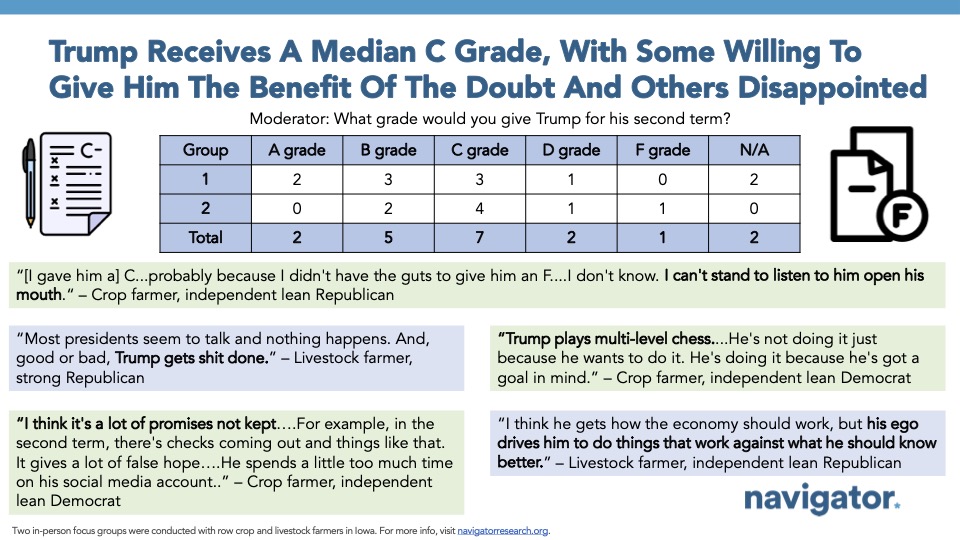
- “Trump plays multi-level chess and … I mean he’s not doing it just because he wants to do it. He’s doing it because he’s got a goal in mind.” – Crop farmer, independent lean Democrat
- “It’s back to the tariff thing. I think he’s got the right plan. I think it’s going to work, but it really hurts to get there. So I’ll tell you in five to 10 years if it was good or not.” – Crop farmer, strong Republican
Some expressed frustration with Trump’s rhetoric and feel there isn’t a strategy behind his policy announcements.
- “Just about every time he opens his mouth there’s a facepalm. And I’ve always leaned conservative pretty hard.” – Livestock farmer, independent lean Republican
- “Hell, I voted for this moron once. He’s just gone off the rails.” – Livestock farmer, independent
- “It’s like there’s no plan. They claim it’s this 4D chess thing, but on the surface, sure looks like there’s just not a plan.” – Livestock farmer, independent lean Republican
Reviews of Trump’s second term were mixed when asked to give him a grade. Trump’s second term grades are decidedly mediocre, with more giving him a “C” than anything else. Those scoring him higher cited Trump getting things done while those more critical in their grading cited broken promises.
Many Had Concerns Over Rising Fuel Prices, High Interest Rates, and the National Debt
Farmers agreed high diesel prices have been very challenging and have raised their input costs. One farmer said it would cost him $1,000 per day to run his combine in the fall during harvest. While some blamed the wars in Ukraine and Iran for high energy prices, others pointed to corporations like BP making record-breaking profits.
- “I think I read or heard somewhere that BP’s prices or BP’s profit was at an all time high…We’ve had 80, 90, $100 crude before, but we didn’t have $6 diesel fuel. Something between here and there changed.” – Crop farmer, strong Republican
- “We’re just kind of still doing the same thing we’re doing, but the fuel prices are just killing us…because it’s double what we are accustomed to paying.” – Livestock farmer, strong Republican
Several brought up concerns over inflation, America’s rising national debt, and high interest rates. Several participants brought up how closely they monitor rising interest rates and cited specific examples of how it relates to their farm’s finances.
- “I think the high interest rate is driving its own part of the inflation. So because it trickles down, if the big corporations have to pay the high interest, they build it into their price and then we pay it.” – Livestock farmer; independent lean Republican
- “Inflation is still significant. But I mean, also you’ve got this $40 trillion national debt.” – Crop farmer, strong Republican
- “I’m scared to death about the cost of interest and the national debt’s the highest it’s ever been and everybody in Washington isn’t even talking about it.” – Crop farmer, independent lean Democrat
Farmers Feel Most Americans Don’t Understand Their Daily Work Or Recognize Them As Business Owners and Operators
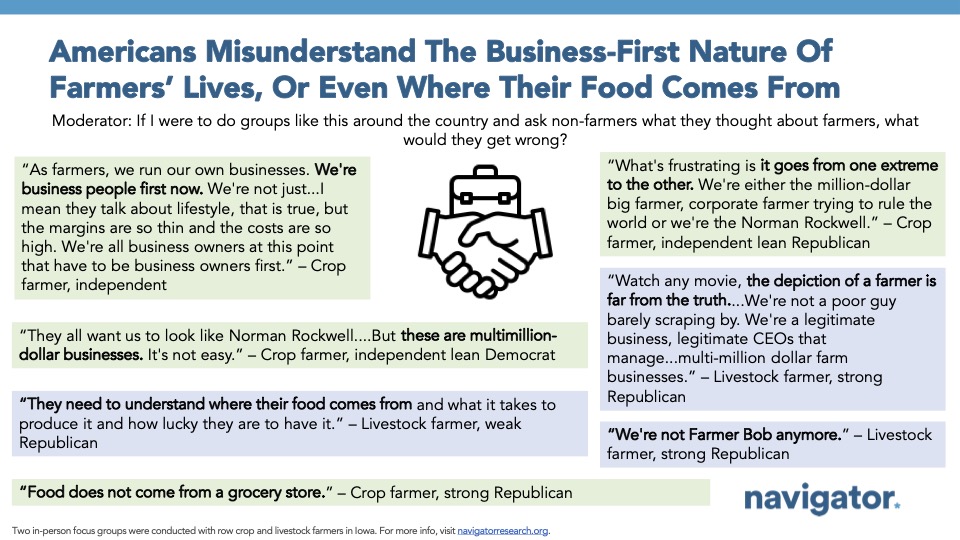
Farmers feel most Americans, especially those living far from rural areas, don’t understand their daily lived reality. Many described running multi-million dollar businesses and closely watching the markets and commodities pricing. They feel they are either villainized as big agribusiness owners or depicted in a nostalgic pastoral scene akin to a Norman Rockwell painting.
Farming is “in their blood”
Farming was described as more than a livelihood but a lifestyle – for many, a heritage – that comes with a unique set of challenges but is also a source of pride, especially for those running multi-generational family farms and working alongside family members. While the hours are long and the work is never done, many said they wouldn’t want to do anything else.
- “You got to want to do it. It’s a tough business. It’s not a 40-hour a week job.” – Crop farmer, independent lean Democrat
- “I like a good day’s work and the feeling you have after you have had a good day’s hard work where you can look and see that you really did something. That’s what I like best.” – Livestock farmer, not strong Democrat
- “I got my grandkids and I can guarantee you, I know which ones will farm and which won’t.” – Crop farmer, strong Republican
- “It has to be in your blood and you got to want to do it.” – Crop farmer, independent lean Democrat
Iowa Farmers Are Mostly Optimistic, Yet Describe Lack of Ability to Control Outside Factors
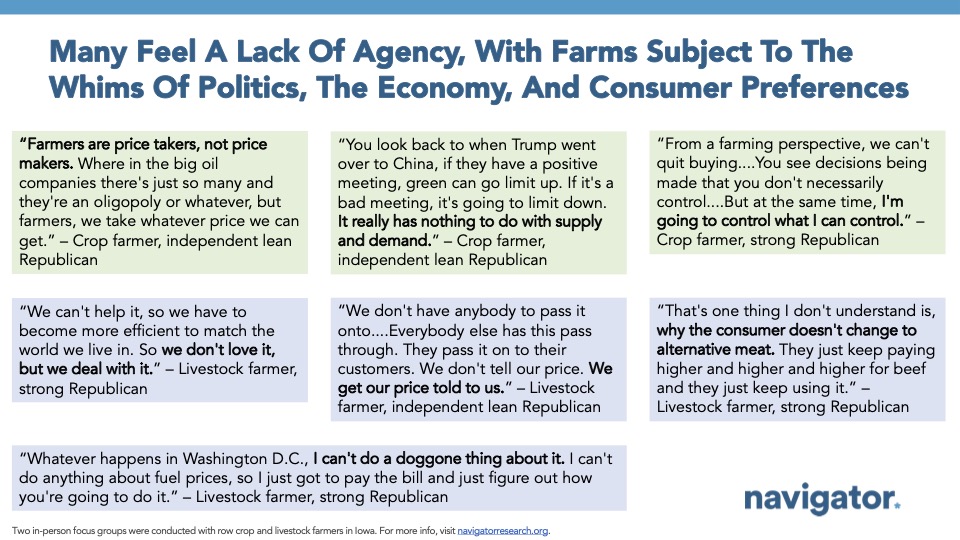
Despite their hardships, most were optimistic about the future and many were content with the present, citing the recent higher prices for commodities increasing their profits. But nearly all described a lack of agency in shaping the factors affecting farming, especially decisions made in Washington or prices set by major corporations.
- “As a farmer, you have to be optimistic.” – Crop farmer, strong Republican
- “I don’t listen to the news. I only live my little life and journey on, you know? That’s basically my attitude…Whatever happens in Washington, DC, I can’t do anything about it. I can’t do anything about fuel prices. So I just got to pay the bill.” – Crop farmer, strong Republican
- “Farmers, we’re always absorbing everybody else’s greediness and we don’t have anybody to pass it on to. Everybody else has this pass through. They pass it on to their customers. We don’t tell our price. We get our price told to us and we there is no passing it through to the next guy.” – Livestock farmer; independent lean Republican
Many Blame Big Corporations for Higher Prices
When discussing higher prices for inputs and everyday items, many blamed big corporations. While strong supporters of a free market and capitalism, many farmers pointed to prices going up and staying high even when contributing factors changed.
- “I’m not a tinfoil hat person, but I still go back to COVID when companies were raising widgets 10, 15, 20% of the time and people didn’t quit buying widgets. They just bitched about what they cost. They figured, ‘Oh my God, look what we can get away with.’ Look at the profits of some of these larger corporations where they’ve done it in the last five years. I’m not saying they shouldn’t make money. I think that’s the capitalistic way, but we almost have become immune to huge price increases and until people quit buying, companies are going, ‘Yeah, they’ll pay it.’” – Crop farmer, strong Republican
- “A lot of the fertilizer suppliers have found that we can accept certain prices and they’re not going to come down.” – Crop farmer, strong Republican
Politics is Not Viewed as Important to their Political Identity, With Nearly All Pessimistic About Politicians and Political Parties
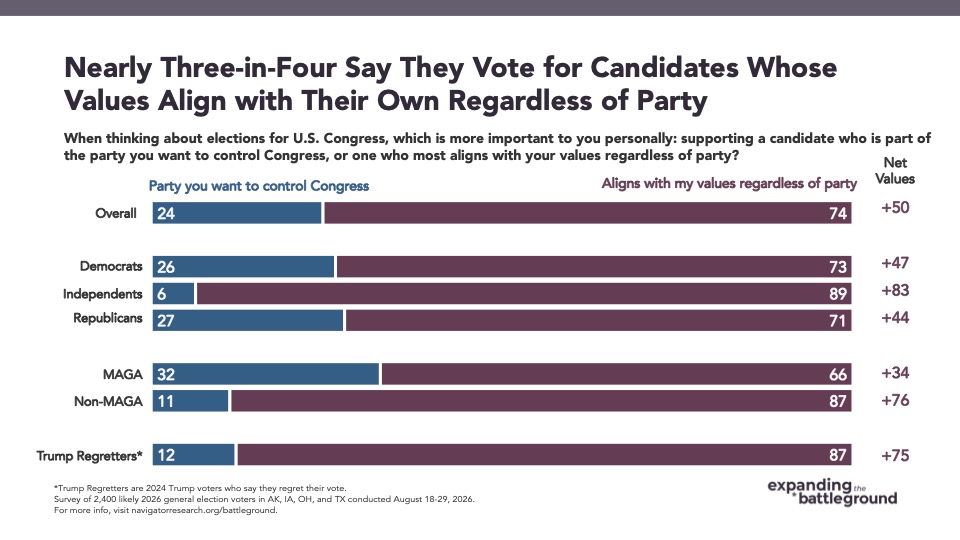
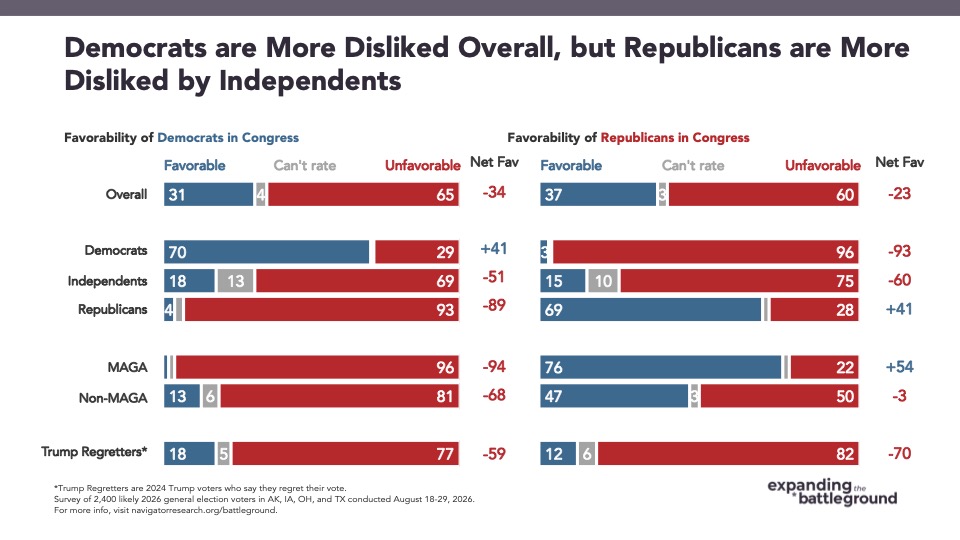
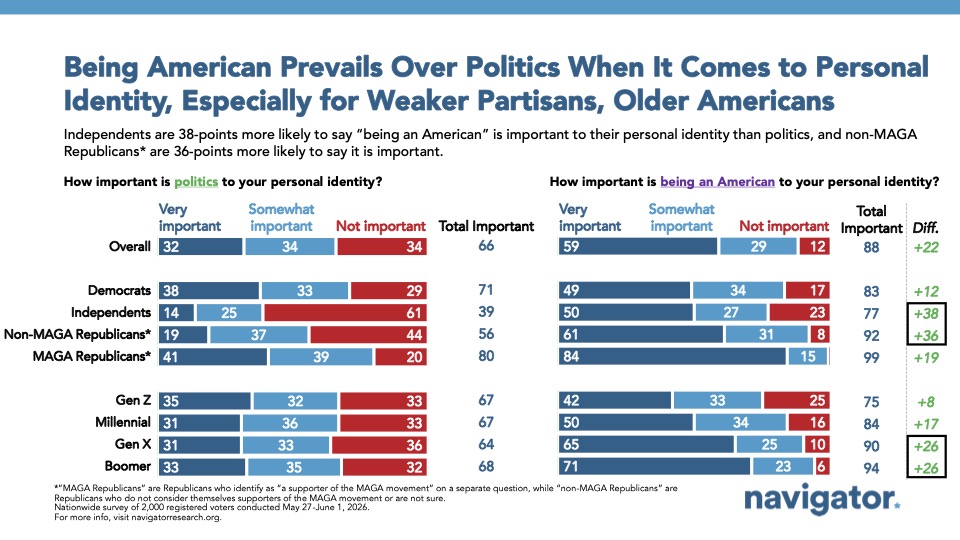
The farmers we spoke with were nearly unanimous in their pessimism for politics and politicians. While describing some Iowa elected officials as understanding of farming and farm life, they felt once the elected officials get to Washington they sell out to special interests. When asked how important politics is to their personal identity, several answered “zero” with many feeling neither Democrats nor Republicans represent them well and are too extreme on both sides. Some described voting as picking the “lesser of two evils.” In this regard, farmers responded much like Americans Navigator has spoken to around the country and from all walks of life.
- “I think Iowa politicians, especially ones that go to Washington, they’re concerned about [farming] because it drives the whole economy of Iowa. But when you get to New York or any of those, they don’t give a darn about us.” – Crop farmer, not strong Republican
- “Most new politicians actually do care for a year or two until they get established out, you know. They all need to have a NASCAR jacket. Tell us who they’re sponsored by.” – Livestock farmer, strong Republican
- “We are made promises from the government that aren’t followed through on. I think that’s probably the frustrating part that we start getting our hopes up.” – Crop farmer, independent lean Republican
- “I would never say that politics define who I am, but who I am defines who I support in politics. And since I’m more of a conservative person, I’m going to support more Republican people.” – Crop farmer, strong Republican
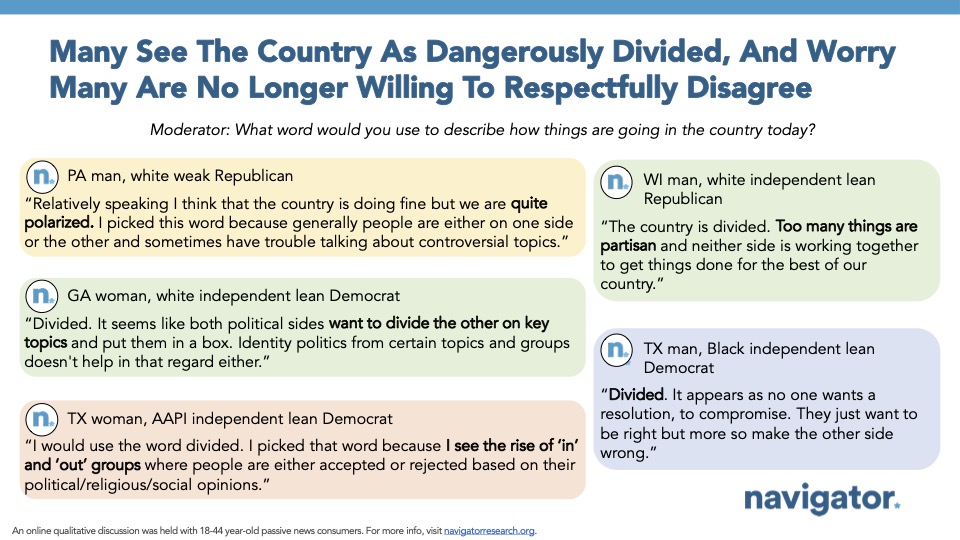
Some described the government and politics as “polarized” and when asked if the system is broken, didn’t hesitate to respond: “absolutely.”
Farmers Are Proud to be Good Stewards of the Land, See Themselves as Doing the Right Thing to Conserve It
All described an immense amount of pride in their work and dedication to protecting the land. Many hoped to or already had plans to pass their farm down to the next generation. They were defensive about farmers being blamed for high cancer rates in Iowa, saying if they had better data or information on what needs to change to lower rates they would do it. The farmers were also critical of data centers being built nearby and on prime farm land.
- “I truly believe there’s not a person in this room that if someone came out and said, ‘If you would do this, cancer rates will drop in Iowa 50%.’ Every one of us would do it in a heartbeat…we are probably the most related to the soil and conscientious about what we do because anytime we put on fertilizer or chemical on anything, it’s big money.” – Crop farmer, strong Republican
- “I do know they took 320 acres of prime ground and they’re building a data center about nine miles down the road from me. I mean it is prime dirt and I don’t know why they can’t do it on … I can get them some rocky dirt or something, build it on that.” – Crop farmer, strong Republican
- “I think it’s important to know that most of us are multi-generational businesses and that we do everything we can to do it right and to do it safe. We’re doing a business that we’re going to pass on to the next generation. But food safety and environmental safety, there’s nobody who’s a better environmentalist than the American farmer.” – Crop farmer, independent lean Democrat