
Poll: Tariffs
This Navigator Research report covers perceptions of tariffs, including the share who believe Trump’s tariffs are raising costs, and how Americans believe Trump should proceed now that the Supreme Court has invalidated many of his tariffs.
Trump Regret at All-Time High
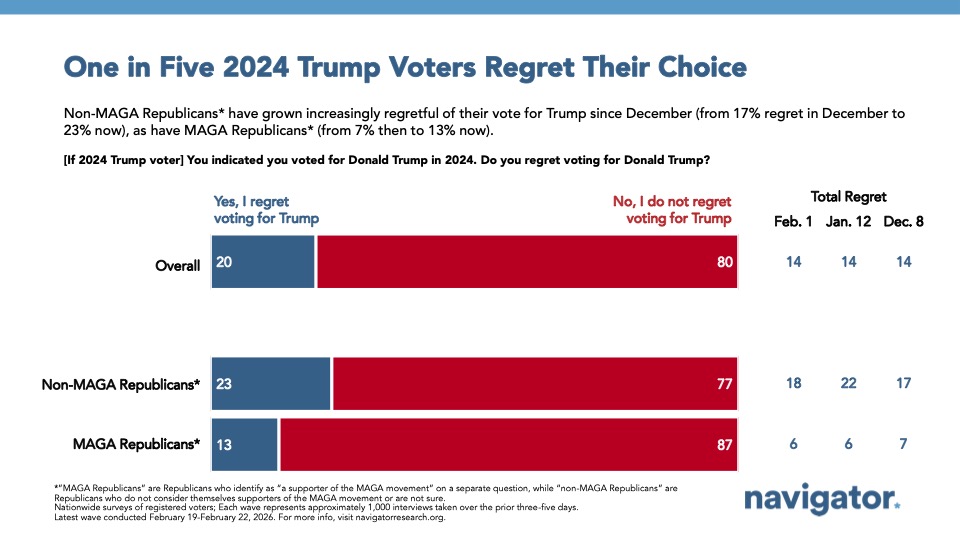
One-in-five Americans who voted for President Trump in 2024 now say they regret their vote (20%), a 6-point increase from earlier this month (and throughout Navigator’s tracking of Trump’s second term). As “Trump regret” surges, tariffs dominate the negative conversations those Americans are hearing. When citing negative news they’re hearing about Trump, Americans cite “tariffs,” “Epstein files,” and “Supreme Court” the most frequently, with those who voted for Trump but regret their decision being most likely to cite “tariffs.”
For more on Trump regretters, check out this report on focus groups Navigator held with them last month.
Perceptions of Tariffs
A majority of Americans view tariffs unfavorably (59%), including 85% of Democrats, 69% of independents, and 31% of Republicans. Among Republicans who do not identify with the “MAGA” movement, tariffs are viewed negatively by 14 points (34% favorable – 48% unfavorable). 57% of those who say they voted for Trump but regret their decision have negative views of tariffs.
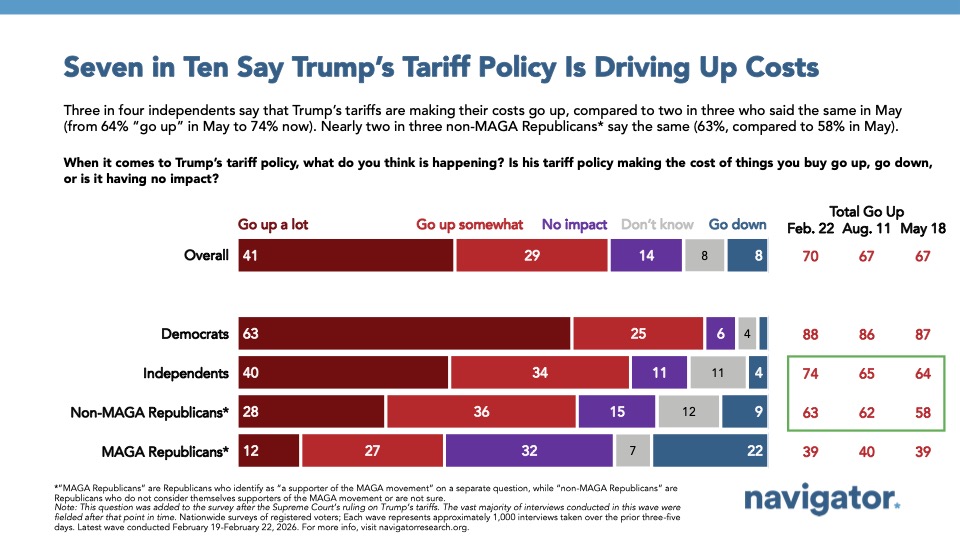
Majorities of Americans continue to believe Trump’s tariffs are increasing the costs of the things they buy (70%), including 41% who say his tariffs have made their costs go up “a lot.” Belief that tariffs have increased costs is not completely partisan – majorities of Democrats (88%), independents (74%), and Republicans (51%) believe tariffs have led to higher costs.
A Majority Believe SCOTUS Got it Right
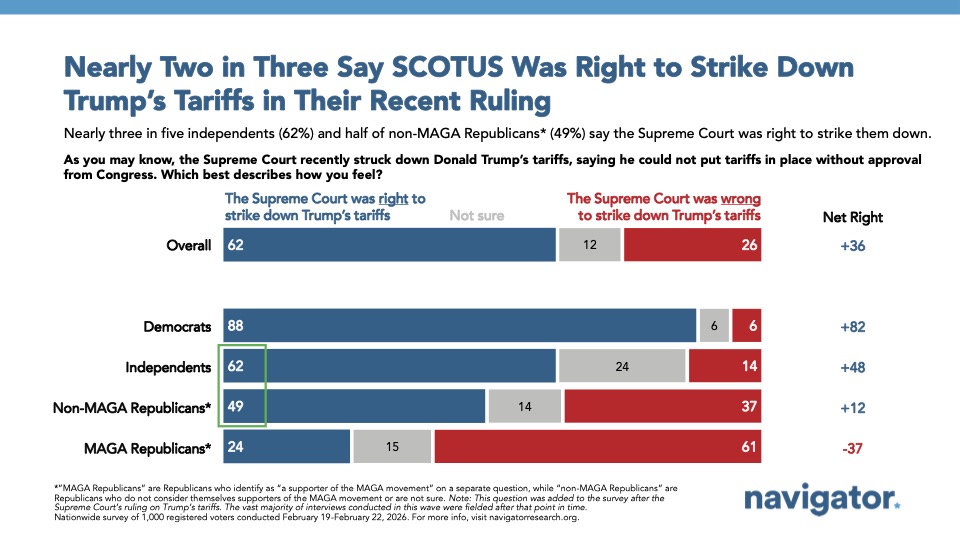
Over three-in-five believe the Supreme Court made the right decision in striking down Trump’s tariffs (62%), including 45% who feel that way “strongly”. 62% of independents and a plurality of non-MAGA Republicans (net +12) also agree the Supreme Court made the correct decision.
As uncertainty swirls, a majority of Americans believe Trump should now end tariffs (52%) and only one-third believe he should try to put the tariffs back into place (33%). Even among groups leaning more conservative, there’s strong support for ending tariffs – including among rural Americans (net +7) and those working blue collar jobs (net +9).
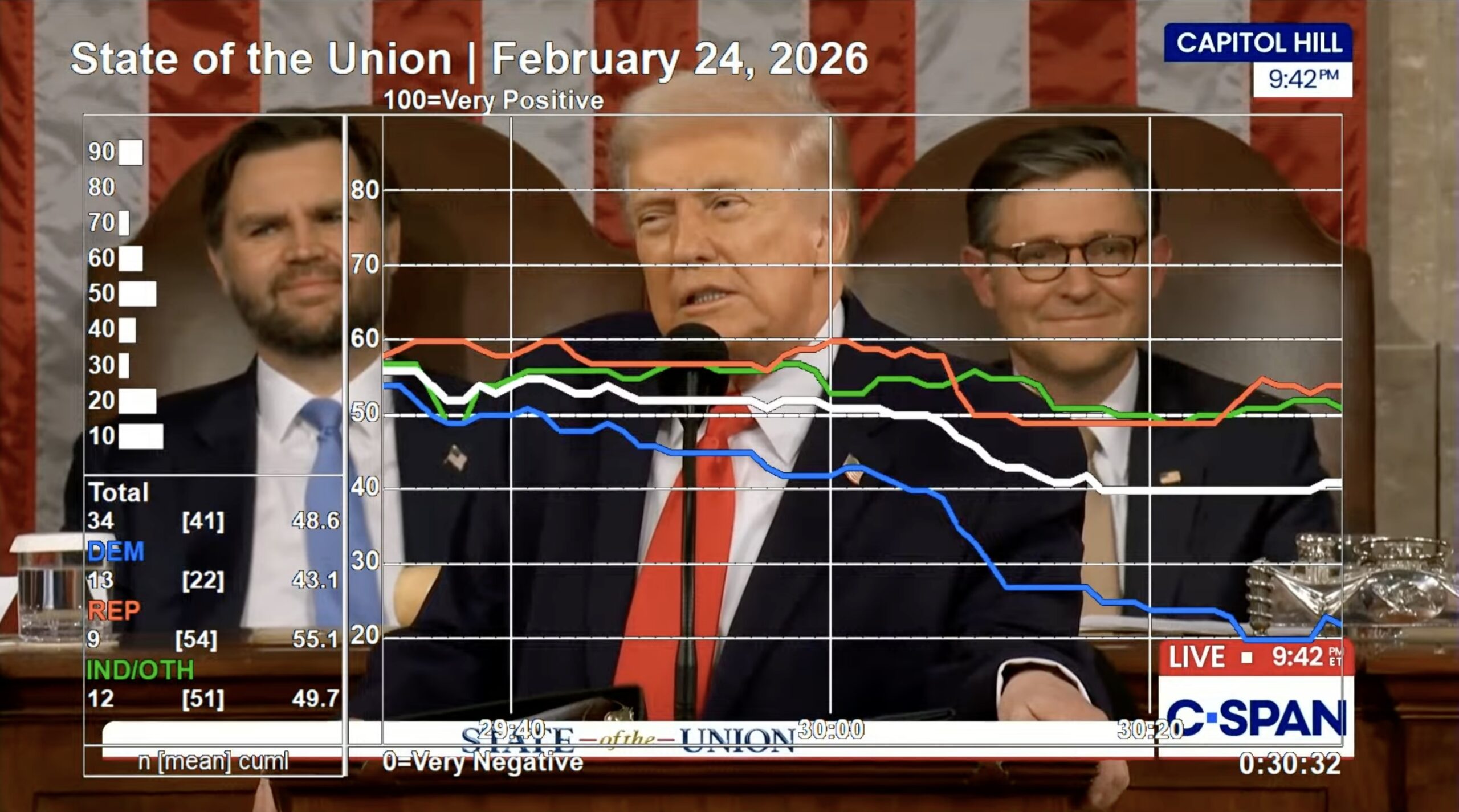
Reminder: Navigator held a dial group among 34 Arizonans for Trump’s State of the Union Speech on Tuesday. As Trump brought up tariffs, participants turned dials down – remaining steadily low as he talked about alternate routes of implementing his tariffs that would not need congressional approval.