Americans Don’t Want Regime Change Wars

Poll: Foreign Policy

This Navigator Research report covers Americans’ views on using military force, regime change wars, and military strikes against Iran.

Americans Oppose Regime Change Wars

More than three quarters (77%) of Americans, including eight-in-ten independents, say the U.S. should be cautious about using military force abroad, especially when it comes to regime change wars, and instead focus our time and money on priorities at home. 

Only 28% said the U.S. should be willing to use its military power abroad, including to topple dictators when necessary, to strengthen U.S. influence and finances. Opposition to using the U.S. military against foreign countries, especially for regime change wars, is high across partisanship, with 88% of Democrats, 83% of independents, and 64% of Republicans opposed. Even a majority (55%) of MAGA Republicans say they are opposed to regime change wars. 

Overall, opposition has increased since January when we last asked a similar question question. At that time, 72% of Americans favored a cautious approach to using U.S. military force abroad — a five-point shift in just over a month.
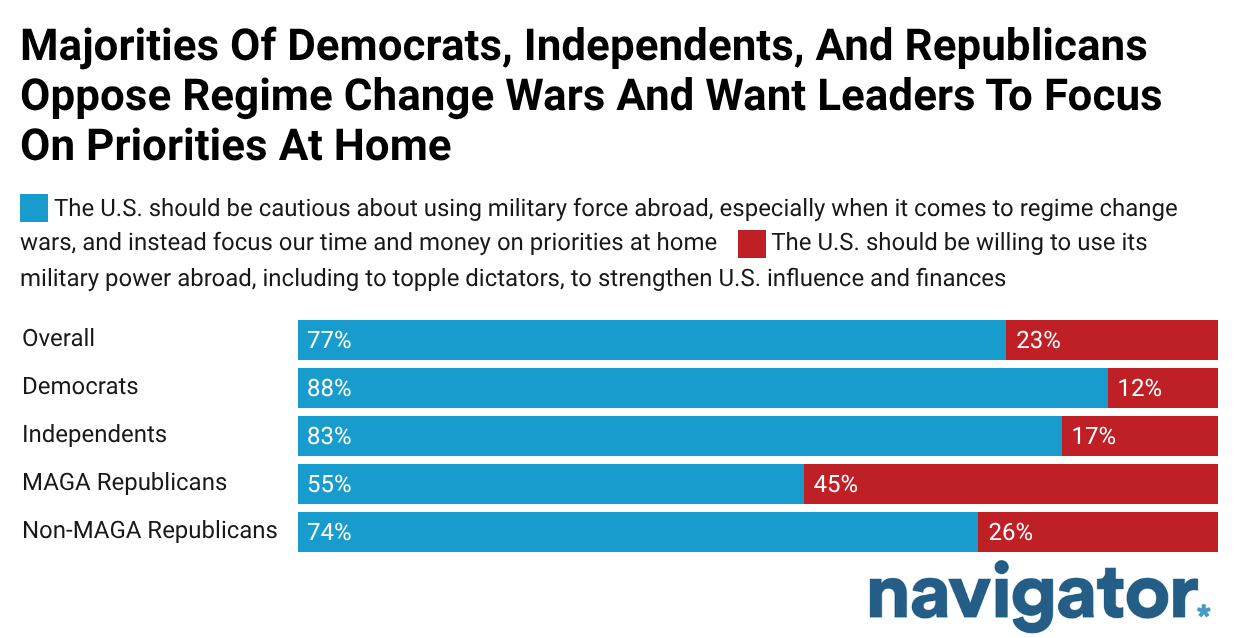
20260302 Majorities Of Democrats, Independents, And Republicans Oppose Regime Change Wars And Want Leaders To Focus On Priorities At Home: A Stacked Line Graph From Navigator Research Titled: Majorities Of Democrats, Independents, And Republicans Oppose Regime Change Wars And Want Leaders To Focus On Priorities At Home

Before Strikes Were Launched, Plurality of Americans Were Opposed 

Nearly half of Americans (48%) said they opposed a U.S. military strike against Iran prior to the Trump administration’s decision to carry out coordinated strikes with Israel that resulted in the death of Iran’s Supreme Leader, Ayatollah Khamenei. When asked, nearly one-in-five Americans (19%) were unsure if they support or oppose a military strike. 
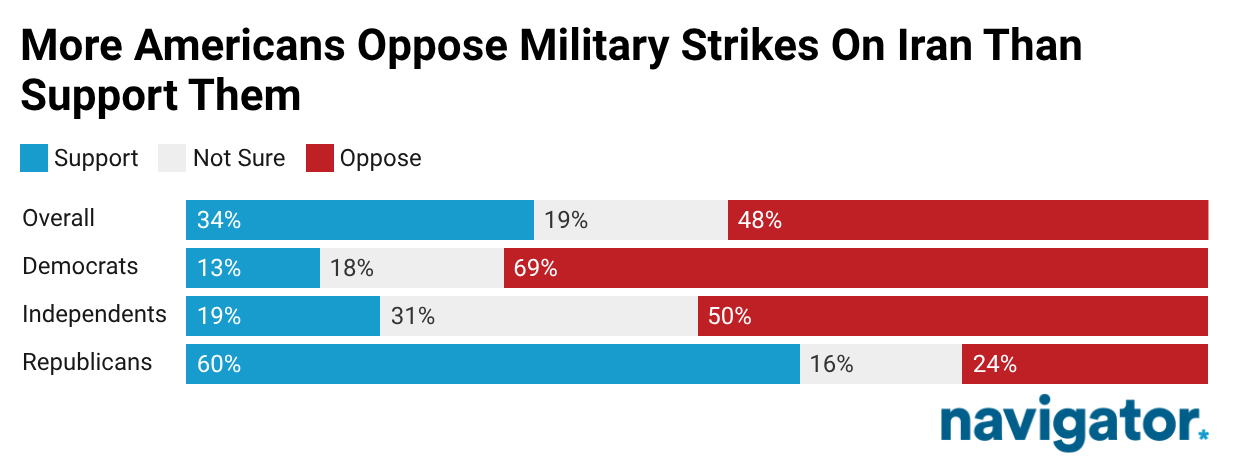
20260302 More Americans Oppose Military Strikes On Iran Than Support Them: A Stacked Line Graph From Navigator Research Titled: More Americans Oppose Military Strikes On Iran Than Support Them

Trump Focused on the Wrong Priorities

Even before the U.S. military strikes against Iran this weekend, an overwhelming majority of Americans said Trump and Republicans in Congress are most focused on immigration (73%) and foreign conflicts (47%) while they want elected leaders to prioritize lowering inflation and the cost of living (63%). Only one-in-four Americans think Trump and Republicans in Congress are focused on inflation and the cost of living, while even fewer (23%) think he’s focused on jobs and the economy — despite nearly half of Americans seeing those issues as top priorities. 
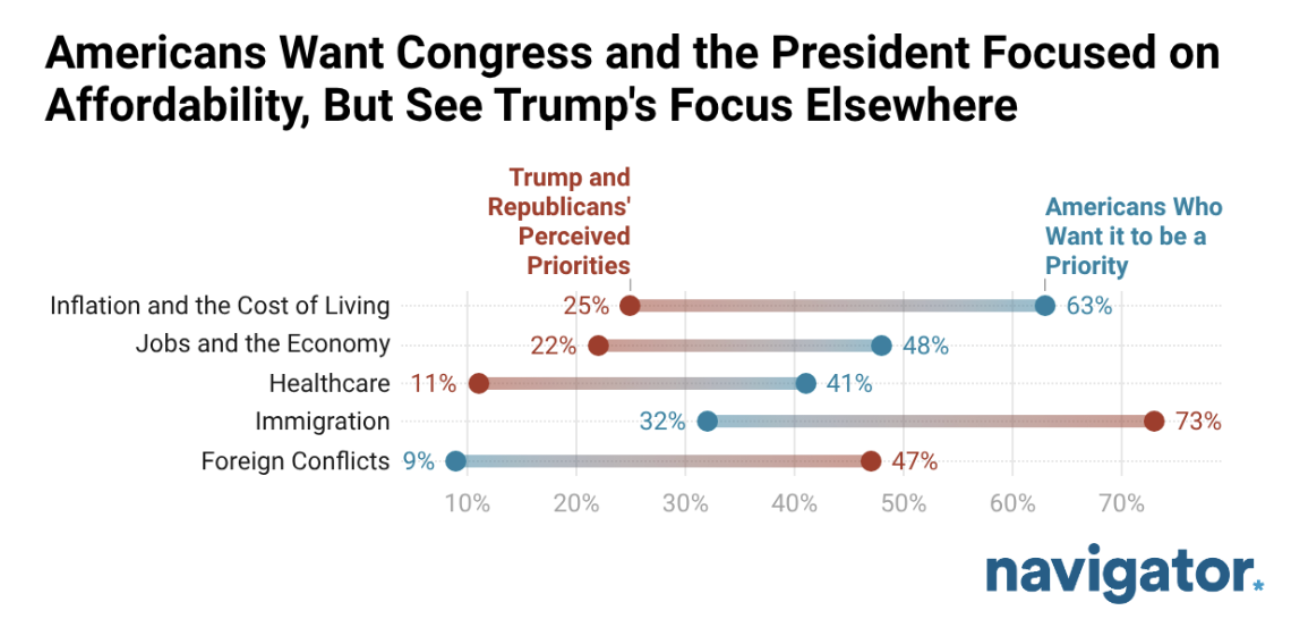
20260302 Americans Want Congress and the President Focused on Affordability, But See Trump's Focus: A Dot Graph From Navigator Research Titled: Americans Want Congress and the President Focused on Affordability, But See Trump's Focus

Read More

May 22, 2026

Americans Want Major Change, But Aren’t Sure if Leaders Can Deliver

This Navigator Research report covers how Americans feel about democracy, institutions, and systems and whether anyone can fix them.

Julie Alderman Boudreau
May 21, 2026

Following Callais: Views on Supreme Court Remain Mixed But Reforms Are Popular

This Navigator Research report covers views of the Supreme Court and what type of reforms Americans support.

Tina Tang
May 20, 2026

Low Awareness, High Stakes: Views on the Recent Supreme Court Ruling on the Voting Rights Act

This Navigator Research report covers how Americans are reacting to the recent Supreme Court decision, Louisiana v. Callais, which gutted protections under the Voting Rights Act.

Tina Tang
May 14, 2026

SPECIAL REPORT: Asian Americans on the Economy and President Trump

This Navigator Research Report focuses on economic sentiment among Asian Americans and how they view President Trump’s job performance across a range of important issues.

Tina Tang & Aidan Harty

Views of Tariffs in the Wake of SCOTUS Decision

Poll: Tariffs

This Navigator Research report covers perceptions of tariffs, including the share who believe Trump’s tariffs are raising costs, and how Americans believe Trump should proceed now that the Supreme Court has invalidated many of his tariffs.

Trump Regret at All-Time High

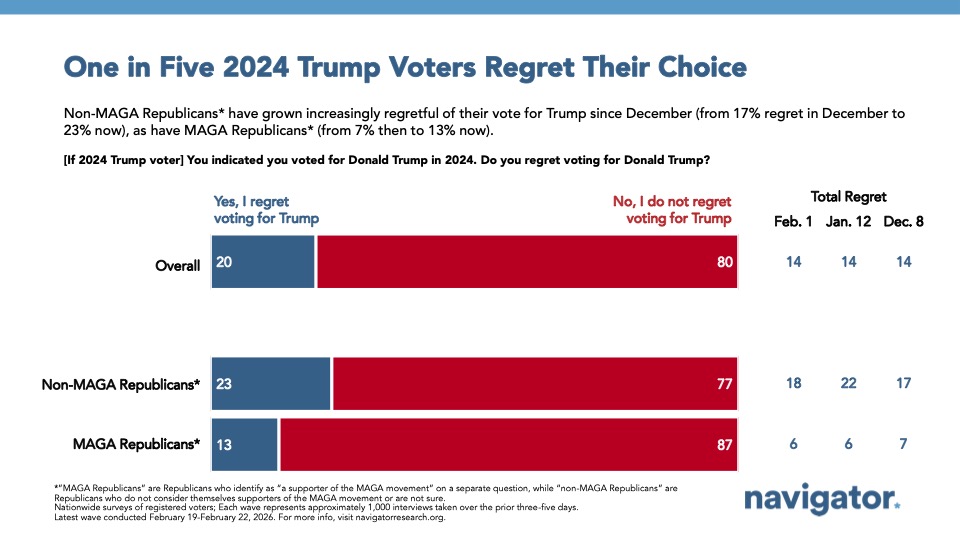
One-in-five Americans who voted for President Trump in 2024 now say they regret their vote (20%), a 6-point increase from earlier this month (and throughout Navigator’s tracking of Trump’s second term). As “Trump regret” surges, tariffs dominate the negative conversations those Americans are hearing. When citing negative news they’re hearing about Trump, Americans cite “tariffs,” “Epstein files,” and “Supreme Court” the most frequently, with those who voted for Trump but regret their decision being most likely to cite “tariffs.”

Bar chart from Navigator Research, titled: One in Five 2024 Trump Voters Regret Their Choice

Perceptions of Tariffs

A majority of Americans view tariffs unfavorably (59%), including 85% of Democrats, 69% of independents, and 31% of Republicans. Among Republicans who do not identify with the “MAGA” movement, tariffs are viewed negatively by 14 points (34% favorable – 48% unfavorable). 57% of those who say they voted for Trump but regret their decision have negative views of tariffs.

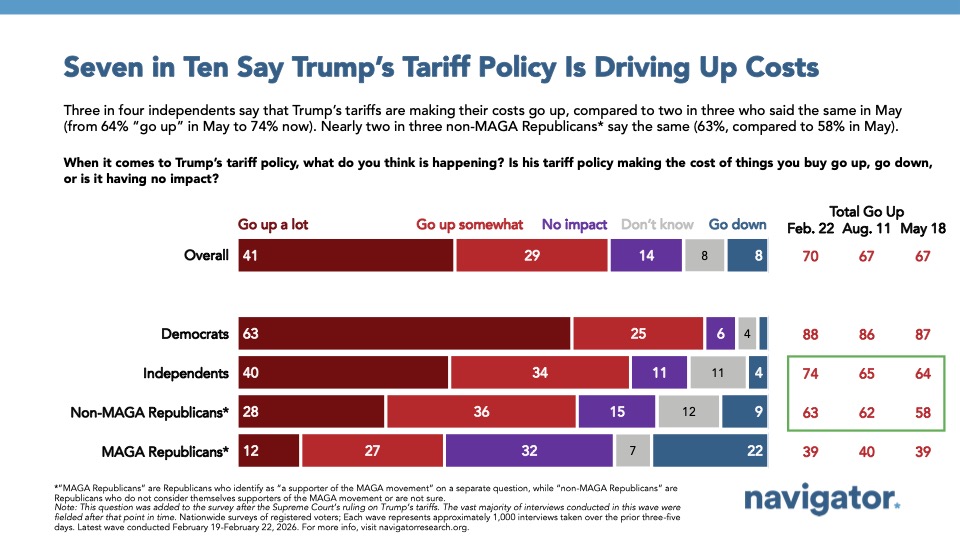
Majorities of Americans continue to believe Trump’s tariffs are increasing the costs of the things they buy (70%), including 41% who say his tariffs have made their costs go up “a lot.” Belief that tariffs have increased costs is not completely partisan – majorities of Democrats (88%), independents (74%), and Republicans (51%) believe tariffs have led to higher costs.

Bar chart from Navigator Research, titled: Seven in Ten Say Trumps Tariff Policy is Driving up Costs

A Majority Believe SCOTUS Got it Right 

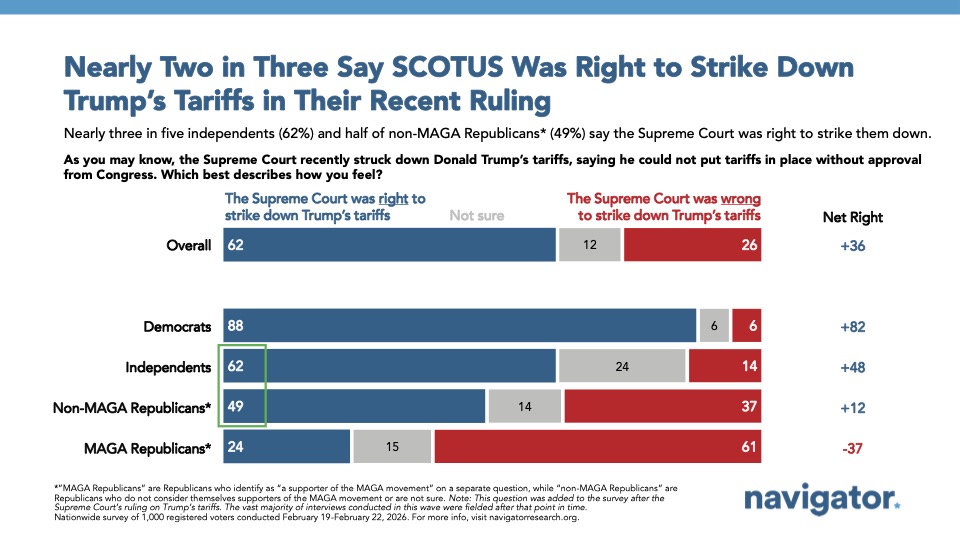
Over three-in-five believe the Supreme Court made the right decision in striking down Trump’s tariffs (62%), including 45% who feel that way “strongly”. 62% of independents and a plurality of non-MAGA Republicans (net +12) also agree the Supreme Court made the correct decision. 

As uncertainty swirls, a majority of Americans believe Trump should now end tariffs (52%) and only one-third believe he should try to put the tariffs back into place (33%). Even among groups leaning more conservative, there’s strong support for ending tariffs – including among rural Americans (net +7) and those working blue collar jobs (net +9).

Bar chart from Navigator Research, titled: Nearly Two in Three Say SCOTUS Was Right to Strike Down Trump’s Tariffs in Their Recent Ruling

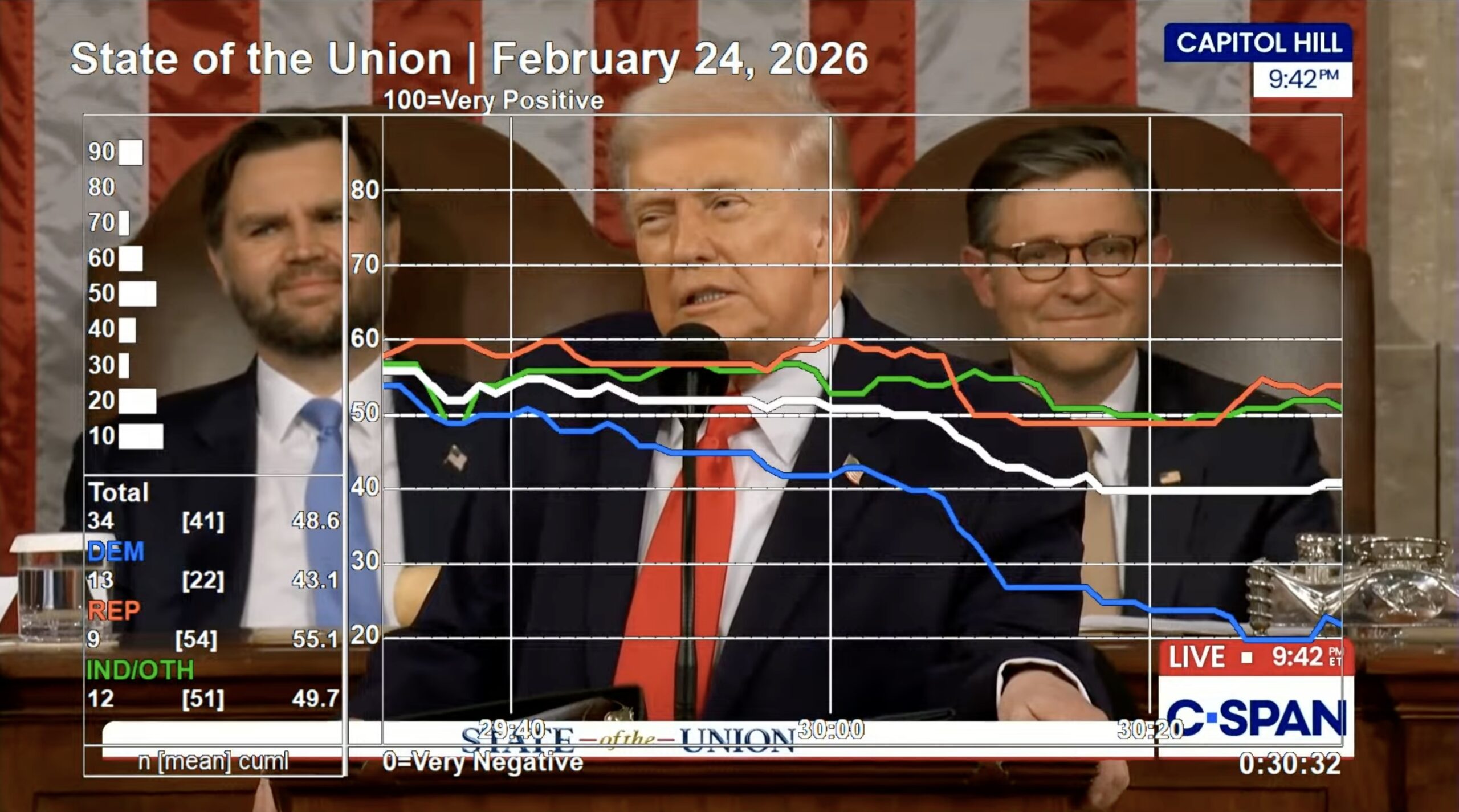
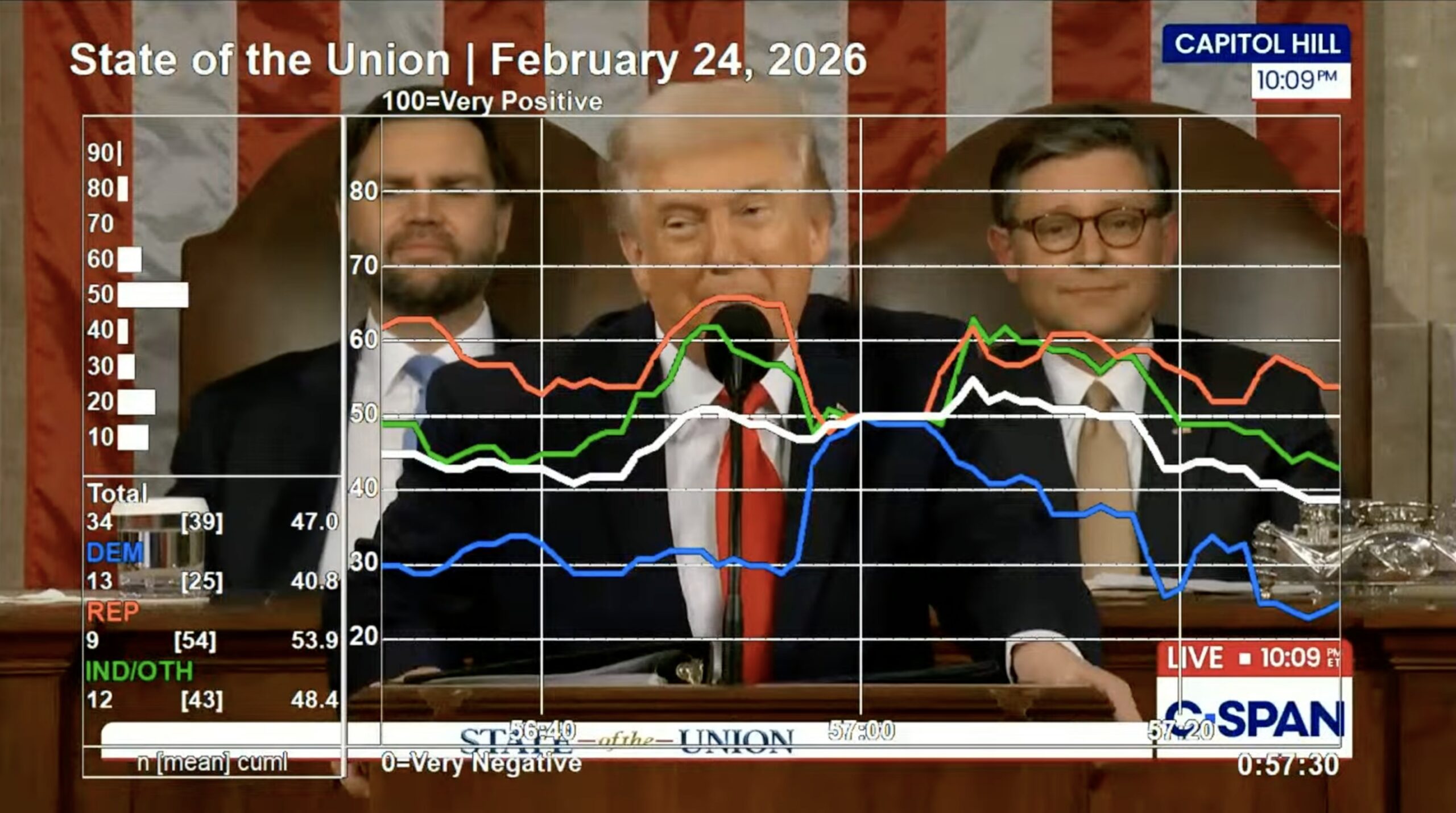
Reminder: Navigator held a dial group among 34 Arizonans for Trump’s State of the Union Speech on Tuesday. As Trump brought up tariffs, participants turned dials down – remaining steadily low as he talked about alternate routes of implementing his tariffs that would not need congressional approval.

Dial group chart from Navigator Research showing dials dipping after Trump mentions tariffs

Read More

May 22, 2026

Americans Want Major Change, But Aren’t Sure if Leaders Can Deliver

This Navigator Research report covers how Americans feel about democracy, institutions, and systems and whether anyone can fix them.

Julie Alderman Boudreau
May 21, 2026

Following Callais: Views on Supreme Court Remain Mixed But Reforms Are Popular

This Navigator Research report covers views of the Supreme Court and what type of reforms Americans support.

Tina Tang
May 20, 2026

Low Awareness, High Stakes: Views on the Recent Supreme Court Ruling on the Voting Rights Act

This Navigator Research report covers how Americans are reacting to the recent Supreme Court decision, Louisiana v. Callais, which gutted protections under the Voting Rights Act.

Tina Tang
May 14, 2026

SPECIAL REPORT: Asian Americans on the Economy and President Trump

This Navigator Research Report focuses on economic sentiment among Asian Americans and how they view President Trump’s job performance across a range of important issues.

Tina Tang & Aidan Harty

State Of The Union Special Report: Arizona Dial Group

Qualitative Research: Dial Group

This Navigator Research report is a special report containing findings from a live-reaction dial group* Navigator conducted in the Phoenix, Arizona metro area analyzing how soft partisans and independents responded to President Trump’s State of the Union address in real time.

Overall Reactions

In the longest-ever State of the Union address, Trump centered his speech on stories of individual Americans and highlighted what he characterized as major accomplishments of his administration. He devoted comparatively little time to cost of living concerns, which are top of mind for a majority of Americans, while avoiding his most unpopular issues such as aggressive actions by ICE and the Epstein Files. We saw the dials spike when Trump shared heroic stories and discussed plans for improving economic security with no tax on tips or overtime. The dials dipped, however, when Trump touted the “golden age of America” and his non-stop “winning,” indicating a disconnect between the president and Americans on the economic state of our union.

Where He Excelled

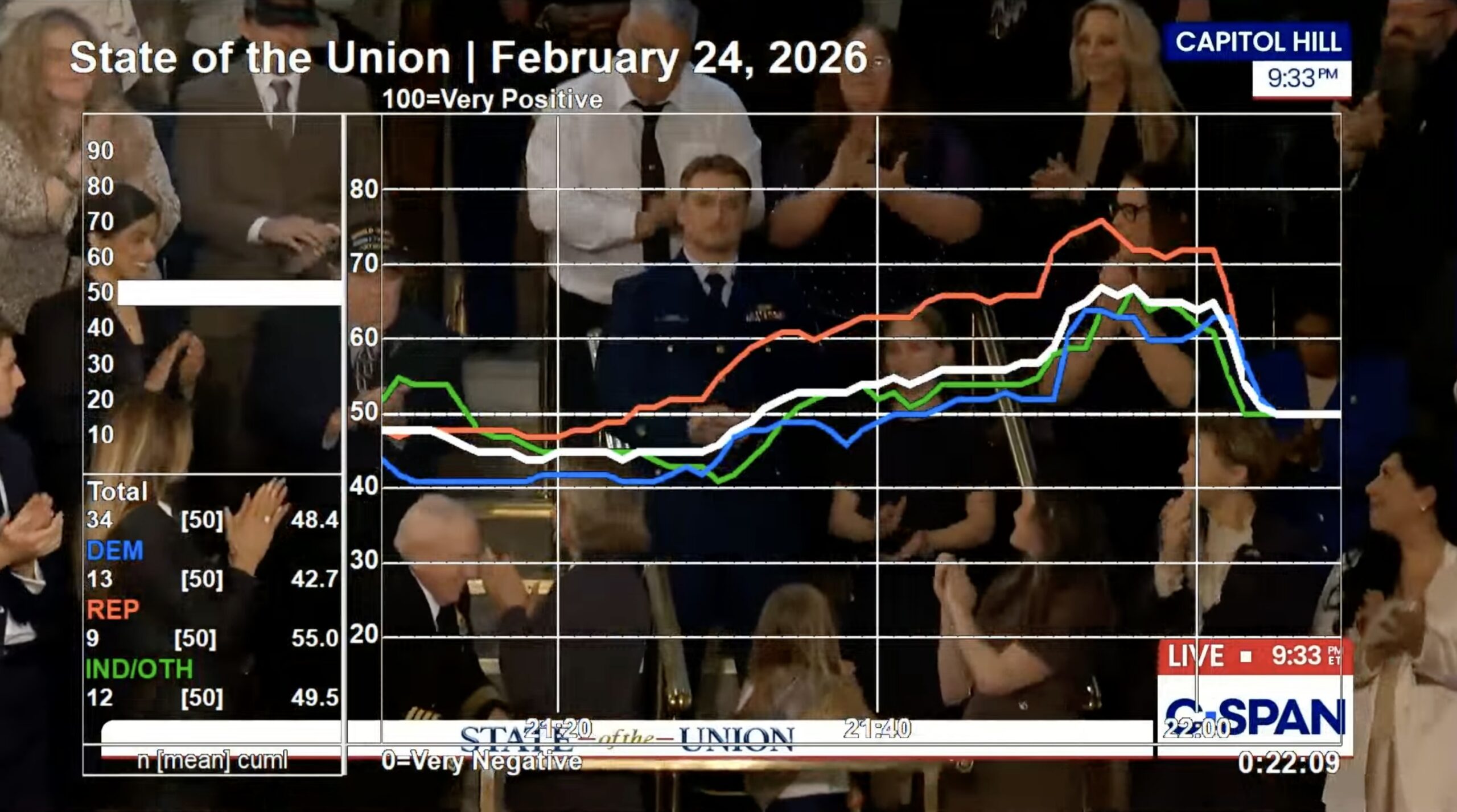
Some of the most well-received parts of Trump’s speech were when he highlighted his guests and stories of others. When Trump highlighted people like the men’s U.S. Olympic hockey team and members of the military, dials spiked. One of the biggest spikes of the evening occurred when Trump honored Scott Ruskan, a Coast Guard rescue swimmer who saved over 165 people when floods swept through Texas. Dials for Democrats, Republicans, and independents all rose above 60.

Image of dial group lines during a part of Trump's State of the Union where he mentioned Scott Ruskan.

In a post-speech questionnaire, many Arizonans say the stories were the highlights:

  • “I was pleasantly surprised to see how he remembered and honored many people tonight from the tragedies of everyday citizens to those who served in the military awarding the highest heroes—and he didn’t talk down or insult anyone.”
  • “He spent a major portion of his time talking about other people.”
  • “How many anecdotes and people he awarded.” 

A few of Trump’s other popular moments were immediately followed or preceded by far less popular remarks. For instance, when Trump spoke about voter ID, the dials ticked up, particularly among Republicans and independents. However, when he called for the elimination of mail-in ballots, the dials dipped, especially among independents.

Image of dial group findings when Trump talked about mail-in ballots.

Similarly, when Trump spoke about taxes, he received high marks for his mention of policies lowering taxes on tips, overtime, and Social Security. However, when he mentioned the massive tax cuts for the wealthiest Americans in the Republican budget seconds earlier, dials dipped.

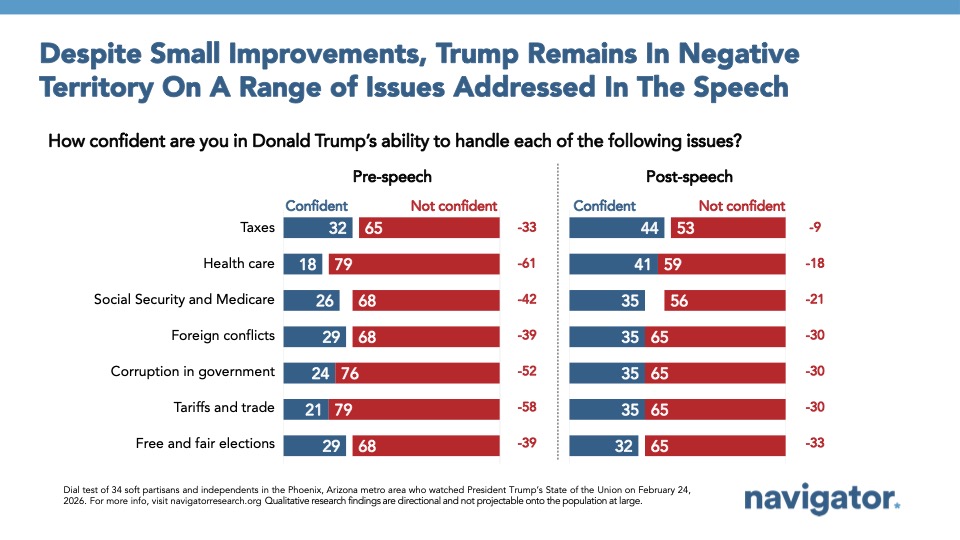
One of the biggest improvements participants noted in the pre- and post-speech measurements was Trump’s handling of health care. This is, in part, due to Republican lawmakers’ poor standing on health care. In a national survey Navigator conducted earlier this month, Democrats in Congress hold a 16-point advantage over their Republican counterparts when asked who respondents trust more on health care.

Navigator Research: Graph Of Feelings Towards Trump On A Variety Of Issues Before And After Speech

Trump attempted to gain support on health care by lying, including the false claim that he would always protect programs like Medicaid, which faces a $1 trillion cut due to his budget.

Where He Flopped

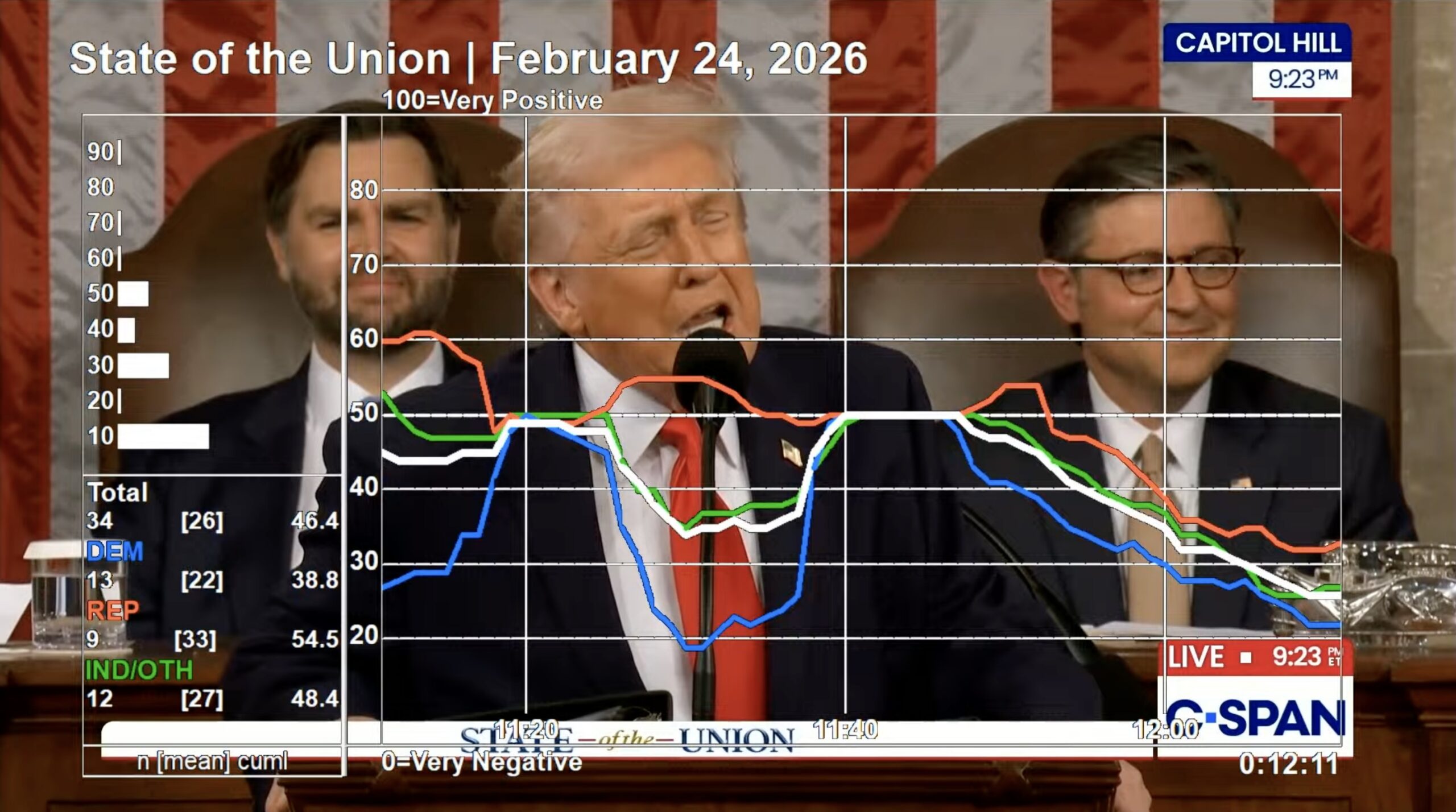
Throughout Trump’s speech, dials took a dip whenever Trump tried to sell Americans on a narrative of a “golden age” and non-stop “winning.” When Trump spent around 30 seconds on how Americans are tired of all the “winning,” dials fell below 30, with independents turning dials around 25.

Image of dial test results when Trump spoke about "winning."

While Trump’s mention of specific policies – especially the ones widely known to be less popular – his first mention of tariffs saw dials take a sharp downturn. Overall, participants turned dials to around 40, with Republicans and independents just under 50, and Democrats turning more steeply around 20. Dials remained negative as he discussed alternative routes for incorporating his tariffs despite the Supreme Court’s recent ruling.

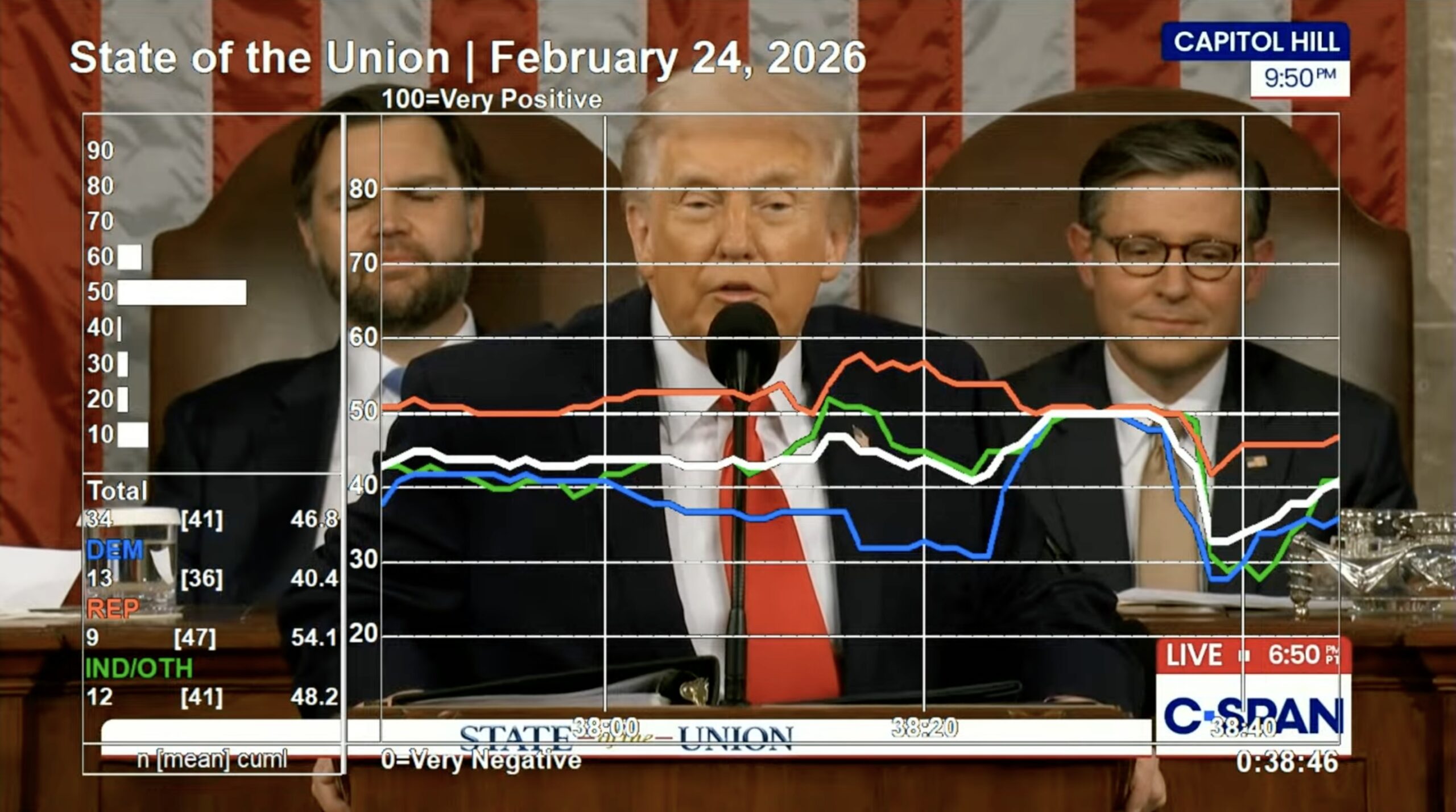
Though he largely remained on message, moments where he veered off into campaign-style rhetoric did not land well with soft-partisans. When talking about health care and prescription drug costs, Trump quickly remarked his second term should have been his “third term.” While the comment was short, participants took note and dials dropped across parties.

Image of dial test over Trump talking about a potential "third term" during his State of the Union address.

Where He Fell Flat

Participants noted Trump’s meandering throughout his speech, with several long periods of little dial movement. One participant noted after the speech that Trump treated the State of the Union “like an awards show.” Other participants noted:

  • “Why did he talk about nothing? What kind of speech was that? He said nothing.”
  • “His dragging on and constantly calling on Democrats.”
  • “A distraction. Nothing was addressed. Just a lot of fluff and fake talk.”
  • “It seemed like nothing really got accomplished. Too much time wasted clapping, standing, clapping.”

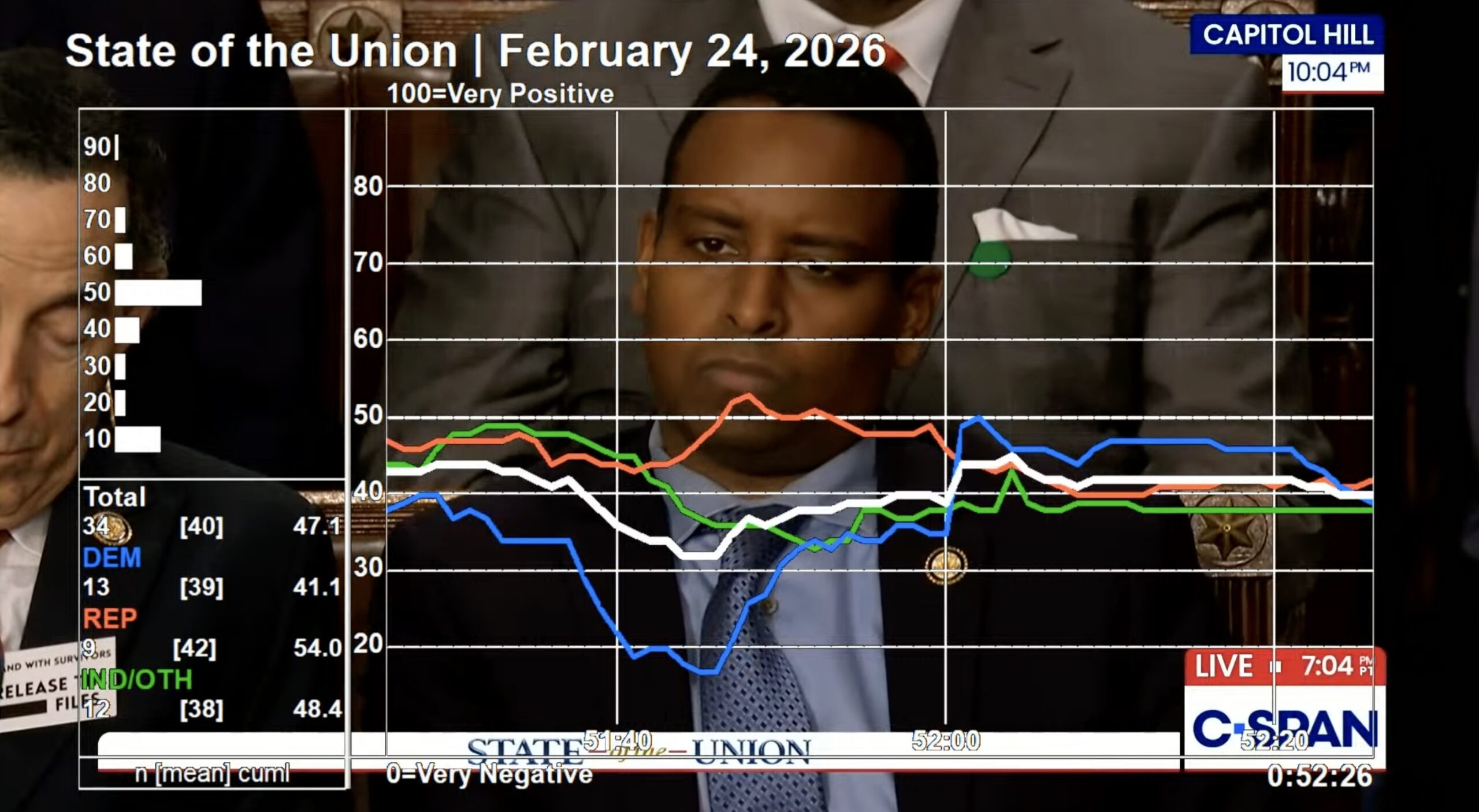
One specific policy area where Trump fell flat was immigration. While some remarks related to deporting violent criminals were popular, his remarks surrounding the cut-off of funding for DHS did not land with participants. Across parties, dials turned down below 50 and remained there as Trump veered off topic into snow cleanup.

Image of dial group findings when Trump spoke about DHS funding.

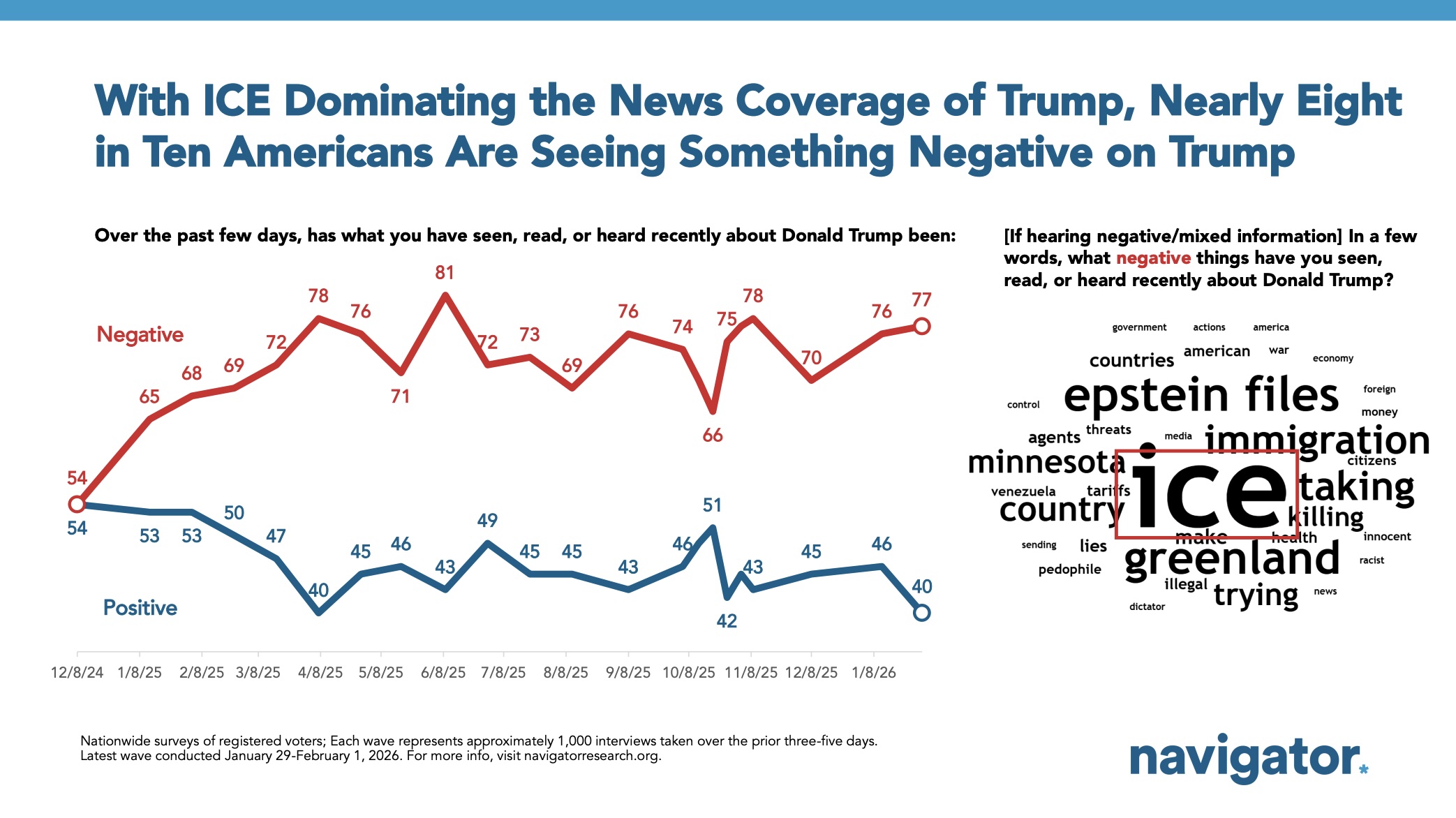
Noticeably, Trump didn’t mention several of his overwhelmingly unpopular policies or actions from this past year. Navigator’s survey from earlier this month showed when it comes to the negative news stories Americans are hearing about Trump, ICE and the Epstein files dominate the conversations. While Trump mentioned immigration in his speech, there was little focus on ICE, and no mention of Epstein files.

Navigator Research Line Chart and Word Cloud: ICE Dominating Negative News Coverage

*GBAO conducted a live-reaction dial group on behalf of Navigator Research on February 24, 2026 during President Trump’s State of the Union address with 34 participants in the Phoenix, Arizona metro area. Participants included a roughly equal mix of soft partisans (not strong Democrats, not strong Republicans) and independents without a partisan lean. Participants were also a mix based on gender, race/ethnicity, and educational attainment.

Some quotes have been lightly edited for brevity. Qualitative results are not statistically projectable.

Read More

August 24, 2023

Dial Groups on the First Republican Presidential Primary Debate

This Navigator Research report contains findings from a live-reaction dial group Navigator conducted in Milwaukee, Wisconsin.

Bryan Bennett
February 8, 2023

SOTU LIVE DIAL RESULTS: Voters Responded Most Positively to Biden’s Calls to Protect Social Security, Medicare, and Lower Health Care Costs

Soft partisans and independents react most positively to Biden’s pledge to protect Social Security and Medicare & the Inflation Reduction Act’s insulin costs cap

Bryan Bennett

State of the Battleground

Poll: Landscape

This Navigator Research report covers perceptions of government leaders, including which party is more trusted to handle the issues that matter most to Americans in the battleground, and who is seen as having the right priorities.
Leaders Across Both Parties Viewed Negatively

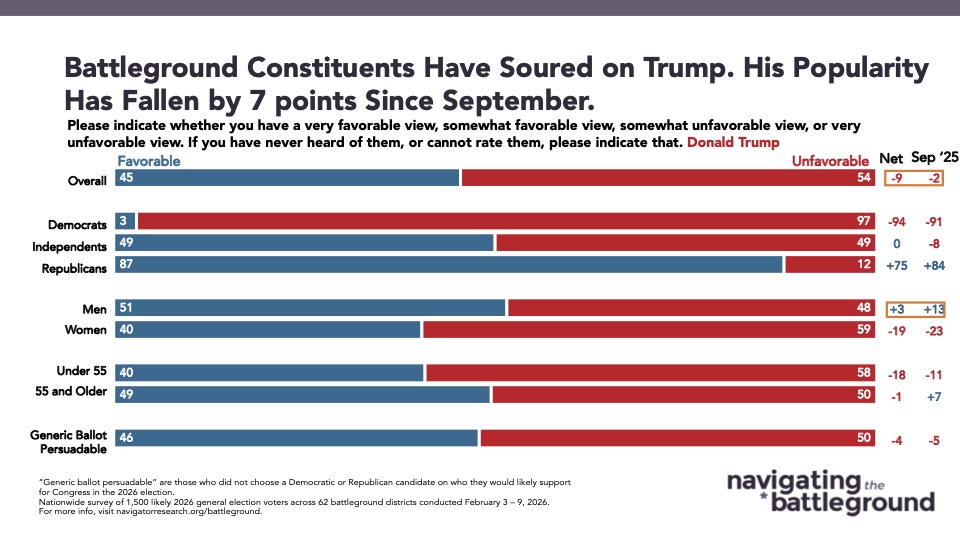
Frustration with both political parties is palpable among battleground constituents. Democrats and Republicans in Congress are both viewed overwhelmingly unfavorably (63% and 61%, respectively), though named Democratic incumbents fare better than Republican incumbents with a narrow but positive favorability rating of net +1. Republican incumbents are struggling more significantly and are underwater by 13 points.

A majority of battleground constituents view President Trump negatively (54%), including a majority of independents who break against him by eight points (43% favorable – 51% unfavorable).This is aligned with findings at the national level with 56% of Americans viewing Trump unfavorably. Independents in the national survey are slightly more unfavorable towards Trump, with 58% viewing him unfavorably and just 32% favorably.

Similarly, 54% of battleground constituents view Vice President Vance negatively and opinions are notably intense, with over half (51%) saying they see him “very” unfavorably.

Bar chart from Navigator Research, titled: Battleground Constituents Have Soured on Trump. His Popularity Has Fallen by 7 points Since September.

Economy, Corruption, Threats to Democracy Remain Top Priorities

The cost of living, jobs, and the broader economy dominate the concerns of battleground constituents. More than four-in-ten (42%) of battleground constituents rank economic issues among their top priorities, with inflation and cost of living leading the list (29% inflation and cost of living, 13% jobs and the economy).

Concerns about the health of our democracy and government corruption are also top of mind. One-third list government corruption (36%) and threats to democracy (33%) among their top two priorities, and nearly a quarter (23%) say protecting democracy should be the number one issue Congress is focused on.

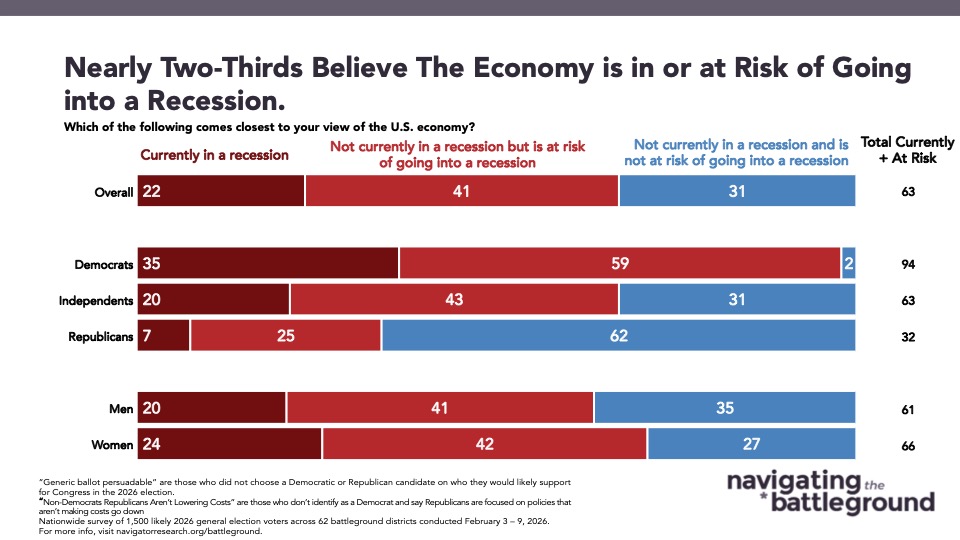
Nearly Two-Thirds Believe The Economy is in or at Risk of Going into a Recession.

Additionally, nearly two-thirds believe the economy is currently in or at risk of going into a recession. While many battleground constituents want Congress to focus on the economy and lowering the cost of living, a decisive majority believe Republicans in Congress are focused elsewhere. A clear majority (59%) believe Congressional Republicans are instead focused on immigration, followed by 17% who say they are focused on national security. Yet immigration ranks as the top issue for fewer than one in ten battleground voters (9%), and national security barely registers as the most urgent priority (only 4%).

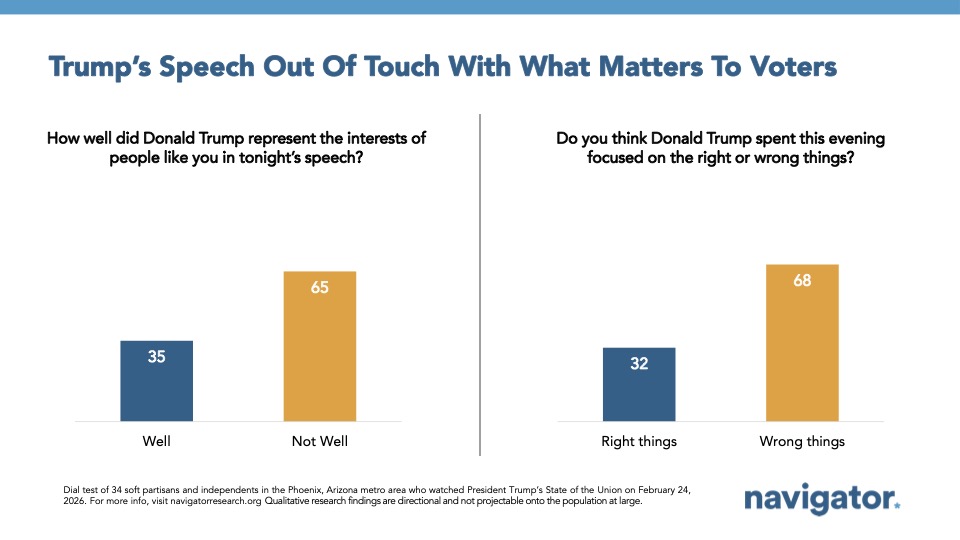
This misalignment of priorities is clear to battleground constituents. By an 18-point margin, they say Donald Trump and Republicans in Congress are focused on the wrong things (39% right things – 57% wrong things). A majority believe they are most focused on non-economic issues (58%), rather than economic issues (39%) even as the latter is a top priority for battleground Americans.

On Top Issues, Battleground Constituents Are Split On Who They Trust

Democrats in Congress hold a slight trust advantage with battleground constituents on several cost of living issues. They’re more trusted on lowering costs for working families (net +8), making health care and prescription drugs more affordable (net +8), and looking out for “people like me” (net +3). These advantages aren’t overwhelming, but they suggest that on day-to-day affordability issues, Democrats have a slight trust advantage over Republicans.

However, Republicans in Congress do hold a small advantage over Democrats on handling the economy (net +3), a longstanding strength for the party that still resonates, even for battleground constituents. This is similar to the net +2 advantage Republicans in Congress hold over their Democratic counterparts on handling jobs and the economy in Navigator’s latest national survey.

Democrats in Congress hold commanding trust advantages on ensuring the wealthy pay their fair share in taxes (net +23) and standing up to corporate special interest (net +9). When it comes to broader issues of corruption and changing the system, Americans in the battleground are essentially split on who they trust. By only 1 point, Democrats in Congress are more trusted to stand up to corruption (with 25% saying they trust neither party), and to bring needed change (24% trust neither party). Congressional Republicans hold a 5-point advantage over Democrats in Congress when it comes to fixing a broken system in Washington – though a plurality trust neither party (36% trust neither – 33% trust Republicans – 28% trust Democrats). This signals a significant share of Americans remain unconvinced that either party can meaningfully deliver for them.

Congressional Democrats and Helping Working People

While Democrats in Congress have a slight trust advantage on lowering costs for working families and looking out for “people like me,” battleground constituents don’t believe “cares about people like me” describes Congressional Democrats well (37% describes well – 60% does not describe well).

Nearly as many aren’t convinced that Democrats “look out for working people” (40% describes well – 59% does not describe well). Slightly more than half say the word “elitist” is a fit description for Democrats in Congress (53%).

That disconnect shows up again when battleground constituents are asked who Democrats are helping. Congressional Democrats are seen as more likely to be focused on helping “other people than people like me” (55%) rather than helping “people like me” (30%). Even so, a plurality say the economic policies of Democrats in Congress most favor the middle and working class (38% middle/working class – 30% wealthy/corporations – 18% the poor).

Message Guidance on Tariff SCOTUS Ruling

Poll: Tariffs

This Navigator Research report covers the latest perceptions of tariffs, including the share of Americans who support Trump’s tariff plan and how tariffs are seen as impacting costs.

Tariff Favorability and Support

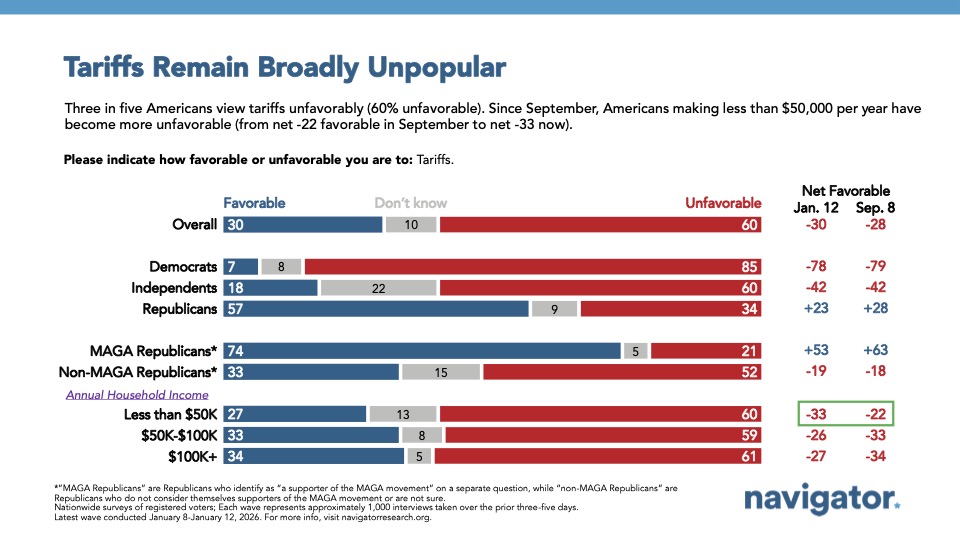
Tariffs remain overwhelmingly underwater, with 60% of Americans viewing them unfavorably and only 30% holding favorable views as of January.

Bar chart from Navigator Research, titled: Tariffs Remain Broadly Unpopular

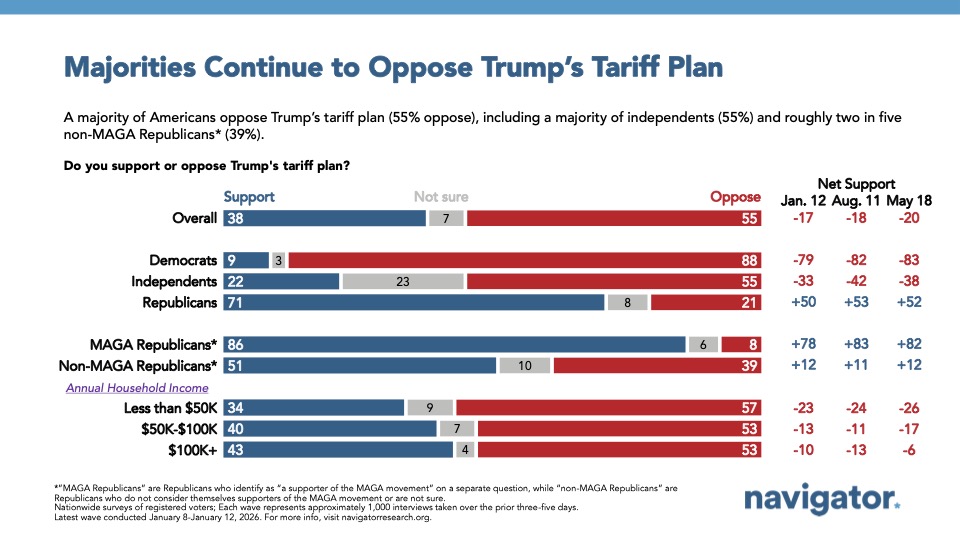
A similar margin opposes President Trump’s tariff plan, with 55% opposing and only 38% in support. Support for Trump’s tariff plan is largely partisan, opposed by 88% of Democrats, 55% of independents, and 21% of Republicans. Among Republicans though, there’s a split in support – with MAGA Republicans being 35 points more likely to support Trump’s tariff plan (86% MAGA – 51% non-MAGA).

  • Across income groups, Americans oppose Trump’s tariff plan, including among those who identify as “middle class” (43% support – 51% oppose).
  • Americans earning less than $50,000 a year have become 11 points more negative on Trump’s tariff plan since September, shifting from -22 in September to -33 in January.
Bar chart from Navigator Research, titled: Majorities Continue to Oppose Trump’s Tariff Plan

Tariffs and Costs

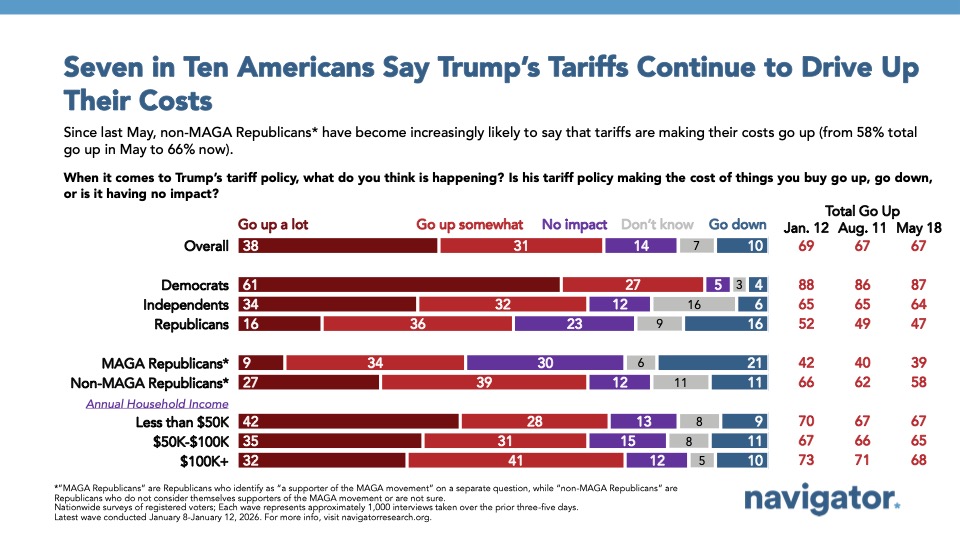
A majority across partisanship believe tariffs have led to an increase in their costs (69%), including 88% of Democrats, 65% of independents, and 52% of Republicans. Two-thirds of passive news consumers, those who say news comes to them, believe tariffs have increased their costs (66%), a similar share as active news consumers (71%). Only 10% of Americans say tariffs have made their costs go down.

Bar chart from Navigator Research, titled: Seven in Ten Americans Say Trump’s Tariffs Continue to Drive Up Their Costs

As Americans continue to believe their costs are increasing, majorities disapprove of President Trump’s handling of inflation and the cost of living (58% disapprove – 37% approve).

Message Guidance

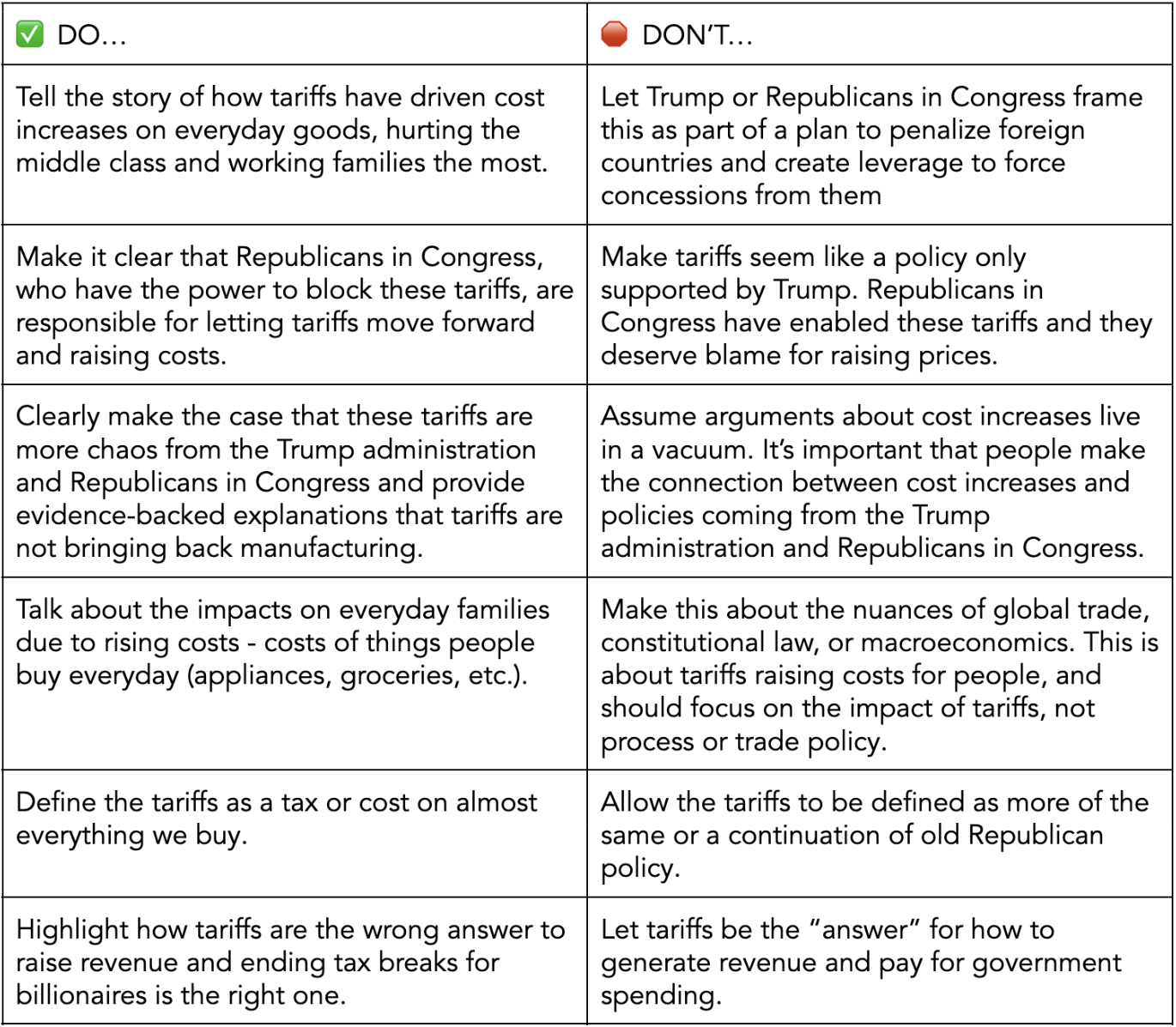
Despite the decision from the Supreme Court this morning, many of the Republican tariffs will continue. Additionally, it is likely that President Trump continues many of his tariffs in one way or another through a different mechanism. Even in the interim, it’s crucial to continue to tell the stories of how these tariffs, imposed by Trump and backed by Republicans in Congress, are raising costs for things people buy every day.

Here are some tips for how best to communicate on the negative impacts of tariffs:

Do's and Don't From Navigator Research

Read More

April 22, 2026

Fraud Is Real. Cuts Are Worse. How to Win This Fight.

While Americans are worried about both fraud and budget cuts, when forced to choose they are far more worried about cuts. Denying, dismissing, or minimizing fraud works against us.

Tina Tang
April 14, 2026

Views on Republican Tax Policies

This Navigator Research report covers how Americans feel about taxes, including the Republican tax law.

Julie Alderman Boudreau
April 9, 2026

Americans Oppose an “Expensive,” “Unnecessary,” and “Dangerous” War with Iran

This Navigator Research report covers Americans’ views on the ongoing war with Iran.

Melissa Toufanian & Aidan Harty

Americans Do Not See Their Government as a Democracy

Poll: Authoritarianism vs. Democracy

This Navigator Research report covers Americans’ views of democracy, authoritarianism, and the federal government.

Democracy is Underwater

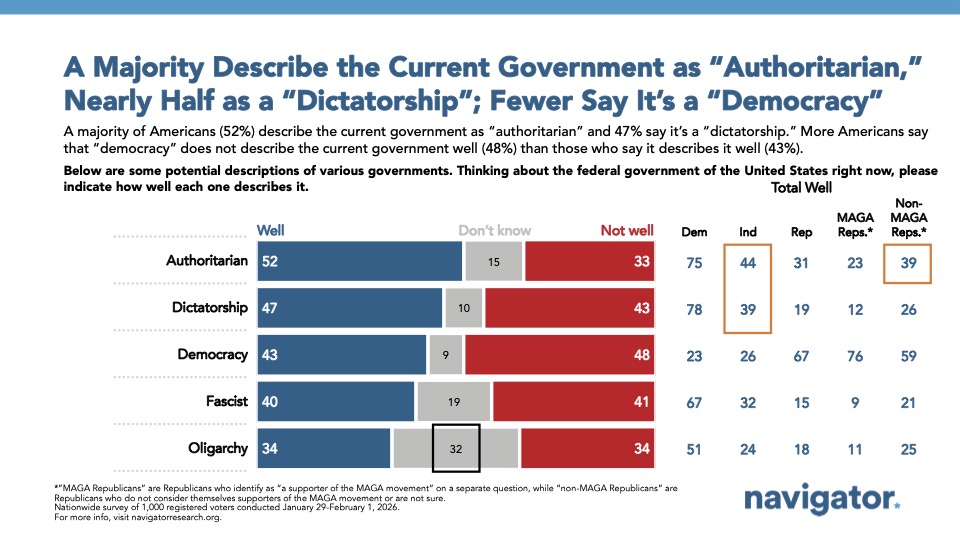
We asked Americans how well or not well the following words described our current federal government: authoritarian, dictatorship, democracy, fascist, oligarchy. A majority of Americans today believe the federal government can be described as “authoritarian” (52%). When asked how well “democracy” describes the federal government, Americans are five points more likely to say “not well” than “well” (48% and 43%, respectively).

Significant shares of Americans also agree that other undemocratic forms of government aptly describe the federal government, including:

  • Dictatorship: (net +4; 47% say well – 43% say not well)
  • Fascist: (net -1; 40% say well – 41% say not well)
  • Oligarchy: (net 0; 34% say well – 34% say not well).
Bar chart from Navigator Research, titled: A Majority Describe the Current Government as “Authoritarian,” Nearly Half as a “Dictatorship”; Fewer Say It’s a “Democracy”

Among tested terms, Americans appear least familiar with “oligarchy.” About one third of Americans say they “don’t know” how well the term describes the federal government (32%).

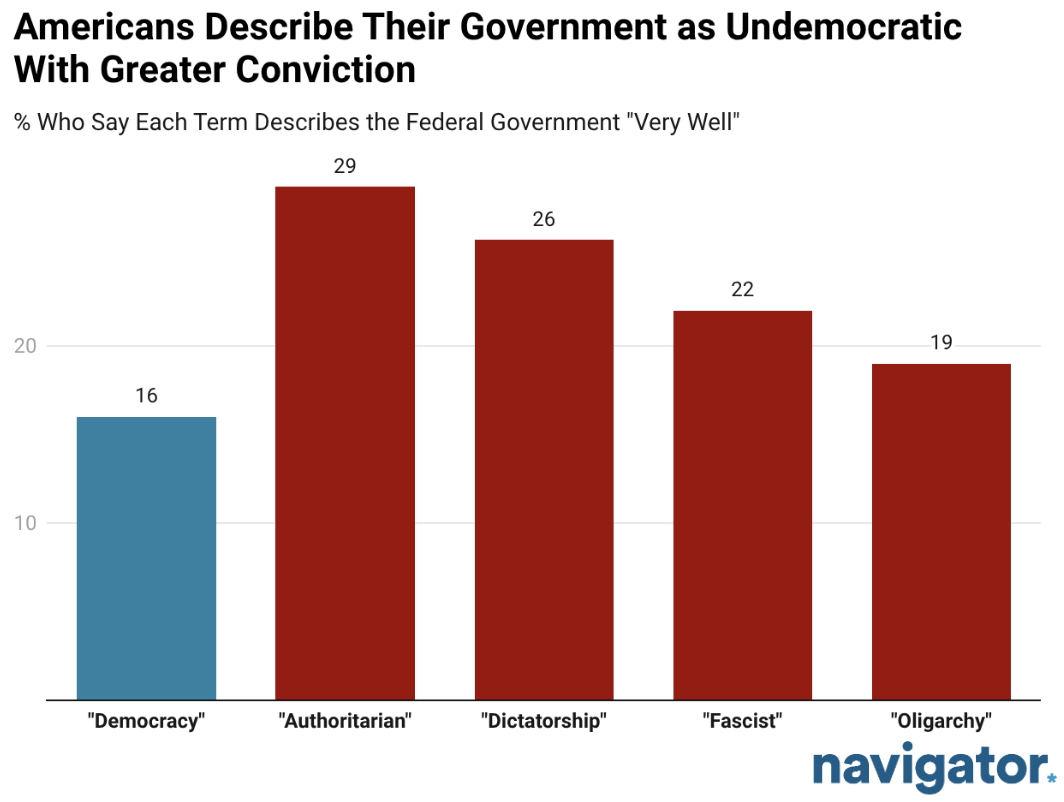
Americans are more likely to describe their current government as undemocratic than democratic. Just 16% say “democracy” describes the federal government “very well” – 10 points less than the share who say “dictatorship” describes the federal government “very well” (26%) and 12 points less than the share who say “authoritarian” describes the federal government “very well” (29%). Americans are also more likely to say “fascist” (22%) and “oligarchy” (19%) describe the federal government “very well.”

Bar chart from Navigator Research, titled: Americans Describe Their Government as Undemocratic With Greater Conviction

Gen Z, Active News Consumers, and MAGA v. Non-MAGA Republicans

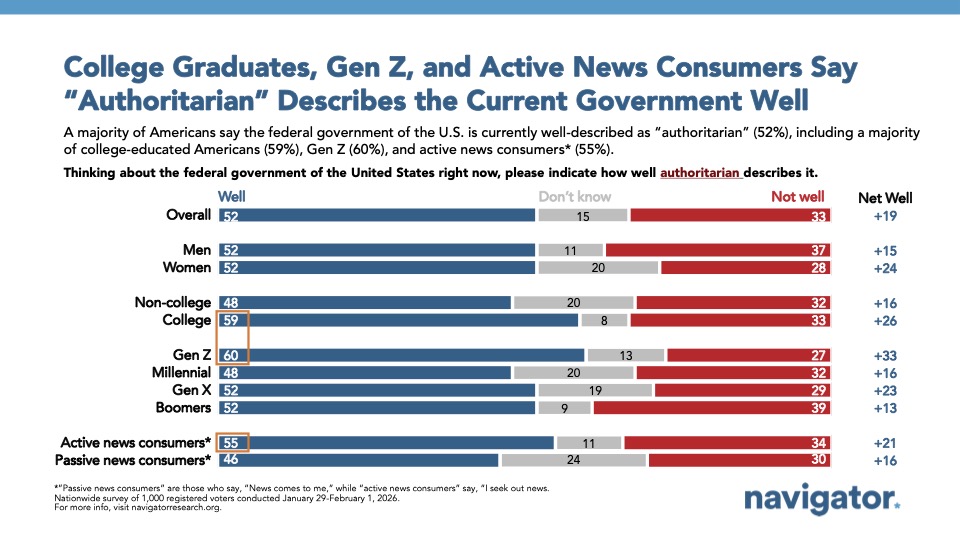
While each generation was more likely than not to describe the federal government as “authoritarian,” Gen Z adults are particularly inclined to see their government as undemocratic. Just 36% of Gen Z respondents feel “democracy” appropriately describes the federal government, with majorities of Gen Z adults instead agreeing with descriptors like “authoritarian” (60%), “fascist” (51%), or “dictatorship” (54%). Just under one third (31%) of Gen Z adults say “fascist” describes the federal government “very well” – nearly twice the number who say “democracy” describes the federal government “very well” (16%).

55% of active news consumers (those who say they seek out the news, rather than letting the news come to them) say “authoritarian” describes the federal government well – nine points greater than the share of passive news consumers who say the same (46%). Passive news consumers were also 13 points more likely to say they “don’t know” if “authoritarian” describes the federal government well (24% of passive news consumers).

Bar chart from Navigator Research, titled: College Graduates, Gen Z, and Active News Consumers Say “Authoritarian” Describes the Current Government Well

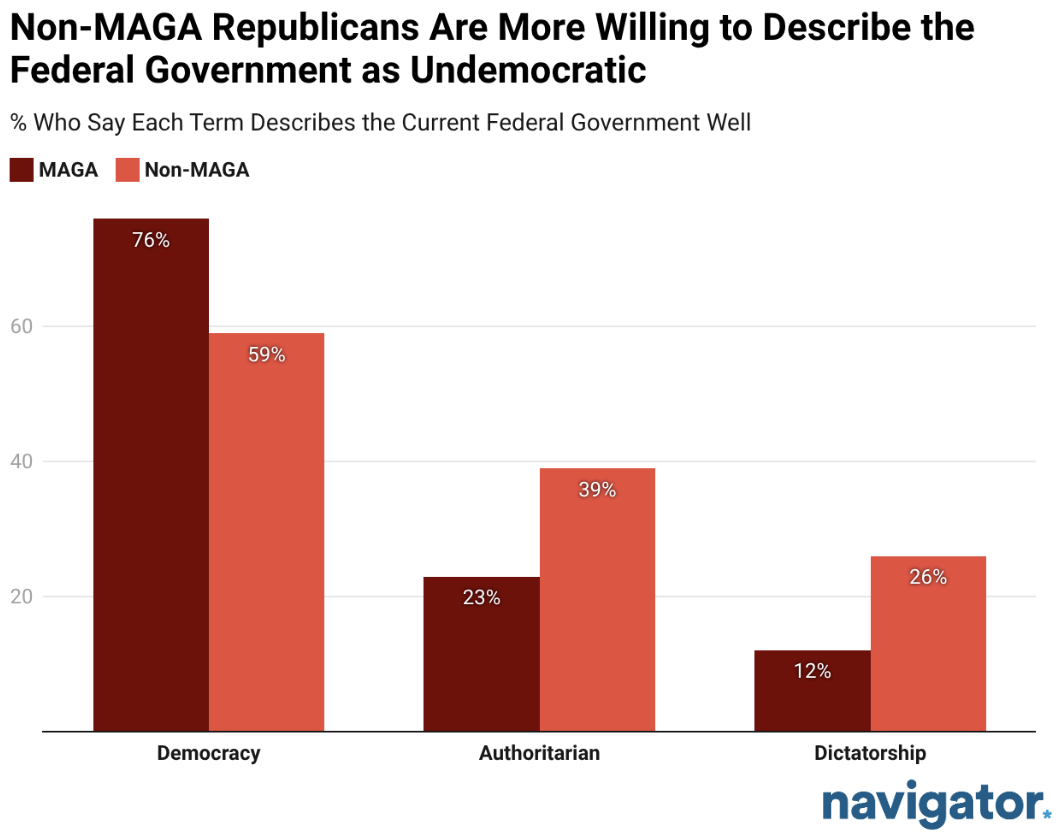
Republicans who do and do not consider themselves supporters of the MAGA movement also demonstrate strong differences in how they view the federal government. Non-MAGA Republicans are 17 points less likely than MAGA Republicans to say “democracy” describes the federal government well (59% and 76%, respectively). Non-MAGA Republicans are 16 points more likely to describe the federal government as “authoritarian” (39% and 23%, respectively), and 14 points more likely to say “dictatorship” describes the federal government well (26% and 12%, respectively).

Bar chart from Navigator Research, titled: Non-MAGA Republicans Are More Willing to Describe the Federal Government as Undemocratic

Read More

May 22, 2026

Americans Want Major Change, But Aren’t Sure if Leaders Can Deliver

This Navigator Research report covers how Americans feel about democracy, institutions, and systems and whether anyone can fix them.

Julie Alderman Boudreau
May 21, 2026

Following Callais: Views on Supreme Court Remain Mixed But Reforms Are Popular

This Navigator Research report covers views of the Supreme Court and what type of reforms Americans support.

Tina Tang
May 20, 2026

Low Awareness, High Stakes: Views on the Recent Supreme Court Ruling on the Voting Rights Act

This Navigator Research report covers how Americans are reacting to the recent Supreme Court decision, Louisiana v. Callais, which gutted protections under the Voting Rights Act.

Tina Tang
May 14, 2026

SPECIAL REPORT: Asian Americans on the Economy and President Trump

This Navigator Research Report focuses on economic sentiment among Asian Americans and how they view President Trump’s job performance across a range of important issues.

Tina Tang & Aidan Harty